Departing Alibaba After Two Months, Lin Junyang Launches a $2 Billion AI Venture
 05/22 2026
 759
759
Author|Ma Duoduo
Editor|Hu Zhanjia
Operations|Chen Jiahui
Produced by|LingTai LT (ID: LingTai_LT)
Header Image|Publicly available online
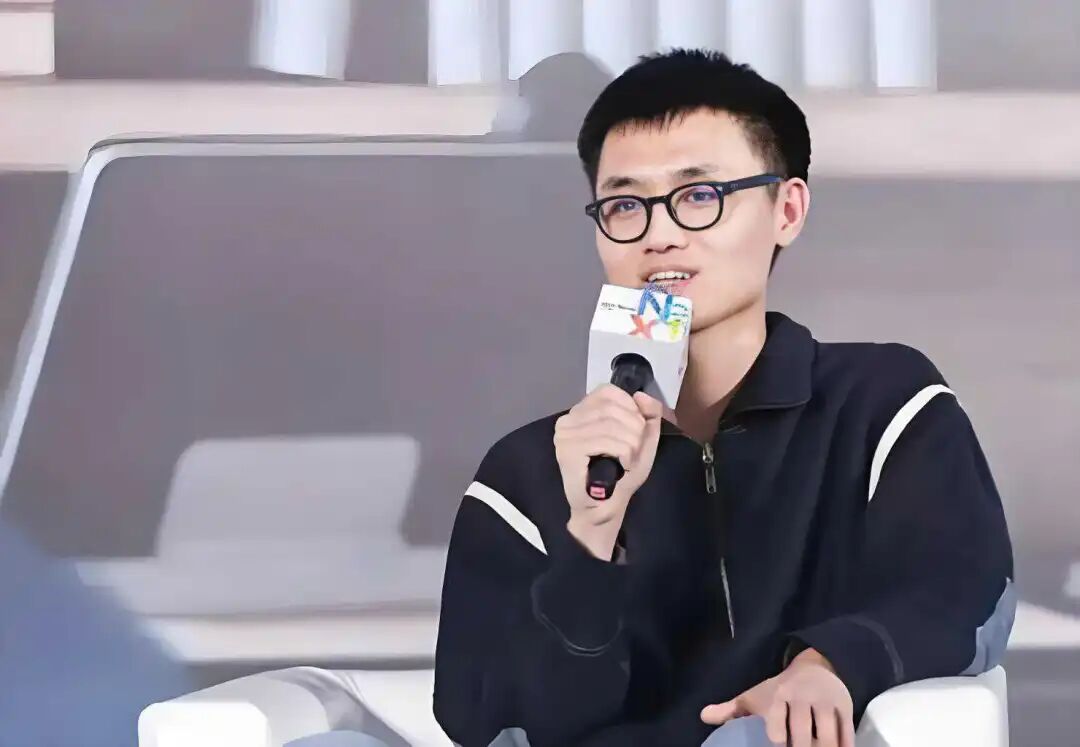
Two months ago, Lin Junyang posted 'bye_my_beloved_qwen' on X, formally announcing his departure from the Tongyi Qianwen team he had built from the ground up.
Then, he went silent on social media.
That silence was broken a few days ago when observers noticed he had wiped his Xiaohongshu account clean, changing his nickname, avatar, and bio. Foreign media outlet The Information then dropped a bombshell—Lin Junyang is establishing a cutting-edge AI lab, with a seed round valuation target of $2 billion (approximately 13.6 billion RMB). Sequoia China and GaoRong Capital are already at the negotiating table.
This is no ordinary AI startup.
In China, it is almost unheard of for a startup without a product, revenue, or even a name to command a $2 billion valuation. Even the most prominent AI unicorns of the past secured far smaller early-stage funding rounds. The Information itself remarked, "Such a valuation is virtually unprecedented among Chinese AI startups."
Who is providing the capital? Sequoia China and GaoRong Capital. Who is joining the team? According to 36Kr’s The Intelligence Emergence, several researchers from ByteDance, Tencent, and overseas institutions have already signed on. What is the direction? Insiders reveal the team is exploring two technical routes: "world models" and "embodied brains."
A 33-year-old leaves a tech giant and secures a $2 billion valuation just two months later.
What is really happening here?
 From NLP Engineer to Alibaba’s Youngest P10
Lin Junyang’s professional journey stands out as somewhat unconventional among tech executives.
Born in 1993, he earned his undergraduate degree in English from the University of International Relations and pursued a master’s degree at Peking University’s School of Foreign Languages. A linguistics graduate, he joined Alibaba’s DAMO Academy as a senior algorithm engineer in 2019. Few anticipated that this "liberal arts student" would ascend four ranks in six years to become Alibaba’s youngest-ever P10.
His rapid rise was closely tied to the success of Qwen.
After joining DAMO Academy, Lin quickly became a core member of the M6 multimodal pre-training model team. M6 was Alibaba’s most ambitious early multimodal large model project, pushing parameter scales to the 10-trillion level.
Comprehensive media reports from Tianyancha show that by late 2022, DAMO Academy’s language and vision AI teams merged into Alibaba Cloud, forming the Tongyi Lab. Lin formally took over as technical lead for the Tongyi Qianwen series of large models.
From there, Qianwen expanded at an astonishing pace. Under his leadership, Alibaba launched the Qwen open-source model family, covering various parameter scales. By the time of his departure, Qwen series models had surpassed 1 billion global downloads and spawned over 200,000 derivative models.
Data from Tianyancha and Hugging Face in January 2026 show Qwen firmly ranked as the world’s top open-source large model, competing directly with GPT and Claude on benchmark leaderboards. After former Qwen lead Zhou Chang left for ByteDance in August 2024, Alibaba adjusted compensation for the core team. Lin was promoted to P9 and then to P10 within a year based on team performance.
What does P10 mean at Alibaba?
It represents the pinnacle of the technical career ladder, just one step below vice president. At 33, few in the entire group held such a position.
 Departure Foreshadowed: A Power Struggle
Why did Lin leave?
According to Alibaba insiders, the immediate trigger was "strategic adjustments." In late 2025, Alibaba decided to overhaul Qwen’s strategy, believing more technical talent was needed—a move that "partially involved adjusting Lin’s original authority."
In simpler terms, the company wanted to add personnel who might dilute his power. After multiple rounds of discussions, Lin rejected the proposal and resigned voluntarily.
On March 4, he announced his departure on X. That same day, Yu Bowen, the post-training lead, and Li Kaixin, a core contributor to Qianwen 3.5/VL/Coder, also revealed their exits. Three key figures left the Qianwen technical team in a single day. Alibaba clearly sensed danger.
The next day, Group CEO Wu Yongming responded urgently in an internal email, approving Lin’s resignation while announcing the formation of a Foundation Model Support Group led by Wu himself, with Alibaba Cloud CTO Zhou Jingren continuing to oversee Tongyi Lab. A month later, on March 16, Alibaba formally established the Alibaba Token Hub business group under Wu’s direct leadership, incorporating Tongyi Lab.
The speed and scale of these moves underscored the magnitude of the shakeup. Even more telling was the timing. The day after Lin’s departure, Google DeepMind’s lead Omar Sanseviero publicly recruited the Qianwen team on social media: "If you’re seeking a new place to build great models and contribute to open model ecosystems, reach out." Tech giants’ talent radar never misses a beat.
Looking back, Lin announced his resignation on March 4 and was reported to have launched $2 billion financing by May 13. During his two-month "hiatus," he not only finalized a business plan but also secured two top-tier VCs and assembled a multinational team. This was no spontaneous decision—it was a calculated pivot.
Is a $2 Billion Valuation Justified?
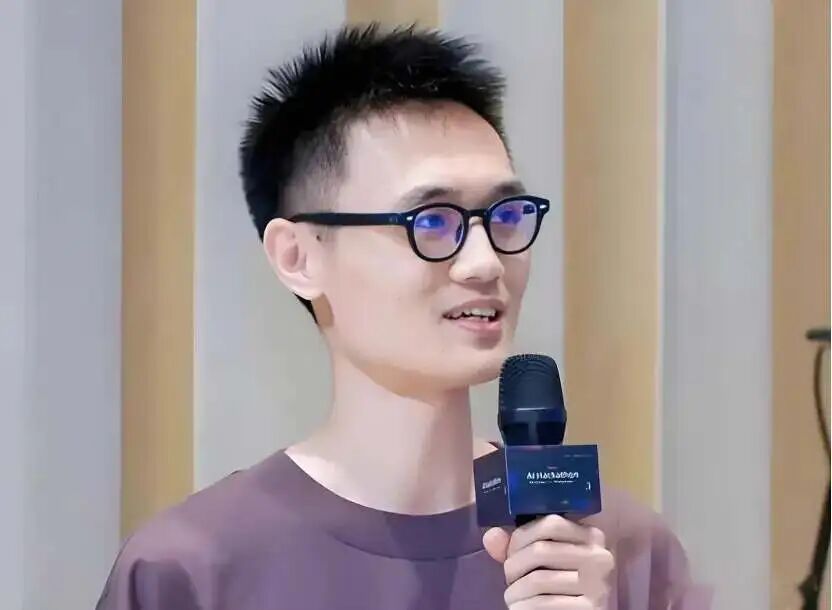
Valuation depends on the benchmark. In the U.S., AI founders’ valuations have soared to unprecedented levels. Former OpenAI chief scientist Ilya Sutskever’s Safe Superintelligence (SSI) raised $1 billion at a $5 billion valuation just three months after founding. Former OpenAI CTO Mira Murati’s Thinking Machines Lab debuted with a $10 billion valuation last year. By comparison, Lin’s $2 billion seems "affordable." But he’s not in Silicon Valley—he’s in China, where AI startup valuations typically lag far behind U.S. peers.
A $2 billion valuation shatters domestic ceilings. Why are VCs paying this price? They’re buying "certainty." Qianwen’s track record is the ultimate endorsement: 1 billion downloads, 200,000 derivative models, top open-source community ranking—these aren’t PowerPoint fantasies. In China’s large model arena, only ByteDance’s Doubao and Baidu’s Wenxin rival Qianwen. As Qianwen’s technical architect, Lin is the brand’s core "asset."
Moreover, Sequoia and GaoRong’s involvement reflects strategic considerations. Domestically, truly globally competitive AI founders are rare—Lin, Zhou Chang (at ByteDance), and MiLM’s Li Dahai (at Minimax) top the list. Scarcity breeds "talent-chasing investments." If you don’t act, competitors will. Another telling signal: financing structure. Sources indicate this round raises "hundreds of millions." At a $2 billion valuation with 10–15% equity sold, actual funds raised likely hit $200–300 million—enough to sustain a seed-stage company for 2–3 years.
Lin Junyang’s Technical Gamble
Money and talent are secured, but the critical question remains: What exactly is he building?
The answer may lie in his March 26 manifesto: From 'Reasoning' Thinking to 'Agentic' Thinking. Its core thesis: The previous AI race focused on making models "think better"; the next phase demands models "think to act."
In Lin’s view, reasoning models have hit an inflection point.
Successes like OpenAI o1 and DeepSeek R1 prove large models can achieve qualitative leaps in math, coding, and logic through reinforcement learning. But marginal gains are diminishing—when models already outperform humans in math competitions, where’s the next breakthrough?
His answer: Agentic Thinking.
This "thinking-for-action" capability differs from static reasoning through interaction. Models no longer independently complete reasoning chains and output answers; they act within environments, receive feedback, revise plans, and iterate. Training shifts from the model itself to the "model + environment" system—the agent and its orchestration framework. This fundamentally alters research priorities: RL algorithms matter less than environment design, trajectory sampling infrastructure, evaluator robustness, and multi-agent coordination interfaces. Competitive advantages shift from "better feedback signals" to "better environments" and "closed training-inference-action loops."
This essay is widely interpreted as Lin’s technical manifesto for his venture.
Insiders reveal his new lab will pursue "world models" and "embodied brains"—directions perfectly aligned with Agentic Thinking. World models simulate physical environments for agents, while embodied brains enable agents to perceive and act in real-world spaces.
In other words, Lin isn’t building a better chatbot—he’s betting on AI’s transition from digital to physical realms over the next decade.
 From P10 to CEO: The Toughest Leap
Ambitions are grand, but realities are harsh.
A $2 billion valuation for an AI lab sounds glamorous, yet the real challenges are just beginning.
First, compute power. Training large models demands massive GPUs, and China’s high-end compute supply remains chronically tight. At Alibaba, Lin had access to the entire group’s cloud infrastructure. Now he must secure GPUs independently—purchasing cards, building clusters, competing for resources. Sequoia and GaoRong’s money buys some compute, but it pales against tech giants’ resources.
Second, differentiation. Alibaba, ByteDance, and Tencent all have large model teams. Launching another general-purpose model pits Lin against former colleagues in a familiar battleground. He must find a niche giants neglect or underinvest in. Agentic Thinking and embodied AI seem promising, but this track also requires colossal resources and data.
The most critical variable is Lin himself. As China’s top AI technologist, his expertise is undisputed. But transitioning from technical lead to founder demands entirely new skills: fundraising, management, BD, product definition, team-building, commercialization. For six years, he operated within Alibaba’s ecosystem with resources at his fingertips. Now he must build from scratch—a daunting prospect even for a 33-year-old prodigy.
Silicon Valley offers parallels. Anthropic’s founders hailed from OpenAI; Character.AI’s from Google Brain. All were elite technologists turned entrepreneurs. Yet success isn’t guaranteed—some secured funding but failed to deliver products; others built products but struggled to monetize. Whether Lin becomes China’s Anthropic or Character.AI remains to be seen. But one thing is certain: In China’s AI startup landscape, he’s now the most compelling figure to watch.
 China’s AI Startup Scene Enters the 'Talent War' Era
To grasp the significance of Lin’s $2 billion valuation, cast your gaze across the Pacific.
In June 2024, Ilya Sutskever left his role as OpenAI’s chief scientist to found Safe Superintelligence (SSI). With ~20 employees, no product, no revenue, and no public demo, capital markets priced it at $5 billion by September 2024 and $32 billion by April 2025. Greenoaks, a16z, Sequoia, Alphabet, NVIDIA—nearly every Silicon Valley titan backed the same bet: Ilya himself.
In July 2025, former OpenAI CTO Mira Murati founded Thinking Machines Lab, securing $2 billion in seed funding at a valuation of $12 billion; less than six months later, rumors of a new funding round suggested a valuation leap to $50-60 billion. Even with the launch of product Tinker, no one believed the $12 billion valuation reflected "product value"—it was unequivocally "people valuation." That same December, Salesforce's former chief scientist Richard Socher founded Recursive Superintelligence, raising over $500 million in four months at a $4 billion valuation—another project without a product or fully formed team.
Connect these dots, and a clear logical thread emerges: The valuation paradigm in the AI era is undergoing a fundamental shift. Traditional VC valuation formulas—TAM × penetration rate × market share × profit margins—collapse here. The new formula is brutally simple: What has this person built before, and what might they build next?
People are the company, and the company is the people.
Viewed through this lens, Junyang Lin's $2 billion valuation isn't just reasonable—it's "pragmatic."
SSI has Ilya's academic prestige, but none of its open-source products have hit 1 billion downloads. TML has Mira's managerial pedigree, but she's never led a ground-up foundational model project as a technical architect. Meanwhile, Junyang Lin—33 years old, Alibaba's youngest P10—personally propelled Qwen to the top of global open-source models: 1 billion downloads, 200,000 derivative models, and influence spanning academia to industry.
VCs aren't buying a P10 title; they're buying the "certainty" validated by 1 billion downloads.
Silicon Valley has SSI and TML; China has Junyang Lin and DeepSeek. Both markets converged on the same choice in the past year: writing astronomical checks to a handful of top-tier talents. This is no coincidence. When training costs for large models approach $1 billion per run, when technological iteration cycles shrink from "months" to "weeks," and when each model generation's performance gap can determine a company's survival—capital recognizes that only the absolute elite deserve elite capital. Mid-tier founders' room for error vanishes, while top talent's pricing power explodes exponentially.
The funding narrative of DeepSeek perfectly encapsulates this underlying logic. In May 2026, DeepSeek initiated its maiden funding round, targeting a staggering RMB 50 billion. Liang Wenfeng, personally injecting RMB 20 billion for a 40% stake, redefined the conventional funding paradigm. This wasn't a case of "founders exchanging equity for investment," but rather "founders transforming into the largest investors themselves." From a valuation of $100 billion in early April to $515 billion by mid-May—a remarkable fivefold surge within just 21 days, briefly eclipsing Anthropic's $45 billion valuation. This was not merely investing in a company; it was investing in one individual's unwavering belief in a technical roadmap.
Junyang Lin's $2 billion and DeepSeek's $50 billion represent two sides of the same coin: the former validates "what you've already accomplished," while the latter bets on "what you're still striving to achieve."
China's venture capital market is making a bold statement through its actions: AI founders with genuine global competitiveness can be counted on one hand. Junyang Lin, Zhou Chang, and Li Dahai from ModelWall Intelligence are among this elite group—a roster concise enough to fit on a sticky note. However, reducing Junyang Lin's departure to a mere personal career decision significantly underestimates its broader implications.
A review of the resignation list from Tongyi Lab reveals a disturbing pattern: Yang Hongxia departed in 2022, followed by Zhou Chang in July 2024, accompanied by a dozen key personnel (triggering non-compete arbitration). Yan Zhijie, Bo Liefeng, and Huang Fei followed suit in 2025, Hui Binyuan joined Meta in January 2026, and on March 4, Junyang Lin and Yu Bowen announced their exits simultaneously. This is not random attrition; it is a symptom of systemic organizational failure within Big Tech AI.
Maimai's data is alarming: the average tenure of AI talent is a mere 2.02 years, with 62.99% planning to leave within a year. ByteDance's "Top Seed" program offers newly minted PhDs annual salaries of $10 million, Tencent's "Qingyun Plan" allegedly lured talent from OpenAI with $100 million packages, and Alibaba allocates 80% of its campus hires to AI—the talent war has reached unprecedented levels.
Yet, beneath the surface of "being poached" lies a more profound issue of "voluntary departure." When core technical talent becomes the scarcest asset, traditional employment models, organizational structures, and incentive systems face existential challenges.
Alibaba's restructuring of the ATH business group is essentially "damage control surgery." Its success hinges on a more fundamental question: when the value of a large model team is concentrated in a few technical leaders, can traditional "P-level promotions + stock options" retain minds that have already witnessed $2 billion valuations?
This is not merely Alibaba's dilemma—every company with AI labs confronts the same crisis.
Junyang Lin's $2 billion valuation may become a landmark reference point in China's AI entrepreneurship history. It sends a clear message to every technical genius constrained by Big Tech: your value far exceeds a P10 title.
China's AI startup landscape is undergoing a profound paradigm shift. The previous generation—the "AI Four Dragons" SenseTime, Megvii, Yitu, and CloudWalk—competed on academic pedigree and algorithm deployment. Then came the "Large Model Five"—DeepSeek, Moonshot AI, Zhipu, MiniMax, and StepFun—vying on capital intensity and model iteration speed, with Zhipu and MiniMax already listed in Hong Kong.
Now, a third path is emerging: "Super-Individual Entrepreneurship."
Junyang Lin did not depart with a ready-made commercial team—the exits of Yu Bowen, Hui Binyuan, and others resemble a natural gravitational pull around a technical visionary. One person takes the lead, and top engineers follow, attracted by his technical acumen. This model requires no 100-person team, no full-fledged commercialization department; its core asset is singular: the founder's technical intuition and track record of building great products.
As training infrastructure becomes cloud-native, open-source ecosystems provide rich toolchains, and capital writes $2 billion checks for "one person"—technical geniuses no longer need massive organizations to channel their creativity.
Returning to Junyang Lin himself. The young man who posted "bye_my_beloved_qwen" on X is now writing his new story. If he carves out a technical path distinct from but equally impactful as Qwen, $2 billion will merely be the starting point.
-
![]()
Doubao Work Unveiled! Domestic AI Leaders Fully Commit to the 'Work' Sector
-
![]()
Who’s Sounding the Alarm on ‘Rushed Vehicles’?
-
![]()
Over 5.3 Billion Yuan in Losses Over Three and a Half Years! Can Yonyou Reverse Its Fortunes Through Streamlining and AI Transformation?
-
![]()
Baidu AI Adopts Free Model: A Strategic Maneuver in Traffic and Monetization
-
![]()
Silicon-Based OLED Pioneer Unveils Financial Results: H1 Shipments Outpace Entire 2025 Volume
-
![]()
AI's First "Lost Summer"
-
![]()
Zeiss Makes Another €2.2 Million Bet: Will Eye Tracking Be the Next Big Thing in the Smart Glasses Industry?
-
![]()
RUNTO Ranking | Global Top TV ODM Factories' Shipment Figures for July 2026