Google Delivers a Stern "Lesson" to Apple
 01/14 2026
 723
723
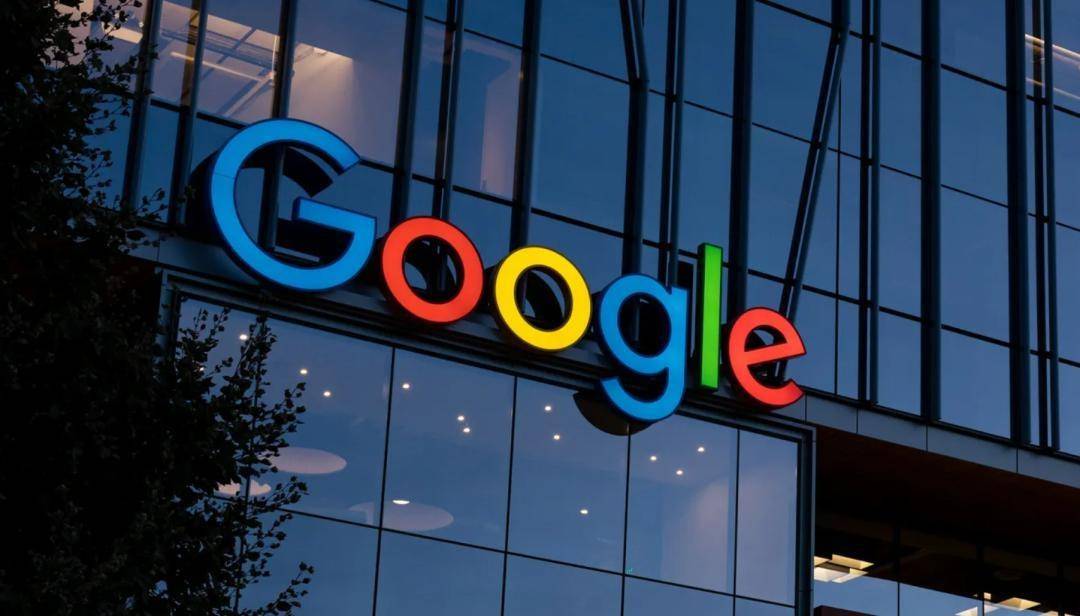
On January 7, the technology sector of the U.S. stock market marked a historic milestone: Google's market capitalization eclipsed Apple's for the first time since 2019, securing its position as the second-largest company in the U.S. stock market.
This signifies a new configuration among the top three global companies by market value: NVIDIA, Google, and Apple.
Over the past year, Google has undoubtedly stood out as one of the most stellar tech stocks on Wall Street, with its stock price soaring nearly 65% cumulatively, outpacing the seven major tech giants in the U.S. stock market. Less than two months after overtaking Microsoft to enter the top three by market value, Google has once again caught up with and surpassed Apple, showcasing robust momentum to claim the global top spot. For Apple, this represents a significant "setback" or perhaps a foreboding "warning."
While Google has executed a remarkable turnaround in the AI race within just three years, Apple's progress in this AI competition appears even more sluggish and lagging. More crucially, this shift transcends mere market value changes.
Innovation "Makes a Comeback"
The shift between Google and Apple primarily stems from their divergent AI strategies and the resulting gaps. Examining the broader tech landscape, the evolving dynamics among the world's major tech giants are largely propelled by AI.
In 2024, when news surfaced that Apple and Google were actively negotiating to integrate Google's Gemini large model into the iPhone, Google, under pressure from Microsoft's alliance with OpenAI, seemed slightly behind in terms of both the pace of model product releases and the strategic determination for integration. Alongside Apple, which had been slow to make significant AI moves, they were perceived as "struggling siblings" in Silicon Valley. However, no one anticipated that by 2025, Google's full commitment and pursuit would yield noticeable results in a remarkably short time.
Google launched the Gemini 3 large language model, Nano Banana image generation model, Veo3 video generation model, and TPU chips, achieving comprehensive breakthroughs across various fronts and reclaiming the technological high ground. Simultaneously, this technological edge is genuinely reflected in Google's business, driving substantial growth in its performance.
Conversely, Apple's lag in the AI race has nearly become an established fact.
For an extended period, as the pioneer of the mobile internet era, Apple has firmly held the "global first" position. However, with the current shift in market value, from a macro perspective, this may signify a transition between the old and new eras of tech and the internet, shifting from a "mobile internet era" centered on hardware ecosystems to an "intelligent era" centered on computing power and cutting-edge technologies. This transformation may also be accompanied by a reshuffling of influence.
Therefore, at this juncture, AI has naturally emerged as the core engine driving market value growth. With AI achievements comes market imagination; without them, market imagination fades.
But is this merely a judgment within the capital markets? The answer is no. This shift in market value can be viewed as a successful reflection of Google's break from tradition and return to innovation, offering enlightening insights to all tech giants.
Reflecting on the past decade, as tech giants have firmly "dominated" key areas such as social media, search, and smart hardware, long-term "dominance," vast core interests, and the spread of bureaucracy within companies have gradually led to signs of "aging." Google has been at the center of skepticism over the years due to its perceived loss of innovation, especially after the advent of ChatGPT.

At the end of 2022, ChatGPT emerged, completely igniting a global tech wave. As attention and praise shifted to a startup, criticism flooded towards Google. People lamented that Google had transformed from an industry pioneer to a follower, and its once-proud innovation label was replaced by "mediocrity." Indeed, over the past decade, Google has hardly launched any particularly successful products.
However, no one expected that through its counterattack with AI technology, it would force OpenAI to raise a "red alert" internally and now even surpass Apple in market value.
This impressive "comeback" has allowed the outside world to witness a rejuvenated Google once again.
The Tech War Ultimately Hinges on Talent
From being severely threatened by OpenAI to posing a serious threat to OpenAI, Google's successful turnaround has been a spectacular "drama" in the entire tech circle.
Why was Google able to turn the tables? Was it due to the founders' return, organizational reform, or an AI full-stack approach? These factors are all indispensable, but the most crucial one may be the gathering of talent.
Over the past few years, as Google has transformed into an average large company, its appeal and cohesion for talent, once considered the ideal workplace in Silicon Valley, have gradually diminished. Especially with the massive layoffs in 2023, there was a widespread belief that Google's core AI talent had been depleted. For instance, when Elon Musk announced the formation of xAI, seven out of the 12 members announced had previously worked at Google or its subsidiary DeepMind.
To recall its "veterans," Google implemented a "Boomerang Plan." It was these "veterans" who formed the core force enabling Google to regain the initiative in the AI race.
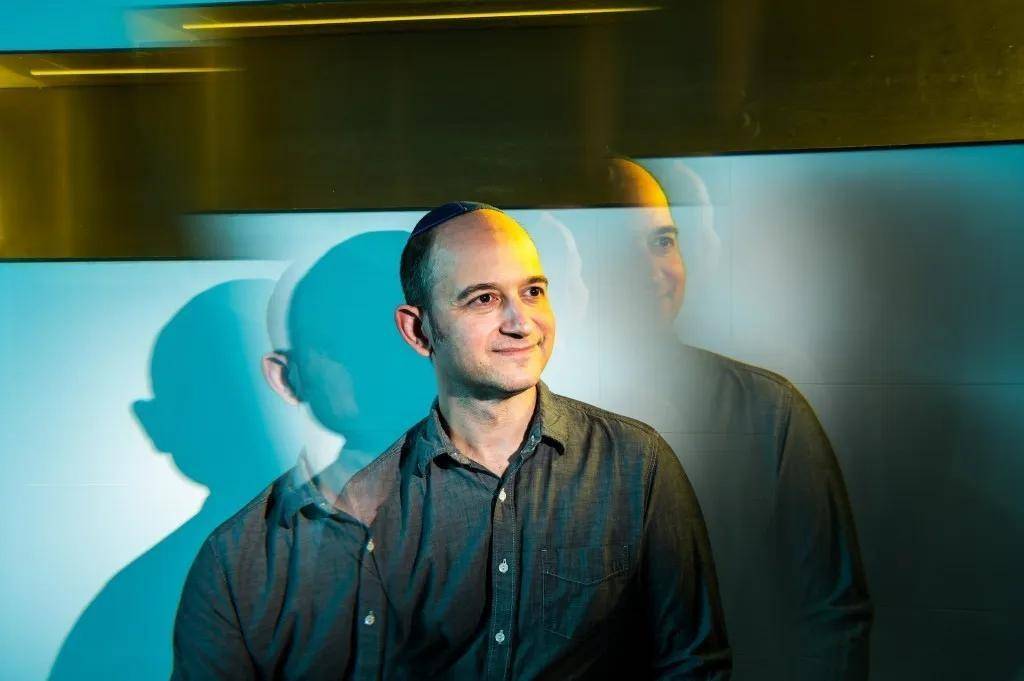
The most typical representative is Noam Shazeer. In 2024, Google paid a licensing fee of up to $2.7 billion to Character.AI to bring back Noam Shazeer and his team to DeepMind. Upon his return, Shazeer was appointed as the co-leader of the Gemini project. It's worth noting that Shazeer left Google precisely because Google refused to launch his chatbot project, and since ChatGPT ignited this sector, Google has been in a precarious position.
Reports suggest that among the AI software engineers hired by Google in 2025, about 20% are so-called "boomerang employees," a significant increase compared to previous years. Meanwhile, a Google spokesperson confirmed that the number of AI researchers from major competitors has increased compared to 2024.
The influx of talent has given Google immense confidence, while Apple is experiencing a talent "crisis" due to significant internal turmoil, especially with the transition between old and new leaders. The management overhaul may put Apple at a disadvantage in this talent competition.
In December, Apple announced that John Giannandrea, its senior vice president in charge of AI and machine learning strategy, would "retire" in the spring of 2026. Shortly after, Alan Dye, Apple's vice president of user interface design, also announced his departure, stating he would join Meta as the chief design officer by the end of the year. A few days later, foreign media reported that Johny Srouji, the senior vice president of hardware technology in charge of Apple's chip business and one of Apple's most respected executives, had discussed leaving with Tim Cook and was considering departing Apple soon.
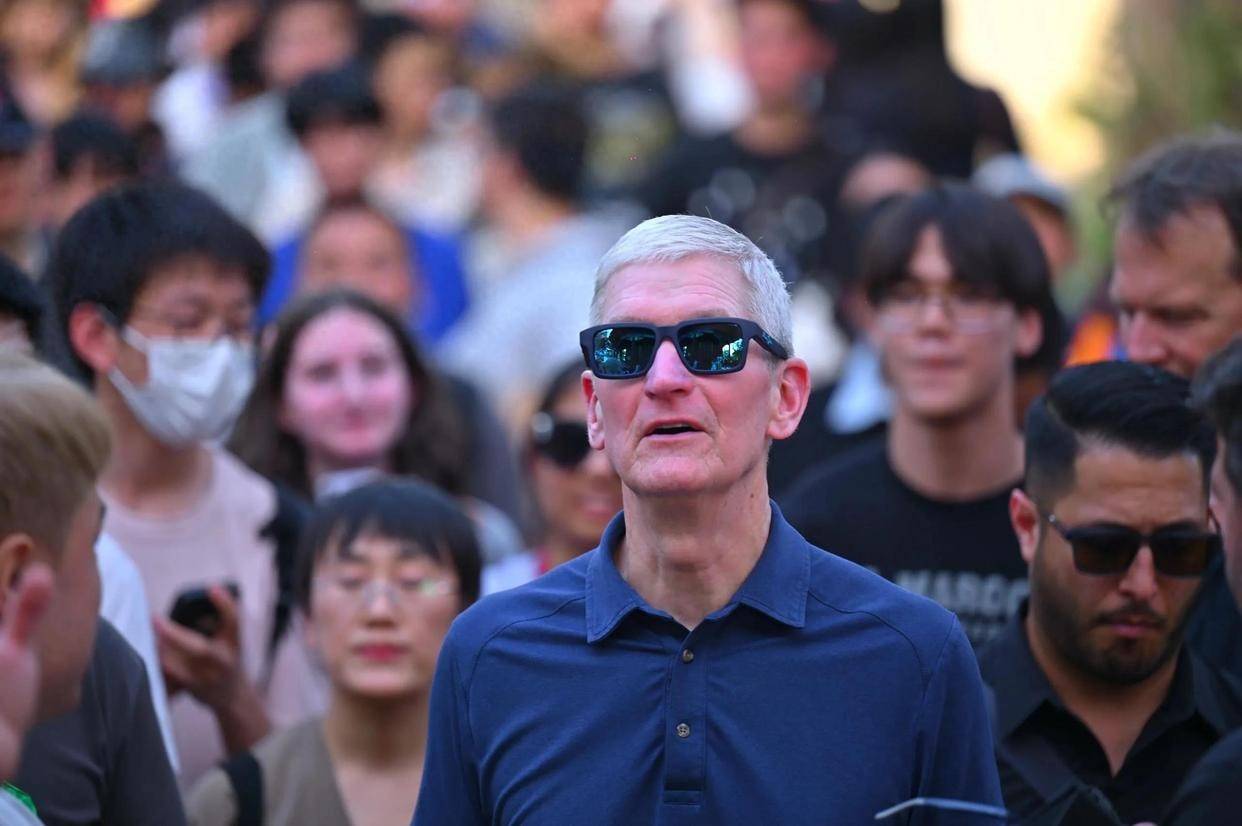
From senior management to key engineers, Apple's talent exodus is not limited to the artificial intelligence business sector but spans almost all critical areas.
For example, Ruoming Pang, Apple's AI model lead, along with Jian Zhang (head of AI robotics software), Tom Gunter, Frank Chu, and other key technical personnel, have all jumped ship to Meta. Alan Dye's departure also took away Billy Sorrentino, the top interface lead. Additionally, OpenAI has poached dozens of engineers from Apple involved in various fields such as iPhone, Mac, camera, and display technology.
At a critical juncture in the AI competition among tech giants, the talent exodus may further hinder Apple's pursuit in the AI era, placing it in an even more unfavorable position given its already lagging state.
Sense of Crisis
If Google's long-term stability and vast interests gradually made it risk-averse and conservative, leading to its mediocrity, then its renewed vitality today can largely be attributed to the rise of OpenAI, which has instilled a sense of crisis.
On November 30, 2022, ChatGPT emerged, attracting over a million users in just five days and over 100 million in two months. Internally at Google, a "red alert" was sounded, and Sundar Pichai even recalled the two co-founders, Larry Page and Sergey Brin, who had retired years ago, to participate in high-level meetings.
Why did Google treat this as a major threat? Not only because Google, long regarded as a top player in the artificial intelligence field, was "beaten to the punch" by a startup in leading the technological wave, but more importantly, the sudden surge in generative AI posed an immediate threat to search. Initially, people speculated whether large models would replace search engines as the primary means for users to obtain information in the next decade.
An unprecedented sense of crisis drove Google to shift from "slow" to "fast," and this transformation, coupled with years of accumulated technological achievements, laid the groundwork for today's turnaround.
However, unlike Google, the technological wave of generative AI and the multiple opportunities it brings, such as humanoid robots and intelligent agents, do not directly threaten Apple's core business. Even with the later integration of AI technology into smartphones, spurring phone manufacturers to pursue AI phones, no true AI phone has emerged to date that can compete with Apple based on AI capabilities, let alone other AI hardware.

In "The Innovator's Dilemma," Clayton Christensen discusses why some well-managed large companies fail, highlighting that a significant reason is encountering challenges from disruptive technological innovations. After establishing a leading advantage, successful companies tend to stay in their comfort zones, adopting sustaining innovations to maintain their dominant positions. However, disruptive technologies represent entirely new growth curves, and leading companies often respond sluggishly to new technologies, leading to their disruption.
Apple has indeed remained in its comfort zone for a long time and lacks a sense of urgency from competitors. However, the question remains: Is AI a disruptive technology capable of bringing about transformation in the smartphone sector?
It is reported that Craig Federighi, Apple's software chief, has been reluctant to make large-scale investments in artificial intelligence because he does not believe that AI is a core function of personal computers or mobile devices. Although the intensifying AI competition among tech giants has forced Apple to accelerate its AI strategy, it may not have a clear direction on how to leverage AI technology for breakthrough innovations in the software and hardware ecosystems of smartphones.
Google's counterattack in the AI race has, to some extent, benefited from OpenAI blazing a trail in generative AI, but Apple has no "OpenAI" to follow.
From a strategic perspective, Google has fully committed to an AI full-stack layout, while Apple has missed the window of opportunity in the AI competition. With AI becoming the core driver of market value growth, its market value being surpassed is not surprising. However, from a long-term perspective on AI technology development, the current situation may only be a fleeting moment.
Neither Google nor Apple is guaranteed to maintain its trajectory indefinitely.
Dao Zong You Li (A Reasonable Perspective), formerly known as Wai Dao Dao, is a new media outlet focusing on the internet and tech circles. This is an original article, and any form of reprinting without retaining the author's relevant information is strictly prohibited.
-
![]()
Registered Capital Slashed to 372 Million Yuan! Yutong Optical Finalizes Industrial and Commercial Change Registration
-
![]()
Zhuque-3 Successfully Lands, and 'Time Traveler' Secures Another ¥100 Million in Funding: China's Commercial Space Industry Experiences a 'Dynamic August'
-
![]()
Autohome Faces a Shrinking Window of Opportunity
-
![]()
Even a Titan Like Musk Has Faced Setbacks in Fulfilling Promises
-
![]()
AI Office: The End of the Racing Era, Context Becomes the Key to Success
-
![]()
Domestic Vehicle Chassis Revolution ②: The Steering Wheel Remains, But Mechanical Connections in the Steering System Are Decreasing
-
![]()
Exploring MiniMax Design: Can Video Editing Be as Simple as Speaking?
-
![]()
Why Can SenseTime Achieve Profitability While CloudWalk Still Faces Challenges, Despite Both Adopting Large Models?