Harbor Weekly Review | Major Shake-Up in Smartphone Industry Before 618: Apple and Huawei Lead Price Cuts
 05/22 2026
 762
762
By Li Lei, Harbor Business Insights
In a market where most global smartphone makers are contending with escalating costs and subsequently raising prices, Apple has boldly initiated significant price reductions, swiftly followed by Huawei.
On the cusp of the 618 shopping festival, is the smartphone industry bracing for a wave of price cuts? Will other smartphone brands follow suit? Amid the intricate dance between sales volume and costs, which brand will emerge as the market leader in 2026?
On May 15th, sudden price reductions for Apple and Huawei smartphones dominated the trending searches: The iPhone 17 Pro series saw a uniform price cut of 1,000 yuan, accompanied by trade-in deals and double subsidies totaling an additional 2,000 yuan in discounts, bringing the final price down to 6,999 yuan, marking its first foray into the 6,000 yuan price bracket. The iPhone 17 also experienced its inaugural price drop post-launch, with various subsidies and trade-in offers reducing the final price to a mere 4,499 yuan.
Huawei, not to be outdone, slashed prices on its foldable flagship Mate X7, with the entire lineup seeing a straight 1,000 yuan reduction, starting at 11,999 yuan post-discount. The Mate X6 witnessed a hefty 3,000 yuan price drop, with both models qualifying for up to 12-month interest-free installment plans.
From 1,000 yuan to 3,000 yuan, Apple and Huawei, acting like catalysts, swiftly and significantly disrupted the market.
It's widely recognized that around the Lunar New Year this year, after leading brands such as OPPO, Vivo, Honor, and Xiaomi successively announced price hikes, mid-to-low-end models saw price increases ranging from 200 yuan to 500 yuan, with some high-end foldable flagships experiencing price surges of up to a thousand yuan.
A brief recap: On March 16th, Vivo announced in an official community post that due to the sustained and significant rise in global semiconductor and storage costs, after careful deliberation, the company would adjust the suggested retail prices of certain products starting from 10:00 AM on March 18th, 2026. Specific models and prices would be detailed on the official channel's product pages.
OPPO also joined the price hike bandwagon, with the A series seeing across-the-board price increases starting at 300 yuan, and high-memory versions rising by 500 yuan; the K series witnessed price hikes ranging from 300 yuan to 500 yuan. OnePlus Ace series products increased by 300-500 yuan. Additionally, Honor's offline stores raised the price of the Honor 500 standard version by 300 yuan. Honor's foldable phone, the Honor Magic V6, also saw a price increase of a thousand yuan compared to its predecessor.
Notably, during the price hike wave two months ago, Apple and Huawei were among the few manufacturers that refrained from raising their prices.
The adverse impact of price hikes is quite apparent: they directly affect sales volume, with consumers lamenting that low-end models priced around a thousand yuan are nearly extinct. Many consumers planning to upgrade their phones opted to wait and see or continue using their old devices due to the price increases. Especially when income and consumer purchasing power have not increased in tandem, the price hikes exacerbate the situation.
This presents a dilemma: without price increases, manufacturers face losses, and the industry cannot sustain a healthy cycle, as selling at a loss defies commercial logic. However, while price hikes are a market-driven behavior, the resulting contraction effect is also significant.
Between achieving high sales and ensuring financial viability, most manufacturers have opted for the latter.
The rationale behind the price hikes is logically straightforward: AI competition for storage → storage prices soar → whole device costs become unsustainable → prices must rise. AI servers are fiercely competing for HBM and DRAM, with the three major storage giants (Samsung/SK Hynix/Micron) allocating 70%-90% of their advanced production capacity to AI memory, squeezing out production capacity for LPDDR and UFS used in smartphones.
Zhang Yi, CEO and Chief Analyst at iiMedia Research, pointed out, "The fundamental reason for this round of price hikes lies in the rapid growth of AI servers, which has led to a significant occupation of storage production capacity. Chips such as memory, DRAM, and NAND used in smartphones have seen substantial price increases, compounded by rising costs across the entire supply chain, including screens, chips, and batteries. The profit margins for mid-to-low-end models are already thin, and cost pressures are quickly passed on to the end-user, ultimately forcing terminal prices to rise."
The market generally anticipates prices to remain high until at least the second half of 2027, when new storage production capacity comes online and prices may start to ease.
Affected by this, terminal sales data has been notably sluggish. Data from renowned third-party agency IDC shows that in the first quarter of 2026, smartphone shipments in the Chinese market were approximately 69.01 million units, a year-on-year decrease of 3.3%.
Market research firm CounterPoint Research released a report stating that affected by a 14.4% plunge in Android device sales, overall smartphone sales in the U.S. market in the first quarter of 2026 fell by 5.7% year-on-year, while Apple's iPhone sales bucked the trend, increasing by 1.3% year-on-year.
IDC noted that the price hikes for memory chips pose an even more severe situation for smartphones, with an estimated 6.8% year-on-year decline expected in the first quarter of 2026. As storage prices continue to rise, some manufacturers, especially smaller ones, face challenges in securing supply or bearing the costs.
IDC expects a significant decline in unit shipments starting from the second quarter. The average selling price (ASP) will rise, but demand will be suppressed as a result. Annual unit shipments will experience negative year-on-year growth, even if revenue appears relatively stable on the surface due to the increase in ASP.
IDC predicts that global smartphone shipments will decline by 12.9% in 2026, with revenue decreasing by 0.5%. Growth is expected to resume at 1.9% in 2027 and rebound to 5.2% in 2028.
The significant price reductions by Apple and Huawei stand in stark contrast to the price hikes by most other brands, leading to the straightforward conclusion that the magnitude of price cuts far exceeds that of price increases.
Under this polarization, Apple and Huawei will undoubtedly garner greater popular support. When these two brands can leverage supply chain adjustments to achieve cost capabilities far superior to other brands, while others are raising prices by a few hundred yuan, they can afford to slash prices by over a thousand yuan.
Coupled with the long-standing perceived quality advantage of these two brands among consumers, those looking to upgrade their phones are naturally drawn to the better value proposition.
Apple and Huawei, like two formidable catalysts, have jointly launched an offensive on other manufacturers: You raise prices, we cut ours.
According to Counterpoint Research data, in the first quarter of this year, the iPhone 17 accounted for 6% of global smartphone shipments, becoming the best-selling smartphone globally in the first quarter of 2026. The iPhone 17, iPhone 17 Pro Max, and iPhone 17 Pro models dominated the top three spots on the sales chart.
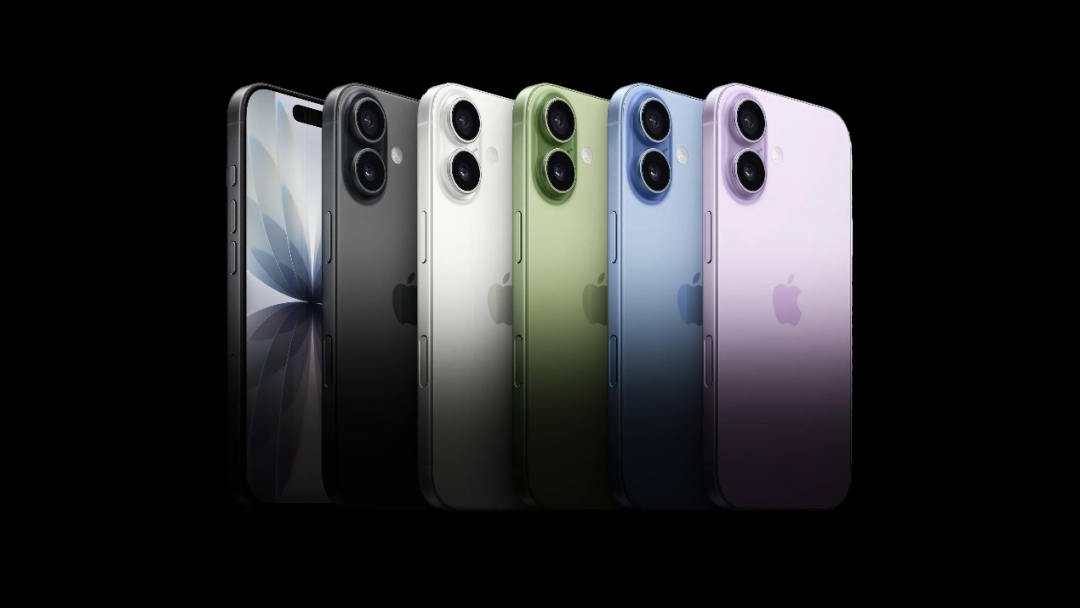
It is reported that the iPhone 17 series now accounts for over 80% of Apple's total smartphone sales.
The expectation is that as Apple and Huawei further reduce their prices, their sales will undoubtedly continue to surge. Meanwhile, their peers who are riding the wave of price hikes will face increased sales pressure. The dilemma persists: should they maintain their prices or passively follow suit with price cuts? These are tough choices. (Produced by Harbor Finance)
-
![]()
Chery's 'Audi Suit Gangster' Makes Waves with Unbeatable Pricing. Netizens React: 'Is This the Aorui A6L?'
-
![]()
AITO Takes a Bold Leap, Forms Joint Venture with BMW and Mercedes-Benz
-
![]()
How Does the Cloud Data Engine Transform Physical Labor into Technical Work for Autonomous Driving Annotators?
-
![]()
Historic Strongest Mercedes-Benz GLE L Faces Intense Competition from Domestic 9 Series
-
![]()
Jeff Dean's First Entrepreneurial Venture After Leaving Google: Why Launch an AI Company 'Not Aiming to Make Money' at This Juncture?
-
![]()
Caught in the Traffic 'Web'
-
![]()
Alibaba's AI Offensive: Over Half of Investment Allocated, Time to Reap Returns
-
![]()
Alibaba’s AI Push: Over Half of Investments Made, Time to Harvest Returns