New 'Traffic Rules' for Unmanned Logistics Vehicles: No Nighttime Driving, Black Boxes Now Mandatory
 06/24 2026
 472
472
Produced by Zhineng Technology
On July 1, the Ministry of Public Security's "Safety Traffic Regulations for Road Testing and Demonstration Applications of Intelligent Connected Vehicles" officially took effect. Industry insiders view this as China's first national-level "traffic rule" applicable to all categories of unmanned logistics vehicles.
Over the past five years, unmanned delivery vehicles on the roads have operated in a legal gray zone: some traveled on non-motorized lanes with test plates, some sped recklessly in industrial parks without supervision, and some were involved in accidents with unclear liability.
The new regulations have now eliminated these gray areas.
The core of the new rules is to formally include Level 3 and Level 4 autonomous delivery trucks in the management system of Class N freight vehicles. Unmanned logistics vehicles on the market are no longer considered "test vehicles." As motor vehicles, they must meet manufacturing standards, comply with road access restrictions, maintain data records, and have clear accident liability frameworks.
01 What Are the Key Provisions of the New Regulations?
● Key Points to Note
◎ The First Provision: Graded Speed Limits
In closed environments such as industrial parks, factory areas, ports, and campuses, vehicles can operate 24/7. On urban roads, speed limits are tiered: 20 km/h on auxiliary roads and non-motorized lanes, and 30 km/h on primary and secondary arterial roads. Expressways, elevated roads, and highways are strictly prohibited. Between 10 PM and 6 AM, operations are only permitted in closed parks and dedicated lanes. Nighttime urban road operations, which previously occurred discreetly, are now explicitly forbidden.
◎ The Second Provision: Hardware Requirements
Every unmanned logistics vehicle on the road must be equipped with an autonomous driving data recording system compliant with national standards, commonly referred to as a "black box."
All critical data—including start/stop records, trajectories, obstacle recognition, and braking operations—must be stored for a minimum of 30 days. After an accident, traffic police will first review the black box footage to determine whether the issue stemmed from the vehicle or the road environment.
◎ The Third Provision: Operational Qualifications
Operating enterprises must establish a 24/7 remote emergency management platform capable of remotely locking or halting vehicles at any time. Vehicles must be insured with exclusive liability and third-party insurance policies tied to the operator. The regulations clearly outline compensation procedures in the event of an incident.
◎ The Fourth Provision: Liability Framework
For accidents occurring during normal operation without faults, the operating enterprise bears full responsibility. If caused by violations by pedestrians or non-motorized vehicles, liability is divided according to traffic rules. For system failures, recognition errors, or unavoidable collisions, automakers and operators share responsibility. Operating without proper registration or entering prohibited areas results in full liability for the operator.
Previously, assigning liability for accidents involving unmanned logistics vehicles was challenging. Ownership often involved tech companies, logistics operators, and local governments—none of whom accepted full responsibility. The new regulations establish clear accountability at every stage of the operational chain.
● Why Were These Regulations Introduced Now?
Before the new rules, the industry operated in a fragmented manner. Over 100 cities had granted road access, but management practices varied widely: some allowed motorized lane operation, others restricted vehicles to non-motorized lanes; speed limits ranged from 15 km/h to 25 km/h; some required dedicated test plates, while others left vehicles idle in warehouses awaiting approval.
Enterprises expanding across cities faced redundant local approval processes for each new market. A vehicle model valid in Shanghai might be ineligible in Hangzhou—not due to technical limitations, but because management rules differed between regions.
The new regulations eliminate regional disparities through a "one-certification, nationwide access" system. Time and resources previously wasted on approval processes can now be redirected toward technology development and operations.
The Ministry of Industry and Information Technology's "2026 Automotive Standardization Work Priorities," released last month, further advances this initiative. The document introduces a "promote-transition-enforce" policy, upgrading voluntary standards into mandatory national requirements for production, sales, and road access.
Three areas—public safety, data security, and cybersecurity—are prioritized for enforcement. Core functions like AEB (Automatic Emergency Braking) and lane-keeping systems must pass national certification. All vehicle operation logs must be encrypted and traceable, preventing unauthorized user data exports. Onboard intrusion detection systems require thorough security validation before standard implementation.
These standards effectively eliminate unqualified manufacturers. Previously, small firms converted low-speed electric vehicles into unmanned delivery vehicles using open-source software, basic cameras, and test plates obtained through loopholes. Under the new rules, such modified vehicles fail to meet mandatory standards for drive-by-wire chassis and redundant actuators, making production qualifications and insurance unattainable while leaving operators fully liable for accidents.

● Automakers Join the Competition
On June 6, Dongfeng Motor launched its unmanned logistics brand OpenVAN in Xiangyang, 25 days before the new regulations took effect. OpenVAN unveiled four models with payload capacities ranging from 1 ton to 13.6 tons and cargo volumes from 2 cubic meters to 60 cubic meters, covering all scenarios from last-mile community delivery to mainline freight transport.
Its most innovative feature is a modular chassis design supporting over a dozen upper-body configurations. The same chassis can accommodate refrigerated compartments for fresh produce, roll-up doors for street vending, or grain dump boxes during harvest seasons. Logistics companies no longer need to purchase specialized vehicles for each use case.
Dongfeng secured orders for over 4,000 units from eight enterprises, including China Logistics, SF Express, and JD Logistics, with deliveries starting in August. This marks the industry's largest single unmanned delivery vehicle order in recent memory. Alongside OpenVAN, Dongfeng released real-world L4 autonomous driving validation data.
All models have completed over 1,000 component, system, and vehicle performance tests. Braking, steering, and power systems feature dual-redundancy designs that seamlessly switch within milliseconds in case of failure.
These are now mandatory requirements for all unmanned delivery vehicles under the new regulations—not just promotional materials, but verified metrics like mileage driven, failure rates, and incident records.
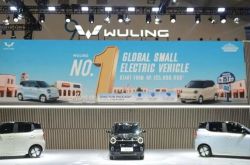
Beyond Dongfeng, Wuling's mass-produced unmanned logistics vehicles rolled off the assembly line in late May, Changan Kaicheng launched three robot platforms in April, and Geely's Robovan plans to deploy 5,000 units in Southeast Asia. Major automakers are converging on the unmanned logistics sector at precisely the right moment.
The new regulations provide legal recognition—an entry ticket—for enterprises with complete vehicle manufacturing capabilities, road testing data, qualifications, and maintenance networks. Smaller players now face significant barriers to entry.
02 How Many Units Will Be Sold This Year?
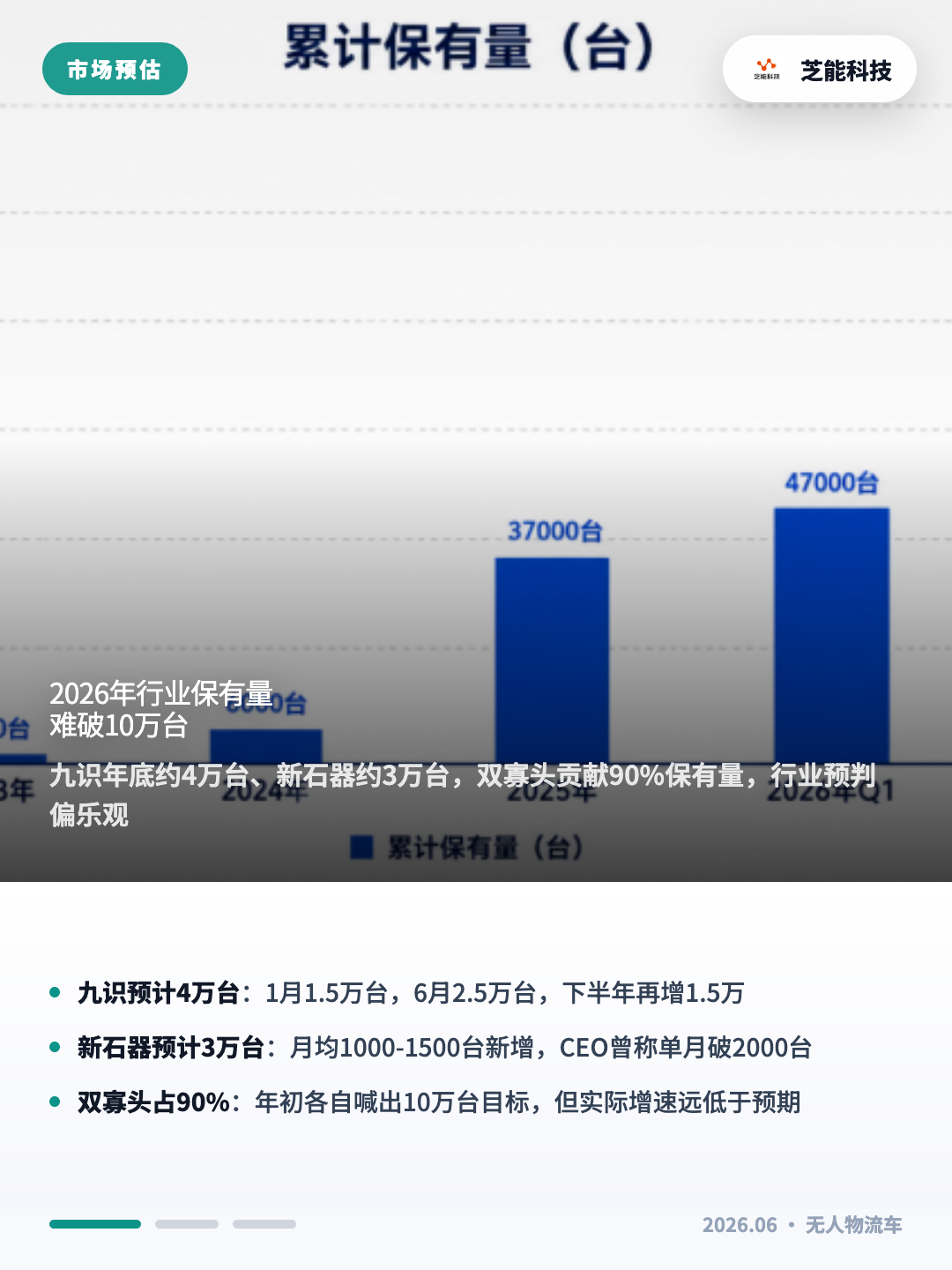
Industry optimists project that the installed base of unmanned logistics vehicles will exceed 100,000 units in 2026.
Extrapolating from publicly disclosed data by leading firms Jiushi and Neolix:
◎ Jiushi's fleet grew from 15,000 units in February to 25,000 in June, adding roughly 10,000 units in four to five months. Maintaining this growth rate, its year-end total could reach 40,000 units.
◎ Neolix, adding several hundred to over 1,000 units monthly, could reach 30,000 units annually.
These two companies account for approximately 90% of the industry's installed base, totaling 70,000 units combined.
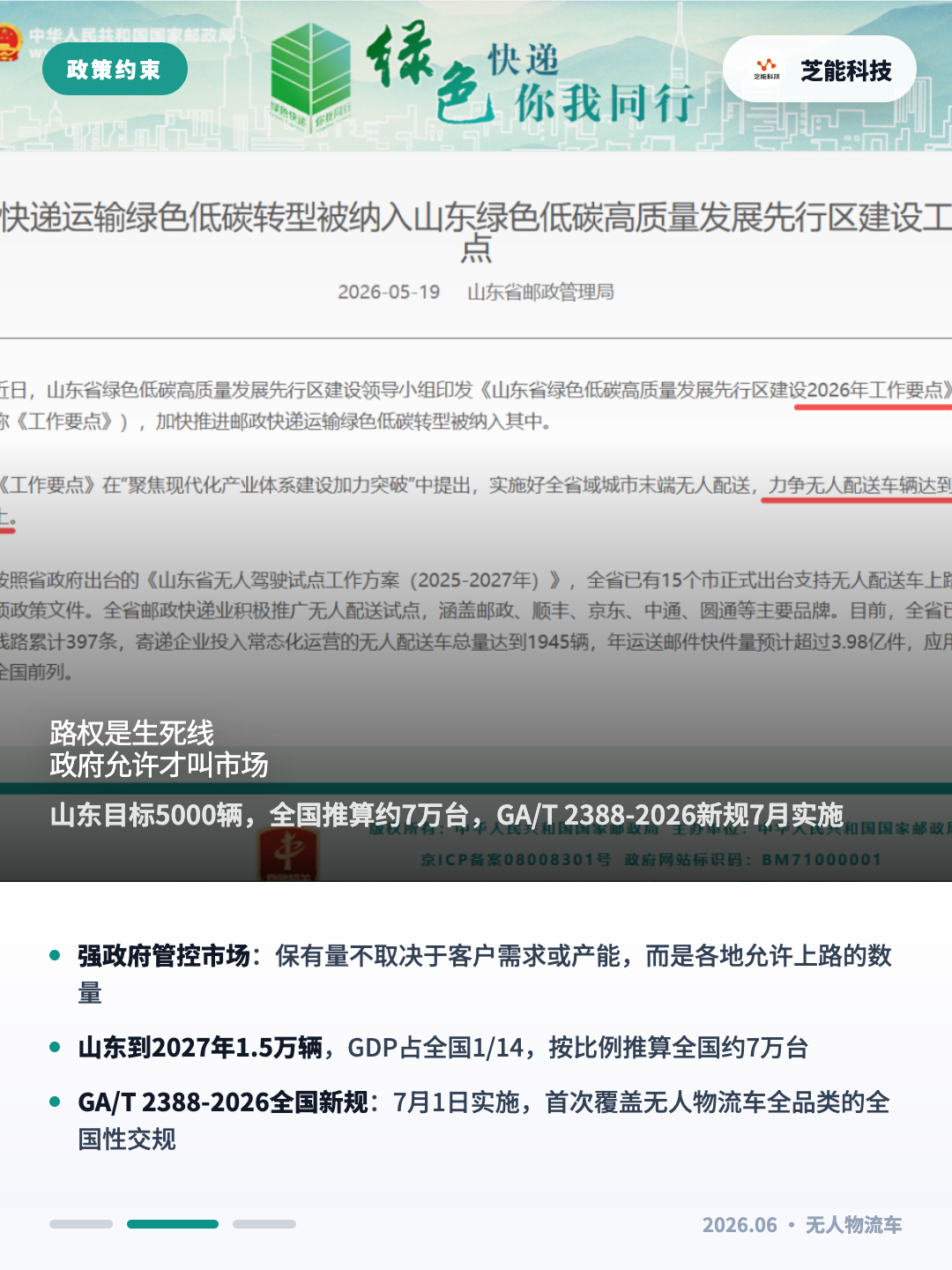
The unmanned logistics vehicle market is not purely demand-driven; a hard ceiling exists in the form of road access quotas. Local governments determine market capacity by allocating permits, designating routes, and approving operational scenarios.
Consider Shandong Province as a case study. Its policy goal is to deploy 15,000 low-speed unmanned delivery vehicles by 2027, achieving over 50% penetration. Qingdao, dubbed the "world's first city for unmanned vehicle applications," rolled out 1,200 units this year. Shandong's GDP represents roughly 1/14th of China's national total.
If other provinces match Shandong's deployment intensity, the national market size in 2026 could reach approximately 70,000 units—aligning with bottom-up estimates based on corporate delivery volumes. Exceeding 70,000 units would require significant "gray zone" operations, which the new regulations now severely restrict.
Summary
Since Liu Qiangdong predicted a future without human couriers, the trajectory of unmanned logistics has been clear. The new regulations mark just the beginning. As the industry transitions from "can it operate?" to "compliant operation," the next challenges will shift from technology and road access to operational efficiency and economies of scale.
Manufacturing costs for unmanned vehicles have dropped from millions to tens of thousands of yuan, while LiDAR costs have fallen from tens of thousands to thousands of yuan per unit. The hardware side is now primed for mass deployment. Software and regulatory bottlenecks are being addressed through the new regulations.
Once these obstacles clear, competition will hinge on who achieves lower operational costs, higher dispatch efficiency, and smoother human-machine collaboration at scale.
-
![]()
Europe Transforms into a Haven for Chinese Cars: BYD Seal U Surpasses 10,000 Monthly Sales
-
![]()
Global Debate on Xiaomi and Tesla's Extensive Recall: Are Europe and the US Considering Restrictions on Hidden Door Handles?
-
Several Judgments on the Development Trends of AI Data Centers
-
![]()
Tough Times Are Here: The Auto Industry Is Mired in Immense Pain
-
![]()
Honda Finds Itself 'With No Alternative' but to Battle On for Another Ten Years
-
![]()
Is the 'Chili Fish Head' Car, Once a Hit Among Noble Ladies, on Its Way Out?
-
![]()
DJI Osmo 360 II Review: Impeccable Hardware, Yet Software Still Lags Behind
-
![]()
The 'Dichotomy' in Alibaba's AI Ledger