Doubao Integrated into Tesla’s Ecosystem: Why Did Musk Make an Exception? | Auto Circle
 08/24 2026
 323
323
As new energy, autonomous driving, artificial intelligence, and chip technologies surge forward, the automotive industry is undergoing an unprecedented transformation. To stay ahead of these developments and provide insightful analysis of market trends, LingTai LT has launched the “Auto Circle” column. From a professional standpoint, this column delves into the latest global automotive industry trends, new product launches by leading automakers, technological innovations, and market performances. Through in-depth analysis, it uncovers the underlying business logic and market patterns, as well as how they are reshaping the automotive landscape and influencing human mobility. This article, the 34th in the column, focuses on the business strategy behind Tesla’s decision to integrate the Doubao large model.
Author: Ma Duoduo
Editor: Hu Zhanjia
Operations: Chen Jiahui
Produced by: LingTai LT (ID: LingTai_LT)
Header Image: Publicly available online image
There was no launch event, no appearance by Musk, and not even a formal press release.
On August 19, Volcano Engine confirmed through official channels that Tesla China’s in-vehicle system had officially launched the Doubao large model, with features being rolled out in batches. Twenty days earlier, on July 31, Tesla China began rolling out the OTA update version 2026.14.13 in batches to all Model 3, Model Y, Model S, and Model X vehicles. The Doubao large model was quietly installed as a standalone app in the in-vehicle system of this American company, renowned for its full-stack AI self-research capabilities.
This marks the first time in over a decade since Tesla entered the Chinese market that it has integrated a third-party large model into its in-vehicle system. For a company that places self-research at the heart of its narrative, this move carries significantly more weight than a typical software upgrade.

A Year-Long “Integration” Process
When public information is arranged chronologically, it becomes evident that this collaboration has been advanced with considerable caution and patience.
According to comprehensive media reports from Tianyancha, in August 2025, Tesla reached a strategic cooperation agreement with Volcano Engine. At that time, Tesla’s official “In-Vehicle Voice Assistant Terms of Use” already outlined a dual-model approach. In April 2026, Tesla’s in-vehicle voice large model service completed registration in Shanghai. By late July of the same year, the OTA update was officially rolled out in batches, with newly delivered vehicles being prioritized. From signing the agreement to integration, the process took a full year.
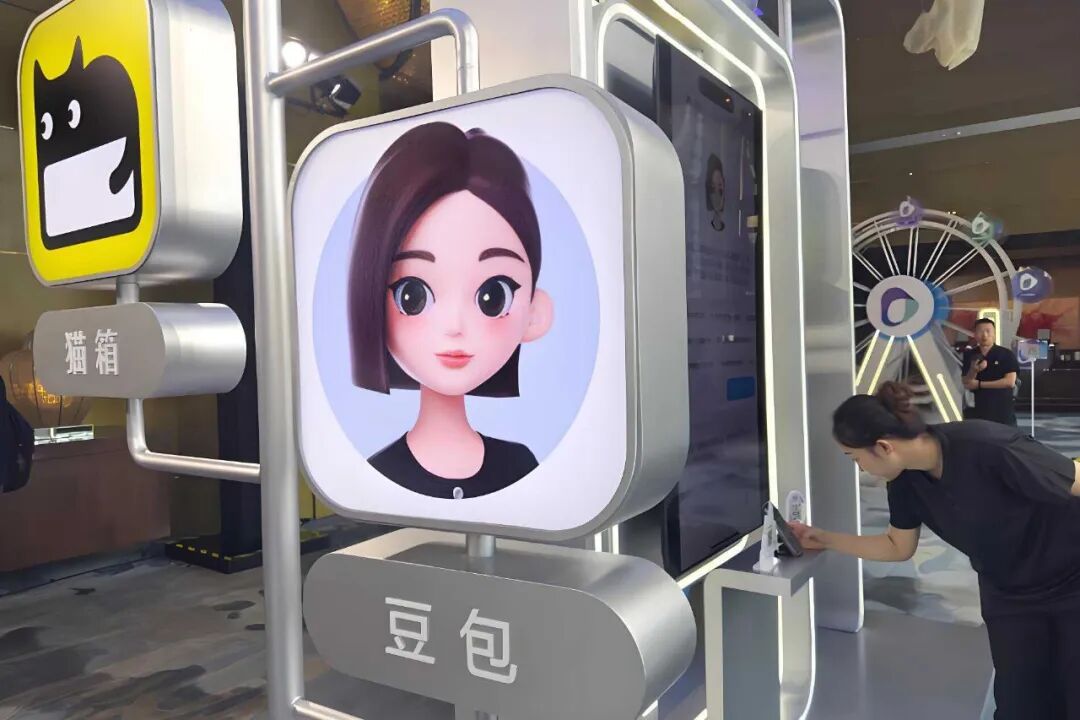
The final implemented solution is a dual-model collaboration: both the Doubao large model and DeepSeek are accessed through Volcano Engine in the in-vehicle system. According to the officially disclosed adaptation plan, Doubao handles vehicle control-related voice commands such as navigation settings, media playback, and air conditioning adjustments, as well as owner’s manual queries. DeepSeek, on the other hand, is responsible for open-ended interactions such as casual chatting, weather, and information queries. One model handles tasks, while the other handles chatting—the division of labor is deliberately separated. The accuracy required for vehicle control commands and the openness needed for casual chatting are inherently difficult to balance with a single model.
However, the initial experience for the first batch of vehicle owners falls short of the planned solution. Media tests by outlets such as Pacific Technology reveal that in the current rolled-out version, Doubao has not yet been granted full vehicle control permissions. Some owners report that it “essentially adds a chatty app to the in-vehicle system.” Additionally, there are two significant barriers: the feature requires a monthly subscription of 9.99 yuan for advanced in-vehicle entertainment services and is only compatible with newer models equipped with AMD chips. Older models with Intel chips cannot be upgraded due to insufficient computing power. Tesla’s localization and delegation of authority are happening step by step.

Why Did the Self-Research Faith Make an Exception in China?
To understand this “exception,” one must first recognize the three practical constraints Tesla faces in China.
The first constraint is compliance—an unavoidable barrier. In-vehicle large models in China must pass registration, and data must remain within the country. Grok’s servers are located in the United States, and direct integration into Chinese in-vehicle systems would involve cross-border transmission of sensitive data such as voice and location—a threshold that cannot be bypassed.
The second constraint is language itself. Grok is primarily trained in English, while Chinese spoken language involves abbreviated expressions, ambiguous commands, and dialect recognition, all of which rely on long-term accumulated data from local scenarios rather than parameter scale alone.
The third constraint is the competitive pace. While NIO’s NOMI and Li Auto’s “Li Xiang Tongxue” have advanced cabin interactions to include emotional engagement, multi-round dialogues, and full-vehicle orchestration, Tesla’s voice system remains stuck at the command recognition stage. The amplification of this shortcoming through comparative consumer decision-making has happened much faster than expected.
By choosing Doubao, Tesla is acquiring more than just a model.
According to comprehensive media reports from Tianyancha, Volcano Engine has previously collaborated with mainstream domestic automakers, with over 7 million smart vehicles equipped with the Doubao large model, covering more than 50 brands and 145 models, and completing over 30 million daily cabin interactions. For Tesla, which is nearly obsessive about delivery quality, this automotive-grade engineering capability, validated across millions of vehicles, is just as important as the model itself.
Third-party data shows that the Doubao app has over 380 million monthly active users—integrating the same model used by a national-level app into vehicles means instantly leveraging established user habits.

The Real Battle Isn’t in the Cabin
While the cabin voice shortcoming can be quickly addressed through collaboration, Tesla’s true competitive edge in China has never been here.
The process of FSD’s entry into China has been a five-year saga of repeated delays: in February 2025, it briefly rolled out assisted driving functions for urban roads, only to suspend them a month later due to regulatory approvals. In November 2025, Musk optimistically predicted approval by early 2026, but by the Q1 2026 earnings call, the CFO adjusted the timeline to Q3. On May 21, the supervised version of FSD was officially announced for the Chinese market, but as of late May, it had only been rolled out in a gray release to about 5,000 vehicles equipped with HW4.0 hardware. More critically, its positioning—the Chinese version is strictly defined as Level 2 assisted driving, requiring drivers to remain fully engaged and bear legal responsibility—has led Tesla China’s official website to change its description from “fully autonomous driving” to “assisted driving.”
Pricing is another hurdle for FSD.
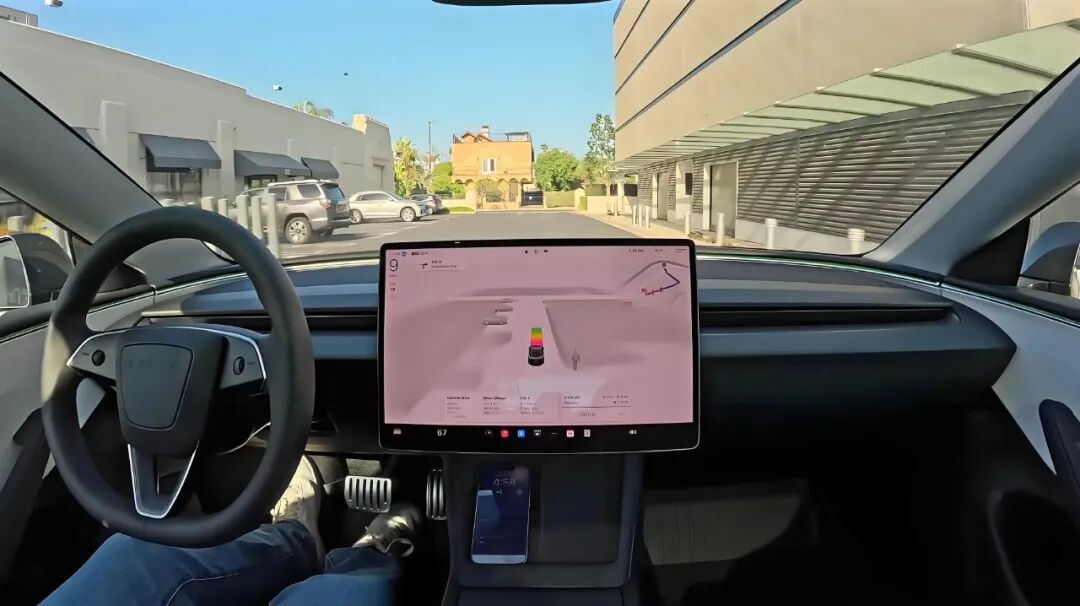
Its one-time purchase price in China has long been set at 64,000 yuan, while Huawei’s ADS 4.0 costs users 12,000 yuan after subsidies, and XPeng and Li Auto’s solutions are priced between 30,000 and 36,000 yuan. As domestic intelligent driving systems accelerate in popularity and urban NOA penetration rates continue to rise, the value of FSD’s “futures ticket” is being diluted by time. According to multiple media reports, the full-featured version of FSD may begin a broader rollout in late August, but whether it will pass regulatory approvals and how many models it will cover remain subject to official information.
While the trump card of intelligent driving is repeatedly delayed, market pressures are very real.
In Q1 2026, Tesla China’s retail sales reached 112,800 units, down 16.2% year-on-year. For the full year of 2025, Tesla’s global deliveries stood at 1.636 million units, surpassed by BYD’s 2.26 million units, losing the global pure electric sales crown. Although Q2 showed signs of recovery—according to the China Passenger Car Association, in June, Tesla China sold a combined 89,000 Model 3 and Model Y units, up 24.4% year-on-year, with Shanghai’s Gigafactory delivering nearly 468,000 units in H1 2026, up 28.4% year-on-year—the intensity of competition in the Chinese market is nothing like it was in 2019 when the Shanghai factory first began production.

Partnering with Doubao to Adapt to Local Preferences
On July 30, Tesla celebrated the rollout of its 10 millionth pure electric vehicle globally at the Fremont factory, with nearly half of them produced in Shanghai. The next day, China’s in-vehicle system integrated a Chinese large model. These two adjacent days mark the dual nature of Tesla’s relationship with the Chinese market: deep reliance on China for manufacturing and increasing reliance on China for intelligence.
For Tesla, integrating Doubao does not mean abandoning its self-research route—overseas in-vehicle systems remain Grok’s domain, and FSD will not cede control to anyone. What has truly changed is how multinational companies operate in the Chinese market: for user-centric aspects such as cabin experience, content ecosystems, and application services, local solutions have become the lowest-cost and fastest-to-implement choice, while core technology self-research barriers remain firmly in Tesla’s hands. According to Zhejiang News, tests for Alibaba’s QianWen large model integration into Tesla’s in-vehicle system are also underway. It may soon become commonplace for a single vehicle to run multiple Chinese large models simultaneously.
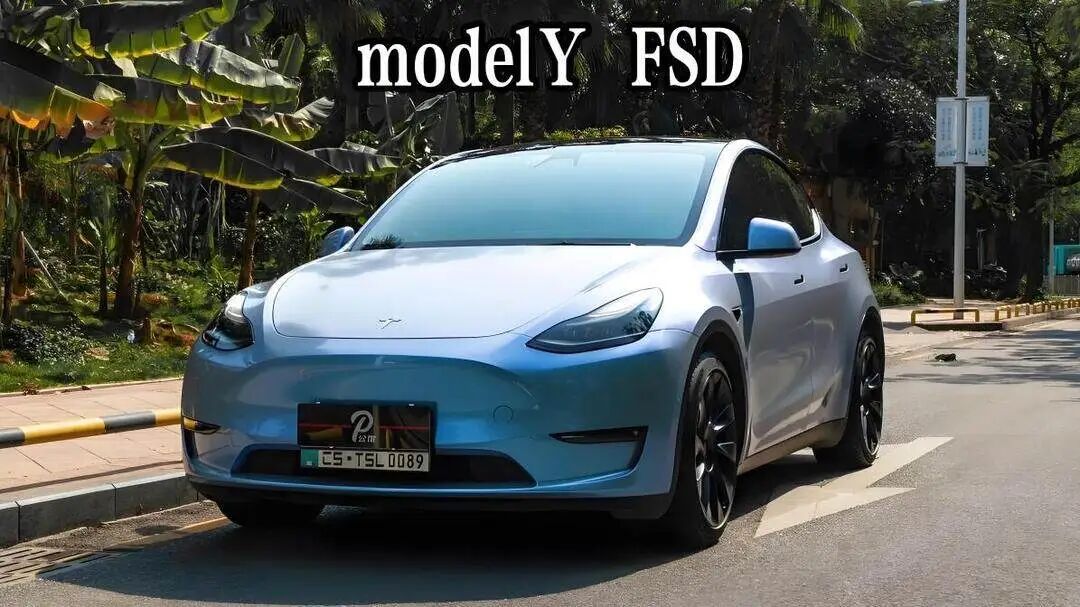
From the Shanghai factory addressing whether it could be built to the Doubao integration answering whether Chinese consumers would like it, Tesla’s localization has gone through two stages.
The third stage—whether FSD can truly land and at what price—will determine Tesla’s next five years in China. This time, how long Musk can wait is not up to the market or regulatory approvals but ultimately to the Chinese competitors ranking on the monthly sales charts.
For inquiries about the article, please contact
Follow LingTai’s video account to stay closer to business!
-
![]()
Autohome Faces a Shrinking Window of Opportunity
-
![]()
Even a Titan Like Musk Has Faced Setbacks in Fulfilling Promises
-
![]()
AI Office: The End of the Racing Era, Context Becomes the Key to Success
-
![]()
Domestic Vehicle Chassis Revolution ②: The Steering Wheel Remains, But Mechanical Connections in the Steering System Are Decreasing
-
![]()
Exploring MiniMax Design: Can Video Editing Be as Simple as Speaking?
-
![]()
Why Can SenseTime Achieve Profitability While CloudWalk Still Faces Challenges, Despite Both Adopting Large Models?
-
![]()
Domestic Car Chassis Revolution Part 3: Suspension Systems Transform Vehicle Posture, from Vibration Absorption to Active Force
-
![]()
Hainan is Going on a Crazy Satellite-Building Spree