Jensen Huang's Departure Sparks AI Selloff, His Return Revives Sentiment—Yet Hidden Concerns Linger Beneath the Computing Power Frenzy
 11/24 2026
 451
Text / Yang Jianyong
After an 11-day absence, Jensen Huang returned to NVIDIA, sending shockwaves through global markets. NVIDIA's stock surged 31% in a single day, adding $954.3 billion in market value overnight. The rally rippled across the global AI ecosystem: SK Hynix climbed 20%, Dell 20%, Intel 16%, TSMC 14%, and Qualcomm 10%. AI supply chain companies across the board posted significant gains that day.
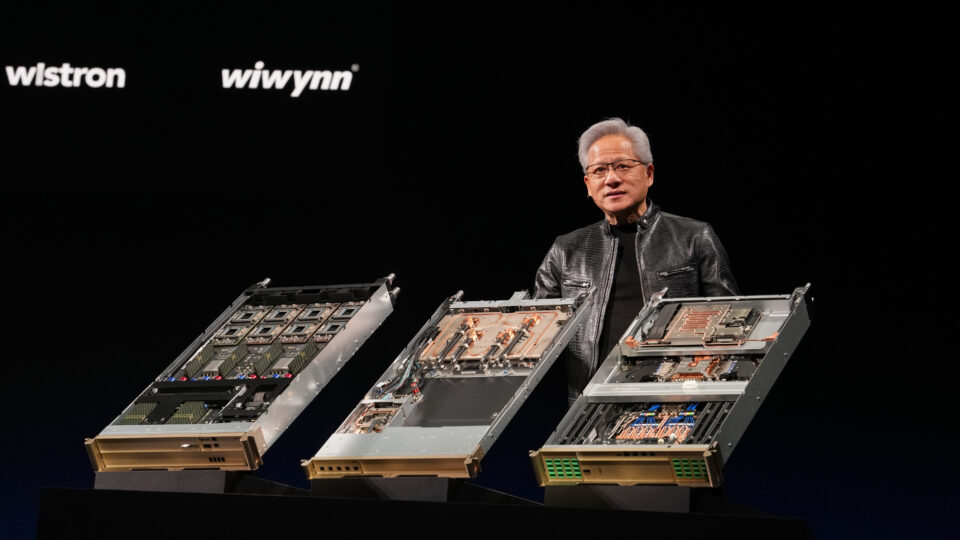
It is worth noting that when Jensen Huang first announced his resignation, panic selling swept through global markets—particularly among AI-related companies. During his absence, trillions of dollars in market value evaporated worldwide, with NVIDIA alone losing a trillion dollars.
The market feared that the development strategy, technology roadmap, and CUDA ecosystem long dominated by Jensen Huang might undergo major changes. This uncertainty, compounded by broader worries about AI investment returns, triggered a bloodbath across the AI supply chain. As global markets reeled, Jensen Huang's return reignited AI trading worldwide and went some way toward easing market concerns about AI.
Notably, the fact that a single individual could send global markets into violent turbulence is unprecedented in history. It underscores Jensen Huang's pivotal influence in the global artificial intelligence industry—one man driving an entire sector upward.
Artificial intelligence has become a key engine of global economic growth. Against the backdrop of trillion-dollar AI computing power expansion, demand is rising across the entire AI supply chain—from computing chips and servers to storage and cloud services—continuously releasing industry increments and adding momentum to global economic growth.
In this AI wave, NVIDIA stands at the core of global technological development. AI large-model development across every sector cannot bypass NVIDIA's high-performance AI chips. Although giants are ramping up their own chip development efforts, the industry will find it difficult to move away from NVIDIA in the short term, and model training across all sectors depends heavily on its high-performance chips. NVIDIA's revenue figures offer the most直观 confirmation of this.
In the third quarter ended October 25, 2026, NVIDIA reported revenue of $115.8 billion, a year-on-year increase of 103%. Data centers contributed $107.6 billion—93% of total revenue.
Most critically, global hyperscale cloud service providers are showing unprecedented demand for NVIDIA chips, driving backlog orders in the cloud industry to $2.5 trillion. These figures are the best evidence of NVIDIA's industry discourse power.
Frontier large-model training relies heavily on NVIDIA computing power, prompting global hyperscale cloud giants to spend aggressively on AI infrastructure. The subsequent buy-buy-buy pattern has caused demand for NVIDIA AI infrastructure to explode. Against this strong demand, NVIDIA expects fourth-quarter revenue of $130 billion.
Of course, the global trillion-dollar investment in AI infrastructure comes with cash consumption pressure, continuously eroding corporate cash flow—including negative cash flow at leading cloud giants such as Amazon and Google.
Although hyperscale cloud providers have massive free cash flow, the enormous investment required for AI computing power construction still forces them to seek external financing through corporate bond issuance and other means to bridge the massive funding gap. As a result, the market remains worried about the return on AI infrastructure investment, leading to contractions in capital expenditure.
Once the pace of computing power investment slows, the impact will transmit directly to the upstream chip and server supply chains, introducing variables into the red-hot AI computing power sector. Doubts about the returns on giants' AI spending remain a question hanging over the industry. Although Jensen Huang has returned, this concern also casts uncertainty over the growth prospects of the entire computing power supply chain.
The views expressed represent only personal opinions. Focused on in-depth observation in technology fields such as large models, artificial intelligence, robots, IoT, cloud computing, and smart home appliances.
-
Has Honor Fallen Out of the Top Five Phone Brands?
-
![]()
Kailer Shares Takes Control of Weitaisi Optoelectronics, Officially Entering the Optical Precision Manufacturing Sector
-
![]()
Totaling 2.41 Billion Yuan: Two Companies Sign Major Computing Power Orders in Succession
-
![]()
Why Does Sit Optical, Still in Its IPO Counseling Period, Dare to Invest 700 Million Yuan in Building Its Headquarters?
-
![]()
Doubao Tests Shopping as a Primary Entry Point: Is AI Conversation Becoming the New Shelf?
-
![]()
Insta360 Q3 Financial Report: Revenue Surges to 3.9 Billion Yuan, Net Profit Plummets 93% to Just 17.43 Million Yuan
-
Global Investors Are Converging on AI Hardware
-
Is Charging Now Faster Than Refueling?