Kuaishou AI: The Dream Ends
 11/24 2026
 545
Source | Bohu Finance (bohuFN)
Author | Qin Sanqian
In the primary market, Kling AI is a name that gets adrenaline pumping.
It secured a rare same-stage investment from BAT, with a post-investment valuation soaring to 18 billion USD (over 120 billion RMB) and a price-to-sales ratio (PS) as high as 36 times.
In the 2026 Chinese large-model battlefield, the release and commercialization of Kling 4.0 almost single-handedly propped up Kuaishou's tech halo. Meanwhile, the Hong Kong secondary market told a different story.
On the evening of November 19, Kuaishou's Q3 2026 financial report was released, and the stock price of Kling's parent company was still grinding repeatedly between historical lows and the 1.5x PS framework typical of legacy internet stocks.
Even though Kling's annualized revenue growth is astonishing, its share of Kuaishou's massive annual revenue pool of over 100 billion yuan remains extremely small. And Kling's independent capital narrative seems unable to rewrite the valuation foundation of Kuaishou as a short-video e-commerce and advertising platform.
As Kling gradually completed its decoupling through independent financing, the capital market was able to view Kuaishou's results from a more pragmatic angle.
Without the cover of an independent AI myth, Kuaishou's main site not only had to bear the profit hit of 5.2 billion yuan in single-quarter R&D expenses in Q3, but also had to return to the business the market truly cares about amid headwinds of an 11.1% year-on-year decline in total revenue and pressure on both livestreaming and e-commerce marketing.
Strip away Kling's capital filter, and Kuaishou's real commercial cards and its ecological position for the next three years are exposed in the ledger of its e-commerce main site.
01 The Main Site Defense Battle
Over the past two years, the reason Kuaishou could continuously release profits after traffic peaked was the cash-flow foundation built by "Lao Tie trust e-commerce" and internal-loop advertising. But entering 2026, in order to catch up with the large-model wave, this cash machine began to suffer intensive "computing-power bloodletting."
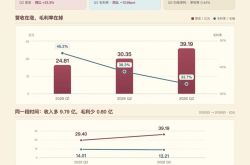
The financial report shows that Kuaishou's total revenue in Q3 was 31.6 billion yuan, down 11.1% year-on-year. Affected by the continued strengthening of its AI strategy and Kling 4.0, single-quarter R&D expenses surged 41.9% year-on-year to 5.2 billion yuan.
Real money spent on computing power and R&D directly pierced current-period profit—Q3 group net loss was 959 million yuan, adjusted net profit was 790 million yuan, down 84.2% year-on-year (though still slightly above the market expectation of 709 million yuan).
More difficult than rising R&D expenses was the "pincer attack" on the main site's fundamental base.
On one hand, the dividend from traditional show livestreaming completely peaked, with Q3 livestreaming business revenue of 7.8 billion yuan, down 19.0% year-on-year; on the other hand, intensifying market competition and external free short-drama content were diverting user time. The Q3 report admitted that daily average usage time per DAU declined year-on-year, directly dragging down overall online marketing service revenue.
The financial report shows that Kuaishou's Q3 online marketing service revenue was 17.9 billion yuan, down 11.1% year-on-year.
The market had long expected this, let alone Kuaishou itself amid the situation. Facing pressure on its main business and high R&D costs, Kuaishou management showed a strong pragmatic gene in the second half of this year.
Since not all businesses can endlessly bleed within the statements, then decisively subtract and spin off heavy burdens that are not profitable enough or consume too much computing power.
Looking back at several key business contractions by Kuaishou this year, they were essentially a "burden-reduction action" around the listed company parent. The most typical moves were the strategic convergence of local life and overseas businesses.
After organizational adjustments, Kuaishou decisively abandoned the fantasy of fighting Meituan and Douyin head-on in tier-1 and tier-2 cities with heavy-asset ground promotion. Local life fully contracted and focused on new tier-3 and lower-tier cities, with long-tail expansion handed to service provider agents. Overseas business strictly controlled the loss red line, and the Q3 overseas segment operating loss narrowed sharply to 23 million yuan, more than 60% lower than 64 million yuan in the same period last year.
And the most bold cut was pushing the video generation large model "Kling," the most GPU-intensive and money-burning business, into independent financing in the primary market.
Video multimodality is recognized across the AI industry as a computing-power cash incinerator. Kuaishou, taking advantage of the highest primary-market sentiment, introduced external strategic investors to share Kling's future computing-power procurement and R&D curve. This not only gave Kling an independent capital premium, but also amounted to a precise "financial mine-clearing" for the listed company parent.
After shedding the long-term money-burning burdens of heavy-asset ground promotion and general video large models, Kuaishou's main site once again became a lighter combat unit more focused on commercialization and monetization.
The Q3 report shows that Kuaishou's main site average DAU remained solid at a historical high of 417.3 million, while MAU grew 12.0% year-on-year to 818.5 million. At the same time, platform private-domain follower relationships continued to accumulate, and per-capita monetization efficiency in private domains reached 2 to 3 times that of public domains.
In the stock era where the boundaries of the traffic pool have already taken shape, the main site's main task is clear: no longer rely on burning money to acquire users and chase scale, but return to the e-commerce and commercialization heartland it is best at, and seek profit from existing transactions.
02 Only Talking About E-commerce AI That "Can Make Money"
Having stripped away Kling's capital halo, Kuaishou's main site's thirst for AI became even stronger.
However, compared with frontier-flavored multimodal generation like Kling, Kuaishou's AI practice on the main site follows a pragmatic logic. No large parameters, no general foundation—only "money-making AI" that penetrates the capillaries of e-commerce transactions and can immediately turn into internal-loop advertising revenue.
The most painful soft spot of the e-commerce industry in Q3 2026 was no longer the inability to find traffic. As CFO Jin Bing admitted at the earnings call, merchant compliance costs are rising, the required return on every unit of ad spend has clearly increased, and spending willingness has become more conservative.
When all merchants are relentlessly pursuing certainty and real returns, Kuaishou's AI should also follow these core forces that create revenue for the platform and move with the wind. Especially after the just-concluded most rational Double 11 in history, the GMV-only theory has completely collapsed, and whether it can help merchants protect real profits directly determines the life or death of the platform's e-commerce marketing foundation.
Within Kuaishou e-commerce's fundamental base, the main force is small and medium-sized white-label merchants from hundreds of key industrial belts across the country. These factory owners and source merchants have goods and price advantages, but generally lack refined operations teams. They neither understand complex search SEO nor know how to run sophisticated multi-channel ad buying, and they fear high return rates will wipe out all their ad spend.
Targeting the survival pain points of these merchants, Kuaishou's main site is trying to convert limited computing-power resources entirely into three "AI cost-control tools" that directly intervene in merchants' cost ledgers.
The first tool is using generative search to reconstruct broad shelf matching. This year Kuaishou fully launched a new-generation generative search framework, OneSearch V2. The framework focuses on using large models to accurately understand the vague, colloquial, even dialect-influenced search intent of users in lower-tier markets, raising the matching efficiency of "people finding goods."
In the past, Kuaishou Lao Tie bought things entirely by livestream hosts "shouting," and shelves had always been a weakness. This move aligns with the industry trend of returning to shelves, removing influencers and middlemen.
Beyond supply-demand matching, bosses in lower-tier markets also have headaches over ad buying. To let factory owners who do not understand operations do business on Kuaishou, Kuaishou this year strongly pushed "sitewide promotion" and "whole-store hosting" (one-click whole-store automated ad delivery). Currently these two automation tools account for more than 75% of total e-commerce marketing spend.
Driven by the underlying intelligent bidding large model, merchants only need to set a target ROI, and the system handles all traffic distribution and creative testing. This "idiot-proof ad buying" directly brought a pure incremental lift of 3% to 4% to Kuaishou's domestic online marketing services.
The financial report also mentioned that total marketing spend in the content consumption industry driven by AI short dramas grew more than 100% year-on-year in Q3, also forming an effective complement to e-commerce AI.
Beyond cutting costs, the more important direction for Kuaishou's growth lies in opening sources. On this point, it also launched the "net transaction ROI" algorithm, whose penetration among industry clients has reached 45%.
Simply put, it uses AI risk-control models to predict and remove high-return-risk orders at the front end of ad buying, directly optimizing around merchants' "actual settled GMV." In addition, Kuaishou is also fully rolling out AI real-time product highlight summaries and automatic customer service replies in livestream rooms, to reduce the problem of one-to-many hosts being unable to respond to users in time.
AI's assessment metrics on Kuaishou's main site will not be model benchmark scores or parameter scale, but advertising spend, merchant retention, and business increment.
This quarter, we can see Kuaishou's preliminary disclosure in this regard. The more critical change is likely to appear in next year's free cash flow, no longer bleeding because of computing power.
03 Eager to Be "Bottom-Fished"
Although management warned at the earnings call that Q4 revenue and profitability will still face pressure, in management's view, Kuaishou has actually reached the end of this difficult cycle.
This is an intriguing posture. Kuaishou turned from profit to loss in Q3, with both advertising and livestreaming revenue declining. Management did not avoid these numbers, but repeatedly emphasized the word "end" on the same occasion.
The subtext is almost explicit: the worst time is passing.
It should be noted that Tencent, shortly after Kling's financing, reduced its Kuaishou stake from 15.68% to 9.37%. In addition, Kuaishou's stock price has fallen more than 60% over the past year. Repeatedly emphasizing this under such a valuation gap makes the direction very clear.
CFO Jin Bing said bluntly on the conference call that advance arrangements for related computing-power reserves had been completed, and Kling would shift to flexible procurement such as leasing. At the group level, efficiency would be improved through allocation and engineering optimization, and the pressure of subsequent capital expenditures and AI investment on cash flow would gradually ease.
More importantly, with improvements in advertising and e-commerce efficiency and optimization of the cost structure, Kuaishou is actively conveying to the market a signal that its medium- to long-term adjusted net profit margin is expected to recover to a relatively healthy range.
At this point, Kuaishou's strategic outline for the next two to three years is already very clear. 2026 is the last year of "computing-power bloodletting" for Kuaishou's main site, and in 2027 the group's financial focus will fully shift to cash flow and profit margin.
After being tempered by this cycle, Kuaishou no longer fantasizes about head-on confrontation with giants in tier-1 and tier-2 cities across all shelf categories. Instead, it builds its deepest moat on high-density private-domain trust relationships and AI automated agency operations.
An end-to-end generative retrieval architecture like OneSearch is responsible for matching user intent and products more accurately; whole-store hosting lets small and medium merchants launch all store products with one click and no longer be trapped by single-product ad delivery; net transaction ROI removes invalid refund orders and spends money only on transactions that actually settle. Stacked together, these three tools mean that those factory owners across hundreds of industrial belts nationwide who do not know how to operate are gradually being "taken over" by the platform.
In terms of valuation logic, Kuaishou is also likely to turn conservative.
Outside the group, Kling after independent financing will continue to sprint toward an IPO in the primary market, taking on the task of telling a good story about China's multimodal AI frontier and earning a high-tech premium.
In the Hong Kong stock market, Kuaishou's main site, which alone returned more than HKD 5.8 billion to shareholders through dividends and buybacks in the first three quarters of this year (including HKD 1.41 billion in single-quarter Q3 buybacks), may slowly shed the cloak of a high-growth internet stock and instead take the route of a "defensive cash cow." Through sustained dividends and frequent share buybacks, it will complete a solid value re-rating.
The copyright of the article cover image and illustrations belongs to the copyright owners. If the copyright owner believes that their work should not be displayed to everyone or should not be used free of charge, please contact us promptly, and this platform will immediately correct it.
-
Has Honor Fallen Out of the Top Five Phone Brands?
-
![]()
Kailer Shares Takes Control of Weitaisi Optoelectronics, Officially Entering the Optical Precision Manufacturing Sector
-
![]()
Totaling 2.41 Billion Yuan: Two Companies Sign Major Computing Power Orders in Succession
-
![]()
Why Does Sit Optical, Still in Its IPO Counseling Period, Dare to Invest 700 Million Yuan in Building Its Headquarters?
-
![]()
Doubao Tests Shopping as a Primary Entry Point: Is AI Conversation Becoming the New Shelf?
-
![]()
Insta360 Q3 Financial Report: Revenue Surges to 3.9 Billion Yuan, Net Profit Plummets 93% to Just 17.43 Million Yuan
-
Global Investors Are Converging on AI Hardware
-
Is Charging Now Faster Than Refueling?