$10 Billion Entry: Who Is Pricing AI4S
 11/24 2026
 581
Chaoyong AI Editorial Department
Capital news from the overseas AI4S (AI for Science) track has been landing thick and fast lately.
OpenAI's acquisition of drug R&D coordination platform Orchestra Bio; Iambic's public listing to raise $150 million; Bloomberg's report that Isomorphic Labs is in talks for a new $500 million financing at a valuation of about $50 billion; Mirendil's $1 billion Series A—large financings, giant acquisitions, and IPO exits have all appeared within the year. Behind the AI4S boom lies a question: on what basis do these companies actually command these prices?
SVTR tallied the financing of 175 AI4S companies from September 2025 to September 2026: 118 confirmed deals totaling about $7.5 billion.
Isomorphic Labs alone took $2.1 billion, or 28%; 13 companies with single deals exceeding $100 million accounted for 73%; the remaining 162 companies split 27%.
The top players took most of the money.
Why is the money concentrated? SVTR examined round, company age, whether companies develop pipelines in-house, and founder background, attributing within-group differences to capability scarcity.
Following this judgment, one can continue to ask: who pays for these capabilities?
Depending on the payer, AI4S assets can be divided into four layers. The pipeline layer is priced by pharmaceutical companies' R&D budgets; the platform layer's cost is determined by compute and experimental infrastructure; the tools layer consumes R&D software budgets; the capital layer looks at exit buyers.
Behind these four layers stand four different payers. Which layer has the most money, which layer's price can withstand the most scrutiny, which layer has already begun to loosen—the capital test for AI4S is underway.
Pipeline layer: pharma budgets determine the ceiling of AI drug discovery
First, the pipeline layer, which is closest to revenue.
According to Evaluate, from 2025 to 2030, more than $300 billion in global prescription drug revenue will lose patent protection.
By 2030, the growth gap for large pharmaceutical companies will be about $94 billion.
Pharma companies need new pipelines; AI drug discovery companies sell time.
In May 2026, Isomorphic Labs completed a $2.1 billion Series B led by Thrive Capital, with participation from Alphabet, GV, MGX, Temasek, CapitalG, and the UK Sovereign AI Fund.
Its collaborations with Eli Lilly, Novartis, and Johnson & Johnson—with Lilly and Novartis alone—have a potential combined value of nearly $3 billion.
In November 2026, Bloomberg reported that it was in talks for a new $5 billion financing at a valuation of about $50 billion, not yet closed. This is the most expensive sample in the pipeline layer.
But Isomorphic's in-house pipeline is still preclinical, and the company expects to start its first clinical trial by the end of 2026—a timeline already delayed from the original plan.
The total collaboration value is the milestone ceiling, not equivalent to received revenue. Pharma companies use upfront payments and clinical milestone payments to leave clinical risk with the seller.
The same pricing logic applies to other pipeline companies.
In July 2026, Chai Discovery completed a $400 million Series C at a post-money valuation of $3.8 billion. The Chai model has entered R&D collaborations with pharma companies such as Eli Lilly, Pfizer, and Novartis.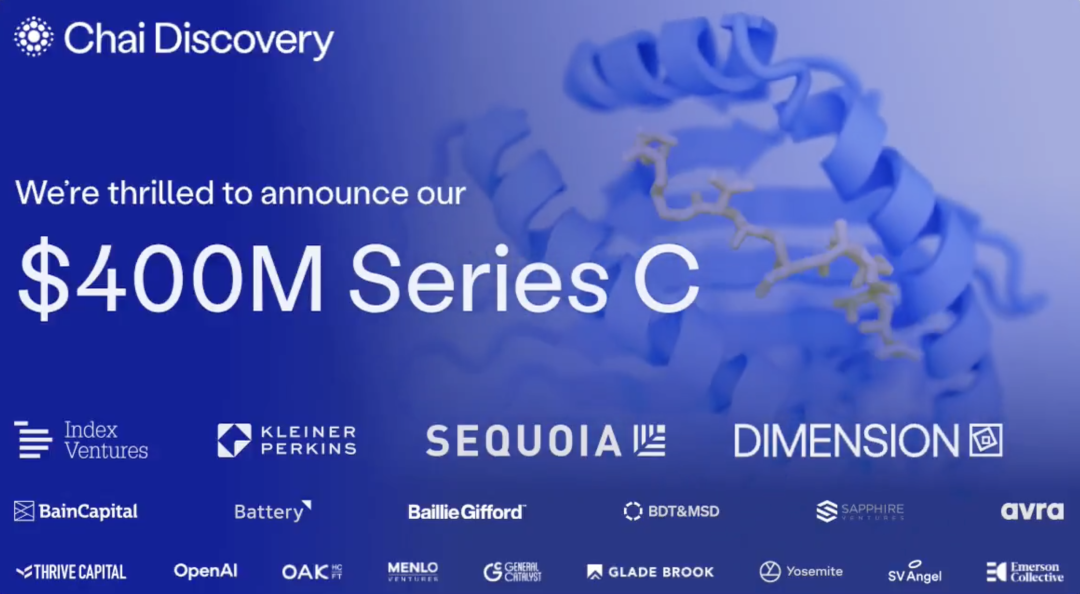
The company says Chai-3 roughly doubles the success rate of predicting molecular interactions. Strong product capability can raise prices; whether it can continue to raise prices depends on whether pharma companies renew the next round of collaboration.
Pharma companies' approach to binding risk is consistent.
Eli Lilly's agreement with Profluent has a milestone ceiling of $2.25 billion, with the upfront payment undisclosed. Pharma companies are buying the option to select candidate drugs; milestones are paid only when the candidate reaches clinical nodes.
Beyond collaboration terms, the pipeline layer ultimately has to reach a capital market exit. In February 2026, Generate Biomedicines raised $400 million in a Nasdaq IPO, with GB-0895 entering two Phase III trials.
The exit path for the pipeline layer is the clearest, provided that clinical data can support the valuation.
Platform layer: compute and experimental infrastructure determine platform costs
Unlike the pipeline layer, which sells candidate drugs, the platform layer sells a set of AI R&D infrastructure.
In September 2025, Periodic Labs completed a $300 million seed round at a post-money valuation of $1.3 billion.
The company was founded by Liam Fedus and Ekin Doğuş Çubuk; the former helped create ChatGPT, and the latter worked on materials discovery at Google DeepMind. Revenue was not disclosed.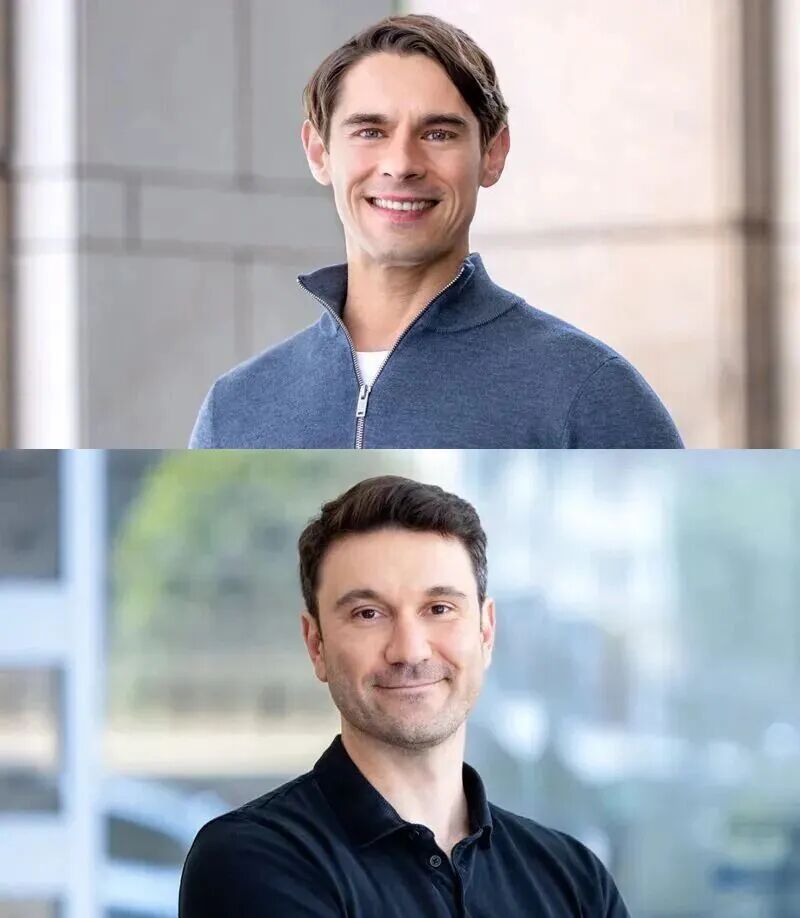
Liam Fedus (top) and Ekin Doğuş Çubuk (bottom)
In May 2026, Forbes reported that it was in advanced talks for at least $500 million in new financing at a valuation of about $7.5 billion, led by AMP; the deal has not been confirmed by the company.
a16z wrote in its investment announcement that internet text has been exhausted, and the best models have trained on about 10 trillion tokens. Science cannot rely only on reading textbooks.
Periodic built a powder synthesis laboratory where robots mix precursors, heat, and characterize, and the experimental data flows back into the model. a16z summarized this approach in one sentence: nature becomes a reinforcement learning environment.
The same judgment has also been bet on earlier-stage teams.
In June 2026, Mirendil completed a $200 million seed round led by a16z and Kleiner Perkins, with NVIDIA participating.
In November, the company announced a $1 billion Series A led by Kleiner Perkins and Clearlake Capital, with Google and others participating; the valuation was not disclosed.
The company has publicly released the Fern model, and the Lor agent platform is in private beta, targeting research and engineering teams.
Lila Sciences pushes the self-built experimental system even further. Incubated by Flagship Pioneering in 2023, it raised a $200 million seed round and two Series A rounds totaling $350 million.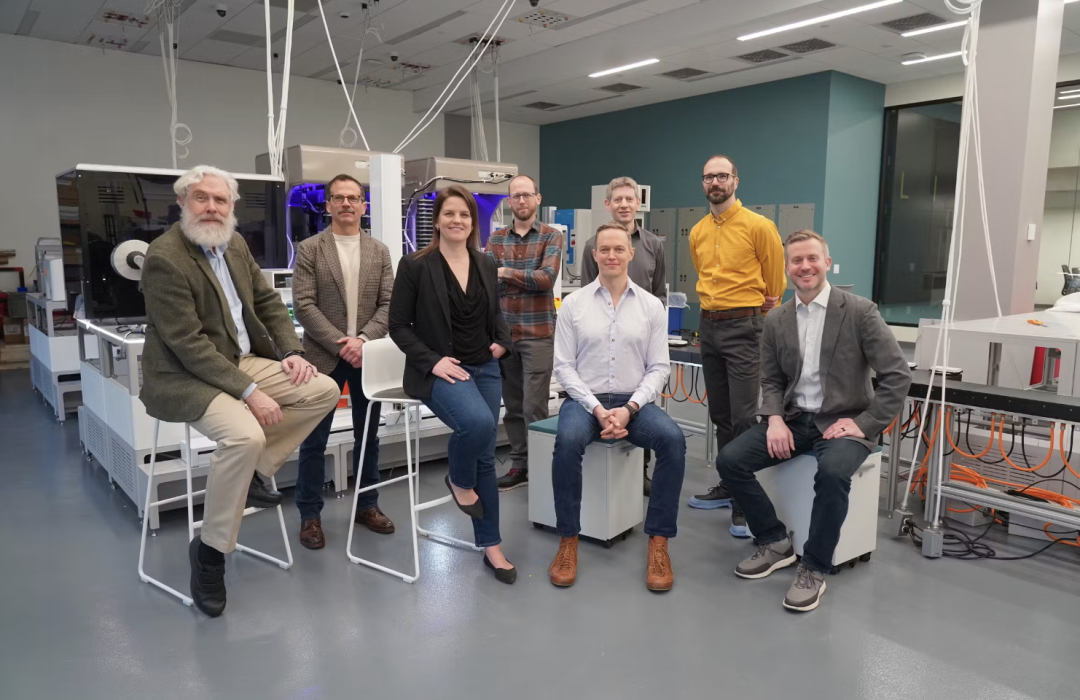
The Lila team in the automated laboratory
The company built its own AI Science Factory and has designed, synthesized, and tested more than 950,000 mRNA sequences. Every result flows back into the model.
In June 2026, Bloomberg reported that it was in talks for about $2 billion in Series B financing at a pre-money valuation of $8.5 billion, not closed.
The asset compositions of the three companies are not the same, but the pricing logic is.
Lila's 950,000 mRNA sequences, Periodic's powder synthesis laboratory, Mirendil's model and agent platform—these assets sell capabilities that others cannot build in the short term.
The cost is the cost structure. A robotic experiment line requires purchasing robotic arms, liquid handling equipment, and characterization instruments, and also supporting a team of scientists capable of designing experiments. The more experiments run, the more data there is, and the thicker the equipment depreciation and compute bills become.
This cost structure ultimately channels money upstream.
The money ultimately flows to NVIDIA, cloud providers, and experimental equipment vendors.
According to incomplete statistics from VCBeat, NVIDIA and NVentures have invested in at least 14 AI drug discovery companies.
In January 2026, NVIDIA and Eli Lilly announced the joint construction of an AI innovation laboratory, with both sides jointly investing up to $1 billion over five years. It is both a shareholder and a supplier.
Tools layer: R&D budgets determine the ceiling of tool companies
Closest to existing software spending is the tools layer.
Schrödinger's fiscal 2025 revenue was $255.9 million, of which software revenue was $199.5 million, up 10.6% year over year. The company still had a net loss of $103.3 million.
Among the first three asset types, the tools layer is the easiest to test with recurring revenue.
In addition to software licensing, the tools layer also includes companies that turn validation workflows into standard services.
Adaptyv Bio turns protein validation into a standard service.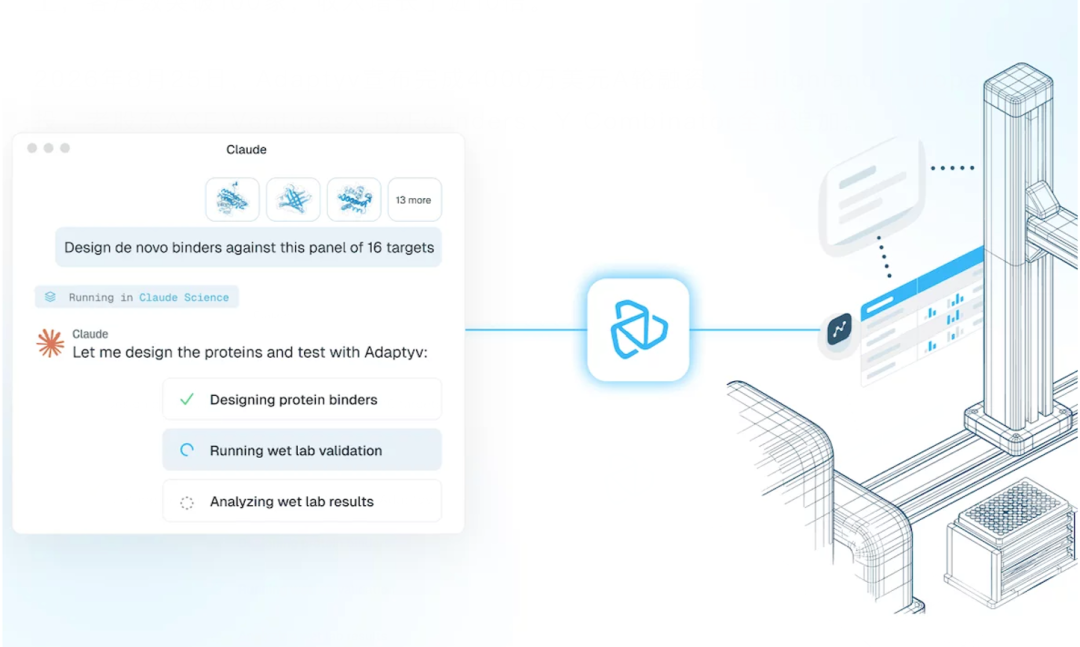
Customers submit designs and receive binding affinity, expression level, and thermal stability data in three weeks, starting at $149 per protein, with a three-day rush option. Chai Discovery is a customer.
The unit price is low and turnover is fast; customers are spending pharma R&D budgets.
The financing scale of early tool companies is also constrained by revenue. Uncountable completed a $27 million Series A in June 2025, when the team had 90 people.
Tamarind Bio completed a $12 million Series A in February 2026, serving 8 of the world's top 20 pharmaceutical companies.
The exit market also bids according to the same revenue logic.
Scite was acquired by Research Solutions in 2023 for $20.9 million, and Wildcat Discovery was acquired by Holyvolt in March 2026 for $73 million. The scale of the two deals is less than a fraction of one platform-layer financing round.
Capital bids based on revenue multiples and replacement cost, without giving platform premiums.
Capital layer: exit buyers determine VC holding periods
The first three layers are assets; the capital layer looks at who takes over.
Generate raised $400 million in an IPO in February 2026, and Iambic raised $150 million in October. The public market absorbed the pipeline layer's exits.
Industrial buyers buy assets directly; Scite and Wildcat were sold to strategic buyers.
Tech giants buy teams.
According to media reports, Anthropic acquired Coefficient Bio in April 2026 for about $400 million in stock consideration, and OpenAI acquired Orchestra Bio in October for an undisclosed amount.
Around these projects, funders have already formed several clear faces. a16z put Periodic and Mirendil into its portfolio, and Thrive repeatedly led Isomorphic. General Catalyst appears on the shareholder lists of both Lila and Chai.
Deep tech funds such as Dimension have bet on Chai and Earendil from the seed round. ARCH and Foresite incubated Xaira, and Flagship incubated Lila and Generate.
NVIDIA NVentures, GV, and Amazon are industrial capital, while MGX, Temasek, and the UK Sovereign AI Fund represent sovereign capital.
In addition to financial funds and industrial capital, pharmaceutical companies themselves are also sitting at this table. Sanofi participated in Earendil's $787 million financing in March 2026. Previously, it paid $125 million in upfront payments for two antibody pipelines.
This kind of heavy bet is most extreme in a complete drug company.
In 2024, ARCH and Foresite Labs incubated Xaira, with a first round of $1 billion, the largest initial investment in ARCH's history.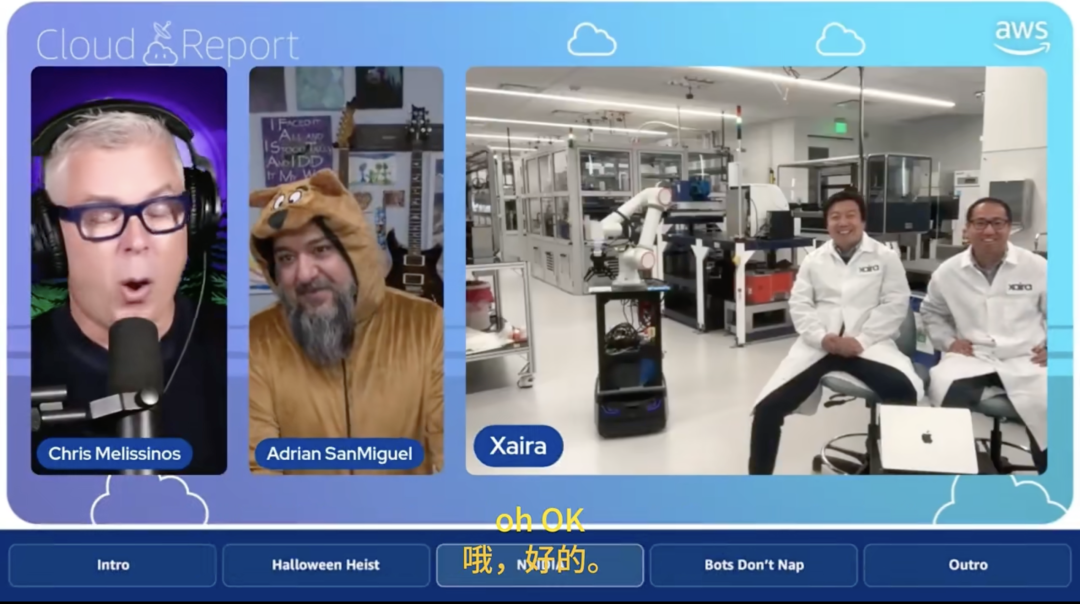
Xaira Lab recorded video: AI scientist directs robots to conduct experiments
Bob Nelsen's reasoning is straightforward: to build a complete drug company and also understand AI requires tens of billions of dollars—one billion is not enough.
The differing terms of different funds ultimately determine the VC holding period. In Isomorphic's Series B, MGX, Temasek, and the UK Sovereign AI Fund all contributed.
Sovereign funds look at national capability and long-term exposure. Industrial capital wants computing power demand and model usage. Pharma strategic investors, on the other hand, lower the upfront payment, raise the milestones, and tie payments to clinical nodes.
Sovereign funds and industrial capital usually have more flexible terms, while financial VCs are constrained by fund terms, and the heavy investment at the platform layer lengthens the validation cycle. The pipeline layer and the tool layer wait for clinical nodes and exit windows respectively, and their cycles may not align.
The VC investment approach is to judge in advance who will take over.
The Cracks: Four Things the Buyer-Side Logic Cannot Explain
This pricing framework is not without weaknesses—first, look at the clinical evidence on the pipeline side.
In Healthcare Discovery's industry tracking updated in May 2026, 173 AI drug projects are in active clinical development, with 15 entering Phase III. No AI-designed drug has yet been approved.
The Phase I success rate for AI drugs is 80% to 90%, and Phase II about 40%, similar to historical ranges, though the sample is still small.
Phase I mainly tests safety, and Phase II tests efficacy. Clinical trials do not recognize model scores.
The pipeline-layer risk sits in clinical trials; the platform-layer risk lies in how long scarcity can be sustained. Periodic and Mirendil have not disclosed revenue, and Lila's $8.5 billion figure is merely a valuation under negotiation, as reported by the media.
SVTR judges that the window in which others cannot catch up may be only 12 to 18 months. Once model capabilities reach parity, revaluation will begin from the next funding round.
Platform-layer valuations rest on capability scarcity—and scarcity has a shelf life.
Beyond the valuation basis, cracks also run through the cost structure and capital distribution. Cloud labs must maintain equipment and staff while customers pay by project. When pharma companies trim R&D budgets, tool budgets are often the first to be squeezed.
Capital allocation is uneven as well: 13 companies capture 73% of the money, and the IPO window favors companies with more advanced pipelines.
The long horizons of sovereign funds and industrial capital may also blunt price signals. Head concentration reinforces itself, making it harder for later companies to secure large financing.
Tide Surge AI Viewpoint
Putting this framework back into the Chinese market, let us first look at the overall comparison of the primary market.
According to SVTR, over the past 12 months China recorded 41 AI4S financing deals and the US 44—deal counts are nearly equal.
Yet among the 13 companies with single deals exceeding $100 million, China has only one—DP Technology, with a $114 million Series C. China's largest single deal is $114 million, the US's is $435 million, and the UK's is $2.1 billion. The gap in deal count is small, but the gap at the top is far wider.
However, over the past 12 months only 41% of Chinese financing rounds disclosed amounts: 4 of 13 Series A deals and 2 of 7 angel rounds. Comparing totals between China and the US is like comparing all of the US with 40% of China.
In the sample with disclosed amounts, the median single deal for Chinese self-developed pipeline companies is $51 million—not lower than the US figure of $41.5 million. First-round pricing for Chinese companies is not low; what is lacking is large top-tier financing and long-term money.
Moreover, the pricing advantage of Chinese companies comes at another cost.
According to Fierce Biotech, the per-patient cost of non-small cell lung cancer trials is about $165,000 in China versus about $296,000 in the US—China is 44% lower. The advantage of Chinese companies lies in validation cost.
Insilico's revenue in the first half of 2026 was $106.3 million, up 287.2% year on year, of which about 97% came from drug R&D and pipeline development. Rentosertib entered Phase III clinical trials in China in July 2026.
Earendil Labs raised $787 million in March 2026, with investors including Sanofi, Pfizer, Hillhouse's fund, and DST.
Overseas pharma companies' willingness to pay for Chinese assets shows that the validation cost advantage can be priced across borders.
New trends in the primary market are moving in this direction as well. In November 2026, Wujie Evolution, incubated by XtalPi, completed a Pre-A round of over RMB 100 million, focusing on foundation models, automated experiments, and AI4S infrastructure.
XtalPi's AI4S smart solutions revenue in the first half of 2026 was RMB 193.5 million, up 136.4% year on year. Total revenue was RMB 393.6 million, down 23.9% year on year, with a net loss of RMB 224.9 million.
AI4S revenue is rising, but the company's profit has not caught up.
Beyond revenue and clinical evidence, the heavy investment required at the platform layer means a different rhythm for Chinese companies. The platform layer demands self-built labs, computing power, and data teams, and top companies' financing has already reached the billions-of-dollars level. Chinese companies are better off first making revenue, clinical, and customer evidence solid at the pipeline and tool layers. Migrating to the platform layer must wait until this evidence holds up.
Back overseas, what to watch in the coming year is not valuation but three sets of evidence: whether Isomorphic's candidate drugs can enter clinical trials as scheduled, whether Generate's Phase III data can support its valuation, and how long the robotic labs of Periodic and Lila can remain scarce.
The pipeline, capital, and platform layers each have an answer sheet waiting to be submitted.
Buyers determine valuation, and validation will determine whether the buyers are still there.
-
Has Honor Fallen Out of the Top Five Phone Brands?
-
![]()
Kailer Shares Takes Control of Weitaisi Optoelectronics, Officially Entering the Optical Precision Manufacturing Sector
-
![]()
Totaling 2.41 Billion Yuan: Two Companies Sign Major Computing Power Orders in Succession
-
![]()
Why Does Sit Optical, Still in Its IPO Counseling Period, Dare to Invest 700 Million Yuan in Building Its Headquarters?
-
![]()
Doubao Tests Shopping as a Primary Entry Point: Is AI Conversation Becoming the New Shelf?
-
![]()
Insta360 Q3 Financial Report: Revenue Surges to 3.9 Billion Yuan, Net Profit Plummets 93% to Just 17.43 Million Yuan
-
Global Investors Are Converging on AI Hardware
-
Is Charging Now Faster Than Refueling?