The Long-Standing Foldable Adaptation Challenge: Solved by Apple, Eluding Huawei, Xiaomi, and Samsung for Years
 10/08 2026
 493
493
Recently, developers creating apps for Apple's ecosystem have likely taken note of a significant announcement from the tech giant.
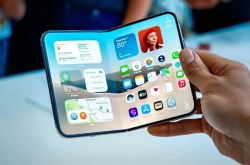
Apple has mandated that, starting from April 2027, all apps submitted to the App Store—be they games or utility applications—must incorporate screenshots specifically designed for the iPhone Duo.
The requirement for including screenshots may not be immediately clear to everyone. In essence, it signals a clear directive: developers must now cater to Apple's foldable device, the iPhone Duo.
Given Apple's considerable sway in the tech industry, it's anticipated that by this time next year, all apps—regardless of their origin, be it from major corporations, independent developers, or studios—will achieve compatibility with the iPhone Duo, unless they opt out of the Apple ecosystem entirely.
Consequently, it's not far-fetched to predict that by next year, all Apple apps will boast seamless compatibility with foldable phones.
This achievement, without resorting to hyperbole or slander, represents a feat that has long eluded the Android ecosystem.
How dire is the situation with Android's foldable adaptation?
Foldable phones from manufacturers such as Huawei and Samsung made their debut in 2019, marking seven years since their introduction.
Even after this considerable time span, only a fraction of apps have been optimized for foldable screens, with the majority remaining untouched. As a result, these apps are merely stretched to fit the foldable display, leading to subpar adaptation.
This poor adaptation manifests in the form of unsightly black bars either at the top and bottom or along the sides of the screen. In essence, the expansive foldable display fails to live up to its potential as a large screen, with significant portions of the display area going to waste.
Despite repeated calls from these manufacturers for developers to adapt their apps for foldable screens, the response has been lukewarm at best. The sheer diversity of foldable phones in the Android camp—with varying models, screen sizes, and resolutions—poses an insurmountable challenge for developers. Creating separate adaptations for each brand, such as Xiaomi, Huawei, Samsung, OPPO, VIVO, and others, is simply not feasible.
As a result, some manufacturers have chosen to forgo foldable screen adaptation altogether, focusing instead on mainstream straight phones with common resolutions. The responsibility for optimizing apps for foldable screens, they argue, lies with the phone manufacturers themselves.
This approach has led to a scarcity of software actively adapting to foldable screens, despite their existence for six or seven years.
However, Apple's situation is markedly different. With its tight control over the ecosystem, Apple can enforce compliance, and those who refuse to adapt risk being left out. Moreover, Apple currently offers only one foldable phone model, with a fixed screen size and resolution.
For app developers, adapting to this single model, while requiring some effort, is undoubtedly more straightforward than catering to the myriad of Android foldable screens.
This highlights Apple's key advantage: a unified ecosystem and stringent control. In contrast, the Android app landscape is fragmented and lacks uniform management.
-
![]()
Thirst for Computing Might! Tencent Secures $7 Billion Worth of Computing Resources from Oracle
-
![]()
After a model evaluation, I began to re-understand WorkBuddy
-
[Shanhu Talks] The Diverse Lives Unfolding in the AI Era: A Ten-Month Journey
-
【Tibetan Fox Talks】These Ten Months in 2026: People and Me Amidst AI Anxiety
-
Second-Gen Doubao Phone Falls Short in Resolving Previous Flaws
-
Second-Generation Doubao Phone Falls Short in Resolving Previous Limitations
-
![]()
"Dark Side of the Moon" Completes Final Pre-IPO Funding Round with Valuation of Approximately $50 Billion, Kimi Set to List in Hong Kong!
-
![]()
Apple Imposes Mandatory Adaptation Directive for iPhone Duo, Marking Unprecedented Assertiveness