Doubao and Hongguo Reveal: Leveraging ByteDance’s Traffic for Gaming Is Futile
 04/03 2026
 560
560

Source | YuanSight
The business sector in which ByteDance has demonstrated the most patience has also been the most unforgiving to the company.
In July 2021, Nuverse acquired Mooton for $4 billion, only to decide to sell it for $6 billion in March 2026. For Mooton, this transaction was a resounding success. However, when considering ByteDance's broader gaming operations, this sale underscores ByteDance's strategic realignment within the gaming industry.
In 2017, ByteDance began venturing into the gaming sector. From 2019 to 2021, ByteDance was most fervent about gaming, aiming to replicate its past triumphs in other domains through an all-or-nothing approach.
From an acquisition standpoint, ByteDance successively acquired Haimoku, AI game developer Shenji Intelligent, Aiyou Interactive Entertainment, and Mooton Technology. It also elevated Nuverse, the core entity of its gaming business, to a business unit on par with Douyin, Feishu, and Volcano Engine.
Simultaneously, ByteDance started luring talent from rival gaming firms, attracting many with compensation packages above market rates. It invested hundreds of millions of yuan in 3A game development, positioning itself against gaming behemoths like Tencent and NetEase.
However, a decade later, the dividends and rationale that once propelled ByteDance into the gaming arena have shifted.
01
The Internet Sector's Logic Has Evolved
The Mooton transaction can be viewed as a successful 'buy low, sell high' maneuver. However, from ByteDance's broader business trajectory, it can also be seen as a phased adjustment.
Starting in 2019, ByteDance embarked on talent recruitment, studio construction, and the acquisition of established teams, showcasing its ambition in self-developed gaming. From the outset, the market scrutinized whether ByteDance possessed the inherent capabilities for long-cycle businesses like game content development.
Yet, ByteDance never fully expanded its product portfolio.
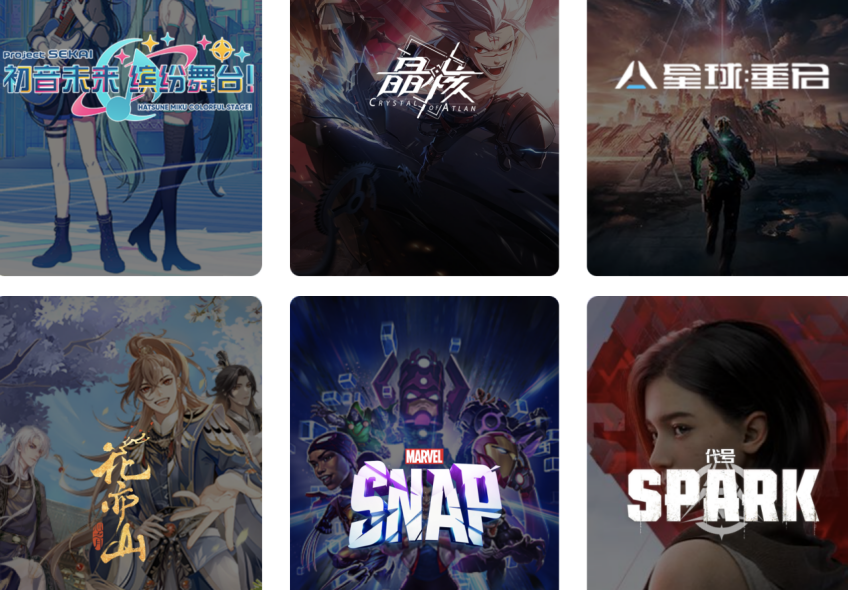
Image source: Nuverse official website
Historically, under the operational logic of internet companies, the gaming business facilitated faster traffic monetization, offering a higher revenue ceiling than pure advertising.
Gaming, social networking, advertising, and payments form a complete monetization ecosystem. However, gaming itself is undergoing transformation. The most significant change is the shift from self-developed heavy games to lightweight distribution, with faster ad monetization for casual games. Meanwhile, mid-to-heavy games that can genuinely drive direct user payments are returning to content-driven models due to soaring user acquisition costs.
In essence, traffic has become increasingly valuable. Even for its own games, ByteDance may not be willing to indefinitely use Douyin's traffic to 'promote' them.
While the market generally perceives ByteDance as highly invested in gaming and unusually patient with the business, the reality is that ByteDance has not provided highly 'ByteDance-esque' support for its gaming operations, treating it more as a parallel business.
Take Nuverse as an example. Previously, its publishing division focused more on high-revenue projects but could not compete head-on with major players like Tencent and NetEase.
According to LatePost, there were two reasons for this: first, Nuverse's conservative style meant that agency project decisions had to be escalated to Yan Shou personally; second, and more importantly, Nuverse's clients could not enjoy internal discounts on Douyin, the largest domestic gaming user acquisition platform. "The business team couldn't influence Douyin's resources, and internal prices were similar to external preferred customer rates," one source noted. "But this is precisely what all gaming companies value most."
Traffic is the cornerstone of all ByteDance businesses, but at a critical juncture when the gaming business urgently needed expansion, ByteDance did not fully open this gateway for Nuverse.
02
ByteDance's New Strategic Direction
According to Sensor Tower, as of the end of 2025, Whiteout Survival had generated over $4 billion in revenue. Dot interaction (Century Games), benefiting from its popularity, achieved 15 billion yuan in revenue in 2024, turning its parent company, Shiji Huatong, from losses to profits.
The game's fast-paced rhythm, viral spread through strong social sharing, and lightweight nature all align with ByteDance's core strengths: algorithms.
Yet, it wasn't ByteDance that capitalized on this trend.
In 2019, ByteDance's earliest gaming business line included a hyper-casual gaming platform called 'Ohayoo,' which released hits like I Peaked at Kung Fu, Jade Ambassador, and Virus Elimination. It was a gaming platform perfectly aligned with ByteDance's DNA. However, because ByteDance focused much of its energy on Nuverse's mid-to-heavy self-developed games, Ohayoo was overlooked in ByteDance's gaming portfolio in recent years and was eventually disbanded in 2024.
However, by the end of 2025, ByteDance began testing a casual gaming platform called GameTop overseas. According to media reports, upon opening GameTop, players randomly start a casual game.
This type of algorithmic recommendation setup, which directly suggests games to users, has already proven successful in Douyin, Hongguo Short Drama, and Qishui Music.
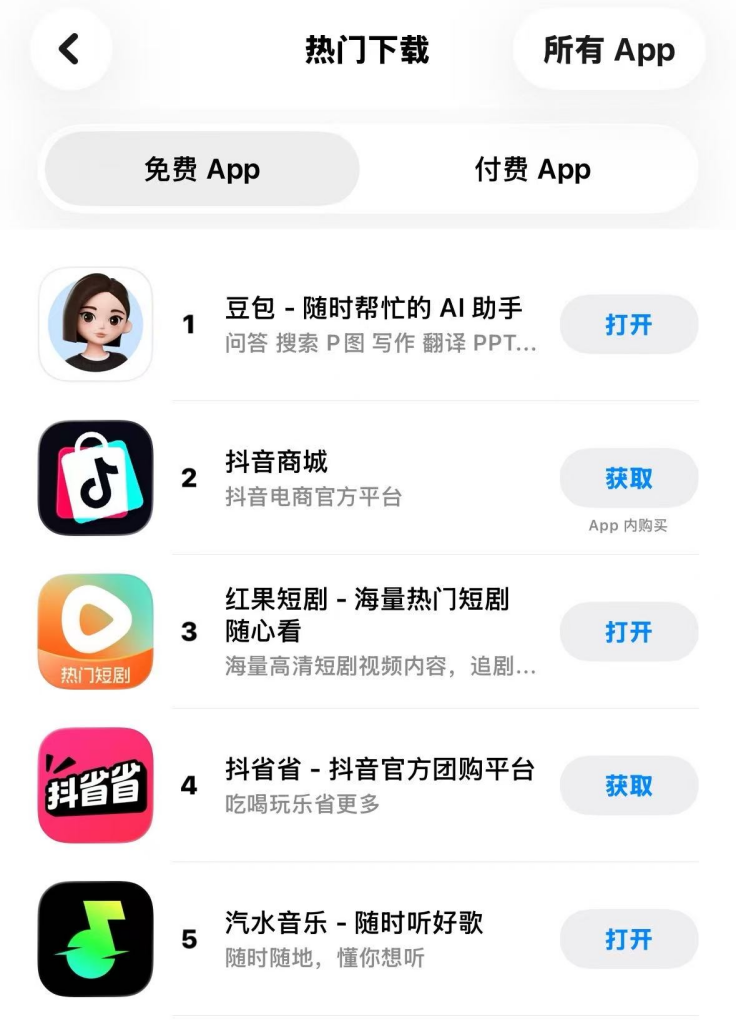
Image source: Apple App Store
Selling Mooton does not signify ByteDance's intention to terminate its gaming business, but its enthusiasm for self-developed games will inevitably wane significantly, shifting back toward more 'asset-light' operations.
In recent years, Hongguo Short Drama and Qishui Music, both incubated by ByteDance, received traffic support from Douyin during their early stages. Currently, Hongguo Short Drama has surpassed 100 million daily active users, solidifying its position as the industry leader; Qishui Music has over 100 million monthly active users, just a step away from NetEase Cloud Music, while challenging Tencent Music's top spot.
Reflecting on ByteDance's gaming journey over the past few years, the most awkward aspect was not its failure to stand out amid fierce competition from major gaming companies but rather the stark contrast between its 'under-the-radar' gaming performance and the success of its other businesses.
Even if Hongguo and Qishui have not yet truly contributed financially to the group, they have achieved significant influence in their respective industries, prompting ByteDance to reconsider how to consolidate traffic and enhance monetization.
To some extent, short dramas are simplified versions of games. They also provide instant gratification and have paywalls, but their production cycles are measured in weeks, perfectly aligning with Douyin's algorithmic distribution. They are even 'lighter' than games and better suited to ByteDance's DNA.
More importantly, the emergence of AI has elevated the potential of Hongguo and Qishui: for the short drama industry, AI-driven content is cheaper and has faster turnover; for the music industry, AI-generated music may disrupt the traditional competition based on copyrights.
Perhaps ByteDance truly missed the best opportunity for internet giants to enter gaming, but it is already positioned for the next big trend.
03
Achieving More Efficient Conversion
Recommendation algorithms, traffic distribution, and rapid iteration are ByteDance's core competencies in many businesses. However, in some areas, these strengths can also become constraints. Rapid validation and elimination do not apply to content businesses that require long-term cultivation.
By stepping away from the gaming quagmire, ByteDance can focus its energy on more certain areas.
At the beginning of 2026, ByteDance CEO Liang Rubo clearly defined the annual keyword for 2026 as 'Scaling New Heights,' with this 'peak' bluntly defined as the 'Doubao/Dola Assistant application.' According to the Financial Times, ByteDance's capital expenditure plan for 2026 has risen to 160 billion yuan (approximately $23 billion), with about half of the budget allocated to purchasing high-performance chips (such as NVIDIA H200) and building AI infrastructure.
Historically, gaming was seen as the pinnacle of traffic monetization because users stayed longer and were willing to spend money. However, the situation has now changed, with AI redefining traffic entry points.
According to QuestMobile data, during the AI 'Spring Festival Battle,' Doubao set a new daily active user record, peaking at 145 million. Meanwhile, Qianwen and Yuanbao also ramped up efforts during this period, attracting users with their respective ecological advantages.
In 2025, Alibaba fully integrated Tongyi Qianwen into its e-commerce ecosystem. Official data shows that during the 2026 Spring Festival, over 130 million users experienced AI shopping and ride-hailing services through Qianwen. Tencent Yuanbao also surpassed 50 million daily active users during the Spring Festival, with users completing over 1 billion AI creation tasks on the platform.
On the other hand, the rise of Qishui Music and Hongguo in recent years has also provided ByteDance with new traffic entry points and monetization channels.
Gaming requires patient craftsmanship. For ByteDance, accustomed to high turnover and rapid feedback, slowing down or lightening its gaming business to fully pursue AI—a new traffic entry point—while continuing to grow Hongguo and Qishui Music, is truly returning to its home turf.
'Who can define the next entry point the fastest' is now the biggest challenge facing internet giants. For ByteDance, rather than being a 'clumsy' follower in a track that doesn't belong to it, it is better to return to its area of expertise and maintain its past agility.
After all, in an era where efficiency is fundamental, the fastest runner is often not the one carrying the heaviest load.
Some images are sourced from the internet. Please notify us for removal if there is any infringement.
-
![]()
Model Giant Jieyue Xingchen Steps into Smartphone Arena: A Strategic Alliance with Huaqin Technology
-
![]()
Big Model Firm Dives into Phone Market: StepFun and Wingtech Forge a ‘Dynamic Duo’
-
![]()
Zhongrun Optics Makes a Bold Move with 1 Billion Yuan Investment: Is a Turning Point on the Horizon for the Precision Optics Industry?
-
![]()
Deploy CLBO Crystals and YIG Single Crystals! Erythritol Leader Invests 30 Million in Youwei Optoelectronics
-
CXMT’s July 16 Subscription: Leading Domestic Memory Manufacturer—What’s the Earning Potential per Lot?
-
![]()
Rhythm Discrepancy and Premium Value Erosion: Foreign Luxury Brands Must Re-evaluate Their China Strategy
-
![]()
Half-Year, 1 Billion Yuan Financing, 7 Billion Yuan Valuation: A New Dark Horse Emerges in the Embodied AI Sector
-
![]()
Strong Rebound for Tech Stocks in Hong Kong Stock Market: Is It Time to Bottom-Fish?