Google's Achilles' Heel
 05/21 2026
 499
499
At the 2026 Google I/O conference, the narrative in public opinion was surprisingly consistent: "Abundant and Satisfying," "Agent Empire," "Operating System-Level Victory."
But if you dare to ask a follow-up question: When a company turns everything into a "system," isn't its Achilles' heel also hidden within that system?
Then let's delve deeper.
01 Speed for Time, But Not a Moat
The most eye-catching announcement at the event was Gemini 3.5 Flash. Google positions it as "born for Agents," with a response speed four times that of competitors and optimized to 12 times in Antigravity environments.
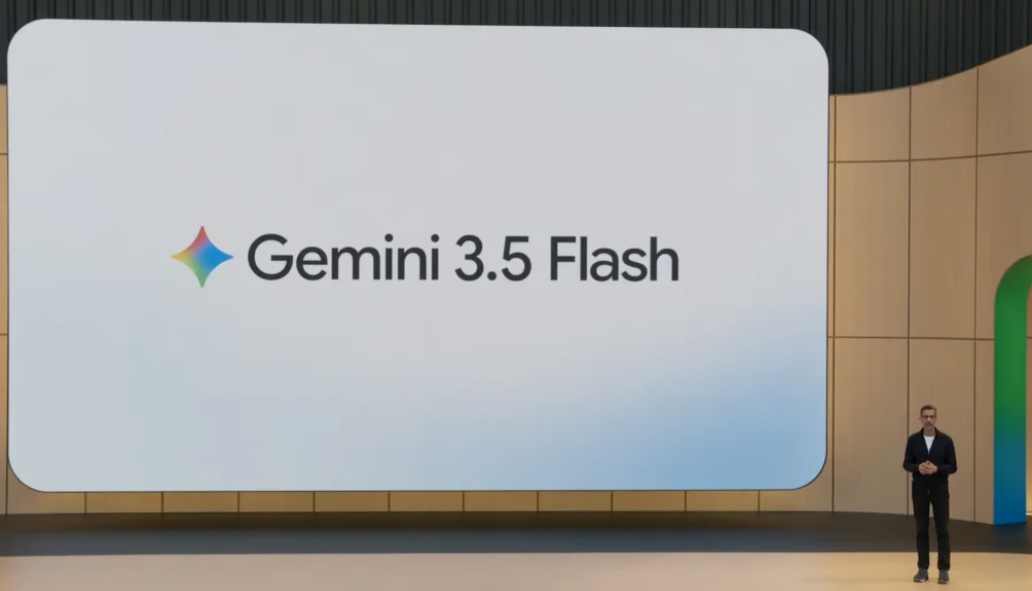
In the Agent era, response speed is indeed a hard metric for commercial deployment. When users demand AI handle long-range tasks involving dozens of API calls, millisecond-level latency accumulation can directly erode all intelligent value.
But this product positioning reveals a deeper anxiety: What Google truly fears in the AI race is not insufficient model intelligence but its inability to deliver that intelligence in real-world commercial scenarios.
It possesses the world's largest user data pool, including consumption records in Gmail, travel trajectories in Maps, content preferences on YouTube, and more, yet consistently fails to find an efficient monetization outlet. Thus, it heavily bets on "speed": Since model intelligence temporarily lags behind Claude Opus 4.7 and GPT-5.5, it pushes response latency to the extreme, enabling Agents to become "usable" in commercial scenarios first.
But speed has never been a moat. Historically, every "speed for time" strategy eventually becomes strategic debt after competitors achieve similar speed optimizations.
Google's true vulnerability lies not in model parameters but in its failure, unlike Anthropic, to find the shortest path from "model to cash flow." Anthropic's path is simple: Let Claude Code complete programmers' tasks and charge monthly fees.
Google takes a convoluted route: First, build the fastest model; then, create the most comprehensive Agent platform; next, integrate Agents into Gmail, Maps, YouTube, and Android; finally, hope users pay at some point. The path is too long, consuming strategic resources at every step.
Meanwhile, Anthropic has fully established the closed loop (closed loop) of "model programming—developer payments—enterprise subscriptions." Claude Code's annualized revenue surpassed $2.5 billion early this year, with API calls growing 17-fold in a year. It doesn't need to be an operating system; it just needs to be an irreplaceable tool for coding to secure the most valuable segment of the AI toolchain.
OpenAI, on the other hand, is doubling down with Codex and ChatGPT, with enterprise revenue rising from 40% to 60% of total income last year, using consumer brand momentum to flood the enterprise market.
More dangerously, both rivals are dismantling Google's core "monetization medium." Previously, Google translated user intent into advertisers' placements via search boxes. Now, Agents directly translate intent into actions in the background. When users complete transactions without "seeing search results," the foundation of Google's two-decade-old advertising empire crumbles.
02 The Full-Stack Curse
Many compare Google to "Microsoft in the AI era" after this I/O. This metaphor may be wrong. A more precise historical parallel is IBM circa 1975.
In the 1970s, IBM boasted the most complete product lineup—mainframes, operating systems, databases, middleware, application software—with a presence in every vertical, accounting for 6% of the U.S. stock market's total value.
Yet it wasn't defeated by a single stronger rival but by a coalition of vertical specialists excelling in their respective domains: Intel (processors), Microsoft (operating systems), Oracle (databases), SAP (enterprise applications). These "single-point, ultimate (extreme)" companies jointly dismantled IBM's full-stack empire.
The fate of full-stack empires isn't replacement by another full-stack empire but disintegration by vertical rivals irreplaceable in single dimensions.
Today, Google faces the same structural risk.
It unifies CLI, desktop, and cloud AI assistants with Antigravity, attempting to replicate Windows' OS glory by defining a standard architecture for multi-Agent collaboration in the AI era. Logically, it holds: Whoever defines communication protocols, scheduling rules, and security boundaries between Agents controls AI infrastructure discourse.
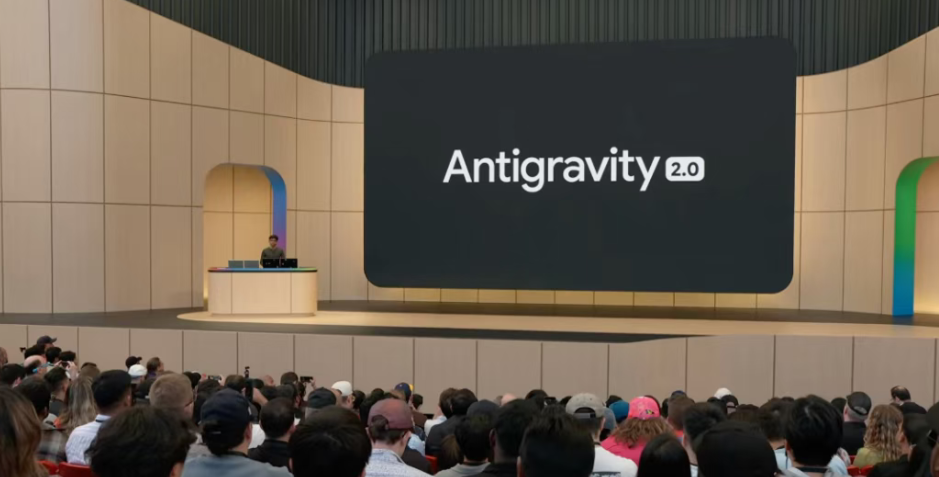
But this strategy's fragility is glaring: It must simultaneously compete with Anthropic for developer mindshare, OpenAI for enterprise clients, Amazon for cloud infrastructure, and Apple for mobile entry points—all while its revenue mainstay, "search advertising," is eroded by its own Agent-driven transformation.
The term "ecosystem" has justified too many strategically disproven narratives in business history. IBM proved it with "total solutions," Sony with "content-hardware integration," and Yahoo with "one-stop portals."""Every full-stack empire's collapse stemmed not from insufficiently grand strategies but from being too grand, leaving no single point truly unassailable in vertical competition.
03 The Self-Devouring Trap of Search Advertising
An even subtler risk lurks in Google's deepest stronghold.
At this I/O, Google unveiled the "biggest search upgrade since 1998": AI Mode and AI Overviews merged, the search box expanded from text to cross-modal, and search results transformed from link lists to generative UIs. The industry applauded.
But a counterintuitive truth is rarely mentioned: By introducing Agent logic into search, Google is essentially accelerating the demise of the "search engine" product form (form).
A true Agent needs no "search results page." It completes tasks in the background—booking flights, processing payments, issuing tickets, sending confirmation emails—without users ever seeing intermediate search results. For decades, search advertising has been Google's core profit pool, with ad slots embedded among link lists. When search results cease to be link lists, ad slots lose their traditional carrier (carriers). When Agents close the loop from "search to transaction" in the background, why would advertisers pay for "search exposure" if users never see results pages?
This isn't a company's transformation issue. It's a business model fundamentally negated by its own technological path.
Google's Agent-driven search transformation is a desperate gamble, voluntarily slicing its thickest revenue artery. To date, AI revenue is far from sufficient to offset the bleeding.
Google proceeds not out of fearlessness but out of necessity. If it doesn't kill search proactively, OpenAI, Anthropic, or any Agent company will do it eventually.
04 Who Pays for "Irreplaceability"?
Using full-stack to counter verticals is one of business history's oldest strategic choices. It succeeded in rare moments: Microsoft locked down the PC era with Windows + Office in the 1990s; Apple locked down the mobile era with iOS + App Store in the 2010s.
But these cases share a common premise: They possessed an irreplaceable physical entry point.
Does Google have such an entry point in the AI era? Gmail? No. YouTube? No. Android? Barely half—it's an open ecosystem where Google cannot control every Agent behavior as Apple controls App Store.
In the Agent era, the most critical "entry point" isn't any app but the default protocols and toolchains developers use. Anthropic and OpenAI already occupy the most advantageous positions in this battlefield.
Google's Antigravity attempts to catch up, but when you try to lock in developers with an "operating system," you must first prove every core component—from models and Agent tools to runtime environments and security boundaries—outperforms rivals. Any lag in a single component becomes an exit wound for developers. Google's model capability gap remains unfilled.
If a full-stack empire's core components aren't optimal, "full solutions" aren't advantages but bundled burdens.
This is Google's deepest AI strategic dilemma: It's using a "system-level victory" logic against "single-point, ultimate (extreme)" rivals. Historically, the former's win rate is low.
05 Conclusion: Big but Unwinnable
IBM had everything in the 1980s: the most powerful hardware, the finest operating system, the most complete enterprise service system. Yet it didn't determine the next era's trajectory.
Two young entrepreneurs in a garage, Bill Gates and Paul Allen, did one thing: They decoupled the operating system from hardware.
Google's situation today is no different. When a giant's strategy shifts from "betting on one thing" to "covering everything," its attention scatters across every front. Precisely in the gaps where it chooses "compatibility" over "All in," next-generation competitors emerge. They're young, focused, and currently obscure—but they do one thing only.
Just like Intel did with processors. Just like Microsoft did with operating systems.
This time, what will it be for the AI era? The answer isn't in Google's conferences. It's in the names overlooked by these conferences.
-
![]()
Doubao Work Unveiled! Domestic AI Leaders Fully Commit to the 'Work' Sector
-
![]()
Who’s Sounding the Alarm on ‘Rushed Vehicles’?
-
![]()
Over 5.3 Billion Yuan in Losses Over Three and a Half Years! Can Yonyou Reverse Its Fortunes Through Streamlining and AI Transformation?
-
![]()
Baidu AI Adopts Free Model: A Strategic Maneuver in Traffic and Monetization
-
![]()
Silicon-Based OLED Pioneer Unveils Financial Results: H1 Shipments Outpace Entire 2025 Volume
-
![]()
AI's First "Lost Summer"
-
![]()
Zeiss Makes Another €2.2 Million Bet: Will Eye Tracking Be the Next Big Thing in the Smart Glasses Industry?
-
![]()
RUNTO Ranking | Global Top TV ODM Factories' Shipment Figures for July 2026