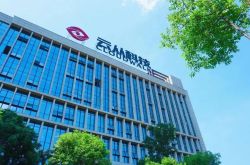
A Second Attempt by AISpeech to List on the STAR Market: Revenue Growth Masks Persistent Profitability Challenges
 06/21 2026
 643
643
Author|Kang Tian
Editor|Gao Shan
Recently, AISpeech Technology Co., Ltd. (hereinafter referred to as "AISpeech") had its IPO application accepted on the STAR Market, with Soochow Securities as its sponsor.
In this IPO, AISpeech aims to raise RMB 1.555 billion, which will be allocated to projects including AI software and integrated hardware-software solutions, R&D and upgrades for AI smart terminal products, and the construction of R&D centers.
Notably, this is not AISpeech's first attempt at a STAR Market IPO. As early as July 2022, AISpeech submitted its prospectus to the Shanghai Stock Exchange but ultimately failed to pass the listing committee's review in May 2023, leading to the termination of its IPO.
The Shanghai Stock Exchange cited two main reasons for the decision to terminate the review: AISpeech failed to adequately justify the projected compound annual growth rate of its revenues over the next four years and did not sufficiently disclose the risks associated with negative net assets prior to listing.
Three years later, AISpeech is making a comeback, but whether its revenue fundamentals and net asset conditions have substantially improved to meet listing requirements remains to be verified.
Profitability Not Yet Achieved
True to its English name, "AI Speech," AISpeech focuses on the field of conversational artificial intelligence. Leveraging its self-developed intelligent customization platform, the company provides system-level intelligent human-machine dialogue products and solutions that integrate cloud-edge collaboration and software-hardware integration for smart mobility, smart office, and smart IoT applications.
From 2023 to 2025 (the "reporting period"), AISpeech's revenue increased year by year, reaching RMB 539 million, RMB 601 million, and RMB 688 million, respectively. However, its net profit attributable to the parent company remained negative, at -RMB 112 million, -RMB 140 million, and -RMB 56.9966 million, respectively. While losses have gradually narrowed, the company has not yet achieved profitability.
High R&D investment is a core characteristic of AI technology companies on the STAR Market and a necessary path for building technological barriers. AISpeech is no exception. Its R&D investment has remained at a high level, reaching RMB 226 million, RMB 264 million, and RMB 254 million during the reporting period. Over the three years, cumulative R&D investment amounted to RMB 744 million, accounting for 40.72% of cumulative revenue over the same period. In the early stages of its development, the company's R&D investment was even more prominent, with the R&D expense ratio reaching as high as 155.77% in 2019, when R&D expenses totaled RMB 199 million.
For STAR Market companies with strong technological innovation attributes, impressive R&D data represents a core advantage. However, from a financial perspective, the long-term high proportion of R&D costs directly restricts the release of profitability.
From an industry competition perspective, the market landscape for conversational AI in China has undergone a fundamental transformation, with competition intensifying across all dimensions.
In the past, AISpeech primarily faced competition from vertical professionals such as iFLYTEK. Today, the competitive landscape has been completely reshaped, with a more diverse range of players entering the fray. In addition to continuing to compete with traditional voice technology leaders like iFLYTEK, AISpeech must now also contend with leading internet companies such as Baidu, which possess advantages in computing power, data, and capital.
As large models increasingly become the new foundational capability for intelligent voice technology, the focus of industry competition has shifted from "recognition accuracy" to "model capability + scenario implementation capability." This means that the technological barriers traditionally held by voice technology companies are being reconstructed.
For AISpeech, its strengths lie in its long-accumulated capabilities in edge-side AI and vertical industry solutions. However, as internet giants continue to penetrate industry markets, AISpeech must prove that it is not just a voice technology company but also an AI company capable of sustained commercialization.
Performance Delivery Challenges
Improving profit quality is a key highlight of AISpeech's relaunched IPO. During the reporting period, the company's comprehensive gross profit margin showed an upward trend, reaching 53.69%, 57.81%, and 63.24%, respectively. This improvement was primarily due to the reduction of low-margin integrated custom development projects and the strengthening of R&D and promotion of its proprietary brand products.
In terms of business structure, AISpeech's main revenue comes from three key areas: smart mobility, smart office, and smart IoT.
Among these, the smart mobility segment represents the company's deepest penetration into the in-vehicle cockpit, a high-demand scenario. AISpeech provides automotive OEMs and Tier 1 suppliers with large-model human-machine dialogue software for smart cockpits, as well as AI hardware products such as intelligent central control instruments and smart audio systems.
This segment boasts the highest gross profit margin, at 70.07%, 82.83%, and 81.30% during the reporting period, significantly higher than the company's overall margin and the other two business segments.
Benefiting from the rapid development of China's new energy vehicle industry, continuous iteration of its in-vehicle AI products, and expanding customer base among automakers, AISpeech's revenue from the smart mobility segment grew rapidly, from RMB 162 million in 2023 to RMB 276 million in 2025. Its share of total revenue increased from 30.04% in 2023 to 40.08% in 2025, making it the company's largest business pillar and significantly boosting its overall gross profit margin.
Despite becoming AISpeech's largest business segment, the actual revenue from smart mobility still falls far short of expectations.
In April 2023, during the third round of review questions for its initial IPO filing, AISpeech projected that its intelligent vehicle-related business would generate RMB 632 million in revenue by 2026. To achieve this target, the company's smart mobility revenue would need to surge by approximately 129% year-on-year in 2026, making performance delivery highly challenging.
More critically, as the intelligence level of in-vehicle cockpits continues to rise and automakers' self-developed technology systems mature, leading new energy vehicle companies are gradually reducing their reliance on third-party AI technology suppliers. Many are now developing their own in-vehicle voice interaction systems, such as NIO's NOMI and Li Auto's Li Xiang Tongxue.
This industry trend not only makes it more difficult for AISpeech to secure new orders from automakers but may also restrict the renewal, price increases, and expansion of existing cooperation projects, significantly increasing uncertainty around long-term growth in the core smart mobility sector.
Meanwhile, the gross profit margins of AISpeech's smart office and smart IoT segments have also improved to varying degrees.
In the smart office segment, AISpeech focuses on meeting and educational scenarios, with proprietary brand products such as smart ceiling microphones, smart matrix microphones, and AI office tablets as its core offerings. During the reporting period, revenue from this segment increased from RMB 180 million to RMB 243 million, with its share of total revenue rising from 33.33% in 2023 to 35.40% in 2025. The gross profit margin improved from 43.78% to 48.59%.
It is worth noting that meeting audio hardware in this segment represents capital expenditure-type equipment, with a finite number of enterprise conference rooms and periodic market demand for new installations, making sustained rapid growth difficult to achieve.
In the smart IoT segment, AISpeech focuses on next-generation smart terminal scenarios such as smart homes, smart robots, smart wearables, and consumer electronics. During the reporting period, revenue from this segment declined from RMB 197 million to RMB 169 million, with its share of total revenue dropping from 36.63% in 2023 to 24.51% in 2025. The gross profit margin improved from 49.27% to 54.86%.
In this segment, AISpeech has proactively abandoned low-margin integrated custom development projects. If high-value-added software products and licensing businesses fail to compensate for the revenue shortfall, the segment faces the risk of long-term contraction in scale.
Cash Flow Pressures
While profitability remains elusive, AISpeech's cash flow situation is also less than optimistic.
During the reporting period, the net cash flow generated from the company's operating activities was -RMB 228 million, -RMB 183 million, and -RMB 171 million, respectively.
As of the end of 2025, AISpeech held RMB 198 million in cash and cash equivalents. However, it also had RMB 320 million in short-term borrowings and RMB 44.882 million in non-current liabilities due within one year, leaving its cash position insufficient to cover these obligations.
At the same time, the growing scale of AISpeech's accounts receivable has further exacerbated cash flow pressures.
During the reporting period, the company's accounts receivable stood at RMB 246 million, RMB 269 million, and RMB 325 million, respectively, showing a year-on-year increase. A significant portion of its working capital is tied up by downstream customers.
This phenomenon is directly related to changes in AISpeech's business structure. As the proportion of smart mobility business grows, the company's customer base increasingly shifts toward the automotive supply chain. The automotive industry is characterized by long project cycles, extended acceptance periods, and delayed payment cycles.
Additionally, AISpeech's inventory levels have risen year by year, reaching RMB 38.3105 million, RMB 50.905 million, and RMB 103 million during the reporting period. If future market demand changes or product iteration speeds up, the risk of inventory write-downs will increase.
Given the company's three consecutive years of losses and persistent cash outflows, external financing has become a critical source of funding for its daily operations and R&D activities.
During the reporting period, the net cash flow generated from AISpeech's financing activities was RMB 185 million, RMB 324 million, and RMB 181 million, respectively. This directly contributed to the improvement of the company's net assets from -RMB 30.7394 million to RMB 294 million.
Since its inception, AISpeech has conducted multiple rounds of capital increases and share expansions. Between 2020 and 2021, the company increased its registered capital three times. By the end of May 2021, the number of shareholders had grown from 20 at the beginning of 2020 to 40. After its initial IPO attempt failed in 2023, AISpeech completed seven additional financing rounds by 2025.
As multiple rounds of financing progressed, early shareholders of AISpeech began to reduce their stakes, drawing attention.
In 2019, Alibaba Network Technology was AISpeech's largest shareholder, holding an 18.32% stake, while Lenovo's Suzhou Legend Star held 8.13%. In October 2020, Alibaba Network Technology transferred some of its shares for RMB 30.0934 million, and Suzhou Legend Star transferred part of its stake for RMB 42.9906 million. Following these transactions, AISpeech's employee stock ownership platform, Dazi Jihui, became the largest shareholder with a 14.18% stake. Alibaba Network Technology's holding fell to 13.22%, ranking second, while Suzhou Legend Star's stake reduced to 5.21%.
In 2023, after AISpeech's initial IPO failed, Alibaba Network Technology transferred some of its shares for a total of RMB 140 million. Shortly thereafter, Alibaba Network Technology underwent a corporate restructuring, and its stake was inherited by Hangzhou Haoyue. In December 2024, Suzhou Legend Star transferred part of its shares for RMB 30 million. In June 2025, Hangzhou Haoyue transferred AISpeech shares twice, with a total consideration of RMB 140 million. As of February 2026, Hangzhou Haoyue held a 5.42% stake, while Suzhou Legend Star held 3.79%.
As AISpeech re-enters the race for listing, it still faces unresolved challenges related to profitability, cash flow, and industry competition. The road to IPO remains fraught with obstacles.
-
![]()
Registered Capital Slashed to 372 Million Yuan! Yutong Optical Finalizes Industrial and Commercial Change Registration
-
![]()
Zhuque-3 Successfully Lands, and 'Time Traveler' Secures Another ¥100 Million in Funding: China's Commercial Space Industry Experiences a 'Dynamic August'
-
![]()
Autohome Faces a Shrinking Window of Opportunity
-
![]()
Even a Titan Like Musk Has Faced Setbacks in Fulfilling Promises
-
![]()
AI Office: The End of the Racing Era, Context Becomes the Key to Success
-
![]()
Domestic Vehicle Chassis Revolution ②: The Steering Wheel Remains, But Mechanical Connections in the Steering System Are Decreasing
-
![]()
Exploring MiniMax Design: Can Video Editing Be as Simple as Speaking?
-
![]()
Why Can SenseTime Achieve Profitability While CloudWalk Still Faces Challenges, Despite Both Adopting Large Models?