Musk's Strategic Pivot: A Boon or Bane for Chinese Automakers?
 06/24 2026
 584
584
Lead | Introduction
Tesla, once the cornerstone of Musk's business empire, has found itself in the shadow of SpaceX. The company is undergoing a profound transformation, shifting its strategic focus towards autonomous driving, humanoid robots, and driverless mobility solutions. This has led to a significant slowdown in the iteration of traditional vehicle models and a halt in the expansion of its model lineup. While this strategic shift has opened up a valuable window of opportunity for domestic automakers, it also poses long-term risks of a widening technological gap.
Author | Heyan Reading Car Studio
Writer | Zhang Dachuan
Editor | He Zi
Full text: 3,095 characters
Reading time: 5 minutes
Musk, at the helm of both Tesla and SpaceX, is increasingly favoring the latter.
On June 12, 2026, SpaceX (ticker: SPCX) made its debut on NASDAQ, raising a staggering $750 billion in the largest global IPO to date. Its shares soared by 19.22% on the first day of trading, valuing the company at over $2.11 trillion. This propelled Musk's net worth beyond the $1.3 trillion mark, making him the world's first trillionaire.
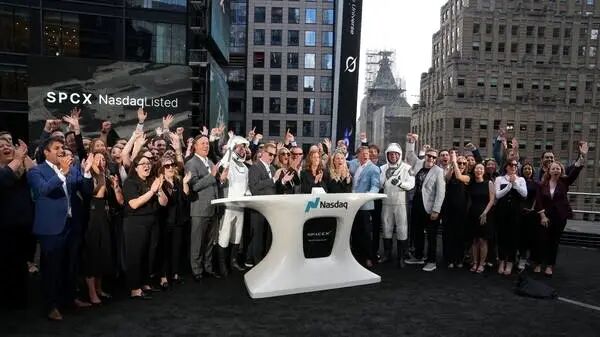
△ With SpaceX's IPO, Tesla is no longer the primary asset underpinning Musk's wealth.
Over the past three years, Musk's business ventures have seen expansive growth across the board. SpaceX has reached a peak valuation of $2.28 trillion, with its Falcon 9 rocket being reused over 200 times and Starlink generating $11.3 billion in annual revenue and $4.4 billion in net profit. Neuralink is valued at $5 billion, with dual production lines for its humanoid robot Optimus now in operation. Tesla Energy reported $12.8 billion in revenue and 46.7 GWh of installed capacity in 2025. Its in-house Dojo chips supply AI computing power across the group, and external battery-powered vehicles generated nearly $9 billion in revenue. Amid this structural shift, Tesla's share of Musk's wealth has dwindled: from 55% of his total assets in 2023 to just under 25% ($320 billion) in 2026, while SpaceX's equity value neared $960 billion. Tesla is no longer the bedrock of Musk's fortune.
Tesla's EV Product Advantage Wanes
Setting aside the Cybertruck—which remains highly anticipated but has faced persistent production delays—Tesla's global mainstream market offerings now hinge solely on the Model 3 and Model Y. The high-end Model S and Model X have ceased large-scale, regular production updates, with North American factories significantly reducing output and repurposing facilities for Optimus humanoid robot production. In 2024, Tesla delivered just 12,700 Model S and Model X units in North America, a nearly 89% plunge from the 2021 peak of 112,000, effectively exiting the mainstream luxury large EV sedan segment. The new Roadster, initially slated for 2020 mass production, has been repeatedly delayed, with the latest target pushed to late 2026—over nine years after its debut. The production plan has undergone multiple revisions, with core specifications repeatedly altered, leaving the sports car market strategy unresolved.
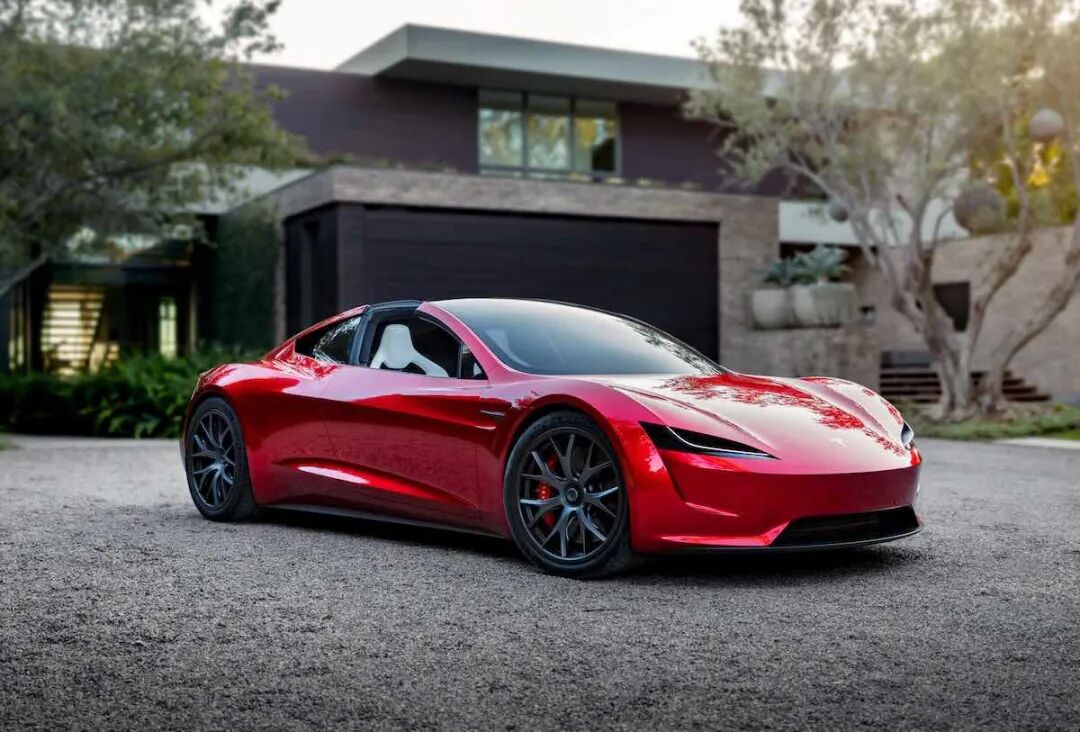
△ The new Roadster, initially slated for 2020 mass production, has faced repeated delays.
The product lifecycles of Tesla's two mass-market models are outdated: the Model 3 launched in March 2016 and entered production in 2017, reaching its eighth year by 2025; the Model Y debuted in March 2019 and began mass production in 2020, making it six years old by 2025. Both have undergone only minor mid-cycle updates and detail refinements, never a full platform or body style overhaul.
In contrast, Chinese EV startups typically achieve major upgrades every 18–24 months and full model replacements every 3–4 years. NIO's ES series, Li Auto's L series, and XPeng's G series nearly annually refresh cabin hardware, chassis architecture, and interior/exterior design. Even conservative European luxury brands have rolled out models rivaling Tesla in product strength, with localized superiority: the Mercedes-Benz EQE SUV, BMW iX, and Audi Q8 e-tron outperform Tesla in interior materials, air suspension tuning, rear-seat comfort, and NVH refinement; the Volkswagen ID.7 differentiates itself with superior handling stability and localized infotainment; and the Porsche Taycan maintains an edge in powertrain performance and track handling over Tesla's offerings at similar price points.
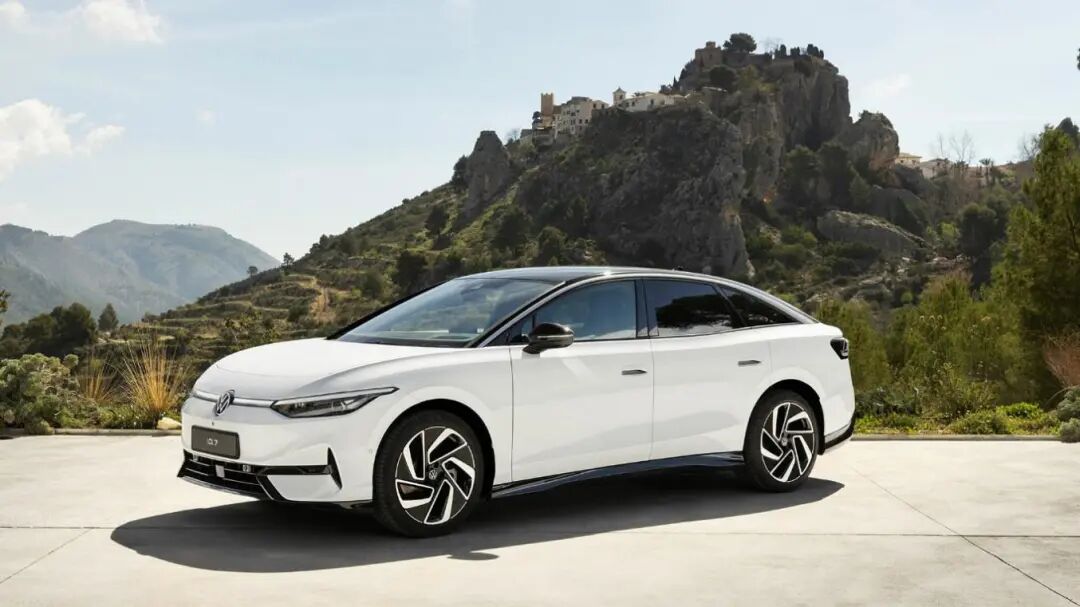
△ European luxury brands have launched models that rival Tesla in product strength, with localized superiority.
At present, Tesla's hardware lead has narrowed sharply: its two mainstay models rely on outdated platforms and chassis, lag behind rivals in chip and infotainment screen upgrades, and face persistent criticism for seat comfort and interior fit-and-finish. Tesla now relies solely on its Full Self-Driving (FSD) system as a competitive edge, with over 2.3 million FSD subscribers in North America by 2025 and cumulative driving mileage exceeding 15 billion miles. Its highway lane-changing and urban navigation capabilities remain industry-leading, but regulatory restrictions in the EU, China, and other regions prevent full deployment of its intelligent driving features. By mechanical quality, cabin experience, design freshness, and localization, Tesla's current lineup no longer dominates the global BEV market as it did from 2019–2021, surviving only on autonomous tech and cost advantages.
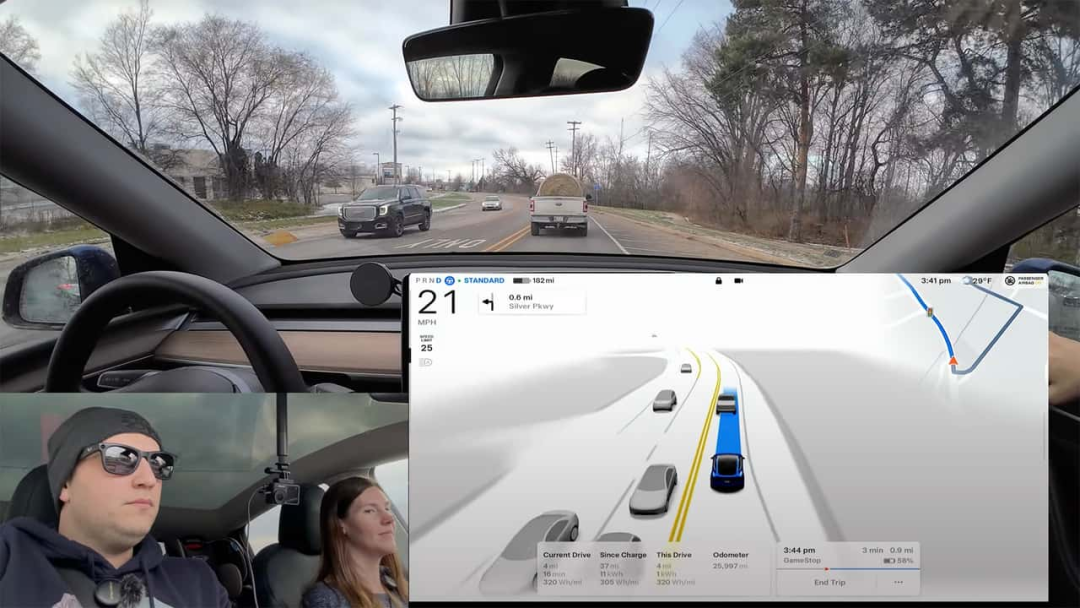
△ Tesla now relies solely on its Full Self-Driving (FSD) system as a competitive edge.
Cybercab: Tesla's New 'Ace in the Hole'
With Model 3 and Model Y iterations stalled and traditional EV advantages eroding, Cybercab has become Tesla's core vehicle for transitioning from vehicle manufacturing to a global intelligent mobility operator—the reason behind its pause in traditional vehicle R&D and full commitment to autonomous driving. Unlike conventional consumer EVs, Cybercab adopts a steering wheel- and pedal-free native autonomous architecture designed exclusively for Robotaxi ride-sharing. Its minimalist structure, lightweight battery, and integrated manufacturing keep unit costs below $30,000, while vehicle utilization rates soar from under 5% for private cars to 70%, slashing per-mile operating costs and offering clear commercial advantages.
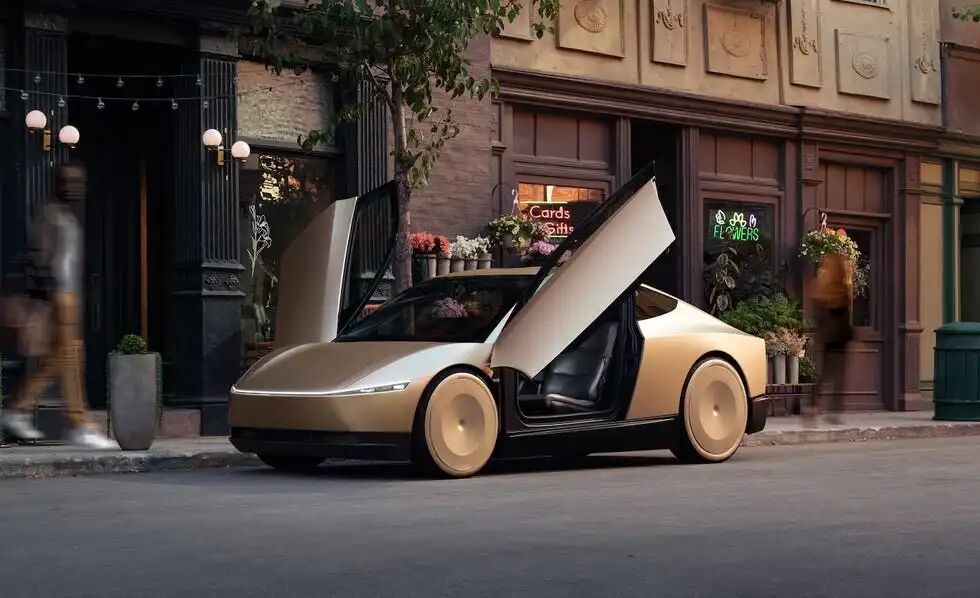
△ Cybercab has become Tesla's core vehicle for transitioning from vehicle manufacturing to a global intelligent mobility operator.
Technologically, Cybercab is deeply integrated with Tesla's pure-vision FSD system, serving as a key platform for algorithm scaling and data loop construction. Tesla has redirected R&D, production line, and computing resources from traditional model updates to full autonomous driving development, forging an exclusive tech barrier through a native self-developed approach—distinct from Waymo's retrofitted autonomous vehicles or those of Chinese automakers.
Commercially, Cybercab revolutionizes Tesla's profit model, breaking free from the one-time vehicle sales revenue of traditional automakers to establish a recurring, diversified cash flow: "vehicle sales + Tesla Network ride-hailing commission + FSD software subscription." Owners can join Tesla's autonomous ride-hailing platform, with the company taking a 25–30% cut, transforming vehicles into income-generating assets.
Under its long-term plan, Tesla aims to deploy a global fleet of 10 million autonomous vehicles, making intelligent mobility services a second growth engine comparable to its vehicle business and offsetting the price wars and growth limits of the traditional EV market. Over time, Cybercab will reshape urban mobility, reduce private car ownership demand, and synergize with Optimus humanoid robots to complete Tesla's AI ecosystem, cementing its lead in general artificial intelligence and autonomous transportation. If Cybercab executes its strategy, Tesla will leapfrog traditional EV rivals through the Robotaxi blue ocean and reclaim a top global position in intelligent mobility.
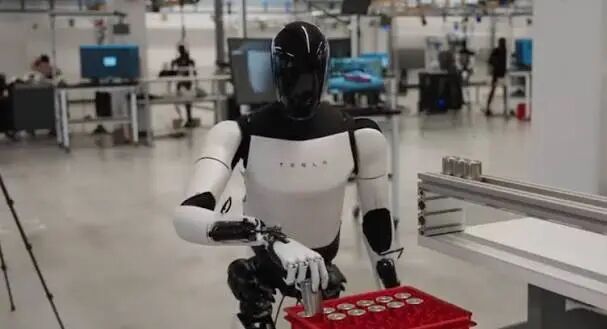
△ Cybercab will synergize with Optimus humanoid robots to complete Tesla's AI ecosystem.
Impact of Tesla's Strategic Shift on Chinese Automakers
Tesla has now redirected over 70% of its R&D budget to FSD, Optimus humanoid robots, and Robotaxi services, sharply reducing investment in traditional vehicle development. The affordable Model 2 project is on hold, flagship Model S/X production has contracted, and next-generation model launches keep getting postponed. With the global mass market relying on the aging Model 3 and Model Y, Tesla's vehicle iteration pace has slowed markedly.
This strategic reallocation has created a rare short-term growth window for domestic automakers. In the market, the absence of Tesla's affordable models in the $14,000–$28,000 segment and lack of new foreign models in the $35,000+ range ease competitive pressure, giving BYD, Xiaomi, Li Auto, NIO, and others room to capture market share and move upmarket. Meanwhile, the industry-wide price war eases temporarily, allowing domestic firms to focus resources on localized autonomous driving, high-voltage BEV platforms, and charging networks. Their overseas expansion into mid-to-low-end markets also faces less resistance.
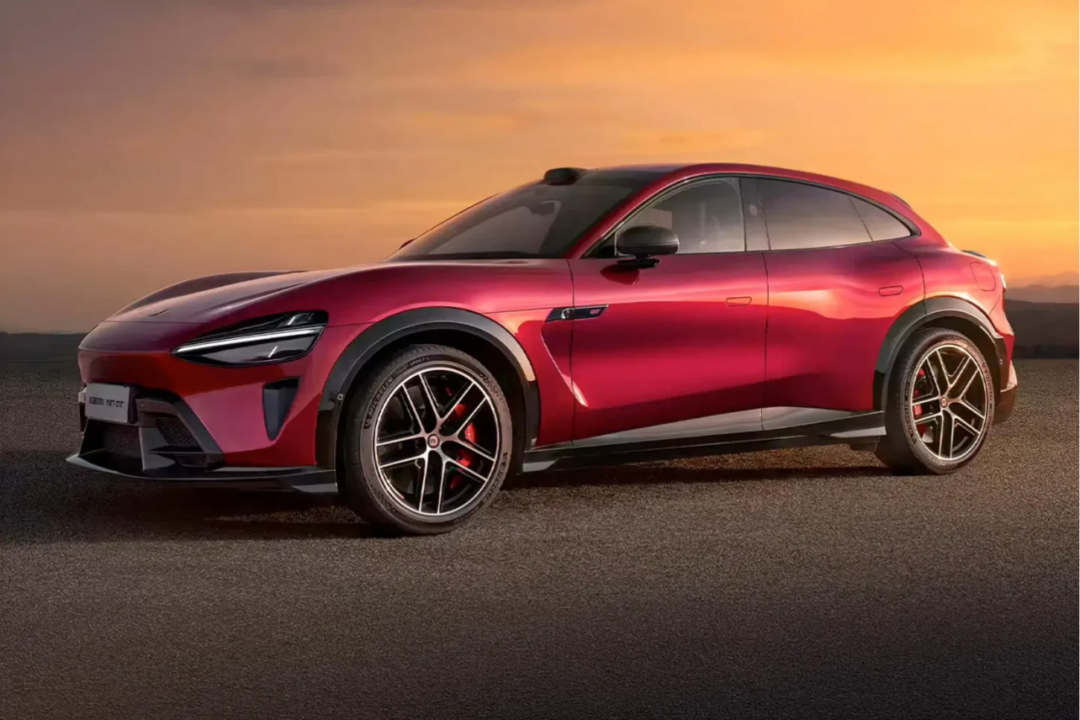
△ Domestic and global automakers will enter a golden period as Tesla's EV competitiveness declines.
However, long-term risks loom. By slowing vehicle hardware updates, Tesla is concentrating resources on FSD and Robotaxi—sectors poised to create overwhelming tech and operational advantages once autonomous driving and driverless mobility business models mature. Meanwhile, without Tesla's disruptive pressure, domestic automakers risk slipping into a feature-stacking, price-cutting trap. Coupled with rising overseas trade barriers and slowing EV export growth, competition in China's saturated market will intensify. For domestic firms, the next 3–5 years are critical. They must scale up rapidly, solidify core technologies, expand globally, and preemptively enter intelligent driving services and autonomous mobility operations to build differentiated strengths and avoid being outpaced by Tesla's tech-driven disruption.
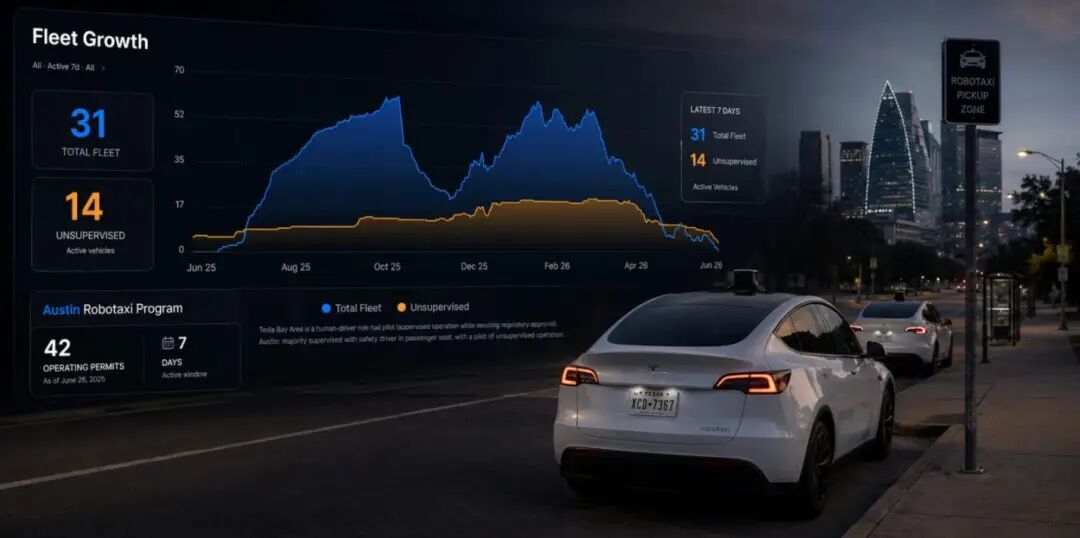
△ Tesla has long targeted the FSD-based Robotaxi sector.
Commentary
Tesla is not "coasting" but executing a strategic pivot—sacrificing short-term hardware advances for long-term software and ecosystem dominance. For Chinese automakers, this 3–5-year window offers a chance to scale up, upgrade brands, and accumulate technology. If they remain stuck in hardware specs and price battles, neglecting autonomous driving, software services, and autonomous mobility ecosystems, they risk a full-scale ecosystem competition shock once Tesla's FSD and Robotaxi models mature.
(Original article by Heyan Yueche. Reproduction without authorization is prohibited.)
-
![]()
Registered Capital Slashed to 372 Million Yuan! Yutong Optical Finalizes Industrial and Commercial Change Registration
-
![]()
Zhuque-3 Successfully Lands, and 'Time Traveler' Secures Another ¥100 Million in Funding: China's Commercial Space Industry Experiences a 'Dynamic August'
-
![]()
Autohome Faces a Shrinking Window of Opportunity
-
![]()
Even a Titan Like Musk Has Faced Setbacks in Fulfilling Promises
-
![]()
AI Office: The End of the Racing Era, Context Becomes the Key to Success
-
![]()
Domestic Vehicle Chassis Revolution ②: The Steering Wheel Remains, But Mechanical Connections in the Steering System Are Decreasing
-
![]()
Exploring MiniMax Design: Can Video Editing Be as Simple as Speaking?
-
![]()
Why Can SenseTime Achieve Profitability While CloudWalk Still Faces Challenges, Despite Both Adopting Large Models?