Xianyu Initiates Internal Testing of 'Yu Maimai' and 'Yu Maimai': Can AI Revolutionize Secondhand Transactions?
 06/30 2026
 475
475
What Xianyu currently lacks is not an AI capable of haggling.
Who would have thought that 'AI confrontation' would unfold in this manner around us? Some time ago, a netizen shared on Weibo their experience of negotiating prices while selling secondhand items on Xianyu: the buyer utilized Doubao to argue that the monitor's price was unjustified based on its condition; upon seeing the Doubao screenshot, the seller employed DeepSeek to justify that their monitor could still command a decent price.

Image Source: Weibo
Coincidentally, recent reports have emerged that Xianyu is internally testing AI assistants for buying and selling, named 'Yu Maimai' and 'Yu Maimai.' As their names imply, one is tailored for buyers, and the other for sellers. The former is likely tasked with finding goods, comparing prices, posing questions, and negotiating, while the latter handles listing items, crafting descriptions, responding to buyers, and facilitating transactions.
In the 'Agent-ified' world of 2026, it's not surprising to see AI features integrated into every online platform. However, Leikeji (ID: Leikeji) believes that applying AI to a secondhand trading platform like Xianyu is more sensible than many 'AI for AI's sake' features.
If you've used Xianyu, you'll know that compared to traditional e-commerce platforms like Taobao and JD.com, the most cumbersome aspect of Xianyu is the lack of standardized information for both parties in many transactions.
When purchasing a new phone on an e-commerce platform, users primarily focus on price, version, color, delivery time, and after-sales policy. However, when buying a secondhand phone on Xianyu, numerous questions arise: Is the screen original? What's the battery health? Has it been repaired? How severe are the scratches on the frame? How much warranty remains? Are all accessories included? Is the seller's claim of 'personal use' genuine, or just a common tactic employed by resellers?
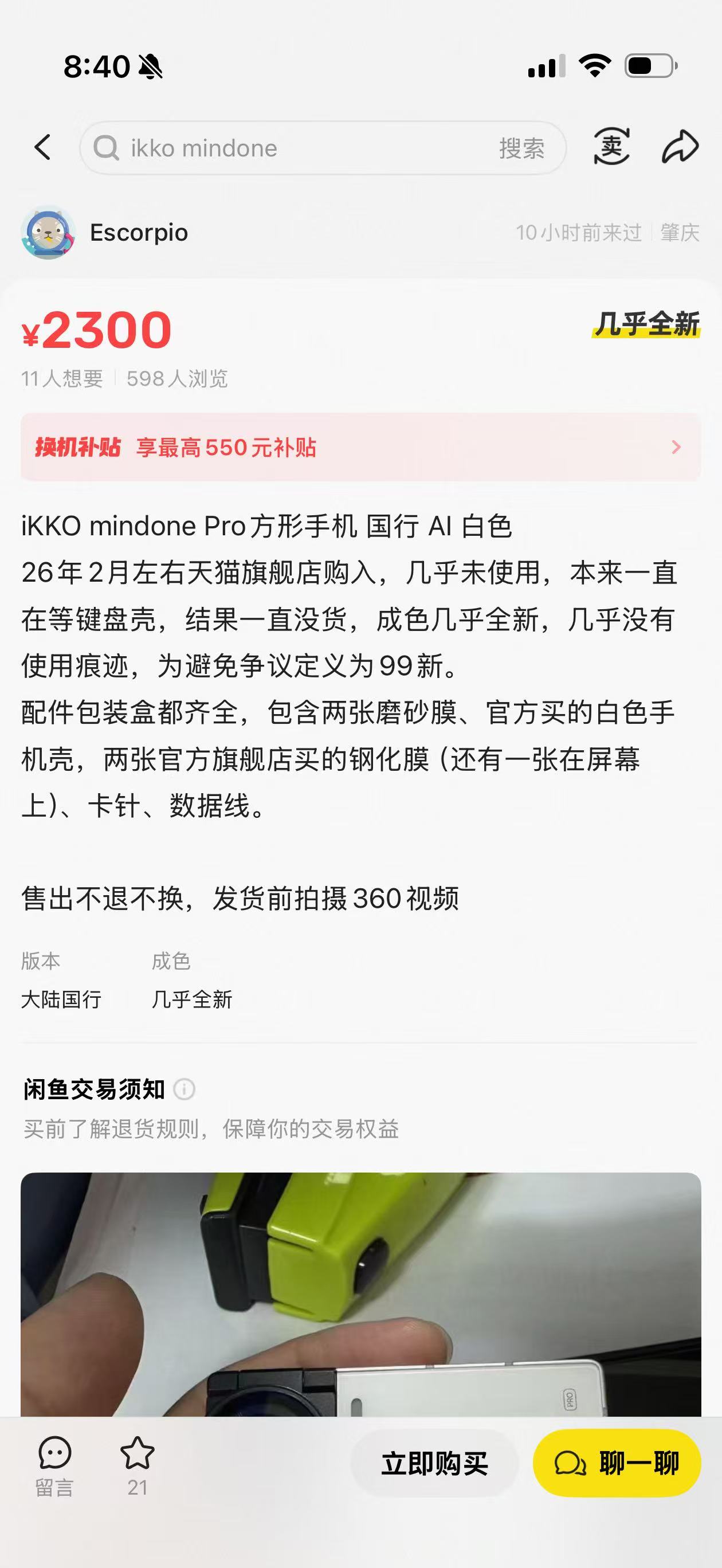
Image Source: Leikeji
These questions are typically not addressed clearly in the item description, necessitating individual inquiries. However, asking too many detailed questions can irritate the seller. Not to mention the numerous back-and-forth exchanges on Xianyu, such as 'What's the lowest price?', 'Is shipping included?', 'No price reductions upon receipt,' which can exhaust patience before the transaction even commences.
Oddly enough, sellers don't have it much easier either.
Many individuals possess idle items at home but are too lazy to sell them. For instance, old phones, unused game consoles, and barely used small appliances could theoretically be resold. However, listing them on Xianyu requires taking photos, writing titles, checking models, setting prices, and answering a barrage of repetitive questions. More troublingly, many people are unaware of their items' current market value.
Of course, Xianyu has acknowledged this issue—recently, it launched a new version of the Xianyu Camera and 'Xianyu Space Mode.' Users no longer need to figure out how to sell their products; they can simply take a photo of their digital products or household items, let the AI identify them, and the Xianyu AI will provide a rough price reference, eliminating the need to hesitate about whether to list them.
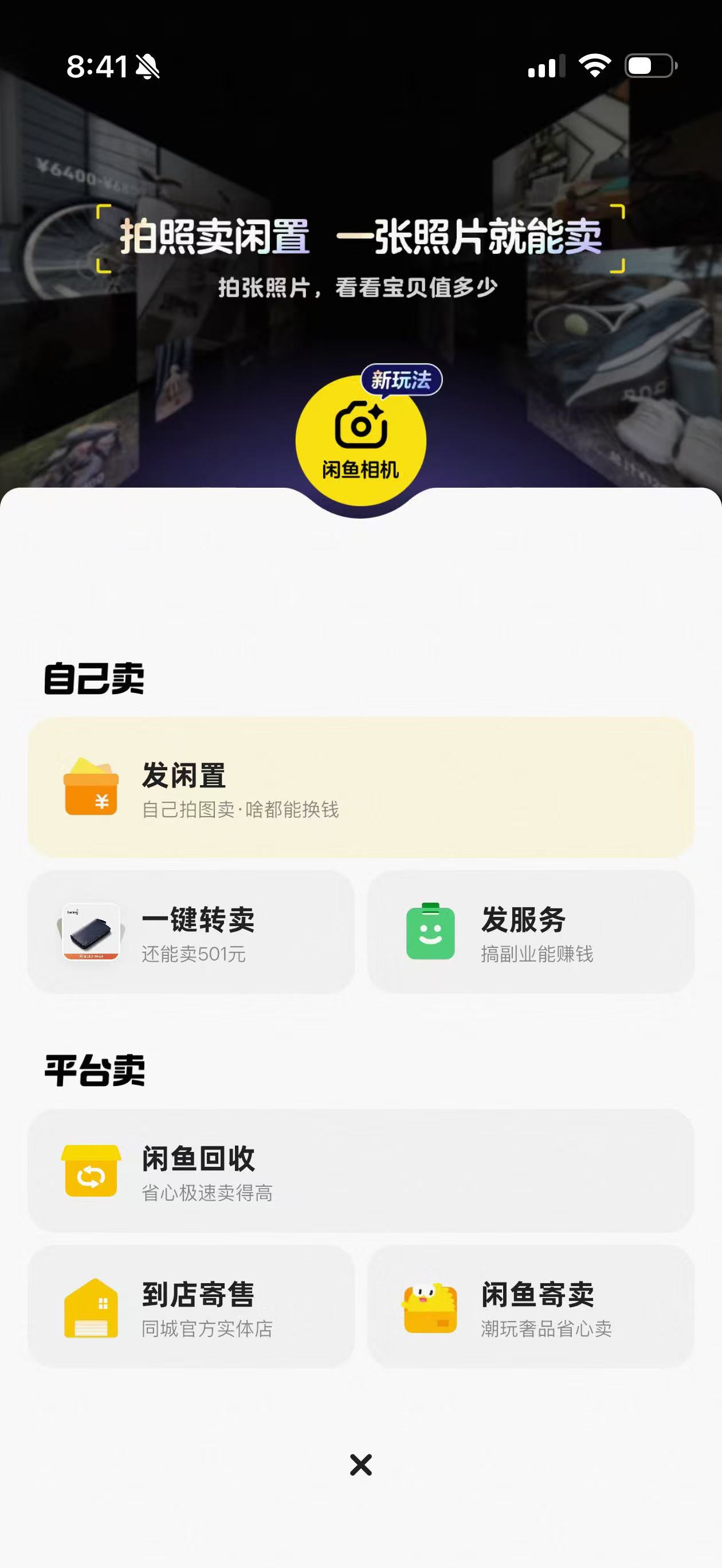
Image Source: Leikeji
For this reason, Leikeji believes that if 'Yu Maimai' can build on this foundation and automatically organize details like model, capacity, accessories, flaws, and purchase date into a coherent description, while suggesting a price based on recent transaction data, it could indeed alleviate the 'laziness to list' issue for some individuals.
Similarly, if 'Yu Maimai' can highlight price ranges for similar items, unusually low prices, missing descriptions, and seller risk warnings when users search for products, it could save a significant amount of screening time. For example, if a phone is priced significantly below market value, the AI could remind users to inquire about repair history and battery condition; if a camera is only described as 'in good condition,' the AI could prompt users to ask for key information like shutter count and photos of viewfinder dust.
However, Leikeji contends that the issues with secondhand trading platforms like Xianyu extend beyond 'slow communication.' Simply having AI negotiate for buyers and respond for sellers only addresses the most fundamental problems in secondhand transactions.
Reflect on the early days of secondhand buying—most people were seeking 'personal idle items.' Someone might sell a TV before moving, a monitor before graduating, or list an old camera lens after upgrading. The descriptions might not have been polished, but we knew we were dealing with an ordinary person. Prices were negotiable, flaws could be inquired about, and while the process was cumbersome, it had a certain charm of 'hunting for treasures.'
Nowadays, secondhand platforms have somewhat lost their original essence: open popular categories like digital gadgets, collectibles, or appliances, and you'll easily find professional sellers listing items in bulk. The titles appear personal, but their profiles reveal dozens or hundreds of similar items; descriptions claim 'personal backup,' yet conversations follow standard customer service scripts; some prices are indeed cheap, but after-sales boundaries are blurry.
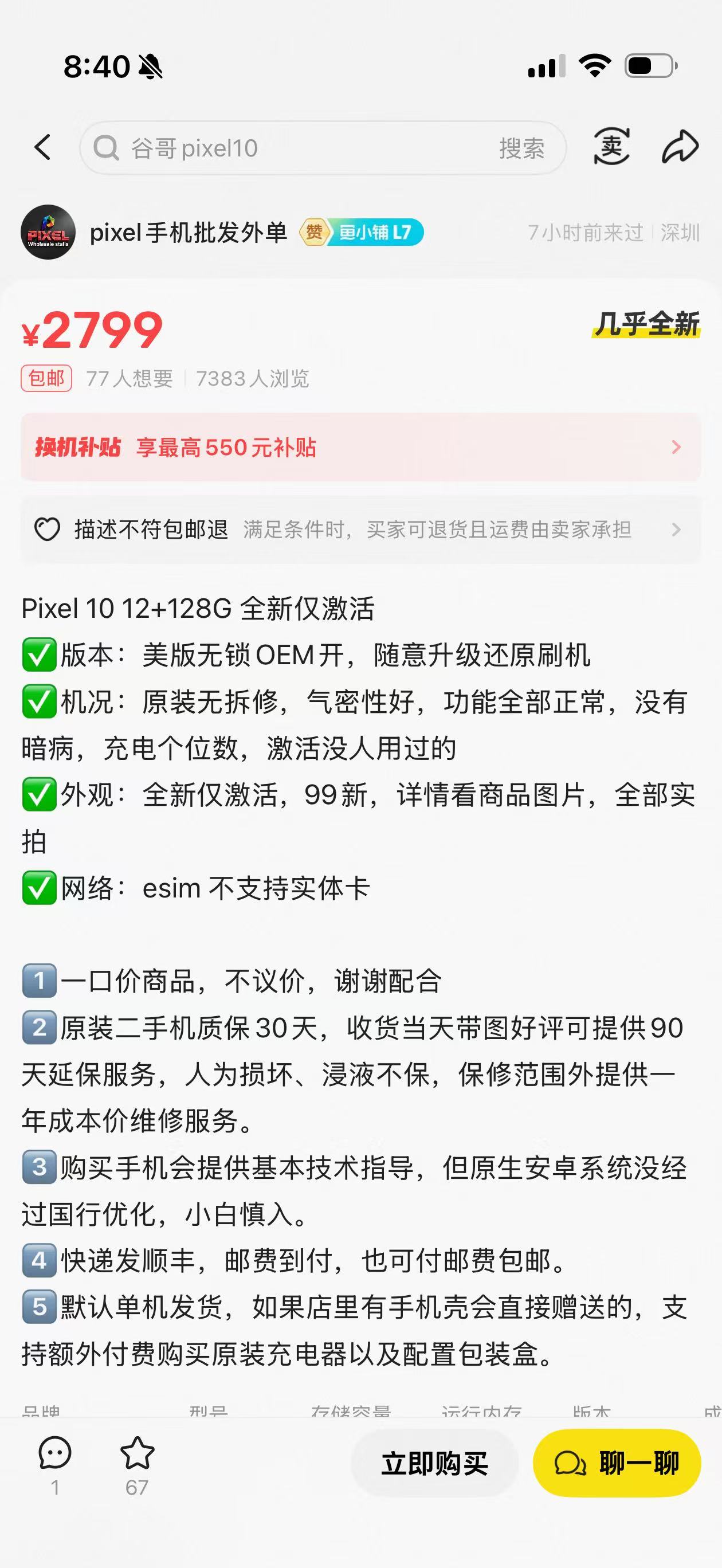
Image Source: Leikeji
For platforms, professional sellers with inventory, quick responses, and high transaction volumes undoubtedly boost activity; however, for ordinary users, the experience becomes awkward. After all, the appeal of secondhand trading isn't merely a 'cheaper version of Taobao.' If users end up facing only professional merchants using 'secondhand transactions' to evade after-sales responsibilities, what value do these platforms offer?
In Leikeji's view, this overly commercialized trading atmosphere is what AI needs to guard against most when entering secondhand trading platforms. If 'Yu Maimai' merely assists sellers in crafting titles that sound more personal, packages 'inventory machines' as 'personal backup devices,' or describes 'slight usage marks' as 'brand new and unopened,' professional merchants will only become more efficient, and ordinary individual sellers will struggle to keep up even with AI assistance.
As a long-time Xianyu user, Leikeji hopes to witness an Xianyu where 'AI bridges the gap between individuals and merchants.' For instance, when listing items, AI could remind sellers to provide (or offer to automatically supplement) key information like purchase date, repair history, accessory status, and flaws; during chats, AI wouldn't just automatically reply with 'Dear, this price is already very low,' but could record both parties' promises.
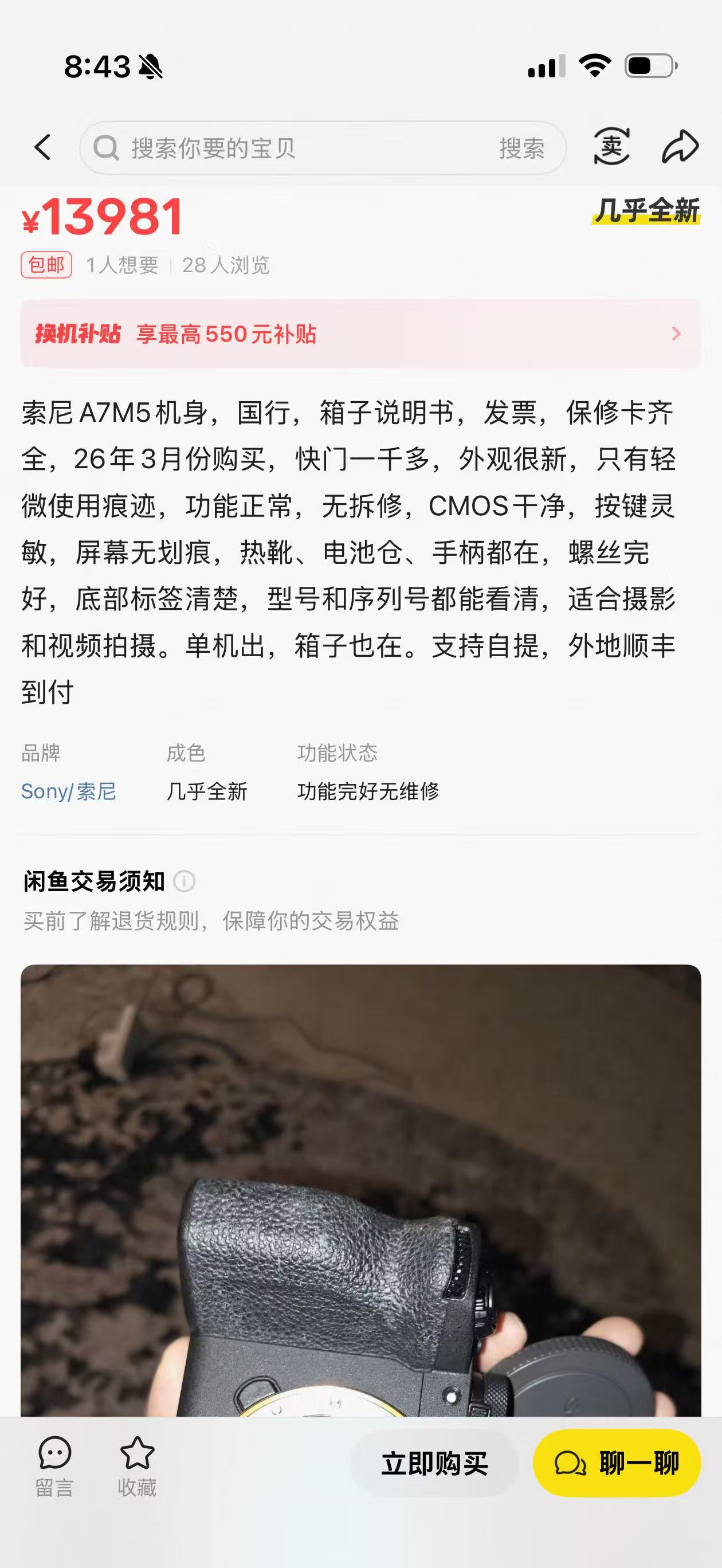
Image Source: Leikeji
More importantly, platforms could utilize AI to more clearly distinguish seller identities. Users aren't entirely opposed to professional sellers—many consider recyclers or secondhand shops when purchasing used phones or cameras. What's uncomfortable is being misled into thinking they're dealing with an individual when it's actually a merchant; or seeing a 'personal transfer' label on what is clearly a bulk operation.
If AI can assist platforms in clarifying roles like personal idle items, professional merchants, refurbished goods, and consignment agents, allowing users to know who they're dealing with before placing an order, Leikeji believes this is far more crucial than using AI to haggle down prices by 20 yuan.
Ultimately, many people don't sell their idle items not because they don't care about money, but because it's too cumbersome. Especially for items like phones, cameras, game consoles, or old textbooks, writing too little makes buyers hesitant, while writing too much risks making mistakes; pricing too high deters inquiries, while pricing too low feels like a loss. In the end, they give up, and the items continue to gather dust in drawers.
From a personal seller's perspective, AI does have the potential to make Xianyu more user-friendly again. However, just as we shouldn't trust AI unconditionally, AI shouldn't transform secondhand transactions into risk-free deals.
Whether a phone has hidden defects, if a camera's shutter count is accurate, if a graphics card was used for mining, or if sneakers are authentic—AI can't determine these from a few sentences. AI can only remind users what to ask, what to check, and which claims require evidence; however, inspection, guarantees, and arbitration still rely on platform mechanisms.
Undoubtedly, features like 'Yu Maimai' and 'Yu Maimai' are worth anticipating; however, Leikeji believes the focus shouldn't be on whether AI can argue, bargain, or prompt shipping for users. What Xianyu truly needs is to bring scattered, ambiguous, and experience-based information in secondhand transactions into the open.
If it can achieve that, AI might genuinely make ordinary users more willing to sell their idle items and make buyers more confident in placing orders.
After all, compared to brand-new e-commerce platforms, the true value of secondhand trading platforms lies in 'buyers spending less' and 'sellers earning more,' ensuring that every idle item continues to shine in the hands of the right person.
AI, Xianyu, e-commerce, secondhand e-commerce, idle item e-commerce
Source: Leikeji
Images in this article are from 123RF's licensed library. Source: Leikeji
-
![]()
Which Brands Will Be the First to Skip the Next Chengdu Motor Show?
-
![]()
Walmart: Steady Performance Marred by Overvaluation Concerns
-
![]()
Can Domestic Autos Still Hold Their Own Against Joint Venture Brands?
-
![]()
Domestic Cars Priced Above 300,000 Yuan Are Gaining Ground in Chengdu
-
![]()
Sedans Face an Uphill Battle in Sales
-
![]()
BBA Takes a Leap of Faith: No Sales, No Tomorrow
-
![]()
Chengdu Unfaded: BYD and Geely Vie for Championship While the Weak Exit
-
![]()
3X Salary Poaching, 40 Executives Depart: Autonomous Driving Talent is Batch-Producing Embodied AI Leaders