Computing Power Infrastructure: Sudden Pause or Strategic Shift?
 07/13 2026
 429
429
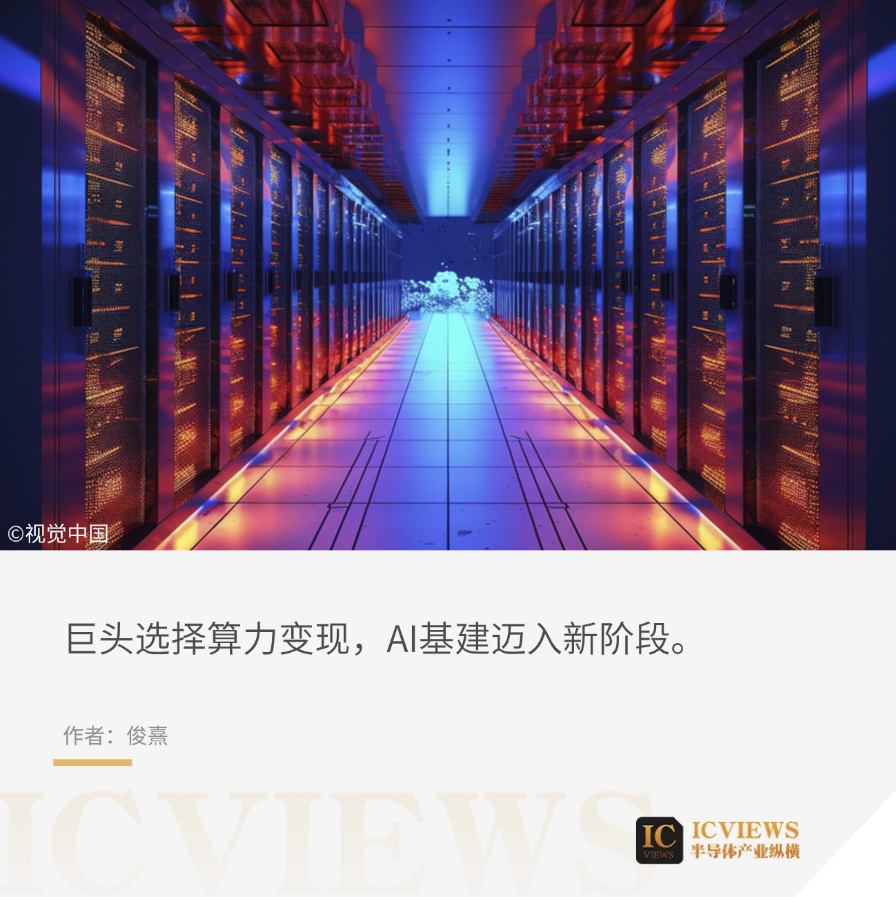
The global AI infrastructure landscape has recently witnessed dramatic shifts. Meta’s announcement to lease surplus AI computing power triggered significant turbulence in capital markets. Soon after, SoftBank Group officially launched SB Neo, marking its aggressive entry into the U.S. computing power leasing market. Meanwhile, Blackstone Group abruptly suspended its $100 billion+ global data center project, while Microsoft scrapped a $3 billion cloud computing deal with Oracle over security concerns.
On one hand, tech giants are moving to "monetize computing power"; on the other, multi-billion-dollar infrastructure projects are grinding to a halt. This paradoxical market behavior raises critical questions: Is the AI computing power market already oversaturated? Is the investment bubble in computing infrastructure about to burst?
A deeper analysis from the semiconductor industry perspective reveals not a simple oversupply, but a fundamental restructuring of AI industry development logic. The era of reckless, cost-insensitive expansion is ending, and AI infrastructure competition is entering a new phase where "efficiency becomes king."
01 Giants Embrace Computing Power Monetization
In July 2026, Meta unveiled plans to launch a cloud infrastructure business, offering AI computing power and model access to external clients. This announcement sent Meta’s stock soaring nearly 9% in a single day, boosting its market value by approximately $127 billion. However, the move triggered collective pressure across the AI computing power industry chain—shares of emerging leasing players like CoreWeave and Nebius plummeted over 13%, while memory chip giants Micron, SK Hynix, and Samsung Electronics all saw significant declines.
The market’s immediate reaction was panic: If even Meta can’t consume its own GPUs, it signals a computing power glut.
However, this linear thinking overlooks the unique nature of AI computing assets and the true strategic intentions of industry leaders. Meta’s leasing strategy represents an upgrade in asset operational efficiency rather than a sign of peak demand.
In 2026, Meta’s capital expenditure guidance reached $125-145 billion, with the vast majority allocated to data centers and GPU procurement. To date, the company has committed a cumulative $183 billion to AI infrastructure. As a business deriving 98% of its revenue from advertising, Meta’s multi-billion-dollar annual investments have created a massive computing power cluster, yet its open-source Llama model generates no direct revenue. Monetizing previous-generation or temporarily idle resources externally not only dilutes depreciation and operational costs but transforms GPU clusters from "pure cost centers" into "revenue-generating assets." Morgan Stanley estimates that leasing 250MW of computing power for a year could generate approximately $10 billion in revenue for Meta.
This isn’t a Meta-exclusive innovation. Previously, Musk’s xAI successfully leased computing power from its Colossus supercomputing cluster at scale. Multiple reports indicate Anthropic rented Colossus 1’s entire capacity—about 220,000 Nvidia GPUs—paying up to $1.25 billion monthly through May 2029, totaling approximately $40 billion. Google also pays $920 million monthly to lease bridging computing power due to delays in its own data center construction. These two deals alone generate over $2.1 billion in monthly cash flow for SpaceX. Institutional estimates suggest that at this rental level, the implied return on investment would recover all capital expenditures within approximately two years.
SoftBank Group’s entry further validates the sector’s attractiveness. On July 2, SoftBank announced SB Neo’s establishment, planning to launch cloud services based on Nvidia’s latest GPUs for U.S. enterprises by fiscal 2027. The company aims to build 10GW of AI data center infrastructure, with an initial 800MW facility in Ohio. To fund this expansion, SoftBank is securing a $10 billion loan using its OpenAI shares as collateral.
From Meta to xAI to SoftBank, tech giants are becoming "computing power landlords" not because they no longer need computing power, but because they must find new investment return pathways amid soaring capital expenditures. As Tianfeng Securities notes: "Meta’s AI cloud doesn’t indicate universal GPU oversupply. This isn’t the end of AI capital expenditure transactions but an evolution of business models from pure infrastructure burning to chargeable platform assets."
Notably, Synergy Research data shows 2025 neocloud (new-generation computing power cloud) market revenue exceeded $25 billion, surging over 200% year-on-year. Gartner predicts neocloud providers will capture 20% of the AI cloud market by 2030. However, McKinsey warns this business model faces commoditization risks—when GPU supply eases, models relying solely on GPU availability will face margin compression. Meta’s entry undoubtedly intensifies this competitive pressure.
02 Data Center Construction Faces Real-World Constraints
While the computing power leasing market thrives, physical data center construction repeatedly encounters practical limitations.
In early July, Blackstone Group’s data center operator QTS formally halted the Digital Gateway project in Virginia. Spanning 2,100 acres with planned investment exceeding $100 billion, the project aimed to build 37 data center buildings, which would have become the world’s largest data center campus. However, after five years of local resident resistance, a state court ruling invalidated zoning approval, and multiple partner withdrawals, Blackstone chose to cut losses. Days earlier, Blackstone sold three mature Virginia data center assets for $3.5 billion, signaling clear strategic contraction.
Similarly, in June, computing infrastructure company Crusoe "paused" a massive 1.8GW Wyoming data center project after major client Google raised "serious concerns" about its energy consumption, which could power a medium-sized city.
These mega-project failures expose multiple systemic challenges underlying the AI computing infrastructure boom:
1. Power Supply Bottlenecks
Data centers are energy-intensive. The U.S. Electric Power Research Institute reports they currently account for 5% of U.S. electricity demand, potentially tripling by 2035. In Virginia—the world’s most densely populated data center region—this proportion already exceeds 25%. The existing power grid cannot match AI infrastructure demand growth. Morgan Stanley analysis shows over 60% of data center projects planned for completion by 2027 haven’t started construction, primarily due to power supply constraints. In Q1 2025 alone, delayed U.S. data center projects were valued at approximately $130 billion.
2. Community Resistance and Policy Tightening
A Gallup poll reveals 70% of Americans oppose building AI data centers near their homes. Concerns about energy consumption, noise, water usage, and rising living costs frequently stall AI projects at the community level. In Q1 2026, opponents hindered or delayed at least 75 U.S. data center projects. Active grassroots opposition groups targeting data centers surged from 396 in late 2025 to 833 by March 2026, covering 49 states. In 2025, canceled data center projects quadrupled to 25, with $18 billion in projects blocked and $46 billion delayed.
3. Compliance and Security Requirements
Microsoft abandoned its $3 billion cloud computing deal with Oracle because Oracle lacked federal security certifications required to manage U.S. government data and was unwilling to undertake large-scale engineering modifications. This incident demonstrates that amid growing computing power supply, security compliance has become a non-negotiable threshold for computing transactions.
Power shortages, water scarcity, and permitting delays are replacing "chip shortages" as the primary constraints on computing infrastructure. Blackstone’s exit and Crusoe’s pause signal that capital’s AI infrastructure investment attitude is shifting from frenzy to rationality. These bottlenecks won’t eliminate computing power demand but will delay its realization—locked-in orders remain, but new project implementation cycles will significantly lengthen.
03 Computing Power Supply-Demand Enters a New Phase
What do the rise of computing power leasing and infrastructure delays mean for the semiconductor industry chain?
First, it’s crucial to clarify that high-end AI computing power remains undersupplied. Industry research indicates the current market suffers from "structural mismatch"—while some low-end general-purpose computing power lacks application scenarios, the gap in high-end intelligent computing power for large model training remains as high as 40%, with demand outstripping supply.
Semiconductor giants’ financial results fully support this assessment. Nvidia’s FY2026 revenue reached a record $215.9 billion, up 65% year-on-year, with data center revenue hitting $193.7 billion (90% of total). Quarterly data center revenue surged 92% year-on-year. TSMC CEO C.C. Wei stated in June that global AI chip demand remains robust, and despite production expansion efforts, supply will fall short for years. TSMC’s May revenue soared 30% year-on-year, with 2026 capital expenditures projected at $52-56 billion (leaning toward the upper limit). Recent reports indicate Nvidia and other AI chipmakers still face shortages, with TSMC’s advanced process and packaging capacities remaining tight.
In memory, competition for HBM remains fierce. SK Hynix, leveraging its HBM market lead, has surpassed Samsung Electronics in market value to become South Korea’s most valuable company. Samsung and SK Hynix have advanced next-generation HBM4 mass production to early 2026 to meet surging AI demand.
However, the proliferation of computing power leasing models is reshaping industry chain procurement logic. When giants like Meta and xAI open their computing power to external clients, they enhance overall societal computing utilization. Small and medium-sized AI enterprises no longer need to purchase expensive hardware but can lease instead. An Apollo report notes GPU prices have surged about eightfold since early 2025, making leasing models more attractive to SMEs. This resource-sharing model has slowed total computing power demand growth, prompting cloud providers to prioritize cost-effectiveness and energy efficiency in hardware procurement.
This dynamic explains why AI giants are investing in self-developed chips. On June 24, OpenAI jointly launched the Jalapeño chip with Broadcom—its first self-developed chip optimized for large model inference, designed and produced in just nine months. Meanwhile, Anthropic is negotiating with Samsung for custom AI chip development; Meta’s fourth-generation self-developed chip, "Iris," is scheduled for September production, aiming to double computing power. Facing high GPU costs, AI giants are reducing unit inference costs through customized chips to decrease reliance on Nvidia. This trend benefits chip design companies like Broadcom but poses potential long-term threats to Nvidia’s inference market share.
From a broader industry chain perspective, computing power leasing models are fostering a new supply-demand balance mechanism. Previously, the AI computing power supply chain followed a linear path: chip designers sold to cloud providers, who either used the chips internally or resold them to end clients. Now, giants serve as both the largest chip buyers and computing power lessors. This "self-use + external leasing" dual identity significantly boosts computing resource allocation efficiency. For semiconductor equipment makers, this means downstream clients’ procurement behaviors will become more rational—shifting from panic buying to refined procurement based on actual utilization and ROI. In the short term, this may slow some order rhythms; but in the long run, a healthier demand structure benefits sustainable growth across the industry chain.
-
China's Private Commercial Rockets: The Next Challenge Post-Long March 10B
-
![]()
New Energy Vehicle Owners: How Much More Will You Pay in Vehicle and Vessel Tax?
-
![]()
The next generation of robots may not necessarily resemble humans
-
Hikvision Makes Its Grand Debut at the World Artificial Intelligence Conference, Unveiling the All-Encompassing Guanlan Large Model Technology System
-
![]()
GPT-5.6 Deletes a Tech Mogul's Files: Before Granting AI "Full Access," Ensure You Have a Backup Plan
-
![]()
120,000 Layoffs in Silicon Valley Due to AI
-
![]()
Volkswagen Group to Slash Model Range by Half, Cut 1 Million Units of Production Capacity in China and Europe
-
![]()
World Models 101: Fundamentals, Technical Debates, and Scientific Frontiers