Doubao Mobile Phone: A Pioneering Leap in the Smartphone Industry!
 12/08 2025
 694
694
Text by Wang Yongzhi, Art by Gu Qingqing
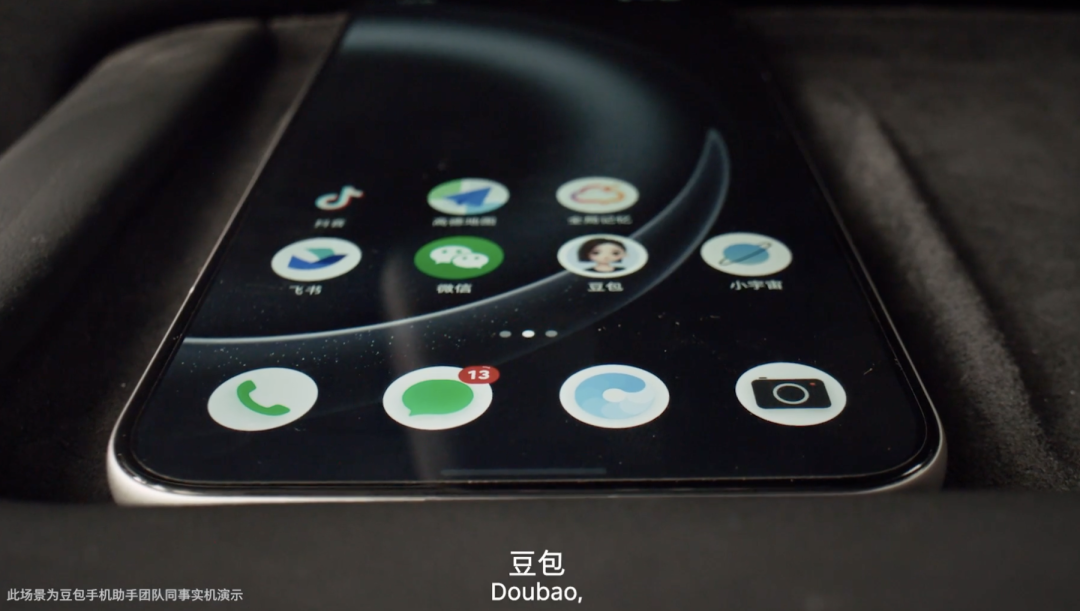
The buzz surrounding Doubao Mobile Phone isn't merely because it's a new gadget; rather, it's due to its groundbreaking approach:
Empowering AI to take charge of smartphone operations, enabling the device to proactively comprehend and execute user intentions.
While the entire industry is still preoccupied with hardware enhancements, Doubao opts to redefine smartphone capabilities through a 'system-level AI agent'.
The arrival of Doubao Mobile Phone is akin to a sudden bolt of lightning illuminating the industry, redirecting everyone's focus to a fundamental question:
Who should ultimately steer the next generation of smartphones? Is it the allure of more powerful hardware, or the intelligence of smarter AI?
Doubao's response is both bold and unequivocal:
The future isn't about users mastering smartphones; it's about smartphones mastering the art of understanding users.
It's precisely this directional breakthrough that bestows historical significance upon Doubao Mobile Phone in 'propelling the era forward'. Even if it's not yet fully mature, and even if it encounters opposition, resistance, or even failure down the road, the path it has blazed is already poised to leave an indelible mark on the history of smartphones, AI, and technology.
01
The Significance of Doubao Mobile Phone Lies Beyond 'Smartphones'—It's About Revolutionizing the Game
Over the past fifteen years, innovations in the smartphone industry have largely been confined to the hardware realm:
Cameras have become clearer
Screens are larger and brighter
Charging speeds have soared
Performance has been enhanced
Systems operate more smoothly
Yet, the user's operational logic remains unchanged:
It's still a matter of 'one person navigating through numerous apps step by step'.
Doubao is the first to truly disrupt this paradigm—
It unveils a new interaction logic to the world:
Users articulate their intentions, AI comprehends them, and AI operates the phone on their behalf.
This isn't merely a 'voice assistant' or 'smart recommendation';
it's a system-level 'AI agent mode'.
The emergence of this mode marks a historical watershed in itself.
02
Doubao Has 'Touched' the Most Sensitive and Crucial Layer of the Industry: System Permissions
Why has Doubao sent shockwaves through the entire industry?
Because it's not just another app; it's a system-level AI capable of:
Screen reading
UI comprehension
Automatic cross-app operations
Simulating user behavior
This encroaches upon the core control rights of all smartphone manufacturers:
Whoever holds system permissions holds the key to the future form of smartphones.
Manufacturers have long viewed AI as a mere 'add-on' for enhancing experiences;
Doubao, however, demonstrates with its tangible product:
AI isn't an add-on; it's the next-generation operating system itself.
This realization has dawned upon the industry for the first time:
Perhaps the real competition in future smartphones lies not in cameras or chips, but in whose AI can better understand users and genuinely assist them in completing tasks.
03
The Struggle for Permissions Will Ultimately Lead the Industry Towards Standardization, and Doubao Is the Catalyst of This Era
Many manufacturers currently adopt a defensive stance towards Doubao, which is understandable:
Fear of losing user access points
Fear of their OS being marginalized
Fear of AI seizing control
Fear of user migration
However, a deeper trend is inevitable:
Future AI will inevitably require system-level agent permissions. Manufacturers may resist for a day or a year, but they cannot halt an entire era.
AI's agent permissions will eventually become part of industry-standard APIs, not solely dictated by manufacturers.
And it's Doubao that has made the industry aware of this trend and compelled it to confront this issue.
This is its historical significance.
04
The Greatness of Doubao Lies Not in Perfection, but in Its Willingness to Take Risks
Frankly speaking, today's Doubao still has significant room for improvement:
Certain operations are unstable
Some manufacturers restrict permissions
Certain apps defend against it
Users harbor concerns about privacy and security
However, great attempts are never defined by 'perfection'.
What did the first generations of revolutionary products look like in history?
The first-generation iPhone couldn't copy and paste
The first Tesla Roadster frequently malfunctioned
The first-generation Android phones were severely laggy
The first PCs had limited functionality
The first version of the internet was as slow as molasses
But none of these flaws mattered because they accomplished something far more significant:
They opened up a new direction.
The same holds true for Doubao.
It's the first shot fired in the era of AI smartphones,
the first time the industry has witnessed 'AI agents truly come to life',
and the beginning of a decade-long transformation in digital device forms.
Summary
Regardless of its commercial success or failure, Doubao has already propelled the era forward.
The mission of Doubao Mobile Phone isn't to compete, but to enlighten;
not to become mainstream, but to pave the way for the future;
not to win the market, but to push the era one step closer to its destiny.
Its commercial success may remain uncertain,
but its historical value has already been cemented.
When future generations look back at the dawn of the AI smartphone era,
Doubao will undoubtedly be prominently featured in that history:
It's the first smartphone to truly make the device 'come alive'; the first system-level AI to challenge the traditional interaction system; the first spark to ignite AI agent competition across the industry.
Regardless of success or failure,
it's a great, courageous, and era-defining attempt.
-
![]()
Registered Capital Slashed to 372 Million Yuan! Yutong Optical Finalizes Industrial and Commercial Change Registration
-
![]()
Zhuque-3 Successfully Lands, and 'Time Traveler' Secures Another ¥100 Million in Funding: China's Commercial Space Industry Experiences a 'Dynamic August'
-
![]()
Autohome Faces a Shrinking Window of Opportunity
-
![]()
Even a Titan Like Musk Has Faced Setbacks in Fulfilling Promises
-
![]()
AI Office: The End of the Racing Era, Context Becomes the Key to Success
-
![]()
Domestic Vehicle Chassis Revolution ②: The Steering Wheel Remains, But Mechanical Connections in the Steering System Are Decreasing
-
![]()
Exploring MiniMax Design: Can Video Editing Be as Simple as Speaking?
-
![]()
Why Can SenseTime Achieve Profitability While CloudWalk Still Faces Challenges, Despite Both Adopting Large Models?