ByteDance Denies Car Manufacturing Plans but Aims for AI Hardware Market with Smartphones, Earphones, and Glasses
 01/08 2026
 802
802
On January 7th, Beijing Time, reports surfaced suggesting that ByteDance was teaming up with automakers to venture into car manufacturing. However, a ByteDance spokesperson swiftly refuted these rumors, clarifying that the company has no intentions of producing cars, according to media reports.
Despite denying car manufacturing plans, ByteDance has already made significant inroads into the automotive sector.
First, let's look at a relevant A-share stock. Seres has seen its stock price climb over the past two days, with a cumulative increase of 5.80%, marking a notable uptick for the company recently.
The surge in Seres' stock price can be attributed to its October 9th, 2025, agreement with ByteDance's Volcano Engine. The two companies signed an 'Embodied Intelligence Business Cooperation Framework Agreement,' focusing on the digital and intelligent upgrade needs within the automotive industry ecosystem. This partnership aims to create a novel 'technology + scenario' integration model.
Earlier, on September 23rd, ByteDance and Mercedes-Benz entered into a similar cooperation pact. This agreement specifically targeted five key areas: intelligent cockpits, intelligent assisted driving, intelligent R&D, digital marketing, and customer operations. The collaboration also leverages Volcano Engine to deliver AI, cloud, and big data capabilities. Notably, the partnership began in 2023 when Volcano Auto Entertainment was integrated into Mercedes-Benz's intelligent cockpit.
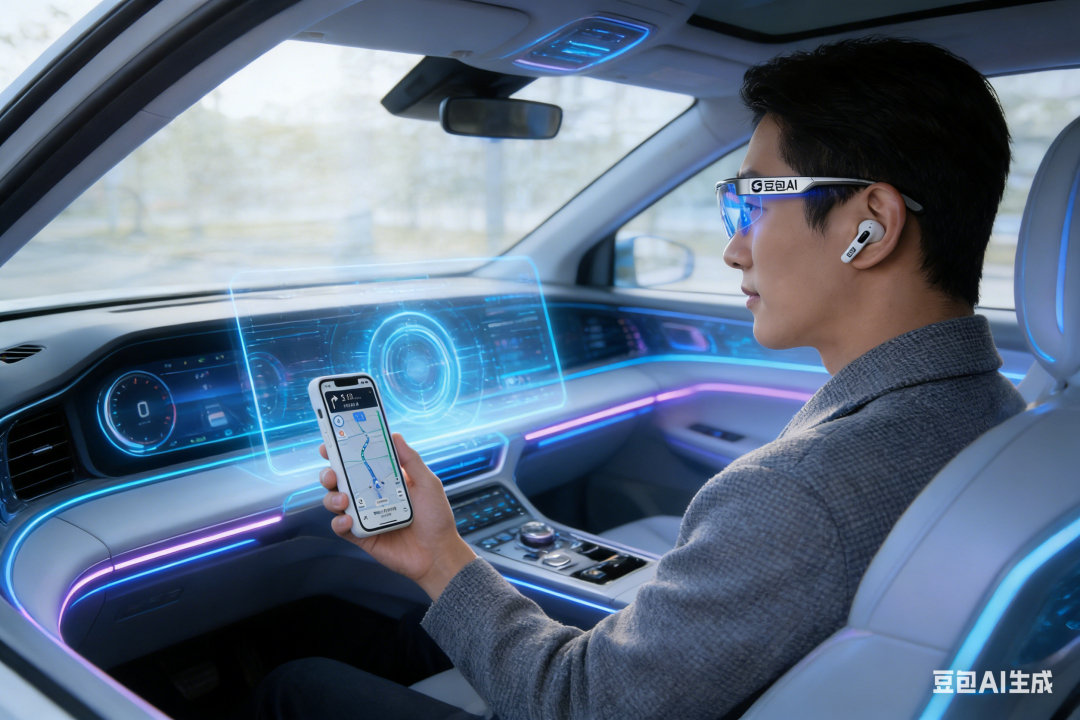
Beyond its automotive endeavors, ByteDance is also vying for a foothold in the AI hardware market, including earphones, smartphones, and the latest innovation—glasses.
As early as September 2021, ByteDance invested heavily, spending approximately 9 billion yuan to acquire XR company PICO and also acquiring some assets of Smartisan. By the end of 2025, reports emerged that Zhang Yiming had internally stated their commitment to continuing Smartisan phone production, citing manageable annual losses.
On December 1st, 2025, ByteDance and ZTE jointly unveiled a system-level AI smartphone—the ZTE Nubia Doubao AI Phone.
This phone quietly made its debut on the ZTE Mall but quickly garnered significant attention, amassing over 500,000 pre-orders before its official sale. The initial batch of 30,000 units sold out in just 47 minutes. Influenced by this news, ZTE's A-share stock soared to its daily limit on the sale day, with a market value surpassing 2.1 trillion yuan, while its H-share stock surged by over 13%.
In the secondary market, this phone, initially priced at 3,499 yuan, was once resold for over 12,000 yuan, though the price later stabilized.
This AI-native phone marks ByteDance's foray into the AI hardware market. By collaborating with smartphone manufacturers, ByteDance leverages its core technologies, such as the Doubao large model, UI-TARS visual understanding, and Cuia Agent intelligent proxy, to deliver a unique user experience.

This phone also showcases Chinese companies' exploration of AI applications, being the world's first true AI smartphone. Public reports indicate that ByteDance is in talks with smartphone manufacturers to collaborate on launching more AI smartphones. However, this path is fraught with challenges, as AI-native smartphones disrupt the existing interest patterns of smartphone manufacturers, which may explain Zhang Yiming's resolve to persist with Smartisan phones.
Unconfirmed reports suggest that the Doubao AI Phone was actually developed by ByteDance but had to be presented as a jointly developed product due to external pressures. This is because ByteDance's apps still heavily rely on the existing smartphone user base and pre-installations on smartphone apps to acquire new users. However, ByteDance's user base growth has largely plateaued.
In addition to AI smartphones, ByteDance has also ventured into AI earphones and is now exploring the launch of AI earphones with cameras, an innovative direction in the earphone industry that focuses on perception and interaction.
More anticipated, perhaps, are the AI glasses that ByteDance is set to launch.
Current reports indicate that these AI glasses will utilize Qualcomm's AR1 chip, as the BES2800 requires an external ISP chip, with hardware support provided by Fortune Techgroup. They will weigh under 50g, come in a camera version, and 100,000 units will be produced mainly for testing purposes, meaning they will not be publicly sold initially. It remains unclear whether the second version will be available to the public.
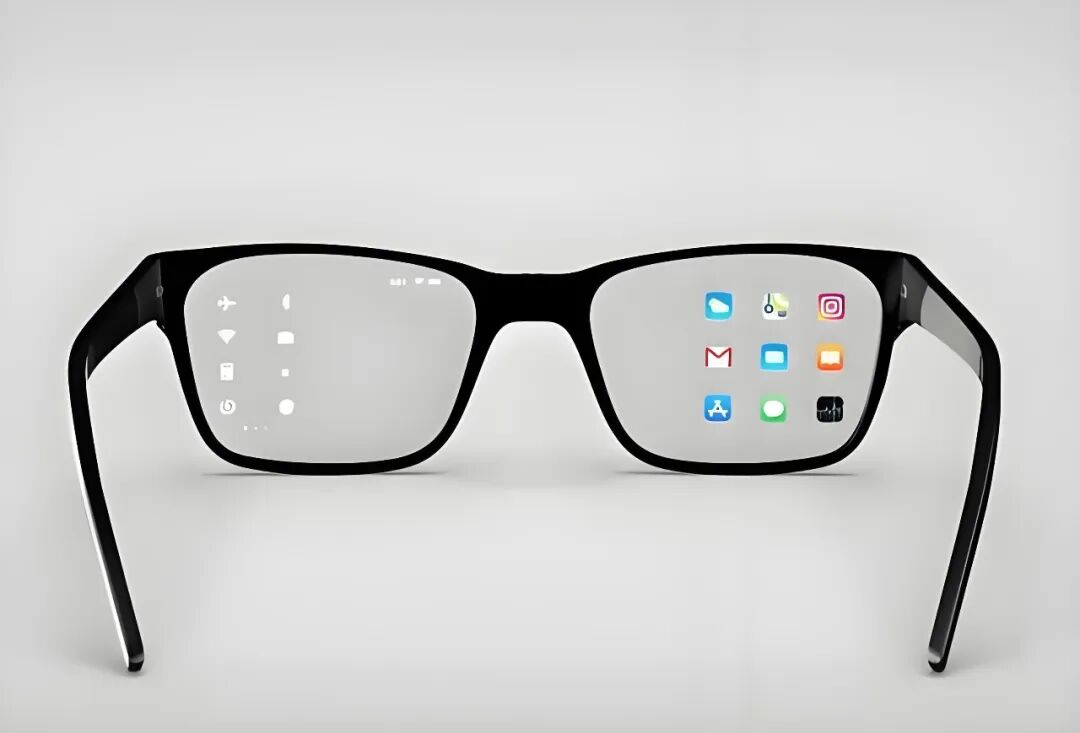
ByteDance's AI glasses will be integrated with the Doubao app, forming a small ecosystem alongside earphones and other devices.
From a certain perspective, ByteDance is using hardware like earphones and glasses to capture and retain user time.
Zhu Mingming, the founder of Rokid, expressed hope that AI glasses can attract fragmented usage time from smartphone users.
ByteDance's greatest asset is its ability to occupy user time through its apps. The rise of AI hardware will inevitably divert user attention, making this a battle ByteDance cannot afford to lose.
OpenAI, the world's highest-valued AI company, is also exploring various commercialization attempts, including AI hardware. According to supply chain sources, OpenAI's first hardware product will be a pen, which is unexpected. Is this targeting users who still use pens or cultivating a new pen-using demographic?
Consider who frequently uses pens? Besides students, perhaps.
Perhaps OpenAI aims to capture the original inhabitants of the internet.
Everyone is vying for users, employing different strategies but with the same ultimate goal of capturing user time for commercial monetization.
As for which hardware these AI giants will venture into, it will undoubtedly vary. However, one certainty is that all hardware will be reimagined with AI, leading to the emergence of numerous hardware directions, as evident from CES 2026.
As a company with a vast user base and substantial financial resources, ByteDance's exploration in AI is worth monitoring to uncover potential investment opportunities.
-
![]()
Registered Capital Slashed to 372 Million Yuan! Yutong Optical Finalizes Industrial and Commercial Change Registration
-
![]()
Zhuque-3 Successfully Lands, and 'Time Traveler' Secures Another ¥100 Million in Funding: China's Commercial Space Industry Experiences a 'Dynamic August'
-
![]()
Autohome Faces a Shrinking Window of Opportunity
-
![]()
Even a Titan Like Musk Has Faced Setbacks in Fulfilling Promises
-
![]()
AI Office: The End of the Racing Era, Context Becomes the Key to Success
-
![]()
Domestic Vehicle Chassis Revolution ②: The Steering Wheel Remains, But Mechanical Connections in the Steering System Are Decreasing
-
![]()
Exploring MiniMax Design: Can Video Editing Be as Simple as Speaking?
-
![]()
Why Can SenseTime Achieve Profitability While CloudWalk Still Faces Challenges, Despite Both Adopting Large Models?