NetEase: A Year of Strategic Pause and Forward Momentum
 02/14 2026
 754
754
Written by | Wu Kunyan
Edited by | Wu Xianzhi
In the world of motorsport, rally racing stands as a testament to endurance and strategic planning. Unlike the dramatic sprint to the finish line, rally racing is characterized by the relentless endurance of long stages and the challenge of complex road conditions. Despite its seemingly gentle pace, it rigorously tests the stability of both machines and organizational structures.
Once upon a time, NetEase was also caught up in the frenetic sprint of launching new products. However, by 2025, the company had begun to shift its focus, redefining the criteria for success from explosive short-term power to sustained long-term endurance.
On February 11, NetEase released its Q4 and annual report for 2025, providing a clear backdrop for this strategic transformation.
Last year, NetEase's gaming revenue soared to RMB 92.1 billion, marking a 10.2% increase year-on-year and demonstrating overall stability. Profitability remained robust, with the annual operating profit surging by 21.1% year-on-year and operating cash flow inflow reaching RMB 50.7 billion.
On the flip side, NetEase's quarterly gaming revenue experienced a modest uptick of 3.4%, reaching RMB 22 billion. This growth contrasted with the deferred revenue reflected in its consolidated balance sheet. The financial report revealed that deferred revenue had ballooned by 34.1% year-on-year to RMB 20.51 billion. Deferred revenue represents prepayments received by game companies for content that players have paid for but has not yet been fully delivered. The expansion of this metric indicates a substantial reserve for future revenue recognition.

The slowdown in single-quarter revenue growth, coupled with the continued expansion of deferred revenue, signals a shift in growth drivers. Specifically, NetEase's rally race is unfolding on two fronts: domestic and overseas markets.
Domestically, NetEase has concentrated its resources on a select few core projects, gradually establishing a new business model centered around high-frequency content updates and appearance-based monetization through products like
Overseas, NetEase has leveraged its mature domestic content production and operational capabilities as a competitive edge, attempting to wage an asymmetric war by making products, rather than capital, the protagonist of its global expansion.
Breathing Doesn't Cost Money Anymore
"From now on, there will be no more casual dragon-slaying. May everyone fare well, and see you in the Jianghu again!"
This was the server-wide message sent by renowned streamer PDD before he melted in-game items and deleted his character due to operational mistakes in the PC version of
From the perspective of domestic gaming history, since Giant Network's
As an MMO pioneer, NetEase naturally developed a highly mature operational and monetization system.
This model was highly efficient. Even MOBAs like
During the "Black Swan" period, the surge in online entertainment demand propelled the industry into a high-growth phase, accompanied by an expanding player base. Low-cost expansion somewhat masked structural issues. It wasn't until the dividends faded, customer acquisition costs rose, and player retention pressures mounted that the limitations of this model became apparent.
It was during this transition period that NetEase began adjusting its growth logic. Interestingly, the company also reduced group marketing expenses and launched an internal anti-corruption campaign at the decision-making level during the same period.
While continuing the IP's worldview and gameplay system,
In

In terms of resources, unlike the past where "time" and "money" (grinding or paying) were the main factors, the game strictly limited resource output frequency and replaced them with relatively fair "probabilities."
As a result, the product reduced the marginal benefit of player spending on gameplay, tilting the experience more toward appearance, story, art, and other content.
"Shifting gears" is never a smooth process. During the transition between old and new business models, NetEase inevitably faced some challenges.
For example, the
Fortunately, NetEase gradually developed operational logic and strategies corresponding to appearance-based monetization.
The appearance-based business model is directly proportional to the active player base. Games also need to provide spaces for players to showcase personalized fashion and gain social recognition. Thus,
Multiplayer gameplay provides crucial social endgame experiences, while story and art are responsible for player immersion and retention. This led to the aforementioned growth in deferred revenue—player spending is consumed alongside content updates, with upfront investments reflecting strong expectations for future game content.
Asymmetric Warfare
On December 27,
According to incomplete statistics by Guangzi Planet, since its anniversary, the product has released 23 free or differently priced fashion items. Additionally, several storylines and a large map were updated simultaneously.
From the perspective of deferred revenue, this will release a considerable portion of revenue into the financial statements—the higher the update density, the clearer the revenue release rhythm.
On the other hand, behind this business model established for stock competition (existing market competition) emerged a massive content production capacity and an iteration efficiency to match.
The ability to supply strong content gradually took shape, and NetEase unintentionally confined it to the domestic market, instead attempting to export it overseas.
During the earnings call, management made a clear statement: "In the past two years,
The so-called core elements, when visualized, represent the efficiency gap gradually forming between domestic and overseas markets in terms of continuous game content production and servicing.
Take
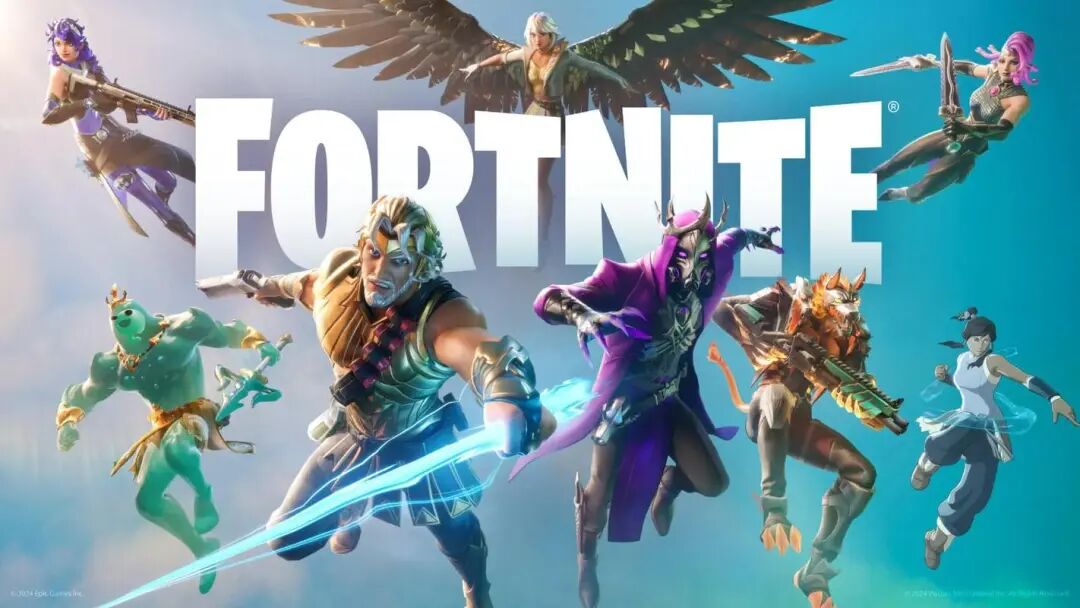
On the other hand, the overseas gaming industry is concentrated in Europe and the United States, where labor costs are extremely high. According to the 2025 Game Developers Conference (GDC) salary report, the average annual salary of game professionals in the United States is USD 142,000 (approximately RMB 1.01 million).
Looking back at NetEase, based on industry standards and its most recent disclosure of approximately 30,000 employees (75% of R&D expenses after deducting depreciation and travel), its R&D expenses last year were RMB 16.2 billion, with an average labor cost of approximately RMB 405,000 per person per year.
In comparison, it is evident that NetEase's domestic and overseas games show a significant "cost differential" in terms of labor cost-effectiveness. This has driven NetEase to overhaul its globalization approach, initiating an asymmetric war overseas—abandoning capital-intensive expansion and instead relying more on content output frequency and version density to capture player attention.
In terms of capital, NetEase not only significantly slowed its global investment pace since 2022 but also methodically contracted, divested, or shut down overseas studios invested in or established during its global expansion period in the past two years.
On the pipeline front, NetEase chose to restart globalization with self-developed titles. Take
According to Sensor Tower data, as of August 3 last year,
However, since its launch, the product has primarily targeted overseas markets. Coinciding with the decline in influence of Marvel series IPs domestically after the high point of
In the second half of last year, NetEase successively launched
Cultural product exports have never been just a technical issue. With
Two New Fronts
Examining NetEase's changes over the past two years along these two axes, internal anti-corruption, the departure of old-era producers, and a gap in product lines can all be seen as external manifestations of strategic restructuring.
Now, this shift from short-track sprints to rally racing is nearing its end. However, any vehicle entering a new track requires new tuning.
For example, as mentioned earlier, cultural storytelling—the phased achievements of
On the other hand, self-developed product exports under centralized control lead to more concentrated risk and reward release. NetEase needs to accelerate its pipeline rhythm, meaning that with the establishment of the appearance-based monetization model, its project initiation logic must also undergo a breakthrough and reformation.
In this regard, the open-world pixiv (anime-style) game
New projects need to avoid the scale constraints of past "workshop-style" multi-point innovation and focus on creating multiplayer gaming experiences. Additionally, they must find a core that resonates with players across different cultural spheres domestically and overseas.
Take
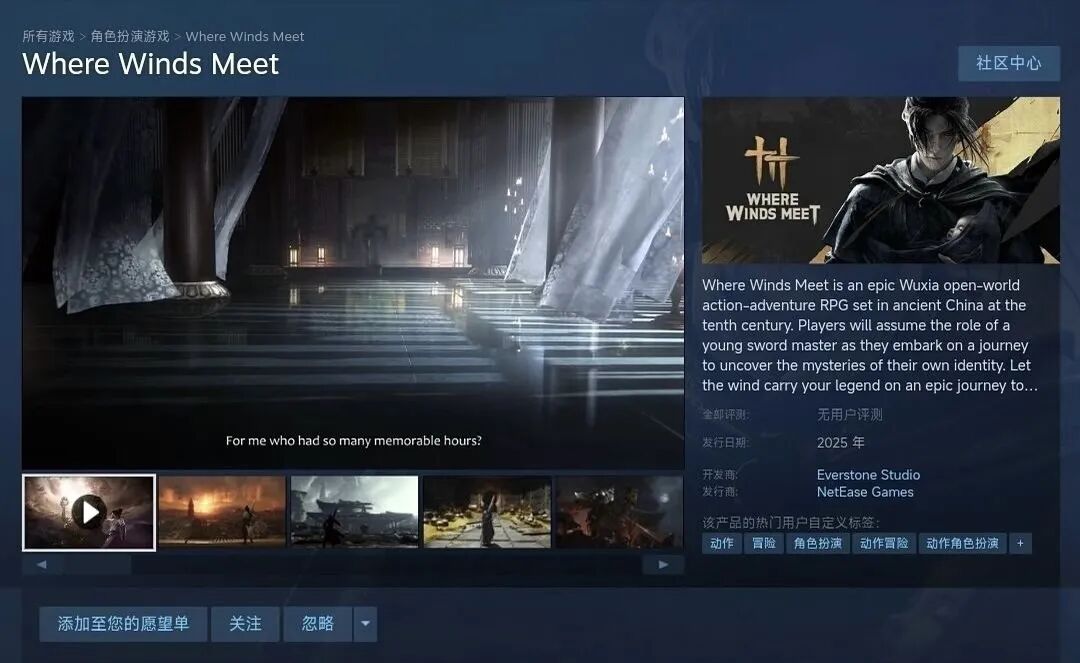
Part of the reason lies in the fact that martial arts' association with "chaos and bans" in a unified feudal dynasty cannot be directly equated with Western cowboys and medieval knights. On the other hand, the stitching together of single-player storylines and multiplayer MMOs also makes it difficult for overseas audiences to find a corresponding evaluation framework, leading IGN to apply evaluation frameworks for open-world RPGs and action games.
If the pressure from project initiation and pipeline scale originates internally, the most significant external challenge comes from AI's impact on the very definition of gaming.
Recently, Google released its latest Genie model, which supports generating interactive, physically attributed game worlds using just a single photo or text description. Its impressive performance significantly impacted the global gaming industry, with gaming stocks in different regions experiencing panic selling.
During the earnings call, it was only natural that management fielded investor inquiries on this topic. NetEase holds the view that the market has, to a large extent, misconstrued the implications of Google Genie for the gaming sector. While the widespread adoption of AI tools will undoubtedly spur an explosion of creative content, it also substantially elevates the bar for success when it comes to top-tier products.
Management elaborated further, noting that AI tools are fraught with a high degree of uncertainty. Their value is primarily seen in cost reduction for content production and in providing auxiliary support for operations, design, aesthetics, and other aspects of “soft power”.
From a production pipeline standpoint, NetEase has already integrated AI into various processes, including art creation, planning, programming, and testing. By examining the forms of application products that have emerged under the influence of AI, we can gain insights into the current state of the gaming industry.
NetEase's strategy of incorporating AI within its existing systems and frameworks is what can be termed as an “AI+” approach. Much like the “Internet+” and “Cloud+” trends, AI signifies not a complete reboot but a gradual evolution for NetEase. In contrast, many AI-driven gaming startups are emphasizing a “Native” approach, characterized by a bold and rapid pace of development.
At present, there are no clear indicators of a definitive shift from old to new paradigms. NetEase still has the luxury of time to allow AI to permeate deeper into its operations, thereby enhancing process and organizational efficiency.
Throughout 2025, NetEase has executed a thrilling pit stop and gear change. This high-stakes race, centered around efficiency, aesthetics, and global aspirations, has only just commenced the endurance-testing latter half.
-
![]()
Registered Capital Slashed to 372 Million Yuan! Yutong Optical Finalizes Industrial and Commercial Change Registration
-
![]()
Zhuque-3 Successfully Lands, and 'Time Traveler' Secures Another ¥100 Million in Funding: China's Commercial Space Industry Experiences a 'Dynamic August'
-
![]()
Autohome Faces a Shrinking Window of Opportunity
-
![]()
Even a Titan Like Musk Has Faced Setbacks in Fulfilling Promises
-
![]()
AI Office: The End of the Racing Era, Context Becomes the Key to Success
-
![]()
Domestic Vehicle Chassis Revolution ②: The Steering Wheel Remains, But Mechanical Connections in the Steering System Are Decreasing
-
![]()
Exploring MiniMax Design: Can Video Editing Be as Simple as Speaking?
-
![]()
Why Can SenseTime Achieve Profitability While CloudWalk Still Faces Challenges, Despite Both Adopting Large Models?