Nubia’s AI-Powered Smartphone Agent Makes Its Debut: Can ZTE Make a Triumphant Return with Doubao?
 07/13 2026
 459
459
Author|Haotian
In the age of artificial intelligence, ZTE aims to reclaim its position at the forefront of the smartphone industry with Doubao.
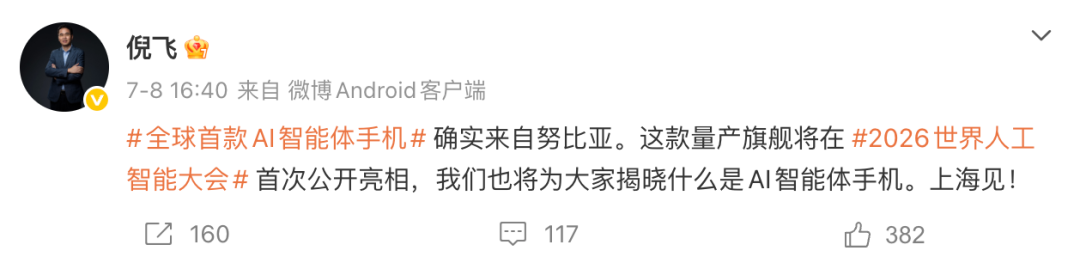
Image Source: Weibo
On July 8, 2026, Ni Fei, President of ZTE’s Terminal Business Division and CEO of Nubia Technology Co., Ltd., announced on a social media platform that Nubia would unveil the "world’s first AI agent smartphone" at the 2026 World Artificial Intelligence Conference, set to begin on July 17.
In fact, ZTE had already introduced its AI agent smartphone, the Nubia M153, six months prior. This device featured the "Doubao Mobile Assistant" and was capable of performing tasks across various apps. However, as an engineering prototype with preview technology, the Nubia M153 had very limited availability, being offered only to tech enthusiasts and developers for initial experience.
According to Ni Fei, the AI agent smartphone to be launched by Nubia at the 2026 World Artificial Intelligence Conference will be positioned as a "mass-produced flagship" model. It targets not just tech aficionados or business users, but all users seeking to simplify their lives.
It is evident that after six months of refinement and optimization, ZTE’s AI agent smartphone has matured in terms of product capabilities. It has moved beyond the technology validation phase and is now ready to penetrate the broader market.
However, it is crucial to note that smartphones are not standalone hardware products; the ecosystem is the linchpin determining a product’s potential. While technological maturity is just the first step, whether ZTE’s AI agent smartphone can establish a robust ecosystem of applications, services, and developers—and thereby become a disruptive force in the smartphone industry—remains to be seen over time.
01 From Industry Leader to Marginal Player: ZTE’s Journey
Today, many users may find ZTE smartphones unfamiliar. Yet, ZTE was once a dominant force in the Chinese smartphone market.
At the dawn of the smartphone era, ZTE’s deep integration with operator channels and the launch of customized devices enabled it to quickly reach a vast consumer base. IDC data reveals that in 2012, ZTE shipped 65 million smartphones globally, including 35 million in China, ranking fourth worldwide after Samsung, Nokia, and Apple.
In the Chinese market, as the leader of the "ZHOKU" (ZTE, Huawei, OPPO, Coolpad) alliance, ZTE was unparalleled and even once surpassed Huawei.
Unfortunately, ZTE could not sustain its lead in the smartphone race. After 2013, with the rise of smartphone manufacturers like Xiaomi, OPPO, and Vivo, ZTE’s smartphone shipments declined year after year.
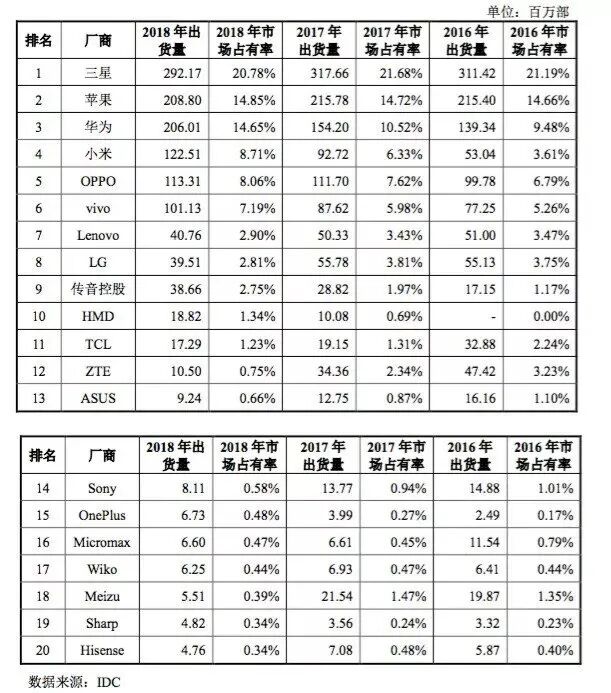
Image Source: IDC
IDC data shows that in the global smartphone market in 2018, ZTE shipped only 10.5 million smartphones, accounting for a mere 0.75% of the market share, in stark contrast to Huawei’s 206 million shipments.
ZTE’s smartphones were largely abandoned by consumers because the company failed to adjust its business strategy in time amid a rapidly changing market environment.
Since 2013, as internet-based smartphone brands like Xiaomi, Meizu, and OnePlus began creating cost-effective products tailored to consumer needs, the Chinese smartphone industry started evolving towards quality, affordability, and flagship models.
Against this backdrop, as a B2B company, ZTE lacked keen insight into the needs of C-end users. It continued to launch a large number of low-end smartphones through operator channels, deviating from consumer demands and naturally being abandoned by the market.
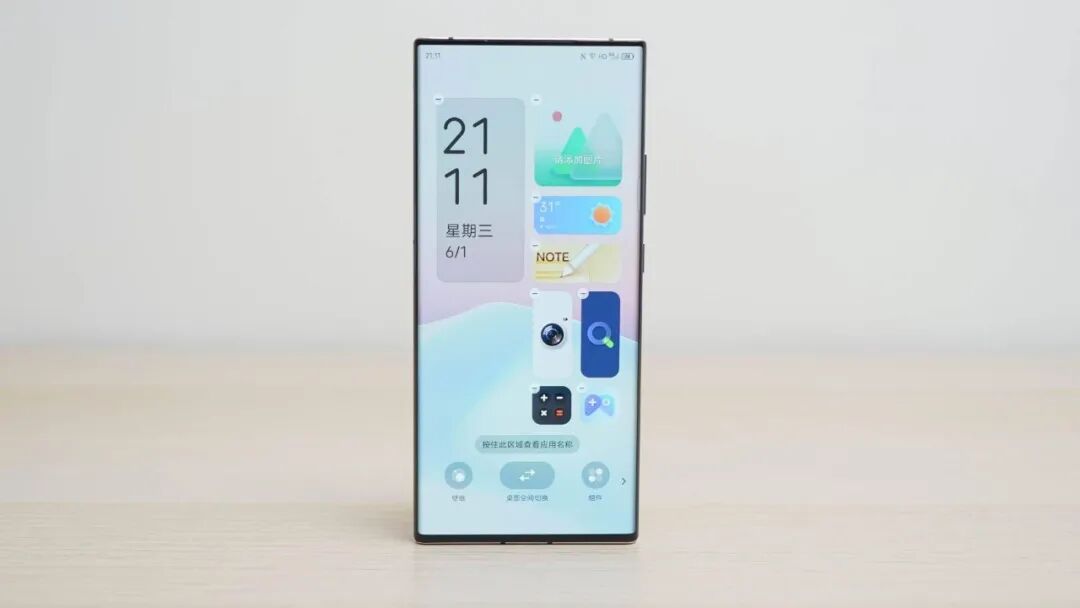
Image Source: ZTE
In recent years, although ZTE has actively adjusted its smartphone business, developing differentiated technologies such as under-display cameras, direct connectivity to low-Earth orbit satellites, and AI glasses-free 3D, and incubating brands like Nubia and RedMagic gaming phones, it has struggled to break out of the "smile curve" due to the fiercely competitive inventory era in the Chinese smartphone industry, where even giants are seeing declining shipments.
02 ZTE Sees a Breakthrough Opportunity with Doubao
Since 2022, with OpenAI’s launch of ChatGPT igniting the AI concept, many tech companies have recognized the potential for transformation and have ventured into innovative hardware, attempting to become the next Apple by creating "AI iPhones."
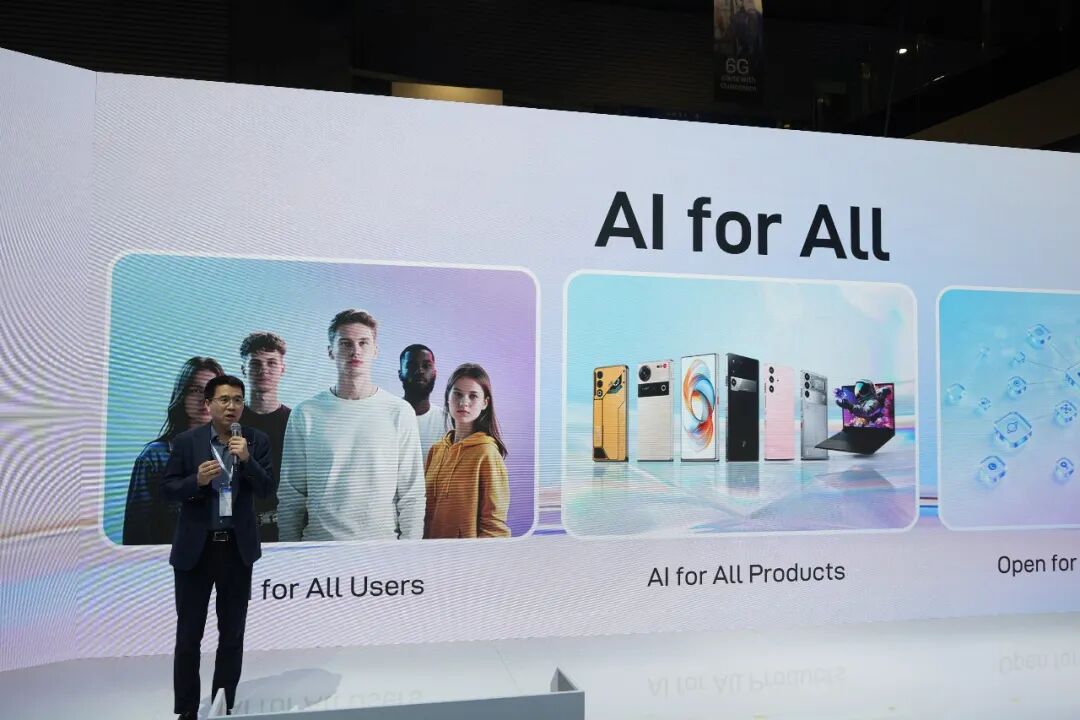
Image Source: ZTE
In 2025, ZTE proposed the "All in AI, AI for All" strategy, aiming to make AI technology accessible to every user and family by reshaping interaction experiences and building a rich ecosystem.
Without historical baggage, ZTE has been extremely aggressive in exploring AI smartphones. In December 2025, ZTE partnered with Doubao to launch the engineering prototype Nubia M153, equipped with the preview version of Doubao Mobile Assistant technology, priced at 3,499 yuan.
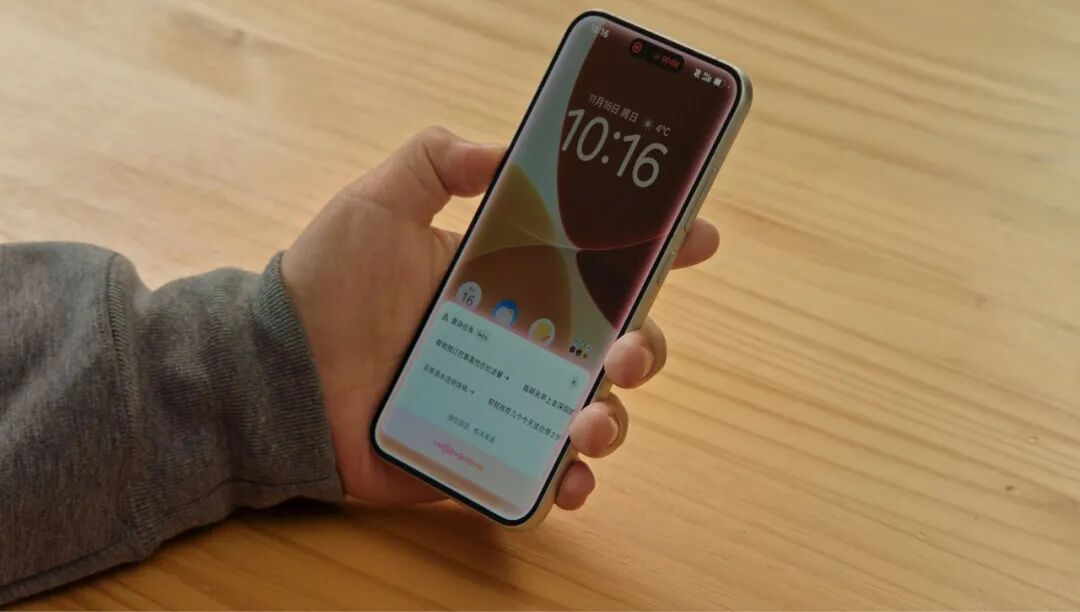
Image Source: Doubao
The "Doubao Mobile" retains the form factor of traditional smartphones, but its core highlight lies in its ability to perform cross-app automatic operations using GUI simulation and clicking technology based on Doubao’s large model capabilities.
For example, when a user instructs the Doubao Mobile to order a cup of Luckin Coffee, the Doubao Mobile Assistant can automatically open the Luckin app, select a beverage that matches the user’s needs, and then invoke a payment app. The user only needs to click to pay to complete the order process.
In contrast, most of the so-called "AI smartphones" on the market today merely incorporate fragmented AI features such as AI photo editing, AI summarization, and AI calling at the system level, without horizontally connecting the mobile internet ecosystem like the Doubao Mobile, thus failing to significantly enhance the user experience.
Due to its strong differentiation and ability to free users from cumbersome operations, the Nubia M153 was highly sought after by consumers upon its launch, with the initial batch of 30,000 units quickly selling out and second-hand products commanding a premium of several thousand yuan.
In response, Luo Yonghao commented, "I don’t know if the Doubao Mobile will succeed, but ByteDance’s attempt to take this first step is remarkable and deserves praise. AI assistants will become ubiquitous, and our lives will be completely dependent on them. Future generations will remember this historic day."
It is clear that due to the immense transformative power of AI technology, ZTE now views the Doubao Mobile as a crucial strategic tool to seize the window of opportunity in the AI era and reshape the competitive landscape of the smartphone industry.
03 Internet Giants as "Obstacles" Behind Product Maturity
Although the Doubao Mobile has won user favor with its differentiated experience, it has faced resistance from many developers at the ecosystem level. Within days of its release, apps like WeChat, Taobao, and Alipay blocked the Doubao Mobile.
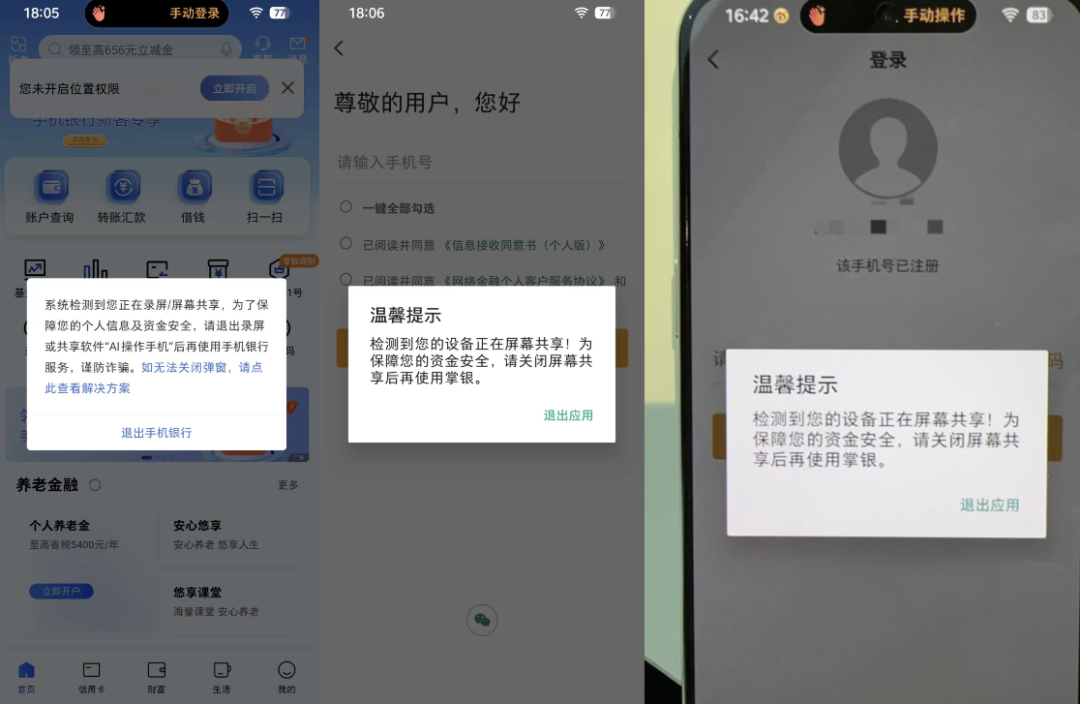
Image Source: Weibo
The reason is that, without access to third-party app APIs, the Doubao Mobile can only rely on technologies like simulated clicking and screen recognition to achieve "one-sentence task execution." This simplistic and crude interaction method disrupts the existing app traffic entry points, data sovereignty, and security risk control systems, leading to its being "blacklisted" by many internet platforms.
In response, at the annual employee conference held in early 2026, Ma Huateng, Chairman and CEO of Tencent, stated that Tencent has always been firmly opposed to using black-market plugins to record and transmit users’ mobile and computer screens to the cloud, "because it is extremely unsafe and irresponsible."
In fact, resistance from mobile internet platforms is precisely one of the main reasons for the slow AI transformation of traditional smartphones.
In recent years, as tools like Codex and Claude Code have matured, Agents are no longer an unattainable technology.
Image Source: OpenAI
However, it is important to note that the current primary carrier of Agent tools is the PC, not smartphones. This is mainly because Agents heavily rely on third-party interfaces. Due to the relatively open PC ecosystem, Agents can invoke different tools and software to perform corresponding tasks.
In contrast, the mobile internet exhibits a strong trend of app isolation. To maintain competitiveness and prevent user and data loss, mobile apps have erected data walls.
Faced with the highly transformative AI technology, most mobile developers adopt a cautious attitude because an omniscient AI has the potential to become a new entry point. If APIs are fully opened, mobile apps may gradually devolve from "traffic entry points" to "service providers," losing their user base and information distribution rights.
Take Meituan as an example: if users can complete operations like ordering food delivery or instant retail directly through the AI assistant on their smartphones, Meituan, while still responsible for transactions and fulfillment, will see its connection with users weakened. In this context, Meituan’s long-accumulated ecological advantages will be diluted, and synergistic businesses built around instant retail, such as Xiang Supermarket, Meituan Flash, and Waima Delivery, will struggle to achieve cross-referrals through a unified entry point.
Given that internet giants are generally cautious about system-level Agents, although the technology is already mature, leading smartphone manufacturers dare not aggressively promote it.
Unlike ZTE, which lacks a massive user base, leading smartphone manufacturers like Xiaomi, OPPO, and Vivo ship hundreds of millions of devices annually. If they adopt technologies like GUI simulation and clicking to achieve cross-app automatic operations, triggering developer resistance and rendering some apps unusable, it could not only escalate into a public relations crisis but also lead to user churn.
A typical example is Honor. Although it is actively investing in AI smartphones, to avoid resistance from internet platforms, it has not adopted the simplistic and crude GUI simulation and clicking technology but instead achieves Agent functionality by integrating official interfaces.
Official information shows that the "YOYO Assistant" on the Honor Magic8 series smartphones primarily relies on a system-level MCP architecture to achieve "one-sentence automatic task execution," supporting over 3,000 automatic execution scenarios. However, since not all internet platforms proactively open their interfaces, the applicability of the Honor Magic8’s AI features is far inferior to that of the Doubao Mobile, preventing it from gaining market traction.
Reviewing the development of the tech industry, every true innovation that has reshaped the industry landscape has often come from redefining existing rules. From the original iPhone redefining smartphones to the mobile internet reshaping the app ecosystem, the real winners have never been those that simply stacked features but those that created entirely new interaction paradigms.
The same holds true in the AI era. ZTE’s early bet on AI agent smartphones and its attempt to reshape human-computer interaction demonstrate the courage to break industry inertia. However, competition in the tech industry is never won through aggressive ideas alone. Any new interaction method must ultimately be built on a foundation of win-win outcomes for user experience, developer ecosystem, and commercial interests.
For ZTE, the real test is not being the first to launch an AI agent smartphone but whether it can establish a closed-loop ecosystem of hardware, systems, and services, transforming AI from an eye-catching new feature into a new entry point that users rely on daily.
It can be said that the ultimate outcome of AI smartphones may not hinge on model capabilities but on who can first reconstruct the next-generation mobile ecosystem.
Interactive Topic
Have you used a PC-based Agent? What are your expectations for smartphone Agents?
This article is original content from Farsight and is prohibited from reproduction without authorization.
-
![]()
Even Li Auto Is Facing Challenges. Can Xiaomi Make a Mark in the Extended-Range Hybrid Vehicle Market?
-
![]()
Surplus Capacity Leasing vs. Aggressive Expansion: Is Meta's 'Dual Strategy' a Deliberate Move?
-
![]()
German Business Leaders Contemplate 'Embracing the 996 Culture,' While Chinese Auto Workers Simply Aspire to Clock Out On Time
-
Graduating with a Violin Serenade in a Luobo Kuaipao, Enjoying Yunba Rides, and Watching Football with Milu: Shenzhen's Seamless Integration of Driverless Cars into Daily Life
-
![]()
Shenzhen Unveils 331 Nighttime Autonomous Vehicle Routes in Three Months: Even Logistics Embrace Off-Peak Operations in the Vibrant City
-
![]()
Why Did the Lingguang App Lose Its Competitive Edge? A Strong Hand Played Poorly
-
![]()
Monthly Double Building Purchases for 3.8 Billion: Is Duan Yongping Still in Sync with Pinduoduo?
-
![]()
Tesla FSD’s China Debut: How Orbbec’s ‘AI Eyes’ Are Revolutionizing Intelligent Driving and Robotics