Is 7-Year Zero-Interest Car Financing a Steal or a Snare?
 04/08 2026
 628
628
Editor|Chen Bailing
As 2026 dawns, the automotive market has erupted into an unprecedented "financial battle."
Tesla spearheaded the charge by introducing 7-year ultra-low-interest financing, swiftly followed by over 20 automakers, including NIO, XPeng, Li Auto, Xiaomi, and Geely. Almost overnight, slogans like "monthly payments from just 1,000-plus yuan" and "drive away with 7-year zero-interest financing" became the rallying cries in 4S dealerships nationwide.
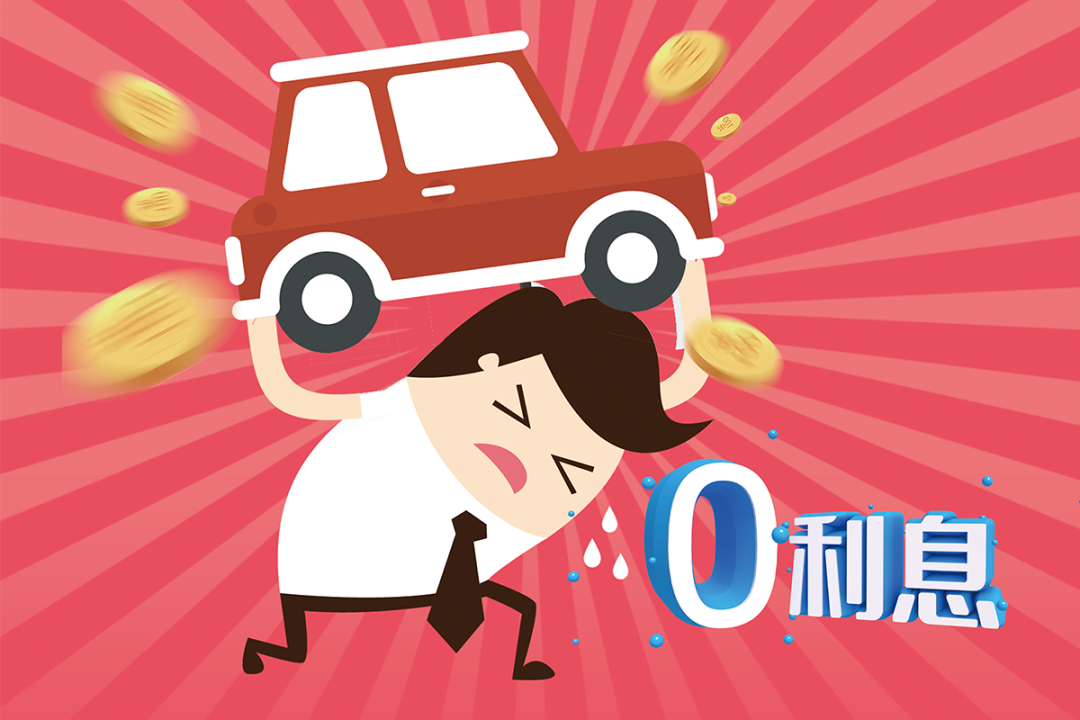
On the surface, this appears to be a golden opportunity for consumers—the same car is now significantly more affordable. However, beneath the allure of low monthly payments lies a reality that may not align with your expectations.

The Seductive Lure of "Low Interest"
Let's delve into some real-world examples.
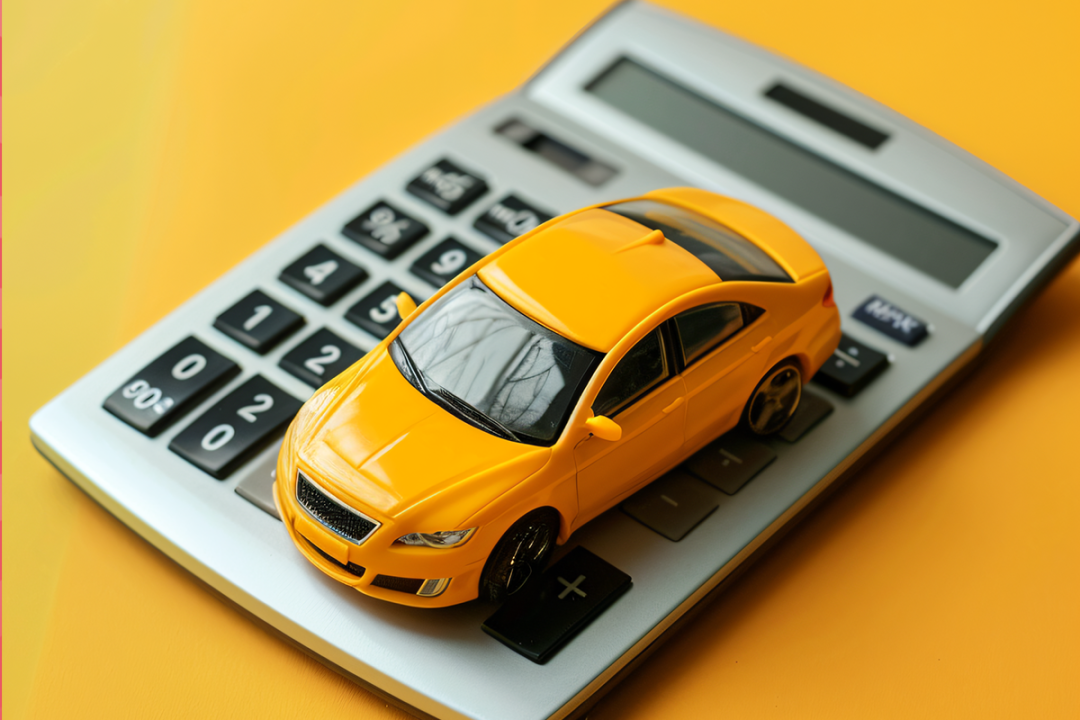
Consider a Tesla Model 3 Rear-Wheel Drive (MSRP: 235,500 yuan). Opting for the 7-year ultra-low-interest plan requires a minimum down payment of 79,900 yuan, with monthly payments of 1,918 yuan and an annualized rate of 0.5%. The NIO ET5, under the same term plan, demands a minimum 20% down payment, an annualized rate of 0.49%, monthly payments starting at 1,872 yuan, and monthly interest as low as 62.8 yuan.
Calculated differently, for a 100,000-yuan loan over 7 years at a 0.49% annualized rate, the total interest amounts to just approximately 3,430 yuan—a seemingly negligible cost. However, the catch lies in the assumptions.
In March 2025, the National Financial Regulatory Administration issued a notice clarifying that the term for personal consumption loans by commercial banks could be temporarily extended from a maximum of 5 years to 7 years. This notice is widely seen as the policy catalyst behind the current "7-year ultra-low-interest" frenzy.
Yet, the true driving force behind this trend is automakers' sales anxiety. Throughout 2025, Tesla delivered 1.636 million vehicles globally, an 8.6% year-on-year decline, marking its first-ever overtaking by BYD. In the Chinese market, retail sales reached approximately 626,000 units, a 4.8% year-on-year drop. The competition among NIO, XPeng, Li Auto, and Xiaomi was even more fierce—with new energy vehicle penetration surpassing 54%, meaning one out of every two vehicles sold was new energy. As the market shifted from growth competition to inventory competition, financial plans naturally became the most direct customer acquisition tool.
The question remains: how deep does this rabbit hole go? Many consumers are unaware of the complexities.

Auto Loans vs. Financial Leasing: Not the Same Thing
What follows may be the most crucial part of this article.
What you might assume to be "installment payments for a car" could actually be signing a "financial leasing contract." Legally, these two differ fundamentally in terms of property ownership.
Bank Auto Loan: The vehicle's property rights are registered under the consumer's name but mortgaged to the bank. Once the loan is repaid, the mortgage is lifted, and the car fully belongs to you.
Financial Leasing for Auto Purchase: The vehicle's property rights are registered under the leasing company's name, and the consumer signs a "leasing agreement," making monthly payments as rent. Until the lease term ends, the car does not belong to you.
Specifically, financial leasing operates in two modes:
Direct Leasing: The leasing company purchases the vehicle directly from the dealer and registers it under its own name, leasing it to you. Upon lease expiration, you can acquire ownership by paying the residual value or choose to return the vehicle. In this mode, the vehicle's property rights always belong to the leasing company.
Sale-and-Leaseback: The consumer first sells the vehicle to the leasing company and then leases it back. The property rights transfer to the leasing company, but the consumer continues to use the vehicle. Upon expiration, ownership can be regained by paying an agreed-upon sum. In this mode, property rights still do not reside with the consumer.
Xinzuoja's market investigations revealed that Tesla's and NIO's 7-year low-interest plans primarily partner with banks (such as CITIC Bank and SPD Bank), falling under bank mortgages with clear property ownership. However, ultra-long-term plans from brands like XPeng, Xiaomi, and Li Auto are often provided by auto financial leasing companies or third-party financial institutions, with vehicle property rights belonging to the leasing company.
For instance, some of Li Auto's financial plans are offered by Tianjin Hengtong Jiahe Financial Leasing Co., Ltd., a subsidiary of Yixin Group. The vehicle is registered under the user's name, with ownership transferring upon lease completion as per the agreement. Meanwhile, other plans are serviced by Tianxiada Financial Leasing, with vehicles registered under Tianxiada's subsidiaries.
What does this imply? You might think you're "repaying monthly installments to own the car," when in reality, you could be "paying rent to lease the car for 7 years." In case of payment delays, the leasing company has the right to repossess the vehicle based on the contract, with your previous payments often considered "rent" rather than "car payments," potentially leaving you with neither the car nor your money.
Wu, a financial crime lawyer at a Beijing law firm, emphasized this point in a media interview: In a financial leasing structure, consumers are not the legal owners of the vehicle until full repayment but rather "lessees" granted usage rights.

Total Interest: Low Monthly Payments ≠ Savings
Let's crunch the numbers—you might wince at the results.
Take a new car priced at 200,000 yuan as an example (equal principal and interest, illustrative calculation):
3-year zero-interest: ~5,556 yuan monthly, 0 yuan total interest
5-year at 4% annualized: ~3,683 yuan monthly, ~21,000 yuan total interest
7-year at 4.5% annualized: ~2,780 yuan monthly, ~33,500 yuan total interest
Monthly payments nearly halve, but total interest soars. Lengthening the loan term essentially trades "short-term high pressure" for "long-term low pressure + higher total cost." For cash-strapped consumers, this might be a pragmatic choice; however, assuming "low monthly payments = savings" would be naive.
More critically, new energy vehicles' depreciation rates introduce new variables. According to 2025 data from the China Automobile Dealers Association, mainstream new energy vehicles retain about 50%-60% of their value after 3 years, with plug-in hybrids at 43.7% and pure electric vehicles at just 42%, compared to over 50% for traditional fuel vehicles. This means your car's residual value might fall below the outstanding loan balance within two years—a scenario known as "being underwater."
Meanwhile, your loan term spans 7 years, far exceeding the typical 3-5-year replacement cycle for mainstream electric vehicles.

What Salespeople Won't Tell You
At 4S dealerships, sales staff will emphasize "monthly payments under 1,000 yuan" and "annualized rates below 1%." However, certain questions require your proactive inquiry:
First, are you signing a loan contract or a leasing contract? This directly determines vehicle ownership. If it's financial leasing, under direct leasing, ownership remains with the leasing company; under sale-and-leaseback, it may reside with the leasing company or its subsidiary. Sales staff might not volunteer this information.
Second, are there penalties for early repayment? Multiple industry insiders revealed that current 7-year low-interest products typically impose constraints on early repayment and buyouts, often charging penalties. Specific penalty standards and repayment restrictions vary across institutions and must be based on the formal contract. For example, one consumer was charged 3% of the remaining principal (around 6,000 yuan) as a penalty after repaying for 2 years and requesting early settlement; another faced a 50% deduction of remaining interest for early repayment. In extreme cases, some financial leasing contracts stipulate paying 80% of total interest for early repayment, with penalty rates reaching up to 5%.

Third, are there hidden service fees? Some financial leasing plans require deposits or bundle insurance and GPS fees into repayments. While the annualized rate appears low, the comprehensive cost after adding various fees might not be.
Fourth, how is insurance handled? Under direct leasing, the vehicle belongs to the leasing company, which procures insurance and includes it in repayments. Under sale-and-leaseback, ownership remains with the individual, allowing self-purchased insurance with greater flexibility. The difference is substantial.
Fifth, GPS tracking and data authorization. New energy vehicles come with factory-installed GPS, eliminating the need for additional devices. However, contracts often require consumers to authorize financial or leasing institutions to access location data for vehicle recovery in case of default. During the lease term, the actual user handles all traffic violations and accidents.

Avoiding Pitfalls: Three Questions to Ask
As a prospective car buyer facing tempting 7-year low-interest plans, how should you decide?
First, clarify the funding source. If it's a bank, property rights are generally secure. If it's a financial leasing company, inquire whether it's direct leasing or sale-and-leaseback and whose name the vehicle is registered under.
Second, calculate the comprehensive cost. Don't just focus on low monthly payments; use a loan calculator to determine total interest. Add potential service fees, deposits, GPS fees, and bundled insurance costs, then compare with other options.
Third, act within your means. While 7-year low-interest lowers the entry barrier, your repayment period extends to 84 months. Can you afford it if your income declines or you face unemployment? Experts recommend keeping monthly payments below 40% of household income and setting aside 3-6 months' worth of emergency funds.
An auto industry expert interviewed pointed out that current 7-year low-interest products are not mainstream in the auto financial market, where 1-5-year conventional auto loans remain core. Consumers must act prudently, aligning choices with their income levels and long-term repayment capacity. Thoroughly review all terms in loan or leasing contracts, focusing on vehicle ownership, comprehensive costs, additional fees, and penalties for early repayment or buyouts before selecting a financial plan.

Conclusion: 7-Year Low-Interest—Neither a Bargain Nor a Trap
It's a potent concoction served by automakers amid fierce competition—enticing in aroma and invigorating upon consumption, but those with low tolerance risk getting inebriated.
The core logic of car buying remains: match needs, capabilities, and long-term suitability. Financial plans lower barriers but shouldn't create demand. If you genuinely need a car and have a limited budget, 7-year low-interest could work. But if you're just chasing "a good car for little money," crunch the numbers first before deciding.
After all, low monthly payments feel great, but the bill after 7 years is the real test.
Welcome to share, like, and comment.
The copyright of this work belongs to Xinzuoja or related copyright holders. No third party may reproduce it without authorization; otherwise, it constitutes infringement.
"Respect originality, respect attitude."
-
![]()
The Allure of 'Acquisition Spree': Li Shufu's Left Turn, Xu Jiayin's Right
-
![]()
Strategic Transformation Yields Results: Phoenix Optics Reports 10.9% YoY Rise in Core Net Profit for H1 2026
-
![]()
Three Key Growth Trajectories Synergize! Crystal-Optech Reports 3.478 Billion Yuan in Revenue for H1 2026
-
![]()
Semi-Annual Report Sparks XPENG Motors Buzz
-
![]()
1.6 Billion Big Order Secured! SeeYA Technology's Revenue Soars by 287.87% in the First Half of the Year
-
![]()
Baidu's Profits Plunge by 68%: Unraveling the Mystery Behind the Numbers
-
![]()
Baidu’s Profits Tumble by 68%! Where Has All the Money Gone?
-
![]()
Hynix’s Taobao Store Shuts Down Abruptly: What Should Customers Do About Warranty Services for Memory Modules?