Huawei's Third "Realm" May Choose SAIC, Baojun Bets Its Future on Huawei
 04/08 2026
 620
620
Lead
Introduction
Can the Huajing S help Baojun escape its predicament? Who will claim Huawei's third "realm"?
On April 7, Baojun's long-anticipated model, the Huajing S, hit the market, becoming one of the most talked-about events in the automotive circle.
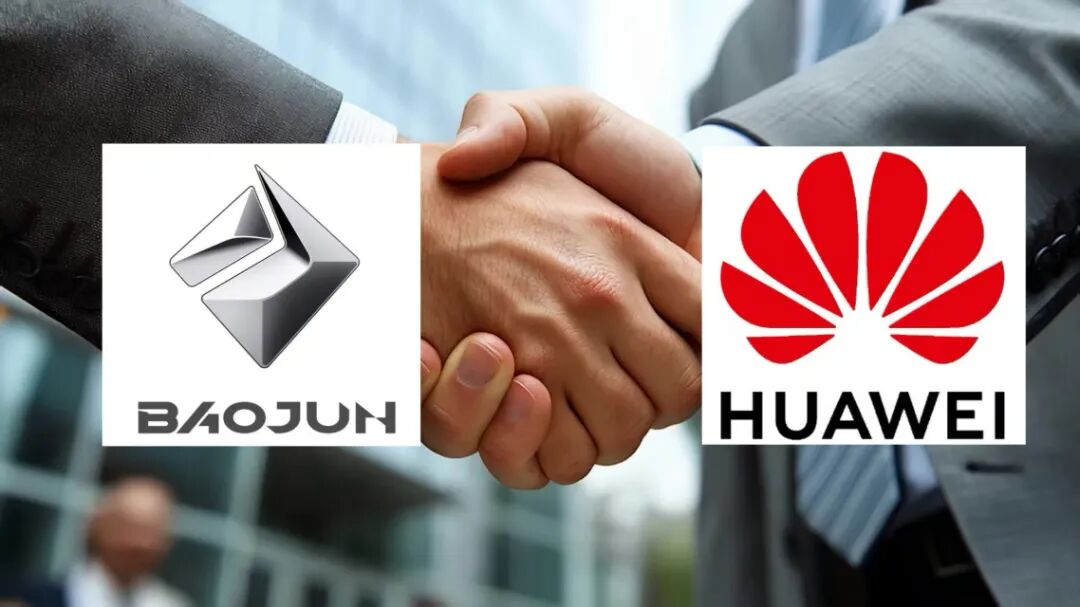
As the first flagship model co-developed by SAIC-GM-Wuling and Huawei, this large six-seater SUV, equipped with Huawei's Qiankun Intelligent Driving ADS 4 Pro, HarmonyOS Cockpit, and other technologies, has been imbued with special significance from its debut—it represents not only a major product for Baojun amid a prolonged sales slump but also Huawei's fresh foray into the smart automotive arena.
For Baojun, the Huajing S is a "lifeline." Once a brand that created multiple sales miracles, Baojun now finds itself mired in a drought of hit models. The deep integration with Huawei is undoubtedly its biggest bet to break free.
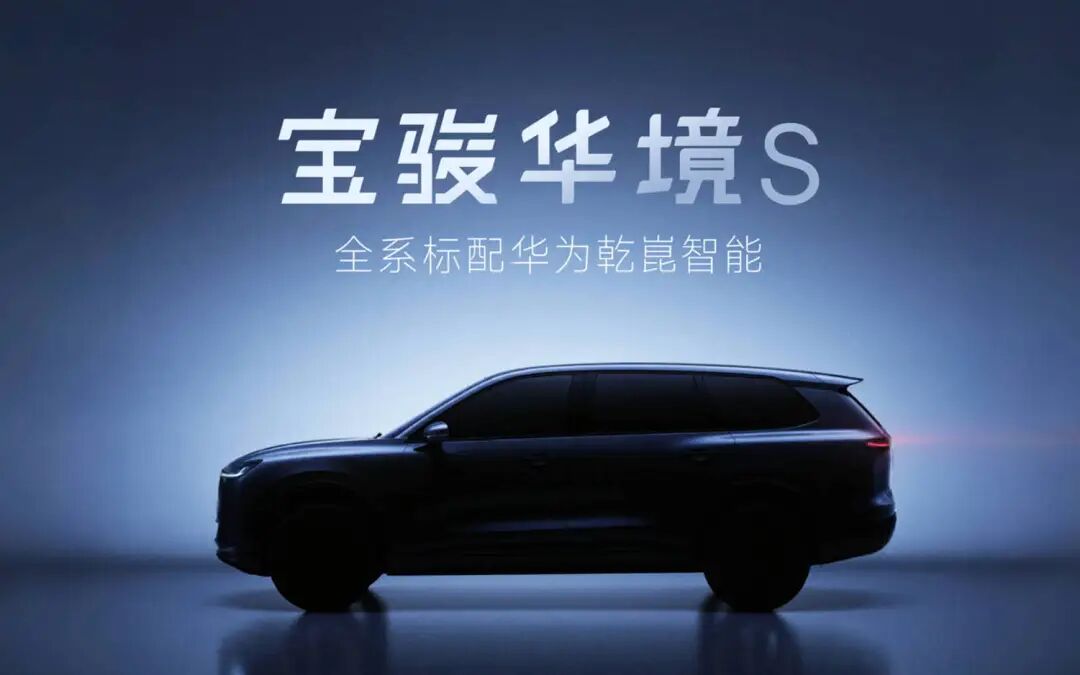
However, controversy has followed. Many industry insiders and consumers argue that the Baojun Huajing S is not a genuine member of Huawei's "Realm" series. Compared to the Guangqi Qijing and Dongfeng Eeyi, it seems more like a product "riding on the hype"—Qijing and Eeyi are products of Huawei's "deep co-creation" model led by its Automotive BU, while the Huajing S initially debuted solely as a Baojun model, seemingly lacking in both "Huawei content" and brand positioning.
Yet, an industry leak is shaking up this debate.
Reports suggest that Huawei's third "realm," following its "Five Realms," may land at SAIC. Given the current depth of collaboration between Baojun and Huawei, if true, the most plausible interpretation is that the Baojun Huajing S is not just a standalone model but will evolve into a brand, officially joining Huawei's "Realm" lineup and forming a tripartite balance with Qijing and Eeyi.
In response to this leak, "Automotive Commune" inquired with multiple relevant sources about its authenticity, receiving replies to "stay tuned."
01 From Peak Sales of 1 Million to Decline: Baojun Seeks Redemption
To understand Baojun's eagerness to collaborate with Huawei, one must revisit the brand's helpless (helpless) decline from its peak.
2017 marked Baojun's golden year, with annual sales exceeding 1 million units, propelling it into the top tier of China's automotive market. At the time, the Baojun 730 sold over 30,000 units monthly; the Baojun 510 dominated the small SUV sales charts for extended periods; models like the Baojun 310 and 560 formed a hit matrix covering various market segments, making "Baojun" synonymous with cost-effectiveness and practicality.
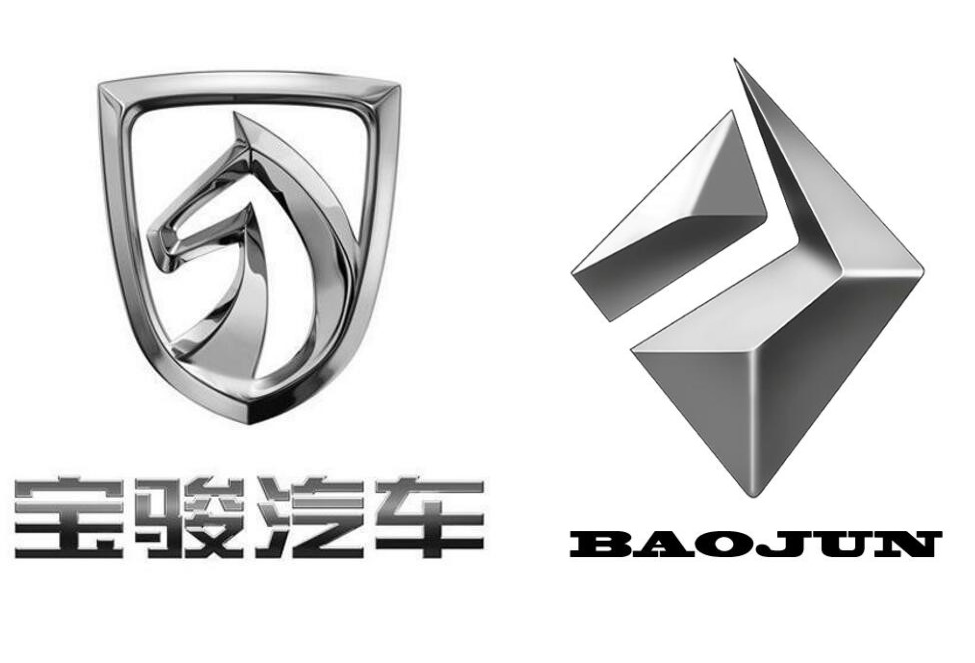
However, the turning point came after the brand's rejuvenation. To shed its "cheap" label, Baojun replaced its long-used horsehead logo with a diamond emblem, attempting to transition into the mid-to-high-end market. Yet, this rejuvenation became the watershed of Baojun's decline.
Post-rejuvenation, Baojun launched several products, including the intelligence-focused Xiangjing and niche models like the KiWi EV and Yueye, none of which replicated the success of the horsehead logo era. Notably, the Baojun Xiangjing saw dismal sales after launch, with hundreds of units sold—a stark contrast to the "5,000 orders in 17 days" claimed during pre-sales, epitomizing Baojun's failed transformation.
Meanwhile, its former hit models gradually faded into obscurity.
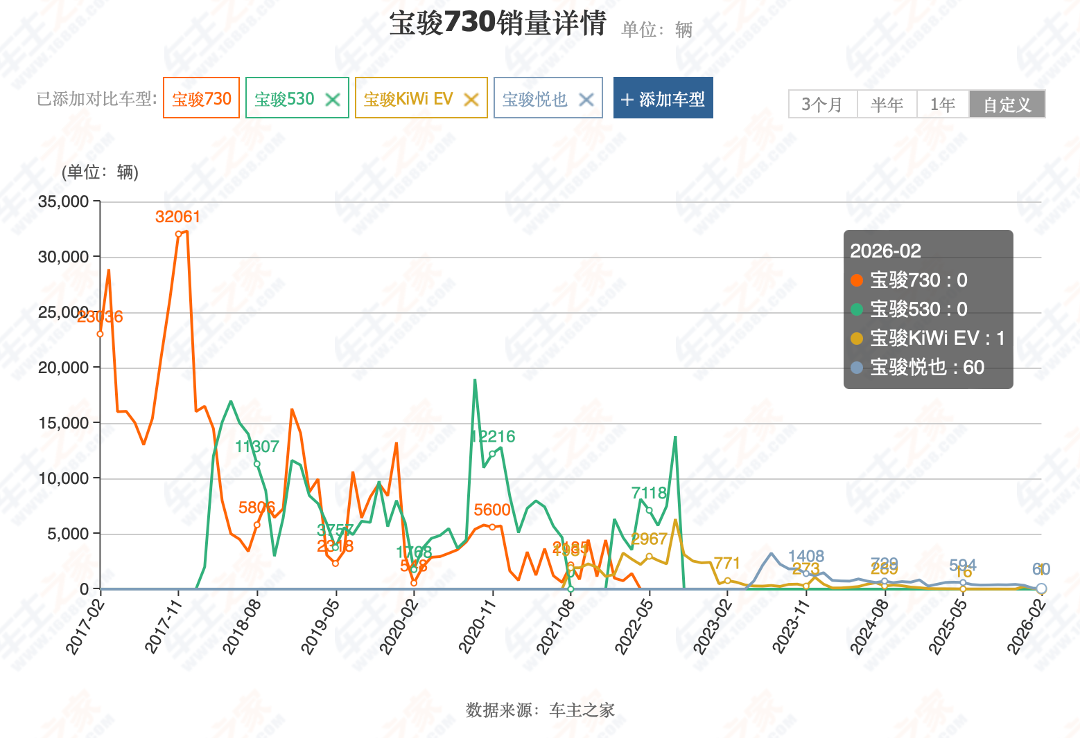
The Baojun 730 failed to keep pace with the new energy trend, with sales declining yearly—falling below 5,000 units monthly in 2021, halving further to around 2,000 units in 2022, and ultimately ceasing production; models like the Baojun 510, 310, and 560 were also gradually forgotten by consumers. The absence of hits caused Baojun's sales to plummet from a peak of 1 million units annually to "disappearing" from sales charts. In recent years, Baojun has ceased disclosing annual sales figures, with industry estimates suggesting annual sales now fall well below 100,000 units—a far cry from its heyday.
Many automotive professionals deeply regret the fate of a brand that once created industry miracles.
Yet, Baojun's decline stems from both external market pressures—such as the new energy wave, price cuts by joint ventures, and the rise of domestic competitors—and internal strategic missteps, including a fuzzy brand positioning (seeking to shed its "cheap" label without establishing a high-end image), a chaotic product lineup (lacking clear technological lineage and user targeting), and lagging technological iteration (failing to keep pace in intelligent driving and new energy powertrains), ultimately leading to its market obsolescence.
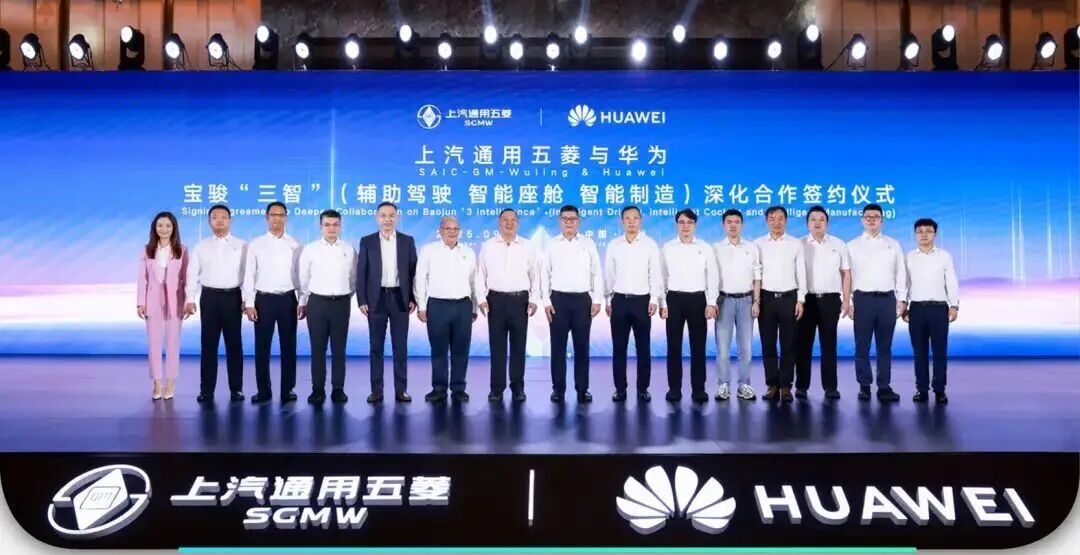
The launch of the Huajing S and rumors of Huawei's third "realm" potentially landing at SAIC undoubtedly offer Baojun a chance at rebirth. By leveraging Huawei's smart technology strengths and combining them with its manufacturing prowess and user base, Baojun could elevate the Huajing S into an independent "Realm" brand, breaking its current predicament and rejoining the mainstream market to replicate past glory.
02 Who Will Claim Huawei's Third "Realm"?
Baojun's aspirations reflect Huawei's rapid expansion and model innovation in the smart automotive sector.
Revisiting Huawei's automotive journey, the success of its "Five Realms" sets an industry benchmark, beginning with Aito.
At the time, Huawei partnered with the struggling Seres to launch the Aito series, leveraging core technologies like the HarmonyOS Cockpit and advanced intelligent driving, along with the "Harmony Intelligent Mobility" model led by Huawei's Consumer BG (Yu Chengdong's team), achieving a win-win—Aito rose rapidly, surpassing 1 million cumulative sales since its founding in late 2021, becoming one of China's fastest new energy brands to reach this milestone.
Aito's success not only boosted Huawei's reputation and profits but also "rescued" Seres from the brink of elimination, proving the feasibility and explosive potential of Huawei's approach to "helping automakers build cars."
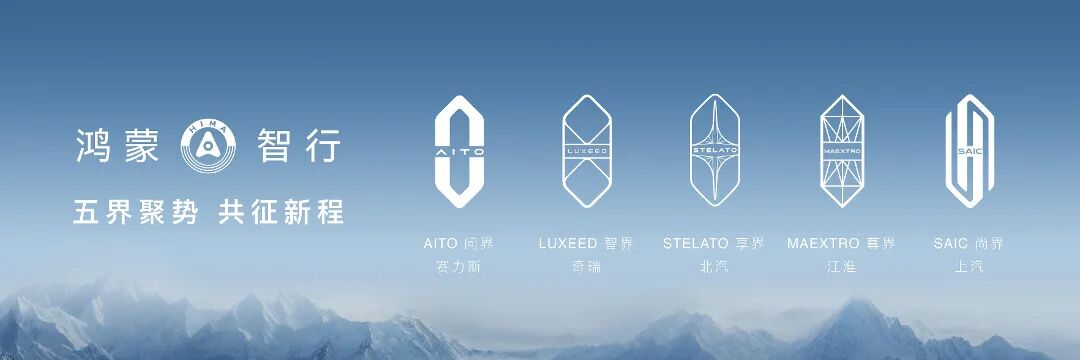
Subsequently, Huawei accelerated its smart automotive layout (layout), with the "Five Realms" taking shape into a product matrix. Among them, Luxeed partnered with Chery to target the 200,000–300,000 yuan price range; Enjoyland collaborated with BAIC to focus on the 300,000–450,000 yuan mid-to-high-end market; Exaltion teamed up with JAC to impact (target) the 700,000–1 million yuan luxury segment; and Shangjie partnered with SAIC to cater to the 160,000–200,000 yuan youth market, forming a comprehensive layout (layout) covering diverse price points and consumer groups.
The advantages of the Harmony Intelligent Mobility model remain prominent—Huawei deeply participates in the entire product lifecycle, from definition and R&D to marketing, sales, and service, leveraging its channel strengths to rapidly connect cooperative models with consumers, fostering strong market competitiveness.
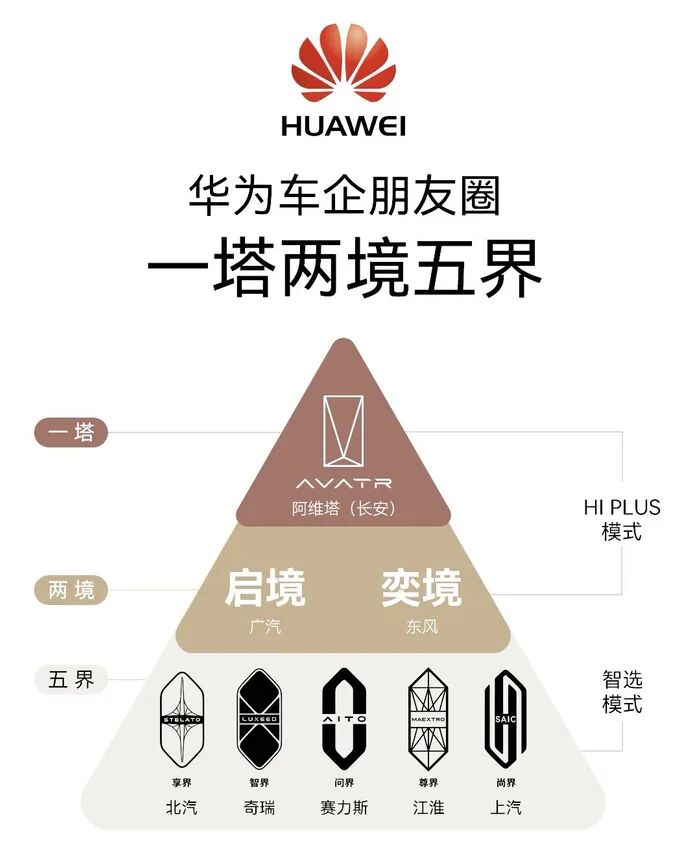
While the "Five Realms" progressed steadily, Huawei's Automotive BU-led "deep co-creation" model (an upgraded HI model) emerged, with Qijing and Eeyi as its first fruits.
Unlike the "Harmony Intelligent Mobility" model, under "deep co-creation," Huawei primarily provides full-stack technological solutions like Qiankun Intelligent Driving and the HarmonyOS Cockpit, dispatching teams for collaborative R&D without interfering in final decisions, allowing automakers to retain dominance in production, marketing, and after-sales, forming a "technology-enabled + automaker-led" cooperation framework.
This model leverages Huawei's technological strengths while respecting automakers' heritage. After their launch, Qijing and Eeyi achieved initial success, further validating the model's feasibility and heightening market anticipation for Huawei's third "realm."
From current industry trends, Wuling becoming Huawei's third "realm" partner holds some rationality (rationality).
On one hand, Wuling boasts deep automotive heritage, a mature production system, and extensive sink (down-market) channels, aligning with Huawei's goal to further expand into the mid-to-low-end smart car market; on the other, Baojun's collaboration with Huawei has entered a substantive phase, with the Huajing S's core technologies aligning with the "Realm" series, providing a foundation for upgrading into an independent brand.
For Huawei, choosing Baojun as the third "realm" partner would also represent a fresh attempt—breaking Qijing and Eeyi's mid-to-high-end positioning to bring smart technologies to a broader mass market, filling gaps in its mid-to-low-end smart car layout (layout), and further refining the "Five Realms, Three Worlds" matrix.
Of course, both the Huajing S's upgrade to Huawei's third "realm" and Baojun's potential comeback face numerous challenges.
For Baojun, the urgent task remains leveraging Huawei's technological empowerment to create hit products that truly meet market demands, rebuild consumer trust, and escape its brand predicament. For Huawei, balancing technological output with automaker dominance under the "deep co-creation" model, ensuring the third "realm"'s product strength and brand tone, and avoiding "hype" controversies are key considerations.
Undeniably, if this collaboration progresses smoothly, it could become another model of deep industry integration, offering Baojun a chance at rebirth and adding a new growth point to Huawei's smart automotive layout (layout).
Currently, reports suggest SAIC is advancing "Realm" model cooperation with Huawei. If realized, SAIC would become the only domestic automaker with both a "Realm" (Shangjie) and "Realm" series. However, while some speculate a Baojun-Huawei partnership, others report a Roewe-Huawei collaboration for the third "realm."
Beyond SAIC, Huawei has many options. Regardless of its final choice, it will remain a market focal point.
Editor-in-Chief: Shi Jie Editor: He Zhengrong
THE END
-
![]()
The Allure of 'Acquisition Spree': Li Shufu's Left Turn, Xu Jiayin's Right
-
![]()
Strategic Transformation Yields Results: Phoenix Optics Reports 10.9% YoY Rise in Core Net Profit for H1 2026
-
![]()
Three Key Growth Trajectories Synergize! Crystal-Optech Reports 3.478 Billion Yuan in Revenue for H1 2026
-
![]()
Semi-Annual Report Sparks XPENG Motors Buzz
-
![]()
1.6 Billion Big Order Secured! SeeYA Technology's Revenue Soars by 287.87% in the First Half of the Year
-
![]()
Baidu's Profits Plunge by 68%: Unraveling the Mystery Behind the Numbers
-
![]()
Baidu’s Profits Tumble by 68%! Where Has All the Money Gone?
-
![]()
Hynix’s Taobao Store Shuts Down Abruptly: What Should Customers Do About Warranty Services for Memory Modules?