Volkswagen's 'Drastic Measures' to Cut Half of Its Models: Will China's Three Joint Ventures Be Affected?
 07/14 2026
 382
382
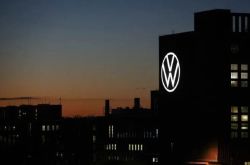
On July 9, outside Volkswagen Group's headquarters in Wolfsburg, 400 workers from Germany's IG Metall union held banners in protest. On the same day, after the Volkswagen Group's management board submitted a plan to the supervisory board to lay off 100,000 employees and close four German factories, which was rejected, it submitted a comprehensive reform plan internally referred to as 'structural self-rescue.'
The core elements of the plan are equally astonishing: Up to half of its approximately 150 model lines may be cut, global annual production capacity reduced from 10 million to 9 million vehicles, and product configuration complexity decreased by up to 75%.
This is no ordinary adjustment. 'Affected by the current global economic and geopolitical environment, existing cost-reduction measures have proven insufficient. We must fundamentally restructure our business model,' admitted Arno Antlitz, Volkswagen Group's CFO, after the plan's announcement.

An Unavoidable 'Subtraction'
The catalyst for this reform is a financial report that has kept Volkswagen's management sleepless.
In 2025, Volkswagen Group's operating profit stood at just €8.9 billion, a 54% year-on-year plunge and the lowest since 2016; net profit after tax fell 44% to €6.9 billion. In the first quarter of 2026, the downward trend continued, with operating profit dropping another 14.3% year-on-year and the profit margin slipping to 3.3%; sales in China plummeted by 20%, and in North America by 9%.
'Volkswagen is at a critical juncture where its profit foundation is crumbling,' commented an overseas industry consulting firm. In their view, Volkswagen is caught in a 'storm': intensifying competition from Chinese new energy vehicle manufacturers, volatile trade tariff policies in key global markets, and competitors launching high-margin products absent from Volkswagen's lineup.
Volkswagen has not shied away from attempting gentler solutions. In March, CEO Oliver Blume announced plans to cut around 50,000 jobs by 2030. However, the cliff-like drop in profits proved that such adjustments were far from sufficient.
What to Cut? What to Keep?
Under the newly submitted adjustment plan, Volkswagen will phase out models in unpopular market segments and concentrate resources on high-profit, high-demand niches. Which models will be the first to go?
From the information disclosed, this 'great purge' spares no brand or seniority. Blume has anchored operational principles on 'value over scale.'
For the Volkswagen brand, the flagship SUV Touareg has been discontinued in some markets; the Sharan MPV has also exited; and the T-ROC Cabriolet is set for official discontinuation in 2027.

The Audi brand has suffered even heavier losses. The iconic sports car TT, supercar R8, and Q8 e-tron have been successively discontinued; entry-level models A1 and Q2 were fully discontinued in April this year. Porsche has not been spared either—the 718 Boxster and 718 Cayman were discontinued in October 2025, and the first-generation fuel-powered Macan will officially bid farewell at the end of this month.
Some analysts believe that low-sales performance models like the Golf R and Jetta GLI may also face exit risks. However, Volkswagen has made it clear that fuel-powered high-performance hatchbacks have no immediate plans for discontinuation, as these models carry the brand's spiritual totem.
'This isn't about nostalgia; it's about the numbers,' said a source close to Volkswagen's product planning. 'Retaining each model line means ongoing investment in R&D, tooling, supply chains, and marketing. With profit pressures mounting, models that don't add up must be cut.'
China: The Eye of the Storm and a Safe Haven
For Volkswagen, the Chinese market is both a major catalyst for this crisis and a potential way out.
In 2025, Volkswagen delivered 2.69 million new vehicles in China, an 8% year-on-year decline; in the first half of 2026, deliveries plummeted nearly 26% year-on-year. Today, China's fuel vehicle market is shrinking rapidly, and Volkswagen is one of its largest players. Classic fuel models like the Lavida, Tiguan L, and Magotan are being pushed out of the mainstream rankings.
It is understood that the future prospects of Volkswagen's core high-volume models in China have not yet been affected. Mainstay fuel models such as the Lavida, Sagitar, Passat, Magotan, and Tayron continue to be updated. However, on the flip side, Volkswagen is launching its largest-ever new energy product offensive in China. Relying on the 'In China, For China' strategy, the group will introduce over 20 new energy models in China in 2026, fully covering battery electric, plug-in hybrid, and extended-range electric technologies.
Volkswagen's three Chinese joint ventures—FAW-Volkswagen, SAIC Volkswagen, and Volkswagen Anhui—are being granted unprecedented autonomy. It is understood that Volkswagen is implementing a clear 'horse-racing mechanism' across the three joint ventures, delegating product definition rights, technology route selection, and final say on intelligent solutions to the joint ventures themselves.
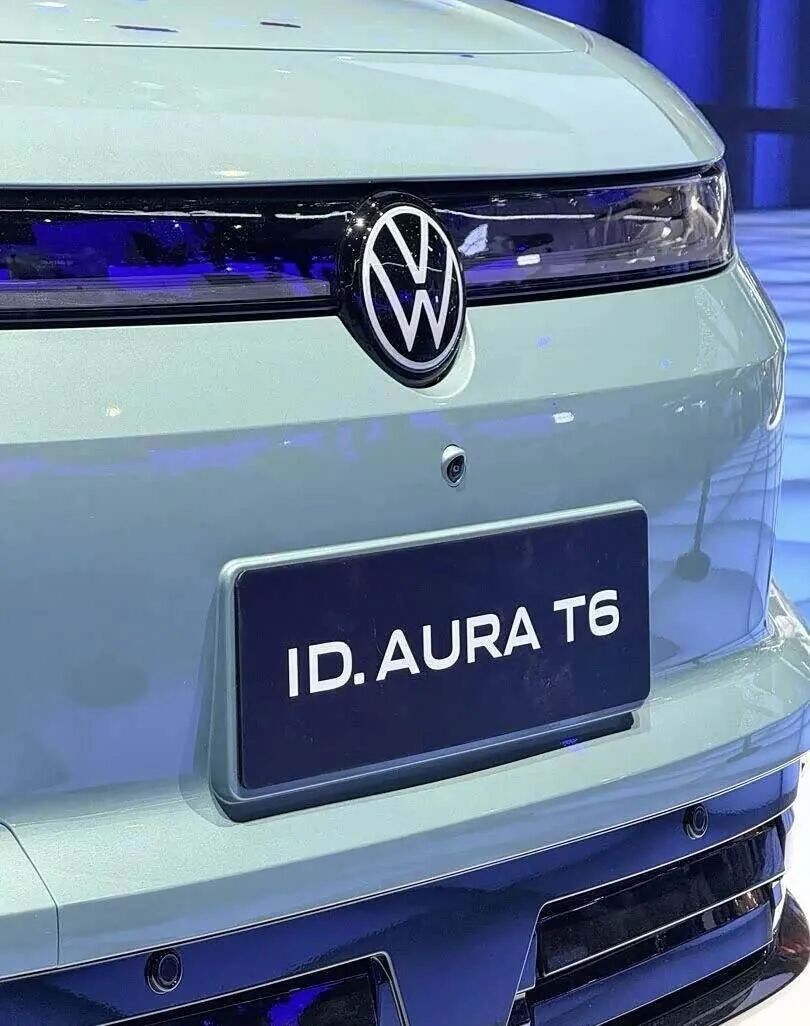
FAW-Volkswagen plans to launch 13 new models throughout 2026, including 7 new energy vehicles and 6 fuel vehicles. In the battery electric segment, FAW-Volkswagen unveiled the new ID.AURA sequence, featuring the brand-new CEA electronic architecture, set for official launch and delivery in September 2026. In the plug-in hybrid segment, the Magotan PHEV and Tayron L PHEV will be rolled out successively.
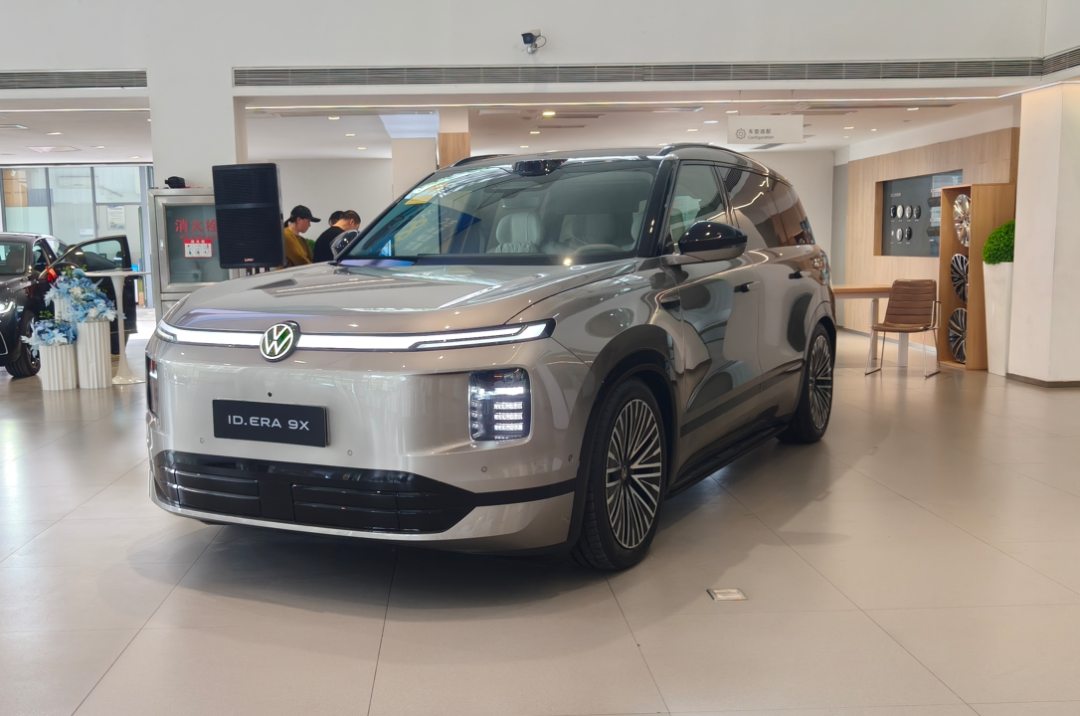
SAIC Volkswagen defines 2026 as the 'year of comprehensive delivery of Joint Venture 2.0 strategic results,' planning to launch at least 7 new new energy products throughout the year, fully covering battery electric, plug-in hybrid, and extended-range electric technologies, with a target of achieving a new energy vehicle sales share of no less than 20%. Among them, the ID.ERA 9X, Volkswagen's first global 9-series flagship six-seat extended-range electric SUV, sold over 10,000 units within two months of its launch, boosting confidence in Volkswagen's prospects in China's new energy vehicle market.
Volkswagen Anhui is set for its first major product year in 2026, planning to launch four new models. The Zhongyu 08, already launched in the first quarter, is the first 'Golden Logo Volkswagen' mid-to-large battery electric SUV built on the localized CEA architecture. The Zhongyu 07 and 2026 Zhongyu 06 were launched in the second quarter. A new sedan, the Zhongyu 09, will also be introduced in the fourth quarter. In June 2026, Volkswagen Anhui's vehicle sales surged 120% year-on-year, showing initial success from its matrix layout.
More notably, there is a strategic shift underway. Volkswagen is evaluating the introduction of electric vehicle models developed in China to local production in Germany. This move breaks the traditional paradigm of 'headquarters R&D, overseas assembly' for German automakers, marking a historic reversal in technology flow. Leveraging the Chinese team's 24-month development cycle and approximately 40% lower R&D costs, it provides competitive mass-production projects for idle German factories.
'If this model succeeds, it means China's automotive supply chain and R&D system are transforming from mere recipients of technology transfer to global automotive industry capability exporters,' said an industry analyst. Indeed, several international automakers have already achieved significant results on this path.
Conclusion:
From a peak production capacity expectation of 12 million vehicles to a realistic target of 9 million; from 150 model lines to a maximum of 75; from 667,000 employees to potential significant downsizing, Volkswagen is using unprecedented 'subtraction' to carve out survival space for the next era.
'Volkswagen Group needs to further reduce vehicle costs without compromising product competitiveness, while cutting management expenses and improving factory efficiency,' Antlitz's statement perhaps best summarizes this reform.
While models can be cut and production capacity reduced, as long as the capacity utilization issue at German factories remains unresolved, cost pressures will be difficult to fundamentally alleviate. The effectiveness of Volkswagen's reforms may not be clear until 2030.
-
![]()
AI-Generated Code Reveals Surprise That Thrills China
-
The answer lies in the performance of the production line by the end of 2026
-
![]()
The Voice in AI Hardware Industry is Quietly Shifting Amid Brain Drain
-
![]()
AI Enters Second Half: Buy the 'Cloud,' Not the 'Chip'?
-
![]()
Breaking the Monopoly! Trillion-Parameter Large Model Adopts Domestic Chips, Marking a Key Step Towards 'De-NVIDIA-ization' in AI Computing Power
-
![]()
Performance Drops Sharply, Seres Alerts 280,000 Shareholders
-
Behind the AI Boom: US Rakes in $314 Billion, South Korea $223 Billion, While China Lags at $26 Billion?
-
![]()
Volkswagen's 'Drastic Measures' to Cut Half of Its Models: Will China's Three Joint Ventures Be Affected?