Historic Strongest Mercedes-Benz GLE L Faces Intense Competition from Domestic 9 Series
 08/24 2026
 498
498
The domestically manufactured Mercedes-Benz GLE long-wheelbase variant finally made its grand entrance at the Chengdu Motor Show. Had this model been produced domestically at the same time as the BMW X5 five years ago, the market excitement would have been palpable. However, the market landscape five years on is vastly different.
On one front, the market for fuel-powered vehicles is indeed contracting. On the other, in the luxury segment above RMB 500,000, alongside traditional stalwarts like the BMW X5 and Audi Q7, domestic 9 Series models have established a formidable presence, creating a competitive encirclement around BBA and other brands. The intensity of competition has never been higher. It's also worth noting that in this price segment, Chinese domestic brands have already secured a substantial market share.
Judging by July's sales data, the Wenjie M9, NIO ES9, Zeekr 8X, and Li Auto L9 claimed the top four positions, while the domestically produced BMW X5, a long-standing rival of the Mercedes-Benz GLE, ranked fifth. Monthly sales of the BMW X5 hover between 3,000 and 5,000 units, but the trend is consistently downward, highlighting the challenges faced by fuel-powered vehicles this year. The outlook is not promising, but for the Mercedes-Benz GLE, the question remains: does its product strength suffice to achieve success amidst such fierce competition? Specifically, how should this core Mercedes-Benz model strategize its pricing to maximize market share under these conditions?
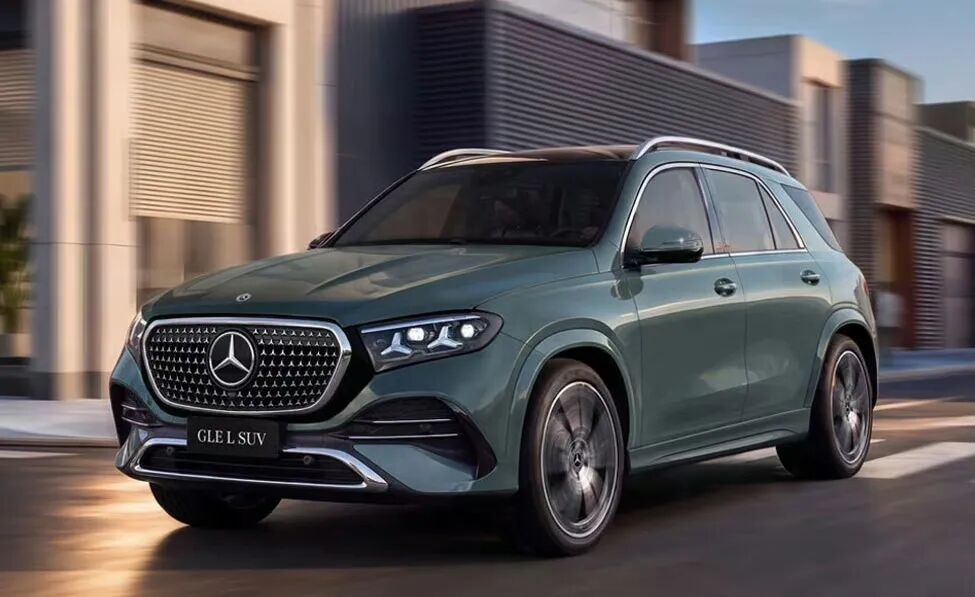
The domestically produced GLE remains a standout in Mercedes-Benz's lineup. Post-domestication, it retains the essence of its overseas counterparts in terms of mechanics and design, while enhancing smart and comfort features tailored for the Chinese market, ensuring it remains a top contender in the fuel-powered vehicle segment. This is undeniable, and it even boasts absolute competitive advantages over the BMW X5.
Firstly, as a domestically produced long-wheelbase model, the GLE L offers extended and thickened rear seats, complete with heated seats and headrests, as well as multi-point seat massage functions. The rear seats will also feature a dual-screen smart entertainment system, supporting seamless screen sharing, among other features. In terms of dimensions, the vehicle measures 5051/2018/1784mm in length, width, and height, with a wheelbase of 3115mm. For comparison, the current BMW X5L measures 5060mm in length and has a wheelbase of 3105mm.
Secondly, the GLE L delivers a superior cabin experience. The front row boasts a triple-screen design and integrates a Doubao AI large model virtual assistant. The central armrest houses numerous physical buttons, wireless charging, Type-C interfaces, and heated and cooled cup holders. Over the past two years, Mercedes-Benz's MB.OS architecture has undergone localized improvements, with significant changes expected in the new GLE L. For instance, it has implemented on-device VLM, elevating the overall smart level to new heights.
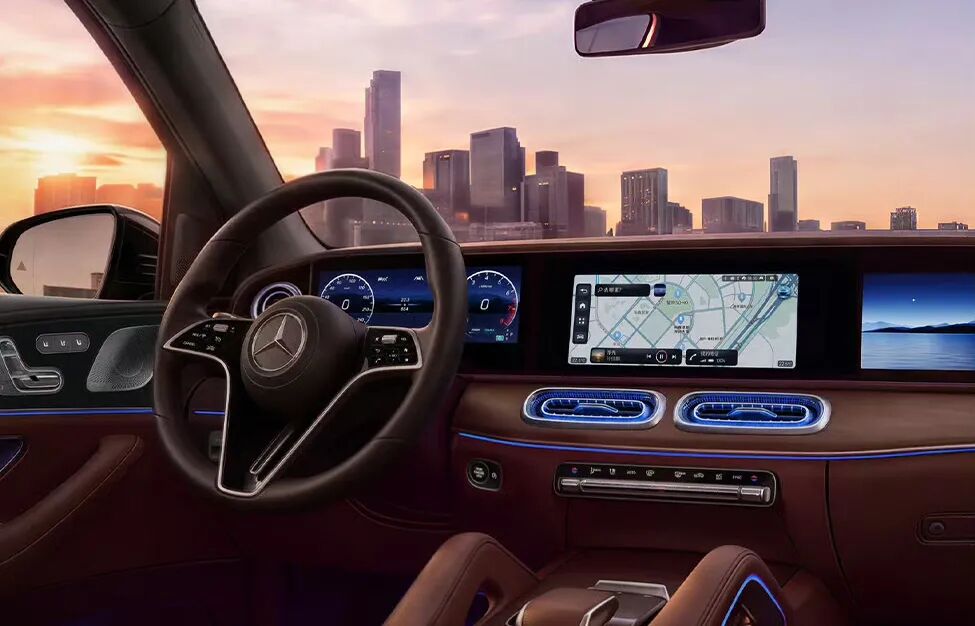
Enhanced human-machine interaction is achievable within the vehicle, encompassing application ecosystems, voice and gesture control, remote controls, and proactive recommendation services. Interestingly, Mercedes-Benz has opted not to follow the 'large TV' trend but has stayed true to its original rear-seat display screen solution.
In terms of intelligent driving, the GLE L continues to rely on the trusted Momenta solution. Currently, it implements the R6 large model, enabling urban and highway assisted driving, with the potential to upgrade to the Momenta R7 world model in the future, achieving parking-to-parking navigation. Mercedes-Benz has always maintained a cautious approach to verifying intelligent driving technologies, so it's unsurprising that it's not the latest R7 version. Thorough verification better ensures user safety rather than rushing to seize the technological vanguard at the expense of safety.
From the current perspective, the intelligent driving capabilities of all models under this system are not as disparate as they were a few years ago.
In terms of power, the GLE 350 L is equipped with an M254 2.0T engine, delivering a maximum power of 190kW and a peak torque of 400N·m; the GLE 450 L is fitted with an M256 3.0T engine, delivering a maximum power of 280kW and a peak torque of 560N·m. Additionally, the vehicle comes standard with an electric auxiliary supercharger, and the ISG smart motor can provide an additional 17kW and 205N·m, enhancing driving smoothness and fuel economy simultaneously. Meanwhile, the new vehicle also comes standard with the 4MATIC all-wheel-drive system, and the 3.0T models are equipped with air suspension featuring dual-valve variable damping shock absorbers.
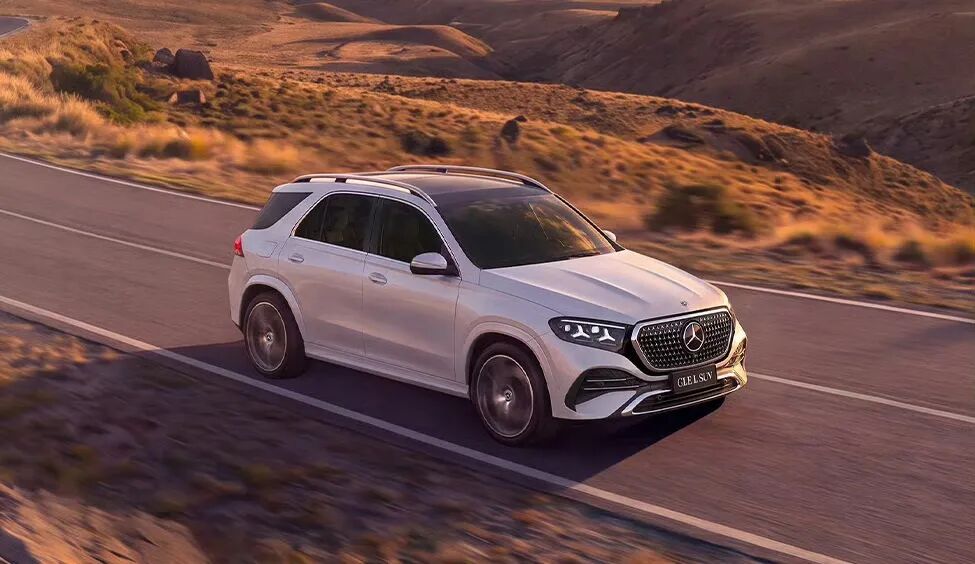
These features endow the GLE L with strong competitiveness against the BMW X5. However, as mentioned at the outset, Mercedes-Benz's primary rival is undoubtedly the domestic 9 Series flagship. For these flagship products, Mercedes-Benz's core competitiveness lies in its long-standing brand reputation and unwavering commitment to product quality. Additionally, with stable fuel prices and evolving purchase policies, its market performance may see a boost next year. However, when pitted against the 9 Series, the overall configuration of the Mercedes-Benz GLE is on par but has not yet surpassed them.
Of course, the 9 Series are predominantly new energy vehicles, not fuel-powered ones, which gives the GLE L some breathing room. Following Mercedes-Benz's previous pricing strategy, the GLE L is expected to be priced in line with market expectations post-launch. Currently, the starting price of Mercedes-Benz E-Class vehicles is already above RMB 400,000, and based on the transaction prices of the BMW X5, it hovers around RMB 600,000, with lower-end models entering the RMB 500,000 range. Therefore, it is speculated that the GLE L's starting price may be around RMB 600,000. However, Mercedes-Benz could also adopt a more aggressive market strategy, such as entering the RMB 500,000 price range, aligning directly with the terminal market, and implementing a fixed-price model, which is not out of the question.
Under such a model, the Mercedes-Benz GLE L may receive a more favorable response. After all, the primary reason high-end luxury vehicles like the Mercedes-Benz GLE, priced around RMB 700,000, have lost market share is that domestic brands offer compelling alternatives. With reasonable pricing and upgraded configurations, Mercedes-Benz's appeal will continue to resonate in the market. After all, for high-end consumers, brand choice extends beyond mere configurations. Moreover, for many consumers, owning a Mercedes-Benz still holds significant allure.
-
![]()
Dong Yuhui Departs with Traffic, Yet East Buy Crafts a Profit-Generating Engine
-
![]()
Did Alibaba Say AI Investments Would Pay Off in Three Years, Then Turn Around and Ask Shareholders for HK$80 Billion to 'Tide Over'?
-
![]()
Kuaishou's 'Fundification' Strategy: Going All-in on Kling AI
-
![]()
"Tech Ferrari" Xiangjie RX: Yu Chengdong’s Glowing Review Sparks Wild Netizen Speculation: Is It the YU7?
-
![]()
Chery's 'Audi Suit Gangster' Makes Waves with Unbeatable Pricing. Netizens React: 'Is This the Aorui A6L?'
-
![]()
AITO Takes a Bold Leap, Forms Joint Venture with BMW and Mercedes-Benz
-
![]()
How Does the Cloud Data Engine Transform Physical Labor into Technical Work for Autonomous Driving Annotators?
-
![]()
Historic Strongest Mercedes-Benz GLE L Faces Intense Competition from Domestic 9 Series