The 'Intense Competition' of East Asian Education is Being Re-exported Through AI
 09/17 2026
 529
529

Author|Zimo
Editor|Li Xiaotian
“It’s over.” Not long after Perspeak AI’s first product launched, a user completed a multi-person discussion training session and, upon seeing the system’s score of 60, blurted out these three words.Perspeak AI’s founder, Courtney, was reviewing user feedback with her team when this comment struck like a warning bell: If AI merely translates “communication skills” into a cold, hard number, it doesn’t replicate progress—it replicates the most fear-inducing aspect of East Asian education: an evaluation system that reduces individual worth to scores and rankings, delivering a verdict of “you’re not good enough.”
This specific reaction from a single user ultimately overturned Perspeak AI’s entire evaluation logic: shifting from “what score did you get?” to “what did you do, and what else can you do?”
This was no isolated incident. Over the past two years, a wave of Chinese entrepreneurs has collided with the same wall.
Their goal sounds simple: take East Asia’s most effective training methods—goal-setting, task breakdown, repeated practice, timely corrections—and reorganize them with AI to sell to learners worldwide.
But the “60-point” incident revealed only the tip of the iceberg: while training methods themselves might be replicable, the evaluation systems, cultural contexts, and learning motivations built atop them are far harder to transplant. This business is now being tested by both capital and genuine demand.
Data released by HolonIQ in July 2026 shows that global edtech venture capital investment reached approximately $1 billion in the first half of 2026, a 26% year-on-year decline. Yet amid this overall cooling, transaction volume in East Asia bucked the trend, growing 37%.
Grand View Research estimates the global AI education market will hit $11.4 billion by 2026. In a16z’s March 2026 ranking of the top 50 global consumer AI mobile apps, education products like Gauth, Brainly, Photomath, and Learna AI still held spots—AI education is no longer just a concept in funding circles but a reality in students’ daily learning routines.
This gap between capital and demand is driving AI education to split into two parallel forces: Large tech companies leverage traffic, capital, and content ecosystems to rapidly dominate general-purpose scenarios, while lighter-weight teams avoid direct competition by tackling niche, unresolved problems in the learning process.
Pmis, co-founder of Shuta AI, focuses on courseware reading; Jia Zijian’s Inspired AI targets language listening and speaking; Courtney’s Perspeak AI addresses communication pressure for international students in discussions and presentations. Behind these three cases lies a similar path: combining East Asian education’s foundational training logic with AI to reach global markets.
The question left by the “60-point” incident, however, will resurface for each of them in different ways.

East Asia’s ‘Intense Competition’ Produces More Than Just Scores
When discussing East Asian education, “intense competition” is an unavoidable keyword: problem-solving, exams, rankings, pressure, and standardized answers.
But beneath these controversial layers lies a method for how abilities are formed: setting goals, breaking down tasks, repeated practice, and continuous correction through feedback.
AI education is reactivating this foundational logic.
The most typical example is problem-solving around goals. In highly results-oriented environments, students habitually first confirm what standards they need to meet, then seek paths to achieve them, and complete rounds of training within limited time.
Pmis is no stranger to this logic: starting primary school at age 4.5, taking the college entrance exam at 16, and training at a key middle school dubbed “Liaoning’s Hengshui.”
This experience shaped her pragmatic view of efficiency: pressure is unavoidable, but clear goals and long-term investment can cultivate focus, learning ability, and a spirit of inquiry. She carries this mindset into her studies today.
When facing unfamiliar courses, she typically first determines her goals, then finds paths to achieve them.
When using AI to read hundreds of pages of foreign-language books, she compresses information-processing time, redirecting saved energy into more knowledge domains.
Here, AI doesn’t replace learning but enhances efficiency under predefined goals.
Deeper than goal awareness is belief in the value of training.
East Asian education is built on a simple premise: ability isn’t entirely determined by talent; repetition, correction, and sustained investment drive progress.
This belief is often obscured by negative narratives of “intense competition,” but for some learners, “competition” doesn’t solely come from external pressure—it can also be a proactive form of self-iteration.
Courtney falls into the latter category. She once named her social media account “Courtney, the Ultimate Competitor,” then later changed it.
As an English teacher, she doesn’t deny the value of practice. Even in Western education, which emphasizes interest and autonomy, foundational skills still require repeated training. The real issue with East Asian education isn’t excessive practice but that training often stops at standardized answers, failing to extend into real-world contexts.
“Mute English” exemplifies this breakpoint. Many East Asian students master vast vocabularies and grammar rules, perform well on reading and exams, yet struggle to speak naturally in real conversations.
They aren’t lacking foundations but training to translate knowledge into action.
When language shifts from an exam subject to a communication tool, learners must not only produce correct sentences but also handle uncertain responses, judge when to engage in discussion, manage disagreements, and form their own views without standard answers.
This means East Asian education’s training methods remain effective, but the endpoint must change: from arriving at correct answers to completing tasks in real scenarios.
Meanwhile, this results-oriented mindset makes these entrepreneurs emphasize educational outcomes over chasing technological novelty.
A phrase Jia Zijian heard while working at TAL deeply influenced him: “Failing to teach well is stealing money.”
In his view, this sets the bottom line (bottom line) for educational businesses. Education can charge fees and scale, but it cannot detach from real results. Products might acquire users through advertising but struggle to build reputation and long-term operations without learning effectiveness. Taking responsibility for results also means accepting that both education and entrepreneurship require long-term accumulation.
Jia describes himself as “mildly competitive” but more “competing against myself than others.”
In his view, growth rarely comes from a single breakthrough but from continuously identifying knowledge gaps and addressing them one by one. Entrepreneurship is similarly a marathon—what matters more than short-term intensity is sustained learning and refining key processes.
These entrepreneurs’ interpretations of East Asian education differ, but they all converge on a similar foundational belief: Complex abilities can be broken down, foundations require practice, errors should receive timely feedback, and investments must be validated by final outcomes.
While not representative of all East Asian education, this forms the system’s more universally applicable training logic.
AI’s emergence further amplifies the value of this training capacity. Explaining a problem, translating a passage, or generating a model essay are becoming increasingly easy. Knowledge hasn’t lost value, but the cost of obtaining standard answers is dropping rapidly.
The new competition isn’t about who possesses more answers but who understands how to structure them into training and help users transform knowledge into ability.
However, a training method effective in East Asian classrooms doesn’t automatically suit global markets just by integrating AI.
What can truly “go global” is the underlying structure of training, not the exam goals, classroom order, or cultural habits attached to it.
Separating the two has become a critical challenge for Chinese AI education entrepreneurs.

Methods Can Go Global, But Classrooms Can’t Be Copied
The easiest part of taking AI education products global is language adaptation; the most underestimated is the life behind the language.
Pmis remains cautious. “Shuta AI primarily serves overseas Chinese at this stage. If we enter local user markets, we’d prioritize East and Southeast Asia, where cultural distances are shorter.”
The reason? Curriculum designs, courseware formats, and learning paces vary by region. Needs identified among Chinese international students don’t automatically translate to acceptance by Western local students.
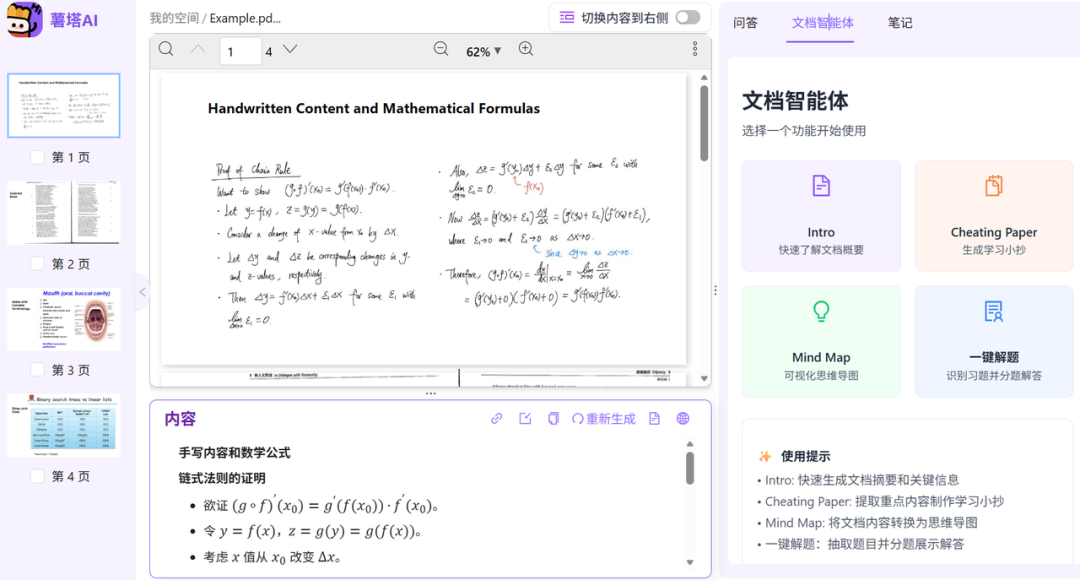
Shuta AI’s product design and user feedback also diverged sharply from her assumptions. Pmis initially envisioned Shuta AI as a learning space covering “preview-study-review” cycles. But after launch, users’ favorite feature wasn’t summarizing key points or AI Q&A but a seemingly low-tech function: reading English courseware while viewing Chinese translations side by side.
“This feature has little to do with AI, but everyone loves it,” she explained. Other tools like Youdao Dictionary or Doubao require manual clicks or screenshots for translation, whereas Shuta AI offers “browse-and-translate” smoothness—a simplicity that retained users earlier and more directly than any advanced feature.
Real, vivid user feedback is the ultimate driver for product optimization and iteration.
Courtney noted that many international students told her they felt discriminated against overseas due to language differences and perceived identities as “Asian” or “Chinese,” even experiencing bullying or false accusations from classmates. They struggled to make local friends, integrate socially, or earn points on collaborative assignments.
These students said they’d welcome practicing in a safe environment before starting school to experience group discussions’ atmosphere.
This is the true starting point for Perspeak AI’s “AI high-pressure communication training”: not whether to compete intensively but acknowledging that these students already arrive overseas with unspoken pressure and isolation. Can the product first catch this genuine vulnerability?
Courtney also observed that some Chinese students habitually wait to fully form their thoughts before speaking, viewing this as politeness in their educational and cultural contexts. However, in Western seminars or group discussions, turns flow seamlessly; few formally pass the topic. Waiting for “your turn” might mean missing the entire discussion.

Perspeak AI Simulates Multi-Person Interaction ScenariosThus, AI must understand not just what users say but what a behavior signifies in local culture.
Does direct questioning imply conflict? Does silence indicate active listening or withdrawal? How can one express opposition clearly without disrupting collaboration? These aren’t issues solved by translating Chinese courseware into English.
However, cultural differences can’t be reduced to fixed labels. “Individual differences far outweigh labels,” Courtney emphasized. Effective localization requires continuous feedback from local users and real-world usage scenarios.
The same expression can yield entirely different effects across classrooms and cultural contexts.
AI must grasp communication contexts in specific scenarios rather than rely solely on regional or cultural labels. When training goals and usage scenarios shift, evaluation systems must adapt accordingly.
This is a necessary transformation for East Asian educational methods to succeed abroad: In schools, exams and Further education (university admission) provide external pressure; in consumer markets, users can leave anytime, so products must rebuild motivation through interest, value, and genuine needs.
User acquisition and feedback thus become two practical entry points to test localization.
A team can translate its product into dozens of languages without knowing how to acquire users in those regions.
Mature teams scale through multilingual social media, advertising, app stores, and word-of-mouth; early-stage teams often start with campus clubs, campus ambassadors, and seed users from a few schools. For example, Shuta AI experiments with domestic and overseas social media and offline events; Perspeak AI plans to build real cases in Australian universities; Inspired AI requires its core team to reply daily to user emails and feedback from different regions.
Markets aren’t understood through a single “go global” decision but through feedback loops, ad placements, and user churn. East Asian education excels at correcting learning through repeated feedback; global teams must similarly use this method to refine themselves.
Treating each country or region as a long-term course—observing users, gathering feedback, and adjusting content and products—might be another commercial extension of this educational philosophy.
Only by finding training goals aligned with local cultures can users engage long-term; only through sustained user engagement can East Asian education’s training advantages be transformed into a viable business via AI.

Is AI + East Asian Education Export a Good Business?
Now, Jia Zijian's Inspired AI has passed through its toughest phase. Founded at the end of 2023, it caught the wave of AI application popularity and secured some early-stage investments. Currently, the company is profitable, generating hundreds of thousands of dollars in monthly revenue—by Jia's own account, “it's already one of the few AI companies genuinely making money.” Behind this success lies the need for steady perseverance and patience.
"Education is not something that can be rushed," Jia Zijian said. He cited three examples that have thrived for two decades—Duolingo, TAL Education, and New Oriental—"they built their success day by day."
Looking back at the educational startups founded around the same time as his, "almost all have pivoted or shut down," while his team remains one of the few still in the game.
Inspired AI's TalkMe and ListenLeap are two separate products—one addresses "fear of speaking," the other tackles "difficulty understanding." They are backed by nearly 100 million user data points, consistently ranking in the top two on education charts in Taiwan, China, and achieving a global user rating of 4.9. 
TalkMe AI simulates real conversations. Jia Zijian summarized the customer acquisition strategy for this business into three key elements: First, operating in multiple languages and regions simultaneously from day one. "Traditionally, a product in one region had only one language. Now, our product in one region supports N languages, and with multiple products, it's N multiplied by N multiplied by N." Second, their overseas and domestic social media matrix generates nearly tens of millions of exposures per month. Third, word-of-mouth—"Our team has an excellent habit: the first thing the core team does when arriving at the office is to respond to user feedback, comments, and emails, ensuring every single one gets a reply." He also didn't shy away from the necessity of paid advertising: "Anyone who claims they don't invest in ads or spend a dime is lying, in my opinion."
Regarding retention, his answer is an old adage in the education industry: "Short-term expectations manage retention; long-term expectations manage payment." Specifically for their products, AI plays three roles that humans cannot replicate: First, as a content producer—traditional curriculum development teams often require 20-30 people, but their content production is entirely AI-driven, relying on a rigorous production mechanism. Second, as a real-time feedback provider—traditional educational products leave users without teacher access after class, with feedback cycles often stretching to 72 hours, whereas AI provides instant, emotionless responses. Third, as a user advocate—through long-term behavioral data accumulation, AI can predict which knowledge points a user is most likely to struggle with next, laying the groundwork for the next step in advance.
What truly warrants scrutiny is whether the "training" capabilities emphasized in East Asian education are genuinely in demand overseas. Jia Zijian provided a counterintuitive numerical comparison: Globally, around 4 million people take the IELTS exam annually, but approximately 1.7 to 1.8 billion people are learning languages each year.
In other words, the group East Asian education best serves—students obsessively preparing for IELTS, TOEFL, study abroad, and entrance exams—represents only a small pool. The truly vast market consists of those learning languages for work or daily life: Mexican immigrants in the U.S. need restaurant English and trucking terminology, while users in Japan, South Korea, and Hong Kong/Taiwan, China, are motivated by work, travel, and pop culture. East Asian training methods aren't inherently flawed—"the English foundation across East Asia is actually quite strong, but more advanced systematic practice is needed"—but if entrepreneurs remain fixated on IELTS/TOEFL and K12 pathways, they risk missing out on a far larger and more authentic demand pool.
Thus, the demand is real; it just doesn't reside in the exam-training scenarios most familiar to these entrepreneurs but in broader, more fundamental life needs. Whether this business can truly succeed depends not on how advanced the AI technology itself is, but on whether entrepreneurs are willing, as Jia Zijian puts it, to "start from a small point and continuously serve the industry's first batch of users"—using the patience and refinement that East Asian education excels at to meet a global demand that exists outside East Asia's traditional evaluation framework.
-
![]()
Total Investment of 2.05 Billion Yuan! Shihua Technology's Optical Film Material Project Aims for Production Commencement
-
![]()
Sunny Optical Invests in Zeno and Partners with Unitree: Strategic Positioning in Embodied Intelligence
-
FAW Acquires Equity in GAC: A Signal of Strategic Alliances in the Era of Major Consolidations?
-
![]()
From Creation to Sale: No-Code App Development Platforms Enter Monetization Phase
-
![]()
The 'Intense Competition' of East Asian Education is Being Re-exported Through AI
-
![]()
Mobile Phones Seek Growth from Screen Innovations
-
![]()
Size is Limited, Price Even More So. Does the Li Auto i9 Deliver Yet Again?
-
![]()
The Edge AI Battle Has Officially Kicked Off | Business Wave