Large Models: Born from Industries, Destined to Revolutionize Them
 09/20 2026
 507
507
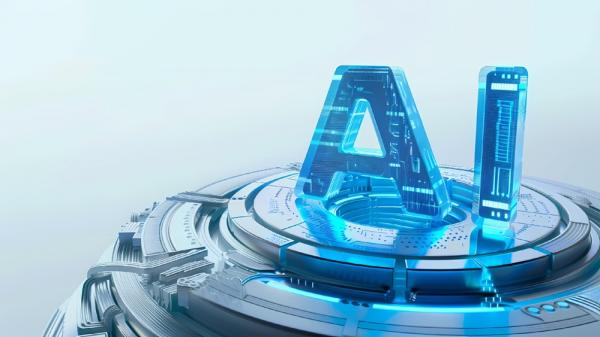
In today's landscape, it's no exaggeration to label large models as an industry 'standard.' Not only are tech giants in the large model arena deploying them, but industrial players are also turning their attention towards these powerful tools. Indeed, large models have the potential to deeply influence and transform industries, propelling them into the AI era. However, discussing large models in isolation, detached from their industrial context, risks undermining their true potential and value.
As the large model industry approaches a period of profound reshuffling, the call for their integration back into industries grows louder. It's safe to say that industry integration will become the next battleground in the large model landscape. For players already entrenched in specific industrial scenarios, applying large models directly to these contexts is a natural progression. For those solely focused on large models, building bridges between these models and industries will be pivotal in determining their future success.
With the maturation of the large model industry, especially as these models begin to showcase their true value through real-world commercial applications, we must ponder how large models, born from industries, can effectively return to and revolutionize them. Only by forging genuine connections between large models and industries can we witness the full maturation of large models and propel industrial development into the AI era.
Large Models and Industries: A Symbiotic Relationship
Treating large models and industries as separate entities not only hinders the healthy development of large models but may also cause industries to miss out on the transformative benefits of AI. A rational and objective examination of the relationship between large models and industries is crucial for their mutual growth. In essence, large models and industries complement each other and coexist harmoniously.
The diverse and vast application environments within industries continuously provide large models with the data and resources needed for their ongoing evolution, presenting new challenges and demands. Conversely, the strengthening capabilities of large models address relevant issues within industries, driving their iteration and upgrading. This symbiotic relationship ensures that both large models and industries evolve together.
For the large model industry, which is now entering a period of deep reshuffling and maturation, the key to driving deeper development lies in understanding the intricacies of industries and leveraging large models to solve existing problems. The deep integration of large models with internet players and their entry into factory workshops are direct manifestations of this trend.
Grasping the complementary and symbiotic relationship between large models and industries, using large models to drive industrial evolution, and nourishing large models with industry insights to maximize their value will be the true challenges that players must overcome in the future.
Large Models as the Foundation, Industries as the Superstructure
Large models are no longer a rarity but have become a standard feature. In some diversified enterprises, each scenario may even require a large model as foundational support. However, we must recognize that the foundational role of large models can only reach its full potential by supporting various industrial superstructures. Only by truly connecting the foundation of large models with the superstructure of industries can we create a new industrial landscape that meets genuine needs.
At this juncture, we must acknowledge the barriers and gaps that exist between industries, according to traditional and internet logic. Large models tailored to specific scenarios and industries support those contexts. If these scenarios and industries remain fragmented and isolated, the new industrial superstructures built upon the foundation of large models will not differ significantly from those in the traditional and internet eras.
Only by viewing large models as new bridges and links that connect the superstructures of industries and scenarios, enabling true collaboration and connectivity among industries, can we usher in a new era of industrial development. In this context, the foundation of large models serves as a bridge and link, connecting industries and scenarios in a novel form and achieving true collaboration and connectivity.
This further underscores the necessity for large models to originate from and return to industries. Only by achieving this can the new industrial forms and scenarios built upon the foundation of large models achieve deep and comprehensive connectivity. Only in this way can large models transcend traditional logic, propel industrial development into a new phase of deep integration, and truly serve as the infrastructure of the AI era.
Industries Provide the Form, Large Models Supply the Soul in the AI Era
Another compelling reason why large models must originate from and return to industries is that, in the AI era, large models are the soul that imbues industries with spirit, while industries are the form that gives large models physical shape. Since large models are the soul and industries are the form, only by achieving true integration of form and spirit can we derive new industrial forms in the AI era.
From this perspective, large models must return to their industrial roots. Only by doing so can the AI era give rise to unique industrial forms. Such a new industrial form is the key to establishing a new relationship between the industrial and consumer ends.
Therefore, another implication of large models originating from and returning to industries is that industries themselves undergo new evolution and iteration due to large models, resulting in new industrial forms unique to the AI era. Such a new industrial form is the result of the deep integration of large models and industries, the matrix for incubating new business models, and the link that re-establishes connections between the supply and demand sides.
With the 'form' of industries and the 'soul' of large models, the iteration and upgrading of industries themselves can truly be completed. Similarly, only by achieving the complete unity of 'form' and 'soul' can large models and industries achieve collaborative development, truly find new industrial forms unique to the AI era, and perhaps, such a new industrial form may represent the ultimate evolution of industries in the AI era.
Conclusion
Large models do not emerge in a vacuum; they originate from industries and should also return to them. Understanding and clarifying the relationship between large models and industries, and finding the correct ways and methods to link them, can truly propel the development of large models and industries into a new stage, allowing large models to serve industries and industries to be rejuvenated by large models.
-
![]()
Silicon Valley Sparks the AI Office War
-
![]()
Weekly Stock Review | Trump’s Concern Over AI Rivalry: The Auto Industry’s ‘Biggest Competitor’
-
![]()
FAW and GAC's Strategic Move: More Than Corporate Collaboration, a Pioneering Case of National Industrial Anti-Involution
-
![]()
Can the Long-Wheelbase Mercedes-Benz GLE SUV Tread in the Footsteps of the BMW X5?
-
![]()
From Netizens' Perspective, the XPENG G9L Still Seems Pricey
-
![]()
10 Questions I Care Most About Regarding Doubao Mobile Phone II
-
![]()
Quality Performance of China’s New Energy Vehicle Tri-Electric Systems in 2026: Experience-Centric Issues Take Center Stage, Range Remains Top Challenge
-
![]()
AIDrive’s Cooperation Model Undergoes Change: Is Xiaomi Pengcheng the Unexpected Winner?