GW is Becoming the Unit of Measurement for Cloud Providers
 09/24 2026
 388
388
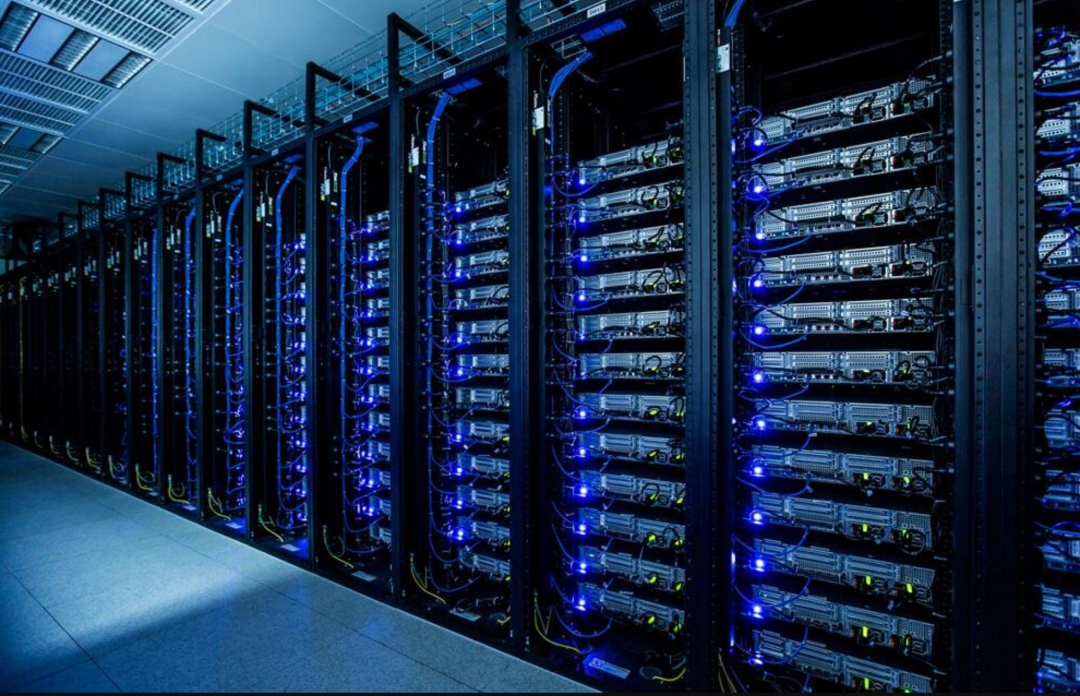

Cloud Providers Are All Establishing Computing Power Ecosystems
Image Source | Network (Please contact for removal if infringing) Partially AI-generated
This time last year, if you asked a cloud provider's technical leader, 'How big is your data center?' the answer would typically be, 'How many tens of thousands of servers?' or 'How many EFLOPS of computing power?'
But this year, if you overhear conversations at the Cloud Town Conference, the likely response will be: 'How many GW did you add this year?'
On September 22, Alibaba's CEO announced at the Cloud Town Conference that by 2032, the global data centers operated by Alibaba Cloud will exceed 20GW (gigawatts) in scale.
What does 20GW mean? 1GW equals 1 billion watts, roughly equivalent to the output of a large nuclear power plant. This implies that Alibaba Cloud's future data center clusters will have electricity consumption on par with the power system of a medium-sized country.
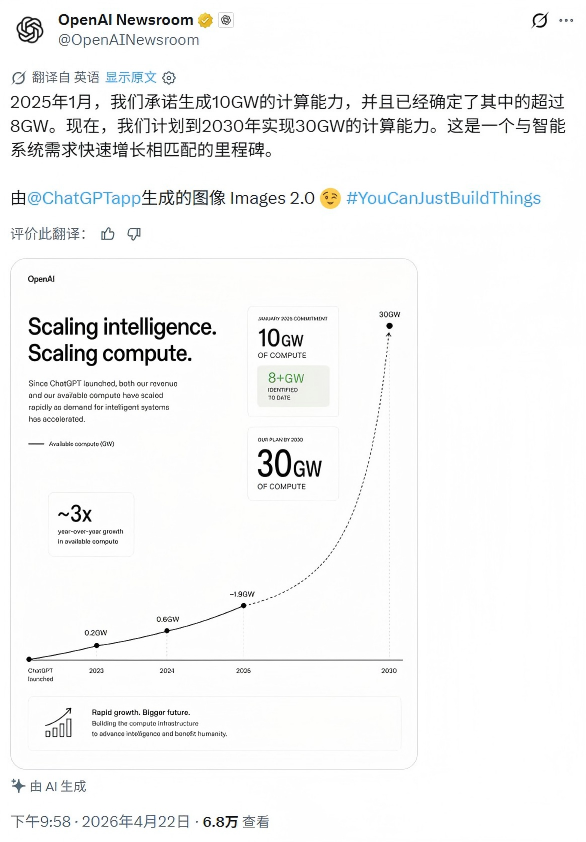
And this is not just Alibaba's solo act. Microsoft plans to expand its data center capacity to 38GW by 2032, Meta will deploy approximately 7GW of computing capacity this year and double it to 14GW by 2027.
Cloud giants on both sides of the ocean have nearly simultaneously shifted their metrics: from 'computing power' to 'power capacity,' from 'how many models can run' to 'how much electricity can be supplied.'
This transformation runs far deeper than it appears on the surface.

Industry Transformation Behind a Unit Shift
The cloud computing industry did not always use GW as its metric. For more than a decade, the standard unit for data center scale was MW (megawatts), with a few-megawatt facility already considered large.
However, starting in 2024, the growth curve of global data center power demand capacity has steepened significantly. TrendForce statistics show that global data center power demand capacity was 122.9GW in 2025 and is expected to climb to 161GW in 2026, a year-on-year increase of approximately 31%.
More noteworthy is the change in demand structure. The proportion of AI servers in data center power demand surged from about 25% in 2025 to 33.4% in 2026 and is expected to exceed 40% by 2027.
In other words, the focus of future cloud computing infrastructure has substantially shifted toward AI.
Jensen Huang stated in his CES speech this year, a widely quoted remark: Even with the most powerful GPU computing power, without GW-scale electricity support, these expensive chips are nothing but decorations with no practical use.
Simply put: Chips determine how fast you can run, but electricity determines whether you can run at all.
In the MW era, cloud providers' core competitiveness lay in server procurement capabilities and software scheduling efficiency. In the GW era, the competitive landscape has broadened dramatically—you need land, grid access, cooling systems, construction teams, local government approvals, and long-term power purchase agreements.
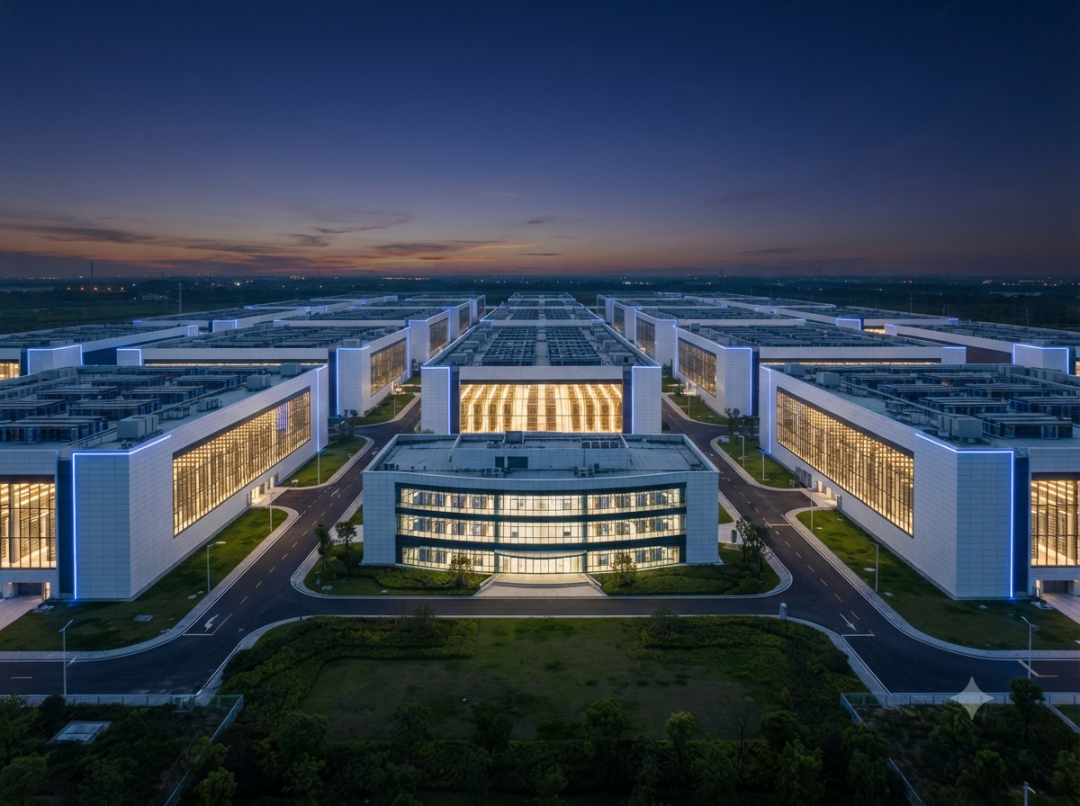
A GW-scale AI data center's engineering complexity far exceeds that of 'building a server room' and is closer to constructing a medium-sized power plant.
Over the past two years, the industry's greatest anxiety has been 'not being able to secure GPUs.' But by 2026, increasing signals point to the same conclusion: The real bottleneck has shifted from chips to electricity.
Google's CTO explicitly stated at SEMICON Taiwan 2026 that as AI model scales continue to expand, the core bottleneck to growth has shifted from chips themselves to electricity supply—the ceiling for AI computing power is changing from 'cannot build chips' to 'cannot find electricity.'
This judgment is supported by solid data. BloombergNEF estimates that if the industry maintains its current growth rate, AI data centers will face a 19GW power deficit by 2035.
TrendForce's estimates are even more aggressive: By 2030, global data center power demand capacity will reach 490.7GW, but the grid's available capacity for data centers will be only 222.6GW, creating a supply-demand gap of 268GW.
268GW is nearly equivalent to the total installed capacity of all data centers worldwide today.
The electricity constraint is not just about 'how much power can be generated' but also 'whether the electricity can be delivered.'
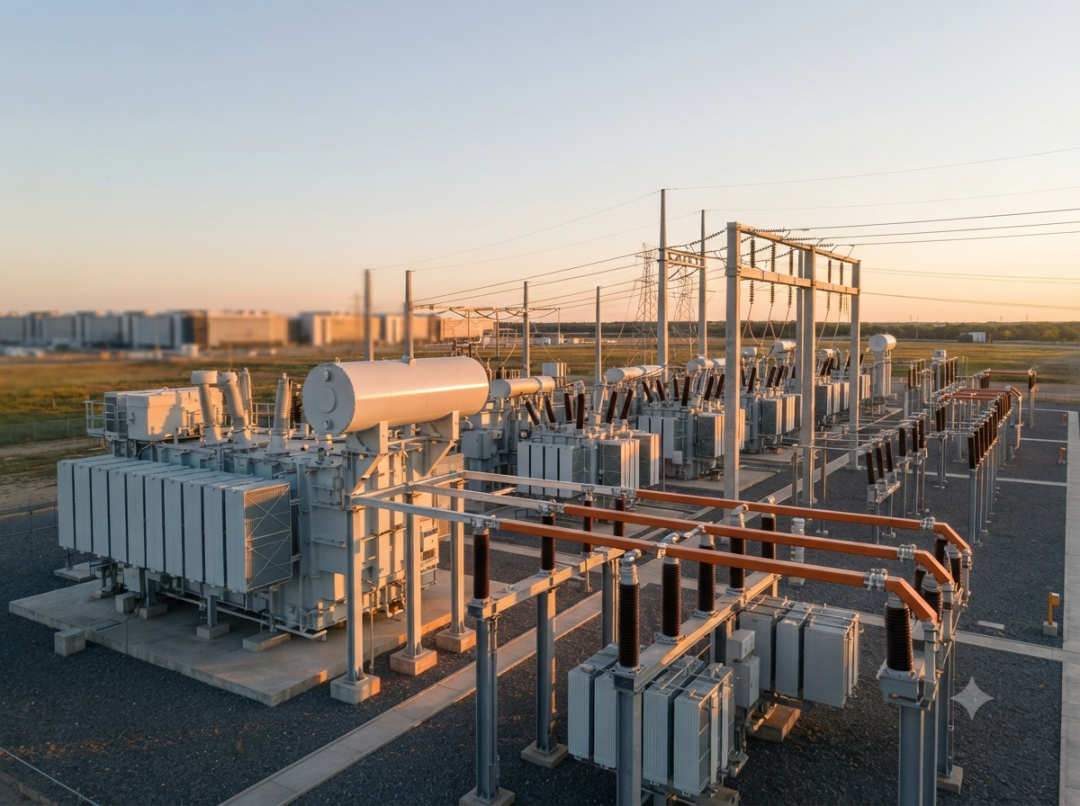
Existing grid capacity, transformer supply cycles, and transmission line construction progress all impose hard physical constraints. In some areas of London, grid connection wait times have approached a decade, and gas turbine delivery cycles have extended to five years.
In the United States, nearly 40% of data center projects face delays, with power shortages, labor shortages, equipment scarcity, and permitting obstacles being the primary causes.
This supply-demand imbalance is fundamentally altering cloud providers' competitive logic.
When building data centers in the past, site selection primarily considered land costs and network latency. Now, securing sufficient power access has become the first constraint in site selection.
Regions rich in power resources and with favorable climates, such as Inner Mongolia, Guizhou, and Ningxia, are becoming hotspots for a new wave of data center construction.
China's policy response has been swift. The 'Action Plan for Promoting Mutual Empowerment Between Artificial Intelligence and Energy,' jointly issued by four departments, explicitly encourages new computing power facilities to sign multi-year green power trading contracts with renewable energy generators and explores direct connections of nuclear and hydrogen energy to supply computing facilities.
The '15th Five-Year Plan for Building a New Energy System' further emphasizes strengthening the coordinated layout of large-scale renewable energy bases and national computing hubs to create 'energy + digital' industrial clusters.
One interesting detail is that Alibaba Cloud's green computing integration demonstration park in Qinghai, built with China Unicom, will reach a total computing power of 150,000P upon completion of its fourth phase. Leveraging local wind and solar resources, the park achieves 100% green power supply through a green microgrid.
This 'computing power follows green power' model is becoming a new industry paradigm.

A Systemic War More Complex Than the 'Chip War'
If electricity is the basic ticket to the GW era, then the competition for this ticket is actually a comprehensive contest involving land, chips, networks, capital, and engineering delivery capabilities.
Let's start with land and energy. Meta announced this year the construction of a data center worth approximately $9 billion in Alberta, Canada, where over 100 data center projects are already in the planning stages.
In Texas, Microsoft unveiled plans for a 2GW-scale data center construction project. The site selection logic for these mega-projects is no longer 'close to users' but 'close to power.'
Now, consider chips. Alibaba announced its self-developed AI chip, Zhenwu V900, at the Cloud Town Conference, with computing power triple that of the previous generation and scalable to 500,000 cards in a single cluster.
T-Head's chip product line now covers GPUs, CPUs, smart NICs, and interconnect chips, with its previous-generation self-developed chip, M890, already serving over 650 external customers through Alibaba Cloud.
The logic behind this is clear: When computing power scales reach the GW level, chip procurement costs become the largest variable constraining profits, making self-developed alternatives not just an 'option' but a 'necessity.'
Networks are an underestimated factor. A GW-scale data center cluster implies interconnecting hundreds of thousands or even millions of GPUs, with network bandwidth and latency directly determining the actual utilization efficiency of computing power.
Global data center networks are transitioning from 400G/800G to 1.6T, with higher-efficiency solutions like CPO all-optical switches becoming upgrade directions.
Capital is the bloodstream connecting everything. The combined capital expenditures of the world's top nine cloud providers were raised to approximately $830 billion in 2026, with annual growth increasing from 61% to 79%.
JPMorgan Chase's CEO offered an even more astonishing prediction in a recent interview: The 'ecosystem,' including hyperscale cloud providers and their upstream and downstream partners, will spend approximately $700 billion this year, potentially rising to $1 trillion by 2027.
This money is not just for buying GPUs. Investments in AI data centers are spreading from semiconductors to power and industrial infrastructure, with land, servers, storage, network equipment, transformers, gas turbines, transmission lines, and more all requiring substantial capital.

The Perils of Heavy Industrialization
The emergence of GW as an industry-standard unit also reveals a deeper transformation: Cloud computing is evolving from an 'asset-light, high-margin' internet business into a 'capital-intensive, high-depreciation, long-payback-period' heavy industry.
The most direct signal is the deterioration of free cash flow. Tencent's free cash flow turned negative by RMB 13.8 billion in the second quarter, marking its first-ever negative figure, with approximately RMB 51.4 billion in prepayments for computing power procurement.
Moody's expects that as capital expenditure growth outpaces operating cash flow growth, the free cash flow of several large cloud service providers in the United States and China may turn negative in 2026 and 2027, leading them to rely increasingly on debt market financing.
A noteworthy contrast is input-output efficiency. Moody's report points out that capital expenditures by the top six U.S. cloud providers will exceed $785 billion in 2026, roughly six times that of leading Chinese tech companies. However, in terms of total data center installed capacity, the United States has about 52GW, while China has about 28GW—less than a two-fold difference.
This means that with the same amount of capital, China can support more infrastructure construction. Lower land, construction, and operational costs, along with cheaper green energy, enable Chinese tech companies to narrow the computing power gap with far less investment than their U.S. counterparts.
However, this does not mean complacency is warranted. As capital expenditures continue to rise and investment payback periods lengthen, market concerns about 'overcapacity in computing power' have not dissipated.
In July, Meta announced plans to lease some of its computing power, triggering significant fluctuations in tech stocks.
A researcher at a fund company admitted, 'Any hardware industry has capacity cycles, and the AI computing power sector cannot remain in a perpetual state of supply shortage.'
Nevertheless, current signals indicate that supply is still far from catching up with demand. Alibaba's CEO explicitly stated at the Cloud Town Conference that 'there is hardly an empty card in Alibaba's servers,' and based on demand projections for the next three to five years, he believes that substantial investments in AI data centers will yield highly certain returns.
Amazon's CEO also publicly stated that 'the market's demand for computing power in 2028 will be astonishing.'

When computing power becomes a public good akin to electricity, the standard for measuring a cloud provider's capability is no longer how many GPUs it has but how much stable computing power it can supply.
This is similar to how a power company is measured not by how many generators it owns but by how many GW of electricity it can deliver to the grid.
This analogy is not mere rhetoric. The narrative framework Alibaba presented at the Cloud Town Conference is precisely this: Tokens are likened to electricity, chips to generators, and the cloud to the power grid. Models determine what machine intelligence can do, chips determine the cost of producing equivalent intelligence, and the cloud determines the scale to which intelligence can be supplied.
Within this framework, 20GW is not just a capacity target but a bold bet on future 'intelligent production capacity.'
According to analyst estimates, if each GW corresponds to approximately $12 billion to $15 billion in revenue, the revenue potential for Alibaba Cloud's GW-scale capacity alone by 2032 is substantial.
However, the GW race also raises a question worthy of caution for all industry participants: When infrastructure investment scales reach the 'trillions of dollars annually' level and data center electricity consumption begins to rival that of medium-sized countries, cloud providers are effectively assuming quasi-public utility roles.
They are building not just commercial facilities but also the foundational energy networks of the digital age.
This entails higher societal expectations, stricter regulatory scrutiny, and greater costs for mistakes.
During the dot-com bubble, many of the most highly regarded companies eventually exited the stage, while some early under-the-radar players later became industry leaders.
In the race for AI infrastructure, the ultimate winner may not be the one shouting the loudest today but the operator capable of converting every watt of power, every square meter of land, and every chip into stable revenue.
GW is merely the first marker in this long-distance race.
-
Yunbao Intelligence Charges Towards IPO: Over 5,000-Fold Revenue Surge in 2.5 Years, Tencent Contributes Nearly 98% of Revenue
-
Field Test of Doubao at Work: Can a Company That Helps Users Kill Time Build a Product That Saves Them Time?", "Doubao, AI, Office Agent, User Growth, Commercialization
-
Ofilm Wins Consecutive Orders for Xiaomi’s Flagship Periscope Telephoto Modules Across Two Generations!
-
![]()
Net Profit Soars by 578% in First Half of the Year! How Promising Is Hycreate Optoelectronics’ IPO on the Beijing Stock Exchange?
-
Reshaping the Supply Chain Landscape: CATL Faces a New Industry Cycle
-
![]()
US$1.2 Million for 'Digital Territory': Global Tech Giants Scramble for '.ai' Domain Names
-
![]()
Apple’s Dependence on Scalpers Hits an All-Time High
-
![]()
Lei Jun’s 200 Billion Yuan Gamble: Why Does He Wait for Trends to Solidify Before Making Big Moves?