AI Is Becoming Your New Colleague! No More Slacking or Leaves—Are Workers Panicking?
 09/29 2026
 328
328
Will They Ultimately Replace Human Workers?
In the coming months, thousands of new “colleagues” are set to join the workforce.
Gradually, you’ll come to remember their names and recognize their avatars; they’ll be added to your email groups and work chats. Eventually, some will take on roles as administrative supervisors, others as engineers, and some even as marketing experts. But these colleagues share one key trait:
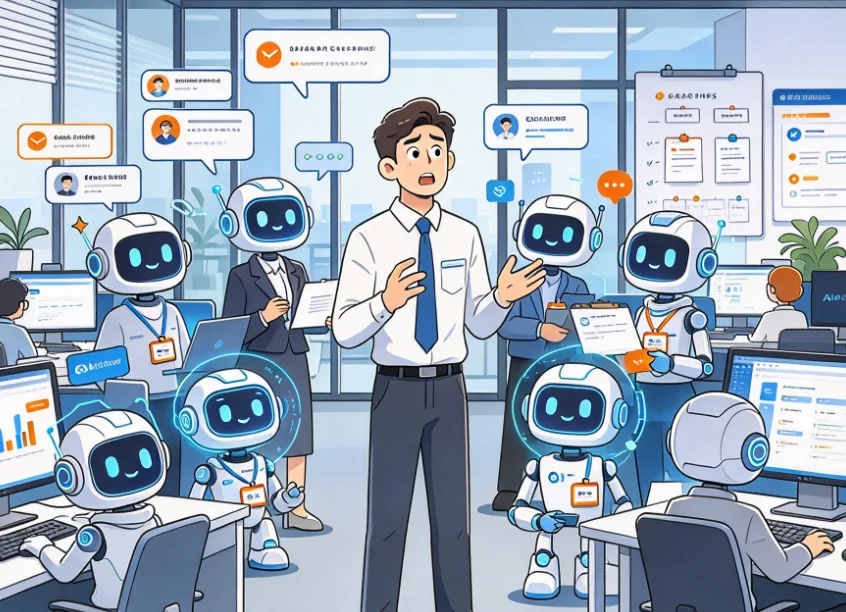
Image Source: Doubao AI
They are not real people—they are all AI agents.
AI agents are essentially systems built on large language models, capable of completing tasks autonomously. After this trend emerged, many companies began offering “digital employee” services. These AI agents are marketed as the ideal workers: available 24/7, never complaining, and boasting intelligence far beyond that of humans.
But interestingly, little attention has been paid to what it’s actually like to work alongside these AI colleagues. Julie Bedard, a partner at Boston Consulting Group, noticed three years ago that discussions about AI in the workplace lacked clarity. Back then, ChatGPT was gaining immense popularity, and business leaders believed the technology would dramatically boost productivity.
In an interview with Wired, Bedard explained that at the time, there was no established terminology to describe AI in the workplace—whether it should be called a tool, a teammate, a colleague, or a collaborator.
When Microsoft Copilot and Google Workspace’s Gemini were first launched in 2023, they were primarily marketed as “employee tools.” However, in January of this year, Bedard and her colleagues surveyed 1,261 managers and found that 22% of companies had already integrated AI agents into their formal organizational structures. Bedard predicts this trend will continue to grow. Now, a wave of startups is offering AI employee services, while tech giants are aggressively promoting their autonomous agents. For example, in June, Microsoft introduced “Scout,” an agent designed to handle tasks such as rescheduling meetings and drafting emails.
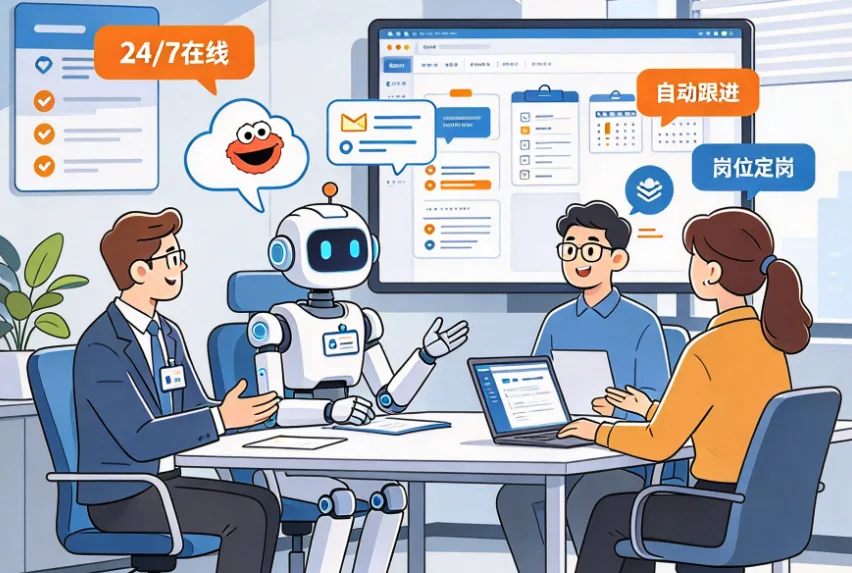
Image Source: Doubao AI
Omar Shahin, Microsoft’s corporate vice president for Scout, bluntly stated during the product launch that the company is essentially providing employees with a personal assistant—and the core value of a personal assistant is its ability to keep working even after the employee has clocked out.
Dhruv Armin, co-founder of startup Anything, mentioned that users begin to genuinely respect these agents and even develop strong emotional attachments, treating them as if they were real people. This Atmosphere coding company entered the AI colleague market in August this year with its platform, Skydive.
Skydive’s agents are neither simple chatbots nor rigid workflows but actual digital colleagues: they have unique names, clear job titles, and operate on cloud servers. They can integrate into various workplace communication channels like Slack, email, and iMessage, each equipped with a puppet-style avatar. Armin describes the design as approaching human-like quality while still being clearly distinguishable from humans. These agents’ names usually reflect their responsibilities—for example, an agent named “Canary” is tasked with 24/7 production monitoring.
Armin believes that adding a touch of anthropomorphism to agents is necessary, as most people still don’t fully grasp what true AI agents are.
Kristin Wendell, CEO of Pronto Housing, is an early Skydive adopter who has assigned AI a variety of tasks: writing contracts, scheduling meetings, and sending follow-up emails to clients. In her eyes, these AI agents are the perfect employees.
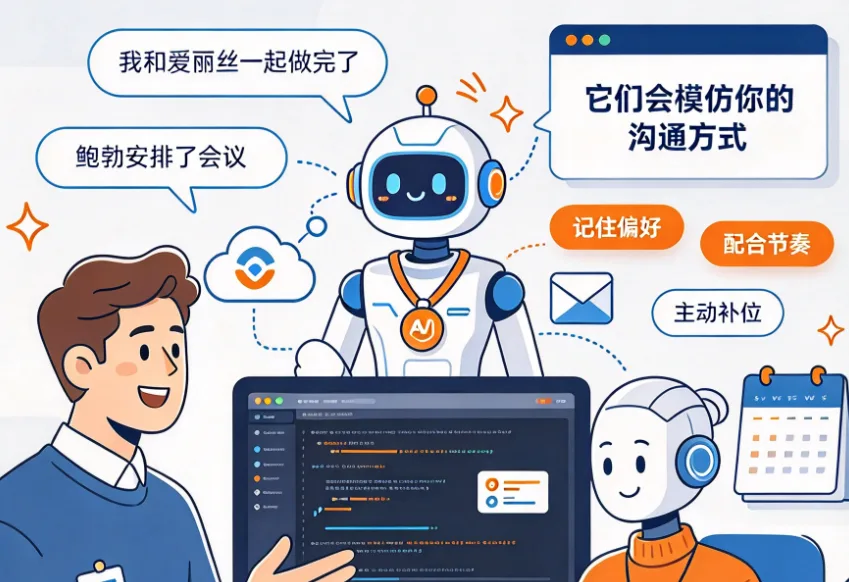
Image Source: Doubao AI
But how do they perform as colleagues? Skydive’s AI agents not only integrate into all workplace communication channels but also continuously evolve to adapt to colleagues’ communication styles, needs, and feedback. In other words, they become increasingly skilled at interacting with human coworkers. After Pronto’s engineering team began using a coding agent, Wendell noticed that employees discussing projects would refer to the AI named Alice as a collaborator, saying they completed the project “with Alice.”
However, the appeal of AI lies precisely in the fact that they are not human. Besides their inexhaustible energy, they are entirely free from office politics and the emotional fragility of human workers. Wendell’s administrative AI, named “Bob,” once made a mistake by sending her detailed schedule to the work group. Wendell scolded it directly without any hesitation.
But anthropomorphizing AI in the workplace carries risks. Bedard and her Boston Consulting colleagues found that when managers were told a task was completed by an “AI employee,” they detected 18% fewer errors than when told it was done by an “AI tool.” Moreover, Bedard argues that AI agents’ capabilities and limitations cannot be fully understood through the lens of human employees.
Bedard states that companies are still in the exploratory phase regarding what behavioral boundaries to set for AI agents.
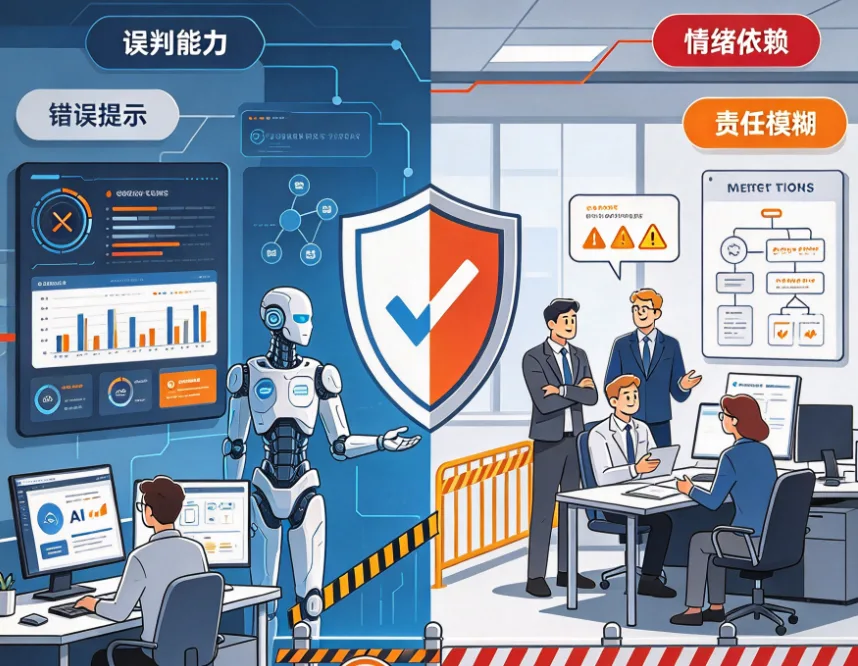
Image Source: Doubao AI
Deep emotional connections between humans and AI are not new—people have been forming attachments to chatbots for years. Even in the workplace, AI tools have provoked unusual reactions. Last year, Henry Blodget, founder of my former employer Business Insider, wrote a blog post about building a team of digital subordinates and even admitted to feeling a genuine attraction to an exceptionally appealing AI colleague’s avatar.
Sarah Franklin, CEO of HR company Lattice, has more fundamental concerns. Even before the concept became mainstream, Lattice incorporated digital employees into its organizational structure two years ago. But Franklin emphasizes that they did so to clarify responsibility divisions, not to encourage employees to treat AI colleagues as real people.
In Franklin’s view, anthropomorphism is a tactic used by tech companies. They rely on the dopamine rush from emotional connections to keep users engaged. While this strategy helps companies accumulate active users, Franklin believes it will have long-term negative impacts on workplace cognition and behavior.
Franklin argues that these large models, which absorb all human knowledge and boast trillion-dollar valuations, might be gradually eroding humanity—a frightening thought when considered carefully. She also questions: What is the ultimate purpose of all this development? Is it to replace humans and cause unemployment?
This article was compiled by Leikeji from Wired.
Original Link: AI Agents Are About to Flood the Workforce. No One’s Ready for It | WIRED
Source: Leikeji
Images in this article are from the 123RF Licensed Image Library. Source: Leikeji
-
![]()
Seres Struggles to Escape Huawei's 'Influence'
-
The AI 'Golden Rice Bowl' of FDE Amid Massive Layoffs
-
![]()
NIO and Geely Cross-Hold Shares: Pioneering a New Auto Industry Joint Venture Focused on Battery Swapping
-
![]()
From 1.3 Trillion to 300 Billion: The Vanishing Trillions in Market Value—Is the Zhipu AI Boom Over?
-
![]()
What Supports Chinese Cinema in the Absence of Blockbusters During the National Day Holiday? | 2026 Chinese Film Report and Overseas Trends
-
US$8.2 Billion: Silicon Valley's Top-Tier 'Girls Help Girls'
-
![]()
Are DOE and Metasurfaces Truly Distinct Entities?
-
![]()
Manus Founder Xiao Hong: Manus Preceded the Advent of Codex and Claude Collaboration