Xi’an Jiaotong University Develops Teleoperation Robot Model; Lancet Robotics Secures Multi-Million Yuan Angel Round Funding
 10/08 2026
 546
546
Chaoyong AI Editorial
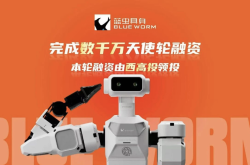
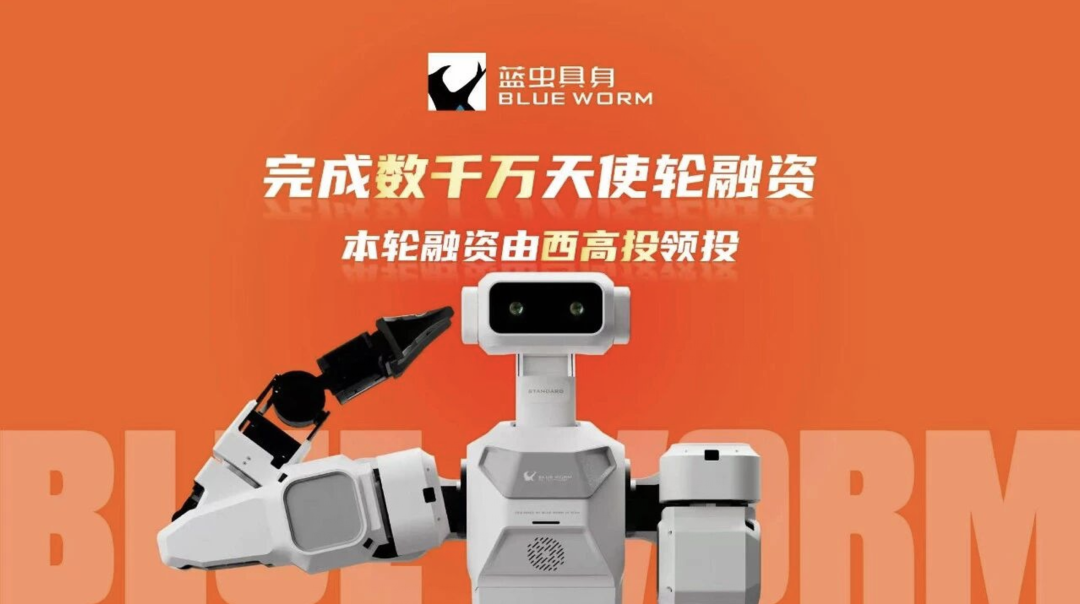
Recently, Lancet Robotics, a full-stack embodied intelligence enterprise, announced the successful completion of a multi-million yuan angel round funding. This round was led by Xi’an Hi-Tech Industrial Venture Capital Co., Ltd. (Xi’an Hi-Tech Investment).
The newly acquired funds will be strategically allocated towards constructing an annual production line with a capacity of thousands of units, advancing product development, expanding into new scenarios, and growing the team.
Founded in March 2025, Lancet Robotics is a spin-off from Xi’an Jiaotong University. Its core team comprises master’s and doctoral graduates from Xi’an Jiaotong University, along with seasoned engineers from the robotics industry.
Founder and CEO Cong Yao, an EMBA student from the 2021 class at Xi’an Jiaotong University, boasts over a decade of experience in the robotics sector. In 2023, he led his team to clinch the national championship in the China MBA Entrepreneurship Competition with their innovative “zero-backlash integrated flexible joint module,” which laid the technological groundwork for the Mantis series robots.
Roughly one-third of the founding team members have competed in RoboMaster, with another third having participated in RoboCon and RoboCup, respectively.
On September 14th of this year, Lancet Robotics unveiled its modular wheeled humanoid robot, Mantis Standard “Xiaobai,” with a starting price of 9,800 yuan. Standing 1.4 meters tall, “Xiaobai” boasts 22 degrees of freedom throughout its body, a rated single-arm load capacity of 7 kilograms, and a battery life of 3 hours.
The robot’s chassis, arms, waist, and head are all designed as independent standard modules, which are mechanically and electrically connected through quick-mount interfaces. This design allows users to purchase modules separately based on their current task requirements. In the event of a failure, specific modules can be easily located and replaced without the need to purchase the entire robot.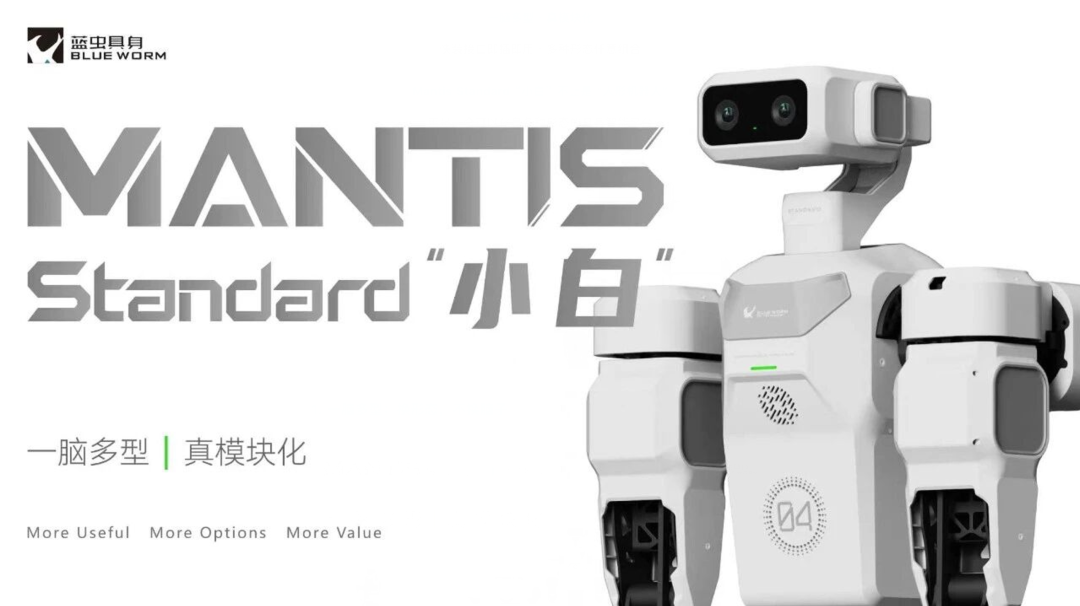
From a technological perspective, Lancet Robotics has developed four proprietary platforms covering ontology, teleoperation, modeling, and cloud platforms.
The underlying “Spring Cocoon” architecture platform achieves approximately 70% reuse of underlying technologies and incorporates six core technologies, including the Tiger Beetle chassis and Mantis electronic control. The “Quantum” teleoperation platform reduces latency to just 10 milliseconds through its self-developed communication protocol, significantly outperforming the industry average of 50 to 200 milliseconds. The “Wormhole” modeling platform utilizes the self-developed brain BW-Brain to host the embodied base model, while the “Hive” cloud platform integrates the ontology, teleoperation, and modeling to enable a seamless “collection-training-inference” cycle.
In terms of commercialization, Lancet Robotics has adopted a strategy of “getting the job done first, then evolving.” This approach involves allowing teleoperation robots to enter real-world scenarios to generate revenue initially, with data naturally accumulating during operations. This creates a positive feedback loop of “teleoperation revenue generation → data accumulation → model iteration → autonomous capability enhancement.”
The company’s scenario strategy follows a “from commercial to household” path. It initially validates its engineering and supply chain capabilities in small B-end commercial scenarios before gradually expanding into the household service market.
Currently, Lancet Robotics has secured a partnership with a leading self-service coffee machine enterprise for the annual supply of hundreds of units. In the academic sector, its robots have been procured by Xidian University, Xi’an Jiaotong University, and China University of Mining and Technology for data collection purposes. Additionally, it has initiated deployments in industrial and commercial scenarios with enterprises such as Shaanxi Tourism Group and Proton Automobile.
By opting for a wheeled structure over a bipedal design and focusing on upper limb operational capabilities, Lancet Robotics has pursued a faster route to commercialization, albeit with some trade-offs in product versatility.
The model of “teleoperation revenue generation + data by-products” effectively ties income and data accumulation together, which is logically sound. However, the long-term cost structure of teleoperation and customer repurchase intentions will require validation through larger-scale deliveries.
-
![]()
Latest Developments: JAC Motors Breaks Silence on Huawei-Maserati 'MaJie' Rumors!
-
![]()
Breaking News! Seres and Huawei to 'Reunite,' New Car Prices Set to Increase by 30,000 Yuan
-
![]()
Xi’an Jiaotong University Develops Teleoperation Robot Model; Lancet Robotics Secures Multi-Million Yuan Angel Round Funding
-
![]()
The Great Battle of AI Assistants Begins: Only 14 Individuals Among the Most Valuable Non-Major Players
-
![]()
UK Mulls Imposing EU-Style Tariffs on Chinese Electric Vehicles
-
AI Embarks on a New Phase Amidst Unabated Capital Fervor
-
![]()
Is Fan the Only Option for Laptop Cooling Systems?
-
![]()
What is the role of language in autonomous driving VLA?