V4 Pro Official Version Yet to Launch, Yet DeepSeek Opts for Price Hike
 10/14 2026
 446
446

While DeepSeek's low-price strategy has proven effective, it has also ushered in a host of new challenges.

On August 6, DeepSeek announced a significant increase in the pricing of its API services, noting that the hike is expected to be substantial.
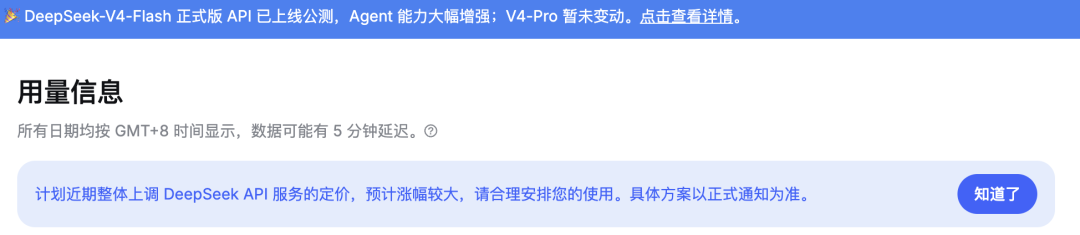
Image source: DeepSeek official website
Just six days prior, DeepSeek had launched the public beta for its new V4 Flash API. According to tests conducted by Artificial Analysis, the cost for V4 Flash to complete a single test task was a mere $0.03. Foreign media outlet Axios subsequently hailed V4 Flash as the new "price killer," suggesting it was driving AI prices toward zero. However, within days, DeepSeek announced a substantial price increase.
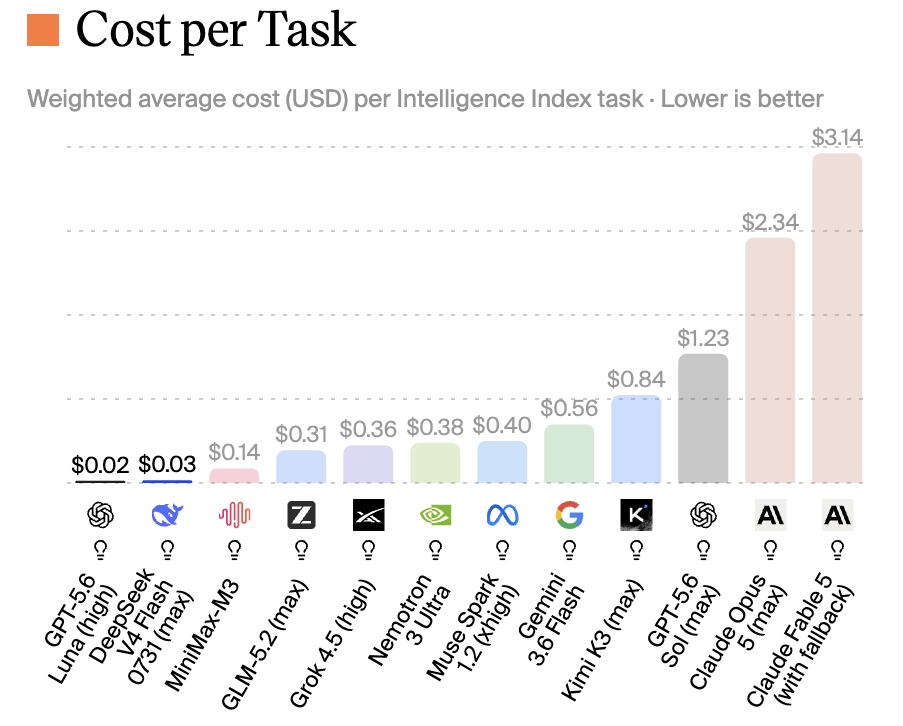
Image source: Screenshot from Artificial Analysis official website test
Over the past few years, "low prices" have been DeepSeek's secret weapon. In May 2024, it slashed API prices to 1 yuan per million input tokens and 2 yuan for output. The following month, ByteDance, Alibaba, Baidu, Tencent, and iFLYTEK followed suit, with some models seeing reductions exceeding 90%, and others becoming free.
By 2026, V4 Flash maintained the pricing of 1 yuan per million input tokens and 2 yuan for output. As model capabilities and token call volumes surged, prices remained at the V2 level. While low prices helped DeepSeek expand its call scale, they also exacerbated capacity and revenue issues.
Now, the company is set to adjust its pricing strategy.
01 Low-Priced Models: A Double-Edged Sword
After R1's explosive popularity in 2025, DeepSeek temporarily suspended API recharges due to insufficient server capacity. That same month, it introduced off-peak discounts: from 12:30 AM to 8:30 AM daily, V3 prices were halved, and R1 prices were reduced to a quarter of the original, encouraging developers to shift tasks to off-peak hours. After V3.1 was launched, DeepSeek canceled these discounts, citing further expansion of API service resources.
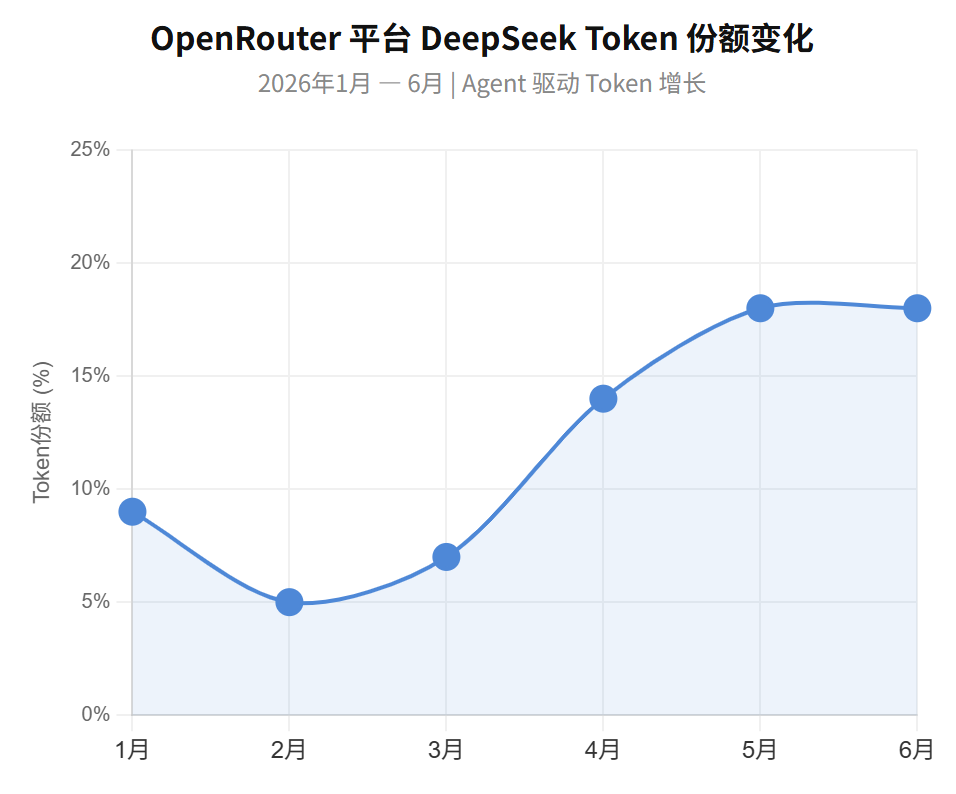
By 2026, the widespread adoption of agents had significantly increased the token volume that low-priced APIs needed to handle, further straining servers. Third-party model routing platform OpenRouter analyzed over 450 trillion tokens processed through its platform from January 1 to June 14, 2026. Platform data revealed that agents were the primary driver of token growth for DeepSeek; by the end of May, V4 Flash accounted for 70% of DeepSeek's agent token traffic on the platform. Agent requests consumed an average of 15 times more tokens than human requests, substantially increasing the model's inference load. On June 29, DeepSeek announced that after the official release of the V4 series, API prices during peak weekday hours would double. The company explained that this move was aimed at allocating resources more reasonably and improving service stability.
However, following the public beta of the new V4 Flash, capacity pressure resurfaced. On the day of the public beta, DeepSeek's status page recorded multiple instances of degraded service performance; some developers reported encountering errors such as long unresponsiveness, request timeouts, and full request queues when calling V4 Flash on social media.
While low prices earned DeepSeek more call volume and agent tasks, the massive token demand also placed greater pressure on server capacity and stability. Several pricing strategy changes also indicate that DeepSeek needs to strike a new balance between low prices and server stress.
02 Valuation Outpaces Revenue Growth
According to a report by The Information, DeepSeek's recent annualized revenue reached $400 million to $500 million, primarily from APIs, with a gross profit margin exceeding 50% for related businesses. Reuters estimates that DeepSeek's valuation after its first round of financing was approximately 350.9 billion yuan. At the then-current exchange rate, this valuation was about 104 to 130 times the annualized revenue.
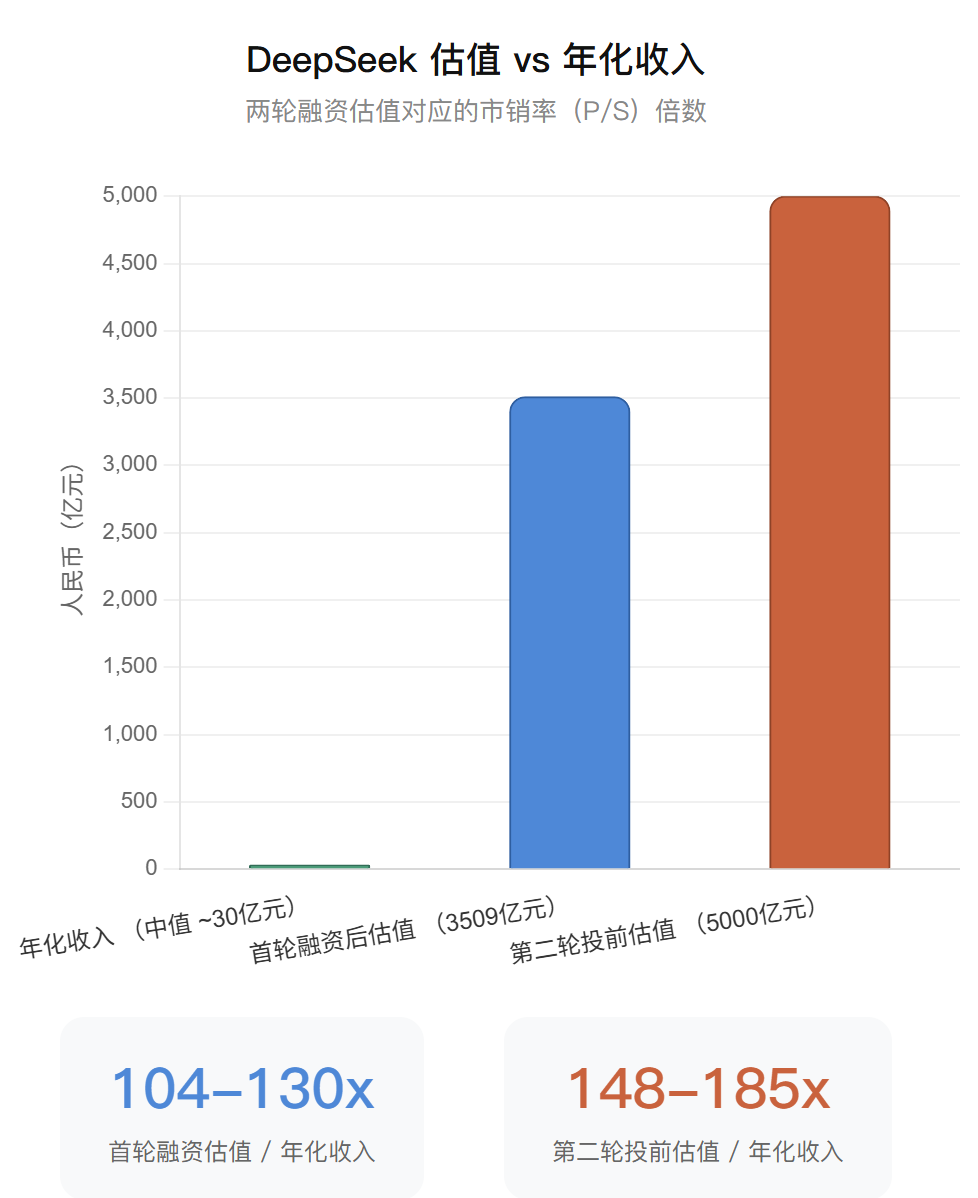
DeepSeek is still seeking a higher financing valuation. Reports indicate that DeepSeek has restarted a second round of financing with a pre-investment valuation of 500 billion yuan. If calculated based on the same annualized revenue of $400 million to $500 million, a 500 billion yuan valuation would be about 148 to 185 times the annualized revenue, reflecting higher expectations for revenue growth.
APIs are currently DeepSeek's most direct source of revenue, but growth in token scale does not automatically translate into proportional revenue growth. DeepSeek once disclosed that from February 27 to 28, 2025, V3 and R1 processed a total of 776 billion tokens in 24 hours, covering web, App, and API. If charged at R1's API price, the theoretical revenue would be approximately $562,000; however, due to free web and App access, lower V3 prices, and nighttime discounts, actual revenue was far below this figure.
With stable paid call volumes, raising API prices can increase revenue from the same number of calls. However, whether the price hike can ultimately drive overall revenue growth depends on changes in call volumes and customer retention.
03 Price Hikes Complicate the Landscape
Unlike closed-source models, DeepSeek has opened its model weights, allowing users to call the same model through third-party platforms or choose to deploy it themselves.
Take the third-party platform OpenRouter as an example: as of July 13, 2026, 16 service providers on the platform offered inference services based on DeepSeek V4 Pro preview; input prices per million tokens varied from $0.435 to $1.74 among different providers, with availability rates between 97.44% and 99.92%. After DeepSeek's official API price hike, users can continue using the V4 Pro preview and simply switch to a different service provider or platform for inference services.
However, open weights do not mean migration is cost-free. While ordinary text generation is relatively easy to migrate, agent business requires retesting prompts, concurrency, and stability; self-deployment also incurs costs for GPUs, inference optimization, and long-term maintenance. For teams with small call volumes, these costs may exceed the API price hike itself.
At the same time, other model providers are also reducing model usage costs.
On July 17, Moonshot AI released Kimi K3, which surpassed Claude Fable 5 and GPT 5.6 Sol in blind frontend programming tests on the evaluation platform Arena, ranking first. However, its API output price is only half that of GPT 5.6 Sol.
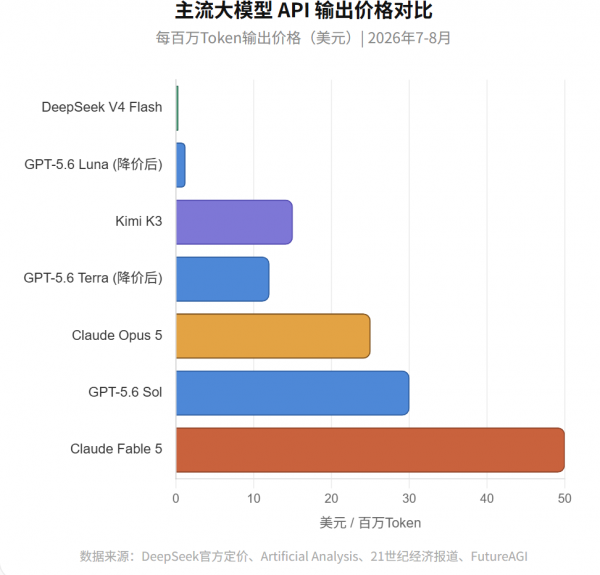
After K3's release, competition around pricing among model providers intensified further. On July 21, Google launched several Flash models focused on low-cost calls; on July 24, Anthropic released Claude Opus 5, priced at half that of Fable 5; on July 30, OpenAI reduced GPT-5.6 Luna's price by 80% and Terra's by 20%.
Since specific pricing adjustments have not yet been announced, it is currently impossible to determine how much user loyalty DeepSeek has accumulated through two years of low prices. Changes in call volumes, customer retention, and third-party platform traffic after the price hike will more directly indicate how much pricing flexibility it has.
(The images and public data materials in this article are sourced from the internet and public industry platforms. If there is any infringement, please contact us promptly for corrections.)
-
![]()
[Attendee Guide] The WAIE (10th) 2026 AI Industry Conference & AI Agent Industry Application Conference Kicks Off on October 23! (Including Conference Schedule + Transportation Guide)
-
![]()
Achieving 100% Year-on-Year Growth! Domestic Ultra-Precision Optical Equipment Emerges as a 'Dark Horse' with Thousand-Unit Shipments
-
Q3 Report | Inspur Information’s Net Profit Soars 176%, Fueled by Robust Server Demand
-
Chinese Automakers Shine Bright at the Paris Auto Show
-
![]()
Changan Technology Strikes Out on Its Own, Leaving Parent Company Behind
-
![]()
US/China: The All-Out War for AI Gateways
-
![]()
Leqi’s Second-Gen AI Glasses: The Path to Blending In—Four Optical Hurdles to Tackle!
-
![]()
GAC Toyota’s September Vehicle Registrations Reach 49,000 Units, with Camry Registering 6,898 Fewer Units Than Wholesale Volume