An Internal Letter: 'Jensen Huang' Admits to Infidelity — Who Is the Woman, and What Does It Mean for 'NVIDIA'?
 11/09 2026
 507

The letter was posted on NVIDIA's official website on November 8 under the title "A Letter to Our Company," signed simply "Jensen." It opens without preamble: "I was unfaithful to my wife. My actions hurt her and our children. There is no excuse for what I did. I am deeply sorry."
What follows is an accounting of responsibility. He writes that his family has always given him love and support throughout his life, that they deserved honesty and loyalty, and that he let them down and damaged the life they built together. He is willing to take full responsibility for what he did and the harm it caused, and to accept the criticism that follows. The apologies are directed in turn to his wife and family, to colleagues he has worked alongside for decades, to the board, to partners, and to shareholders around the world. He calls his position at NVIDIA "the honor of a lifetime," while acknowledging that he "did not fulfill that responsibility well."
The letter also contains a passage unrelated to his family that the media has cited repeatedly. Huang writes that in response to national security concerns raised in news reports, the board has launched an independent investigation, and that he supports it and will cooperate fully. "I love our country, and I love our company. I am committed to protecting NVIDIA and supporting U.S. national security. I am proud and grateful to be an American." A confessional letter written to one's family that must simultaneously declare allegiance to the state—that detail says more about his position than any adjective could.

The final sentence is reserved for his family: "My family should not bear any responsibility for my choices. The responsibility is mine. Please give them the privacy space they deserve."
The wording of the board's statement deserves to be read word by word. It says the board launched the independent investigation "in light of recent reports that the company's founder and CEO, Jensen Huang, was the target of a foreign intelligence operation." The investigation is overseen by a committee of independent directors and assisted by outside independent legal counsel. The statement offers two key judgments: "The board has no reason to believe that national security or NVIDIA's confidential information has been compromised," and "The board has confidence in Jensen Huang and his leadership team."
Read the two sentences together and you see the language of mature corporate governance: first acknowledge that risk exposure exists, then state that trust in the individual remains unchanged. The former is written for regulators and shareholders, the latter for the market. The two are not contradictory, because they are not answering the same question.
At the close on November 6, NVIDIA's stock price stood at $186.64, with a total market capitalization of about $4.5 trillion. After the apology letter was published, NVIDIA fell more than 4% at one point in U.S. overnight trading, then fluctuated around a 3% decline. This is not panic selling; it is more like a rapid repricing—investors are putting a price on "uncertainty" itself, not on "facts."
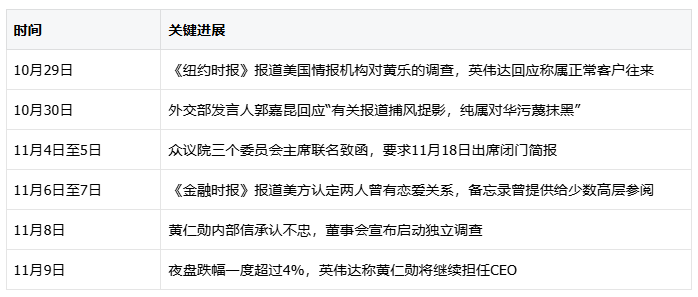
The schedule for the next three weeks says more about the weight of the matter than the stock price does. After market close on November 17, NVIDIA will release its fiscal 2027 third-quarter earnings; the company previously guided quarterly revenue of $108 billion. On November 18, three Republican chairs of House committees—Mast of the Foreign Affairs Committee, Moolenaar of the Select Committee on China, and Crawford of the Intelligence Committee—requested that Huang attend a closed-door briefing to explain his contacts with Alice Huang and NVIDIA's mechanisms for guarding against foreign intelligence activities. The joint letter was signed on November 4 and made public on November 5; all three chairs hold subpoena power. The earnings report and the briefing are only one day apart—that arrangement itself is a statement of attitude. What Congress wants is not gestures, but details that can be questioned.
01
Who exactly is Alice Huang?
Alice Huang is a Chinese citizen and formerly an executive at Singapore-headquartered data center company Megaspeed International. She shares the surname Huang with Jensen Huang, but the two are not related. According to The New York Times, Megaspeed was spun off in 2023 from the overseas business of Chinese gaming and cloud services company 7Road.
The company's position is unusual. It is a regional cloud service customer of NVIDIA; public reports describe its business model as purchasing servers equipped with NVIDIA GPUs, building its own computing clusters, and then renting computing power to customers, including Chinese enterprises. It describes itself externally as one of NVIDIA's major business partners. This identity places it simultaneously on two lines: one is normal commercial procurement, the other is U.S. export controls.
What really pushed the company into the spotlight was the scale of its purchases. According to The New York Times, citing trade records from ImportGenius, Megaspeed's Malaysian affiliate Speedmatrix purchased at least $4.8 billion worth of equipment containing NVIDIA chips between June 2024 and February 2026. The report also explicitly states that purchase records alone cannot prove illegal transshipment. That sentence is the key qualification of the entire set of facts; delete it and the conclusion becomes distorted.
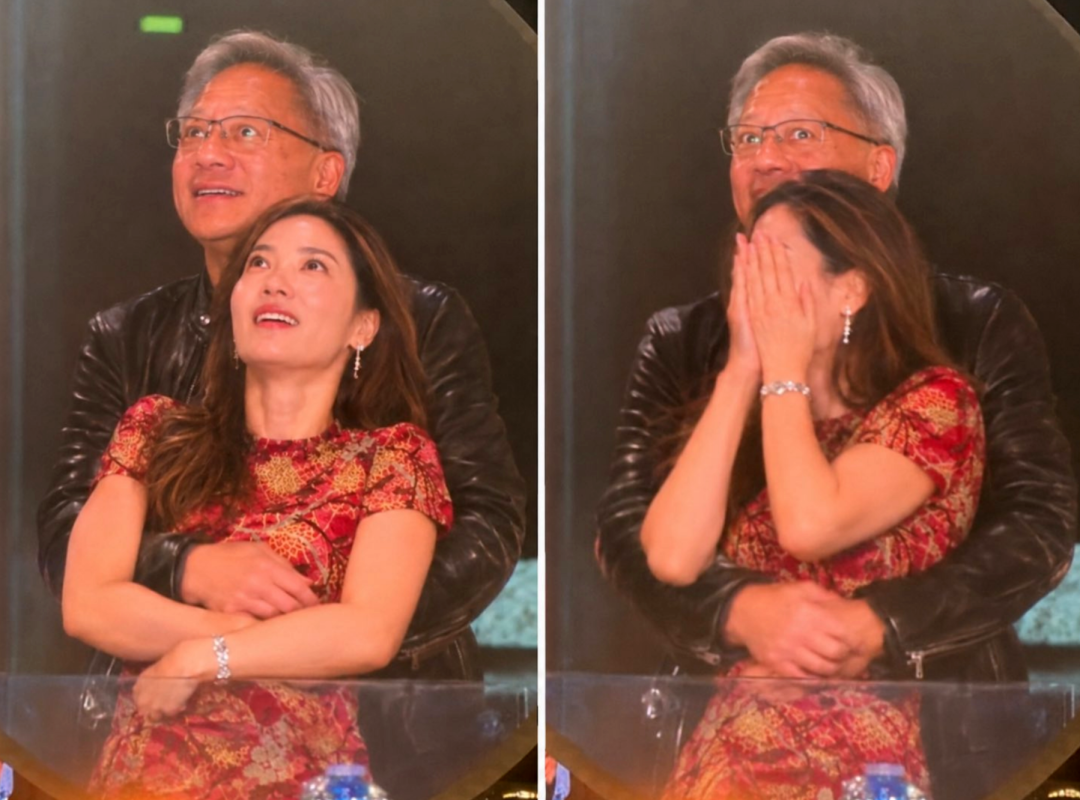
As for publicly available images of the two together, only two instances can currently be verified. During Computex Taipei in June 2024, Jensen Huang gathered with multiple AI industry figures at a bar in Taipei, and Alice Huang was present. In May 2025, the two appeared in the same frame outside a restaurant in Taipei; Jensen Huang was speaking to reporters, and Alice Huang stood behind him. Both were multi-person scenes in public locations. Beyond that, there is no credible image evidence supporting descriptions of a more intimate relationship, and some photos circulating online have not been confirmed by any mainstream media.
The allegations surrounding Alice Huang fall into two layers of completely different nature. The business-layer question is whether Megaspeed helped customers circumvent U.S. chip export controls. The identity-layer claim is that U.S. intelligence agencies assessed her to be an "asset" passing information to Beijing. The New York Times said this assessment came from anonymous sources and did not disclose what specific information she passed. As of November 9, she had not been sued by any party, nor was there any public evidence supporting this assessment.

The U.S. Department of Commerce launched an investigation into Megaspeed in 2024 after discovering unopened equipment at a data center in Malaysia; the investigation was transferred to the Department of Justice in 2026. Singapore police confirmed in October 2025 that they had opened an investigation. Megaspeed stated in December 2025 that audits by the U.S. Bureau of Industry and Security, Malaysia's Ministry of Investment, Trade and Industry, and NVIDIA found no violations. The company has hired outside lawyers for an internal review and said it will cooperate with the U.S. government.
Jensen Huang's and NVIDIA's response is another line. In an interview with Bloomberg on October 29, Huang said the relationship was normal business interaction, that NVIDIA had studied Megaspeed's GPU deployment and counted every single unit, that Alice Huang no longer works at the company, and that the U.S. government had never raised any concerns with him. John Rizzo, NVIDIA's head of public policy communications, told The New York Times that meeting with customers is part of the CEO's job, that he speaks with thousands of customer executives every year, and that what regional cloud customers can access is only ordinary commercial information, not sensitive trade secrets or national security matters. Regarding the transshipment allegations, NVIDIA told CNBC that it had thoroughly investigated and refuted these claims last year.
China's position was already stated on October 30. Foreign Ministry spokesperson Guo Jiakun, responding to related questions at a regular press conference, said, "The relevant reports are groundless and constitute pure slander and smear against China." The Chinese Embassy in the United States said the claims are baseless. The weight of this statement should not be downplayed; it means that on this allegation, China and the United States are in completely opposing narratives, and no judicial process on either side has reached a conclusion.

There is also a question of sequence that most Chinese-language reports have overlooked. According to The New York Times, the initial U.S. lead was unopened equipment discovered at a data center in Malaysia in 2024; the investigation targeted the flow of equipment, then Megaspeed, and only then Alice Huang. What actually put her and Jensen Huang into the same case file was electronic surveillance that found she was in contact with a U.S. citizen; after completing identity declassification procedures, the U.S. citizen was confirmed to be Jensen Huang. First investigate the goods, then identify the person—this sequence determines the nature of the incident. It was not an investigation launched because "some big figure befriended someone," but export control enforcement running into a name in the data.
02
Will NVIDIA lose Jensen Huang?
The short-term answer is no.
John Rizzo, NVIDIA's head of public policy communications, was direct: "Today's news will not slow NVIDIA down. Jensen Huang will continue as NVIDIA's CEO, and the company's leadership will not be affected." The board statement likewise stated confidence in Jensen Huang and his leadership team. As of November 9, no party had announced his departure or suspension.
The board's independent investigation must answer governance questions: for a company estimated by third parties to hold more than 80% of the AI accelerator chip market, how should the CEO's personal relationships with customers be reviewed, how should "ordinary commercial information" and "trade secrets" be defined, and how should a checkable boundary be drawn between the founder's personal network and the company's compliance system? The congressional closed-door briefing must answer policy questions: how do export control enforcement leads extend from equipment flows to personnel interactions, and is NVIDIA's counterintelligence mechanism adequate? The Justice Department investigation must answer legal questions: did Megaspeed engage in illegal transshipment, and does anyone need to bear responsibility?
Among these three lines, if any one fails to provide a checkable answer, the other two will immediately follow up with further questions. This is also why the reassurance that "Jensen Huang will continue as CEO" can solve one week, but not one quarter.
The November 17 earnings report will be Jensen Huang's first public appearance after the controversy, and analysts will not ask only about data center revenue growth. How CEO personal risk enters governance disclosure, the timeline of the board investigation, and whether customer relationship review processes will be adjusted—once these questions are raised on the earnings call, they will turn from news into disclosure obligations. For a company with a $4.5 trillion market capitalization, changes in disclosure obligations are themselves a cost.
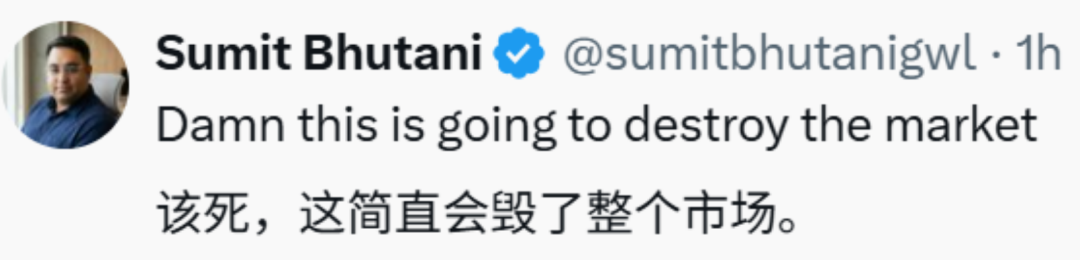
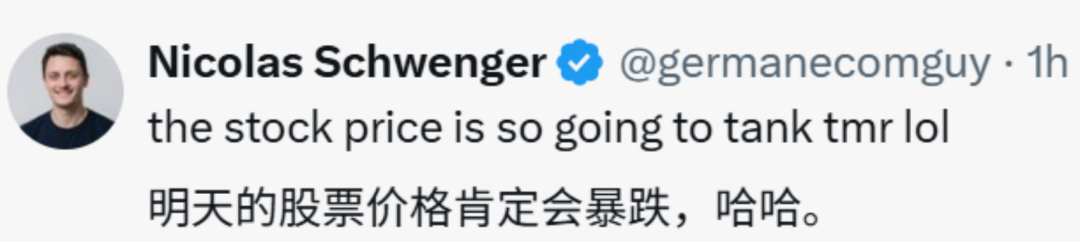

There is another detail most reports missed, written in the same earnings guidance. NVIDIA's revenue outlook of $108 billion for the third quarter explicitly states that it does not include data center computing revenue from mainland China and Hong Kong. In other words, the computing business in the Chinese market has already been removed from current guidance. This reduces the commercial weight of Jensen Huang's personal relationships, while increasing their political weight. Business can be excluded from guidance, but relationships must be explained to Congress.
NVIDIA's real soft spot is actually not in this apology letter. Jensen Huang is 63, has led the company for 33 years, and has no publicly announced succession plan. He is simultaneously the company's chief product officer, chief diplomat, and top salesperson. Over the past two years, he has been one of the few tech CEOs able to meet the U.S. president at any time, pledging $500 billion over the next four years to build AI infrastructure in the United States. This shuttle ability is a second moat beyond the CUDA ecosystem; it cannot be written into financial statements, nor can it be handed over. The moment the board established a special investigative committee for the CEO, this moat was for the first time required to undergo audit.
This is also the real reason the market is willing to apply a discount. What is being discounted is not "whether Jensen Huang had an affair"—that question already has an answer. What is being discounted is "how much unaudited private space this irreplaceable CEO can still retain." This question has no precedent and no institutional answer; for now, it can only be tested through price.
03
Where is the real risk?
At this point, three things need to be separated, because their factual levels are completely different.
On a personal level, Jensen Huang has admitted it, apologized, and taken responsibility. There is no ambiguity here, nor does the media need to defend him. A public figure's failure within his family should be criticized, but that criticism should stop with him—it should not extend to his wife and children, much less be used to convict his company.
The intelligence allegations are a separate layer. They remain at the stage of "the US side believes," with anonymous sources, intelligence assessments, and closed-door briefings forming a complete chain of suspicion—but not a chain of evidence that can be publicly tested. The Chinese side has explicitly refuted it, the individual concerned has not been prosecuted by any party, and the Singapore police have only confirmed that an investigation has been opened. To write it up as "a Chinese female spy captured the NVIDIA CEO" is a factual overreach. What is more alarming is that this framing is achieving the highest dissemination efficiency on the Chinese internet, because it simultaneously satisfies two emotions: voyeuristic curiosity and partisan positioning.
What truly deserves to be treated as news is the mechanism itself. Over the past few years, the lever of US chip controls against China has been "goods"—which chip can be sold, where it is sold, who is reselling it, and who the end user is. Goods have serial numbers, customs declarations, and end-user statements; they can be counted one by one. Now, the lever is shifting toward "people"—who ate dinner with whom, who exchanged letters with whom, who is on whose client list. Human relationships have no serial numbers; they can only be reconstructed through intelligence, communications records, and closed-door inquiries. This shift will not stop because of the conclusion of one investigation; it is structural.
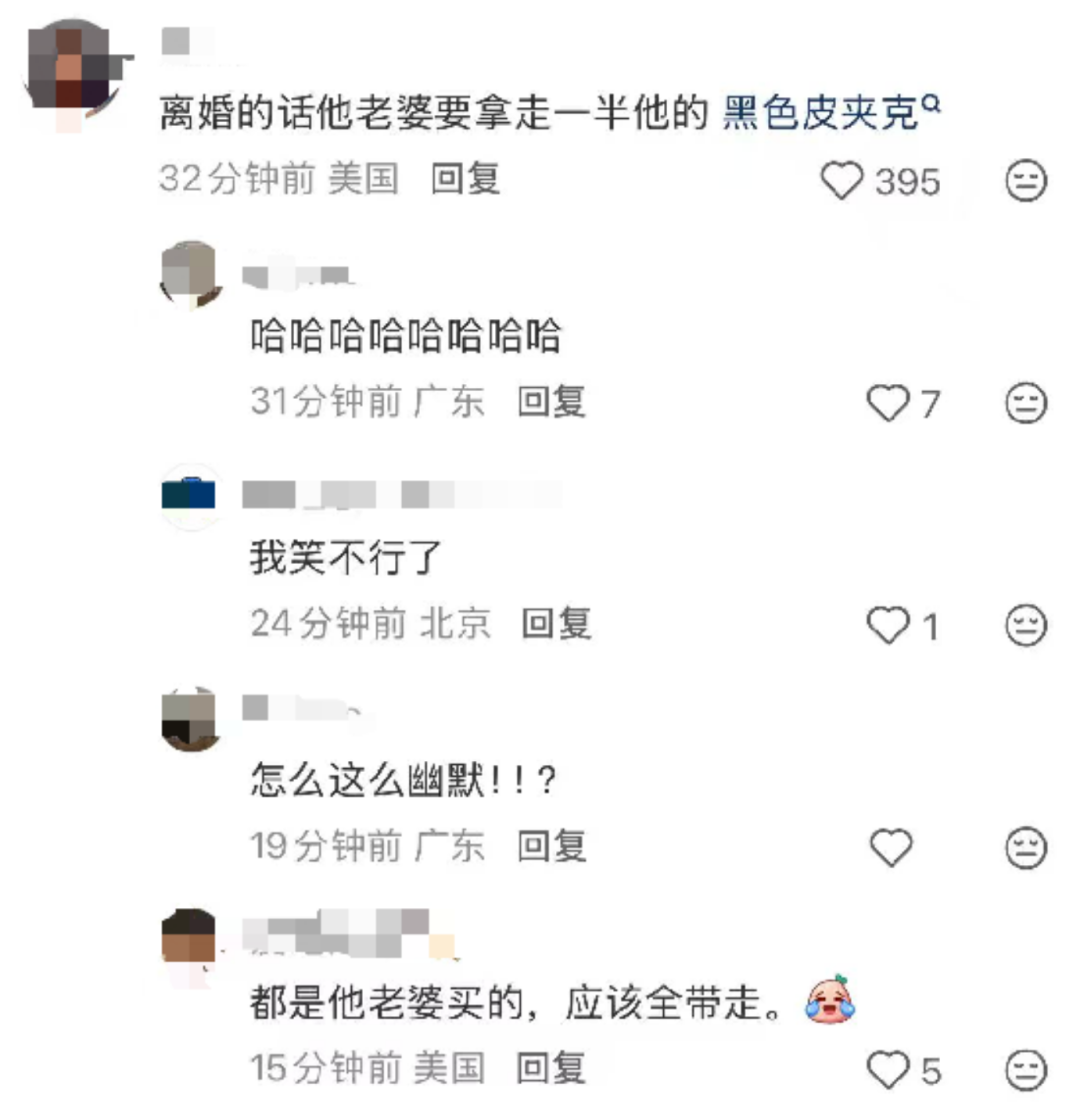
Embodied Emergence believes that the deepest impact of this matter on the global AI industry is not NVIDIA's stock price, but that it poses a new question for the CEOs of all multinational tech companies: your personal relationship network may from today be treated as a corporate compliance asset to be audited. In the past, a CEO's connections were an asset—they could open markets, unlock policy, and win lawsuits. Now, the same network is simultaneously a liability, because every relationship in it may be required to be explained. Between asset and liability lies only a single congressional inquiry.
For NVIDIA, the worst outcome may not be that the investigation finds problems, but that it finds nothing at all while dragging on for a long time. The longer the uncertainty persists, the longer the market discounts for "key-person risk." For a $4.5 trillion company, if it is ultimately forced to seriously discuss CEO succession planning in its annual report, that is the real bill for this apology letter.
For China's AI industry, the lesson of this matter is not gossip. When the other side sets "people" as control nodes, the approach of obtaining computing power through personal connections, relationships, or some special channel will see both costs and uncertainty rise. The only way to hedge against this uncertainty is to build up the delivery capacity of domestic computing power and solidify the usability of the ecosystem. This path is slow, but it does not depend on any one person's private relationships.
As for Jensen Huang, he still has nine days to prove one thing: whether a person who admits he has faltered can continue to hold a company together. The answer is not in the apology letter—it is in the November 17 earnings call, in the closed-door meeting rooms on November 18, and in the investigation report the board has not yet finished writing.
-
![]()
Valuation in the Hundreds of Billions, Revenue Just Over a Billion—Can Kling AI Carry Kuaishou's Second Growth Dream?
-
Alibaba Cloud Token Plan Boosts Quota by 70% Starting Today
-
![]()
Just the Facts, No Emotions—Has AI Actually Crashed or Not?
-
![]()
New Forces' Annual Targets in Jeopardy?
-
![]()
In 2026, Tencent Is Frantically Playing Catch-Up
-
![]()
Optical Brain-Computer Interface Paves the Way for Chip Integration! Huichuang Medical Makes Strategic Investment in Westlake Neuralicorn
-
![]()
First Three Quarters Non-Recurring Profit Jumps 116.94%! Why Is Wavelength Optoelectronics Betting Another 150 Million?
-
![]()
TV Distortion vs. Optical Distortion: How Exactly Do You Convert Between Them?