China and the US have already settled their AI competition—and it's not even close: Multiple US states move to halt data center construction
 11/09 2026
 472
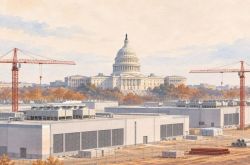
On November 3, America's midterm elections unfolded, and the Democratic Party swept both chambers of Congress. The governor map was redrawn accordingly: five key states—Texas, Ohio, Georgia, Nevada, and Michigan—all flipped blue. In Texas, candidates who campaigned on freezing data center construction won. Exit polls showed that three-quarters of Texas voters opposed data centers being built in their communities.
This is no isolated case. Maine's legislature had previously passed the nation's first ban on large data center construction. On election day, 45 referendums restricting data centers appeared across the country, 42 of which passed or leaned toward passing, spanning multiple agricultural states in the Midwest.
The governor-elect also demands that large electricity users bear the costs of power generation, transmission, and grid connection themselves, and that tax incentives for data centers be phased out.
What triggered this backlash? Electricity bills.
Industry research estimates show that US data centers consumed roughly 180 billion kWh of electricity in 2024—about 4.5% of national electricity consumption. By 2030, that share will climb to 9–17%.
AI loads already account for 15–25% of that total, and the share is still expanding rapidly. In Virginia, the state with the densest concentration of data centers, the figure currently stands at about one quarter, and some institutions predict it will approach half of the state's electricity consumption by 2030. Seven other states may exceed 20%. A single 100-to-1,000-megawatt facility consumes as much electricity as 80,000 to 800,000 ordinary households.
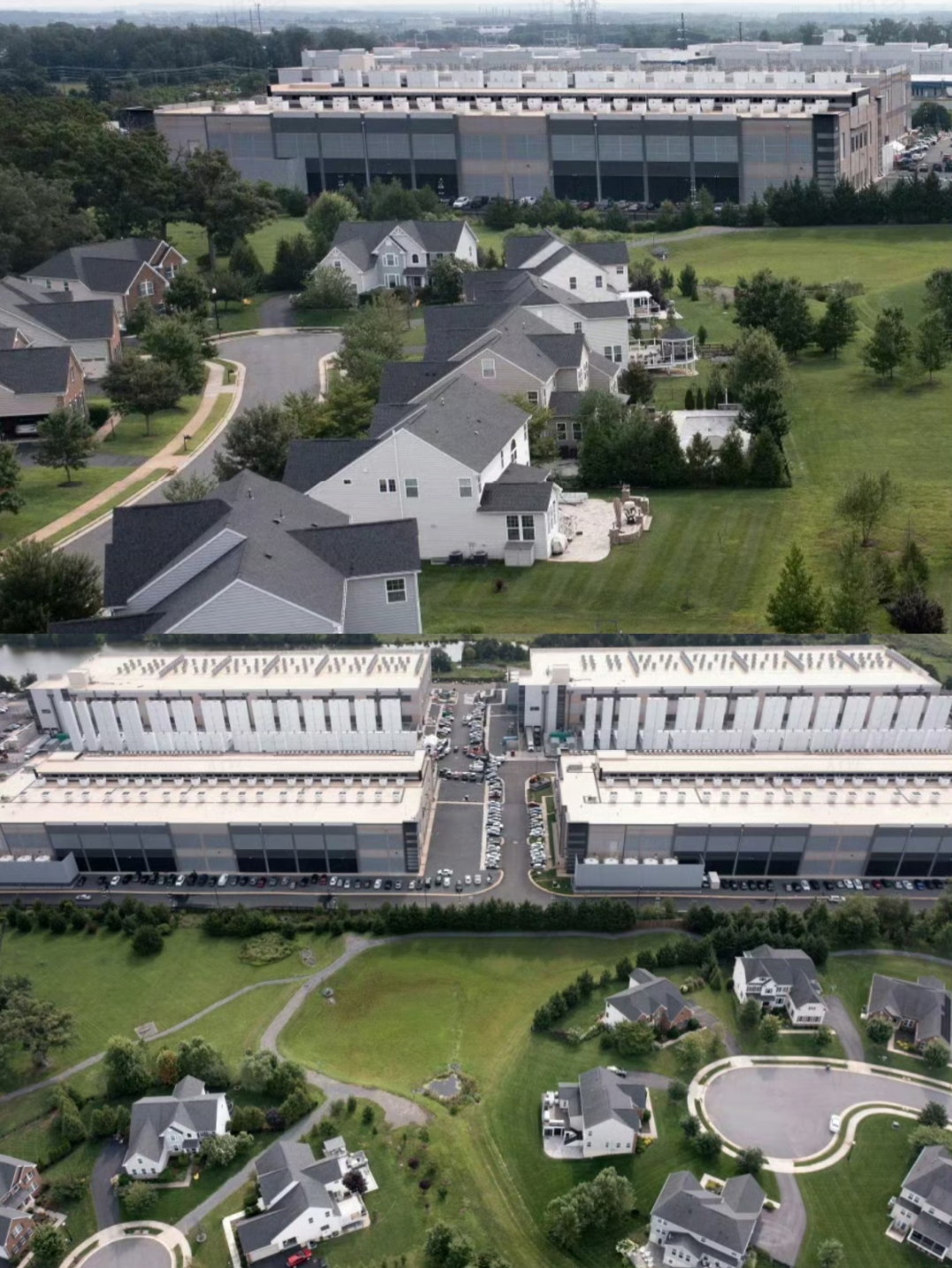
The electricity bills have already reflected the pressure. Some estimates show that US electricity prices rose 6.9% year-on-year last December, while overall inflation during the same period was only 2.9%.
Interestingly, historical data from the same research institution reveal a reversal: from 2015 to 2024, data center load growth actually diluted fixed grid costs and lowered residential electricity prices by an average of about 6%. But that conclusion rested on one premise—supply could keep up. Now gas turbine production schedules are booked through 2030, transformers are in short supply, and the mechanism has flipped.
Texas has more planned data center projects than any other state—about 81 gigawatts in planned capacity. The current governor ordered a freeze on all data center permits on September 21 of this year, and after the election, that freeze shifted from awaiting review to awaiting legislation. Some institutions estimate that states likely to tighten regulation together account for about 45% of planned US capacity; under extreme scenarios, US AI capital expenditure would shrink by about 8%. About 13 gigawatts of capacity is immediately exposed to risk—equivalent to the electricity consumption of 10 million households—and orders for 3 gigawatts of power generation equipment have already stalled. The day after the election, US tech stocks plunged, with the Nasdaq falling 5.5% and the chip stock index tumbling 12%.
Now consider China's data centers—Ulanqab, for example.
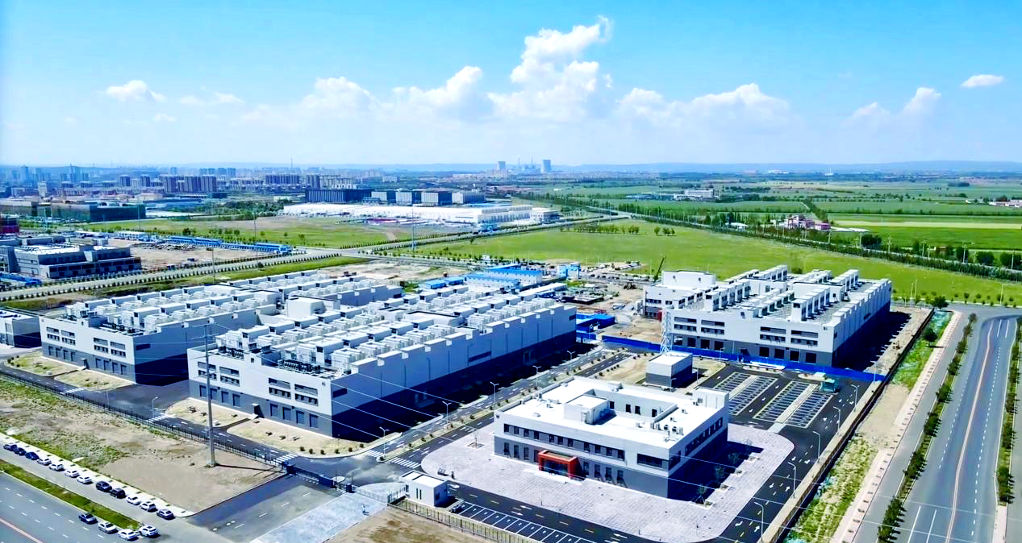
The city's computer rooms were a decade ahead of the AI boom: as early as 2013, a Chinese technology giant signed with the local government to land a cloud computing data center. When the first phase went into operation in 2016, AlphaGo had just defeated Lee Sedol, and large models were still concepts confined to academic papers. In February 2022, the East Data West Computing project was fully launched, and Ulanqab became one of eight national computing hubs and one of ten major data center clusters.
By mid-October this year, the local computing power operation scale had reached 190,000 P, with intelligent computing accounting for more than 95%. A total of 109 projects have been signed, with total investment exceeding 500 billion yuan. In August this year, gigawatt-level projects from five enterprises were signed in a concentrated push; 22 upstream and downstream big data enterprises from the Beijing-Tianjin-Hebei region have already set up operations, cumulatively creating more than 10,000 jobs. The 2026 government work report has already listed computing-electricity synergy as a new infrastructure project.
What underpins this scale is electricity.
Ulanqab's new energy installed capacity is 21 million kilowatts, accounting for 67% of the city's total installed electricity capacity. The local model of incremental distribution grids plus direct green electricity supply treats the big data industrial park as a unified distribution grid unit, with end-user electricity prices of 0.32 to 0.38 yuan per kWh and direct green electricity connection accounting for more than 80%. An integrated source-grid-load-storage project has already proven itself: 300,000 kilowatts of wind and solar installed capacity, backed by 45,000 kilowatts of energy storage, a 16-kilometer dedicated line directly supplying the computer rooms, and about 848 million kWh of self-generated green electricity per year.
The local average annual temperature is 4.3 degrees Celsius, and natural cooling sources can be used for nearly ten months a year, cutting energy consumption by another 20–30%. The city is 240 kilometers from Beijing, and the end-to-end latency of the dedicated optical cable is 4.2 milliseconds—the time it takes for data to make a round trip is barely enough for the human eye to blink once.
China's computing power electricity consumption is also rising. By the end of 2025, national computing facilities will use 196 billion kWh of electricity a year, accounting for 1.9% of total social electricity consumption, with a growth rate of 18.1%. But the increment falls mainly in the western regions rich in green electricity, and the conflict with residential electricity consumption has been resolved in advance through spatial layout.
-
![]()
Valuation in the Hundreds of Billions, Revenue Just Over a Billion—Can Kling AI Carry Kuaishou's Second Growth Dream?
-
Alibaba Cloud Token Plan Boosts Quota by 70% Starting Today
-
![]()
Just the Facts, No Emotions—Has AI Actually Crashed or Not?
-
![]()
New Forces' Annual Targets in Jeopardy?
-
![]()
In 2026, Tencent Is Frantically Playing Catch-Up
-
![]()
Optical Brain-Computer Interface Paves the Way for Chip Integration! Huichuang Medical Makes Strategic Investment in Westlake Neuralicorn
-
![]()
First Three Quarters Non-Recurring Profit Jumps 116.94%! Why Is Wavelength Optoelectronics Betting Another 150 Million?
-
![]()
TV Distortion vs. Optical Distortion: How Exactly Do You Convert Between Them?