Market Value Down 86%, Revenue Up 30%: Can Generative AI Help SenseTime Reclaim Its Peak?
 11/19 2026
 534
By Yang Jianyong
In the previous wave of artificial intelligence technology centered on deep learning, SenseTime, with its technical advantages in computer vision and deep learning, became the leader among the former "four AI dragons." It listed on the Hong Kong Stock Exchange on December 30, 2021—a blockbuster AI IPO at the time that drew enormous attention. Its initial market value reached an astonishing HK$320 billion.
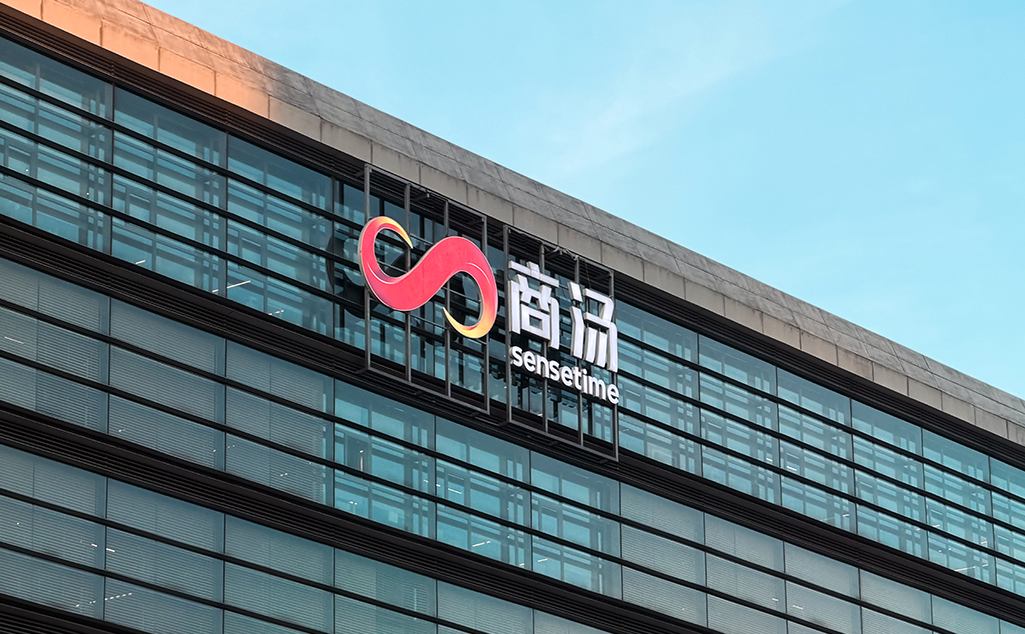
Unfortunately, in the years that followed, the company faced the dual predicament of declining revenue and large losses. Today, the former glory of the four AI dragons is long gone. SenseTime's market value now stands at just HK$44 billion—a drop of more than HK$270 billion from its listing debut, an astonishing 86%.
Fortunately, since artificial intelligence entered the era of generative AI, the industry has ushered in entirely new development opportunities. Leveraging the advantages of its AI infrastructure SenseTime Dazhuangzhi, SenseTime seized this market opportunity, regaining high growth and emerging from sustained large losses.
In the first three quarters of 2026, SenseTime achieved revenue of 3.792 billion yuan, up 30.4% year-on-year, with gross margin rising 4.3 percentage points year-on-year to 43.4% and gross profit reaching 1.647 billion yuan.
It is worth noting that in the first half of 2026, net profit was 617 million yuan, compared with a loss of 1.489 billion yuan in the same period last year, achieving a turnaround from loss to profit. This was mainly due to increases in the fair value of internally incubated enterprises and externally invested AI ecosystem enterprises, which drove profitability.
However, the core business has not yet achieved operating profitability. In the first half of the year, the adjusted net loss was 386 million yuan, narrowing by 67.3% year-on-year. Nevertheless, with substantially increased revenue and significantly narrowed losses, operating profitability is expected to be achieved.
Since the birth of ChatGPT, SenseTime has ushered in a major turning point. Facing the historic opportunity brought by a new round of AI large models, it reorganized its business in 2023, focusing mainly on generative AI. In particular, at the end of 2024, it once again repositioned its strategic direction and core business, establishing a new "1+X" structure.
With this strategic adjustment, the group focuses on core businesses represented by generative AI, while ecosystem enterprises focus on their respective scenario-based AI and segmented market needs, while forming effective synergy with the group to expand greater development space. As a result, SenseTime formed three new business models: generative AI, vision AI, and X innovative businesses.
Driven by the continued growth of generative AI, its revenue share has now risen to 80%. It is not only SenseTime's largest business segment but also the core segment driving overall revenue back to growth. In the first half of the year, the generative AI business achieved revenue of 2.327 billion yuan, and in the third quarter it grew more than twofold year-on-year.
The generative AI business has performed so strongly mainly due to SenseTime's long-term accumulation in large models, AI infrastructure, joint optimization of models and infrastructure, and industry applications.
To this end, it has built a capability system centered on "one set of models, one Token factory, and one agent control system," using enterprise-level full-stack delivery capabilities to connect models, computing power, and industry applications—helping customers improve work efficiency, streamline business processes, and transform technological investment into practical application value.
It is precisely thanks to the empowerment of this system that SenseTime has moved beyond pure price competition, using differentiated technology and services to create sustainable commercial value while expanding its user base and driving recurring revenue growth.
As large model technology continues to iterate and break through, industries across the board are rapidly integrating large model services. In particular, AI agents are being deployed in enterprise organizations at an astonishing speed, further driving up Token usage. As AI infrastructure, the SenseTime Dazhuangzhi platform's average daily Token service volume has increased by 6 trillion, providing solid infrastructure support for the era of Agentic intelligent agents and a solid foundation for its development of the generative AI business.
From the algorithm era centered on deep learning to today's large model period, SenseTime quickly adjusted its strategic goals, making it a mature artificial intelligence technology enterprise.
Finally, the booming generative AI market has driven SenseTime's overall revenue back to growth, which also means that its transformation strategy toward generative AI has paid off. As a result, it has successfully completed the transformation from traditional AI to generative AI, thus opening a new growth cycle.
Yang Jianyong is a contributing writer for Forbes China; the views expressed are his own. He focuses on in-depth observation of technology fields such as large models, artificial intelligence, robotics, the Internet of Things, cloud computing, and smart home appliances.
-
NetEase Q3 Revenue Hits 27.9 Billion Yuan: Evergreen IPs Anchor Growth as Diverse New Titles Build Momentum
-
US Launches Surprise Investigation into Mercedes-Benz—Is the Real Issue Its Two Chinese Shareholders?
-
![]()
Chinese Home Appliances: A Bold Push Overseas
-
![]()
AI Needs a "Call Button"
-
![]()
Consumers Have Fallen Out of Love with Tesla—So Why Are Automakers Still Copying Its Homework?
-
![]()
Auto Braking Leader's Performance Keeps Rising, Spends Over 1.1 Billion Yuan on M&A
-
Two-Wheel Drive Plus LiDAR: GAC Trumpchi Yue 7 Smart Driving Edition Lowers the Bar Again—How Many Extra Sales Can It Deliver?
-
Li Yanhong and Baidu May Finally Be About to Catch the "Last Train" of AI