Chinese Home Appliances: A Bold Push Overseas
 11/19 2026
 541

More and more overseas consumers are choosing Chinese home appliances—no longer because of low prices, but because those products genuinely meet their needs.
Cover image source: Unsplash

Amid the chilling slump of the vast A-share market, where falling leaves seem to be everywhere, one company has bucked the trend over the past two days, repeatedly setting new records for its highest market value.
That company is Midea Group, the leader of China's home appliance industry. Its stock price recently broke through the previous historical high set on February 10, 2021, setting a new record since listing. The company's total market value of A+H shares also briefly exceeded 720 billion yuan, likewise a historical high.
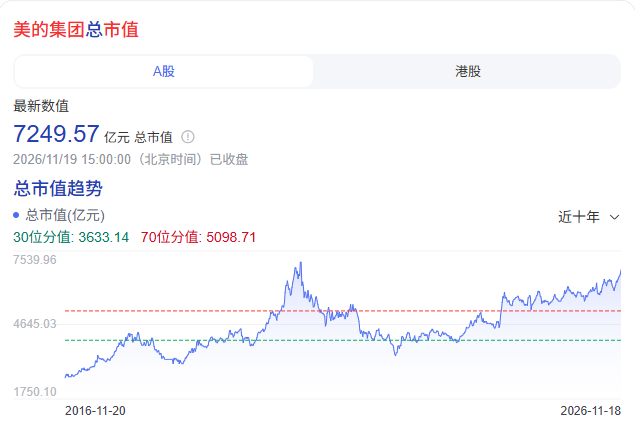
It has been a full five years since Midea Group last saw its market value break through the 700 billion yuan mark, yet China's home appliance industry long ago passed its stage of high-speed growth. According to monitoring data from AVC, from January to September this year, retail sales in the domestic home appliance market (excluding 3C) totaled 604.1 billion yuan, down 10% year on year. By quarter, sales fell 6% in the first quarter, 12.4% in the second, and 10.1% in the third.
The stimulating effect of e-commerce promotions on home appliances is also steadily diminishing. During this year's "Double 11" shopping festival, online sales of home appliances fell by about 14% year on year.
Even as the overall growth rate of China's home appliance industry slows, the stock prices of leading appliance enterprises can still repeatedly hit new highs. This actually shows that the growth logic of Chinese home appliance brands has changed.
The same narrative is playing out for the TV duo Hisense and TCL. A report from RUNTO Technology shows that in 2026, brand complete-machine shipments in China's TV market are expected to reach 30.36 million units, down 7.7% year on year—a new low in market size for at least 17 years.
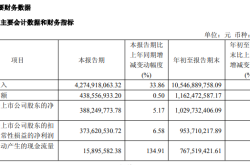
Domestic TVs are not selling well, yet TV manufacturers' profitability has instead grown stronger. In the first three quarters of this year, TCL Electronics' revenue was HK$95.793 billion, up 15.7%; net profit attributable to the parent company was HK$2.104 billion, surging 43.6%. Hisense Visual Technology's revenue was 44.417 billion yuan, up 3.7%; net profit attributable to the parent company was 1.844 billion yuan, also up 13.23%.
From Midea to Hisense and TCL, why have Chinese home appliance brands collectively embarked on a path of counter-trend growth? There is actually only one answer: going global.
1. Chinese Home Appliances Are Selling Explosively Around the World
At the performance briefing in September this year, Fang Hongbo, Chairman and President of Midea Group, disclosed a set of Midea's overseas operating data: Midea's overseas sales account for more than 40% of the company's total sales, and its products have been exported to more than 200 countries and regions around the world. In most overseas markets, it has built a complete online and offline sales network and owns about 5,500 after-sales service outlets; more than 25,000 overseas retailers have connected to Midea's overseas sales platform; as of June 2026, Midea has nearly 50,000 overseas employees.
On the R&D side, Midea has 29 R&D centers in 11 overseas countries, which can integrate global R&D resources to form a globally complementary technology R&D system. Of its 68 major production bases worldwide, 45 are located overseas, enabling localized production and delivery and better grasping growth opportunities in overseas markets.
Judging from Midea's financial reports, its most standout overseas growth engine is the rise of its own brands. In the third quarter of this year, Midea's overseas OBM (original brand manufacturing) revenue grew by more than 20% year on year, and OBM has accounted for more than half of overseas revenue.
Especially during Europe's record-high temperatures this summer, Midea's PortaSplit mobile air conditioner was in short supply in the European market, further boosting the brand's overseas awareness.
This product, designed to address the pain point that European apartments cannot drill holes to install outdoor units, has been "hard to find" and fully sold out across online and offline channels in many European countries, and even second-hand market prices have soared. Since June, new orders for the PortaSplit split mobile air conditioner have exceeded 160,000 units.
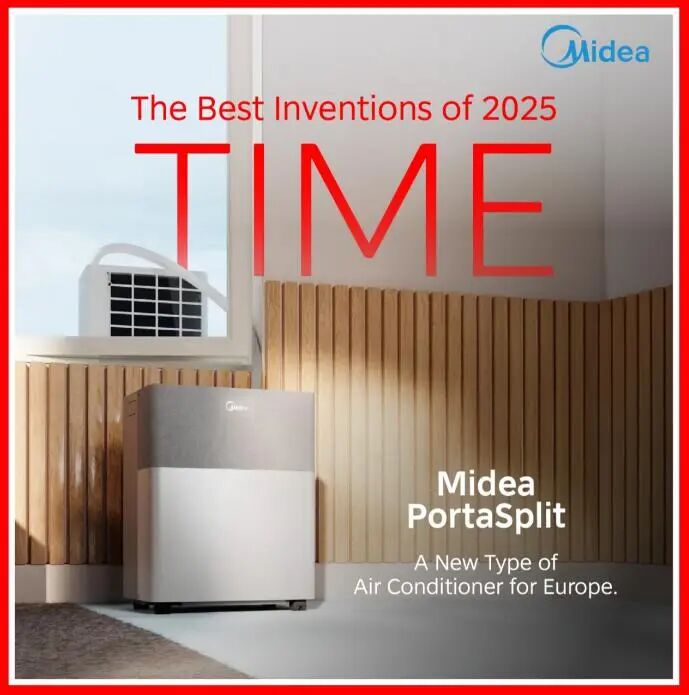
During the same period, Midea's dual bases in Wuhu and Guangzhou added a total of 200,000 new European orders within one month. By July, Midea Air Conditioning officially announced that it would urgently ship 200,000 air conditioners to the European market to cope with surging demand.
While Midea air conditioners were selling explosively in Europe, Hisense and TCL's TV products also captured a large swath of overseas markets.
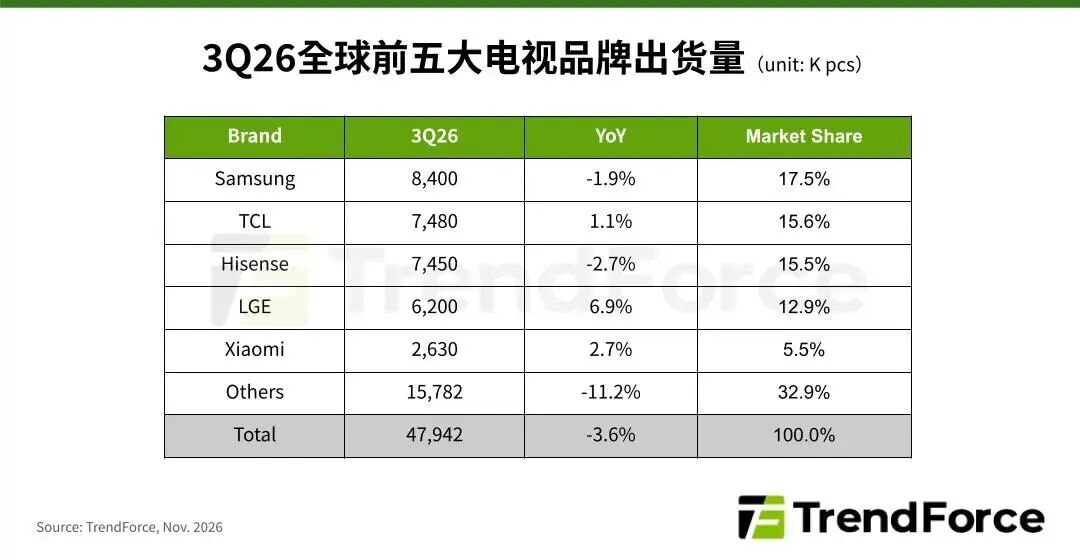
The latest TV industry research from TrendForce shows that in the third quarter of 2026, Hisense and TCL shipped 7.48 million and 7.45 million units globally, respectively. While firmly holding the second and third positions, they also nearly cornered Samsung at the top.
Moreover, contrary to the conventional impression, the strong overseas sales of Chinese color TVs are not solely due to price advantages. Jia Shaoqian, Chairman of Hisense Group, once revealed that in the past, when Chinese home appliances went overseas, selling for US$500 was an astronomical figure. Today, Hisense's products, especially Mini LED products, can sell overseas for as high as US$25,000 and still win market favor.
Hisense sales data shows that from January to September this year, the sales volume of Hisense TVs in the global 100-inch-and-above large-screen and Mini LED high-end TV markets increased by 77.37% and 75.53% year on year, respectively. Among them, in high-end European markets such as Germany, the United Kingdom, and France, sales of products priced above US$3,000 increased by 110%, 83%, and 40%, respectively.
TCL has also established a firm foothold in overseas high-end markets. In the first three quarters of this year, international markets contributed nearly three-quarters of TCL's TV business revenue. Among them, the average selling price of TCL overseas TVs increased by 17.8% year on year, Mini LED TV shipments in international markets grew by 94.5%, and the gross margin of the overseas TV business rose from 14.6% in the same period last year to 19%.
2. Going Global Is Now a Mandatory Question
The globalization path of Chinese home appliance brands started very early, but given the huge foundation of domestic market demand, overseas increments in earlier years could only be regarded as a bonus, and it was difficult for them to truly support the development blueprint of an entire brand and group.
However, as domestic demand in the home appliance market peaked, the importance of overseas markets began to become increasingly prominent. Today, going global has become a mandatory question for all leading home appliance brands.
Among white goods groups, in addition to Midea, Haier has also long built a basic overseas foothold.
Judging from financial report data, Haier already achieved an overseas revenue share of more than 50% in the second quarter of this year. Moreover, Haier's path of going global is also a long-slope, thick-snow route. On the one hand, it builds consumer trust by acquiring brands such as Sanyo Home Appliances and GE Appliances; on the other hand, it hedges tariffs and geopolitical risks by building overseas factories, hiring local workers, and paying taxes.

Among small home appliance brands, emerging smart home appliances represented by robot vacuums have already borne fruit overseas for Chinese brands. Among them, the two leading brands Roborock and Ecovacs have basically formed a business structure in which "the bulk is overseas."
Specifically, Roborock's overseas revenue in the first half of 2026 was 6.073 billion yuan, accounting for 60.22% of total revenue; Ecovacs' overseas revenue share reached 51% for the first time in the second quarter of 2026, surpassing the domestic market. In the first half of the year, the overall overseas revenue share was 49%, and in the first three quarters, the overseas revenue share also steadily remained above half.
Whether it is traditional large home appliances such as refrigerators, color TVs, and air conditioners, or emerging small home appliance products such as robot vacuums and projectors, Chinese brands and Chinese manufacturing have already become the common choice of global consumers—and this does not even include some foreign brands that are already OEM-produced by Chinese factories.
From the perspective of product characteristics, more and more overseas consumers are choosing Chinese home appliances no longer because of low prices, but because real user needs have been met.
For example, the Midea PortaSplit mobile air conditioner mentioned above has a split mobile design and drill-free installation, which is very suitable for the installation environment of the vast majority of homes in Europe.
In Pakistan, locals have the habit of wearing robes, and large families have large laundry volumes. Haier therefore launched a 15 kg large-capacity washing machine that can wash the robes of an entire family at once.
In Vietnam, where thunderstorms are common, TCL developed color TVs with stronger lightning protection and signal reception capabilities, which were welcomed by local consumers as soon as they were launched. In 2025, TCL's share in Vietnam's TV market entered the top three.
But such success is obviously not achieved overnight; it can even be said to be valuable experience summarized from many painful lessons. Just over a year ago, Midea voluntarily recalled about 1.7 million U-shaped and U+ window air conditioners sold in the US and Canadian markets. The reason was that the U-shaped design of this product was insufficiently adapted to the high-humidity environment in North America, causing condensed water retention and mold growth.
The huge space in overseas markets also means that usage environments and user needs are not the same. Only by exploring real local needs and conducting forward-looking R&D of customized solutions can brands obtain brand premiums and long-term growth space.
3. Lessons from Mobile Phone Manufacturers
The success of Chinese home appliances overseas today easily reminds people of the vigorous overseas journey of domestic mobile phones. Brands such as Xiaomi, OPPO, vivo, and Transsion are typical representatives of Chinese mobile phones going global. Among them, Xiaomi's global shipments firmly rank in the top three, Transsion's market share in Africa is close to 50%, and OPPO and vivo perform prominently in Southeast Asia and high-end markets in Europe.
From the perspective of the path of going global, there are also similarities between home appliance brands and mobile phone brands. The driving force is that domestic market saturation forces overseas expansion, and the expansion approach is also to first open emerging markets with cost-effectiveness and channel efficiency, and then penetrate mature markets.
As the "predecessors" in going global who established themselves abroad and built brand awareness earlier than home appliances, mobile phone manufacturers' development history overseas is actually very worth referencing for home appliance manufacturers.
The first is early warning of legal risks in different regions. Relevant arrangements must be front-loaded to "before entering the market," rather than "boarding the train first and buying a ticket later."
For example, patent litigation is a pit that many domestic mobile phone manufacturers have fallen into overseas. Xiaomi, OPPO, Transsion, and other companies have all encountered intensive and protracted litigation battles overseas. Although some lawsuits ultimately ended with Chinese companies winning, the time and energy spent, as well as the damage to brands, are far from what a written judgment can make up for.
Such stories have actually had precedents in the home appliance industry. For example, the well-known home appliance brand Whirlpool has repeatedly protected its US market through intellectual property and trade barriers. In 2016, it initiated an anti-dumping investigation against Chinese large household washing machines, and last November it launched an "ITC + district court" dual-track lawsuit against companies such as Midea and Haier, with the core subject being specific low-profile microwave-vent hood combination products.
The second is unpredictable geopolitical risks. Of course, as enterprises, they cannot eliminate them by unilaterally "doing the right thing"; they can only hedge through structural diversification.
Previously, Chinese-funded mobile phone companies such as Xiaomi, OPPO, and vivo suffered greatly in India. Even if they built factories, hired people, and operated compliantly locally, their assets could still be frozen for non-commercial reasons, and their equity could still be forcibly diluted.
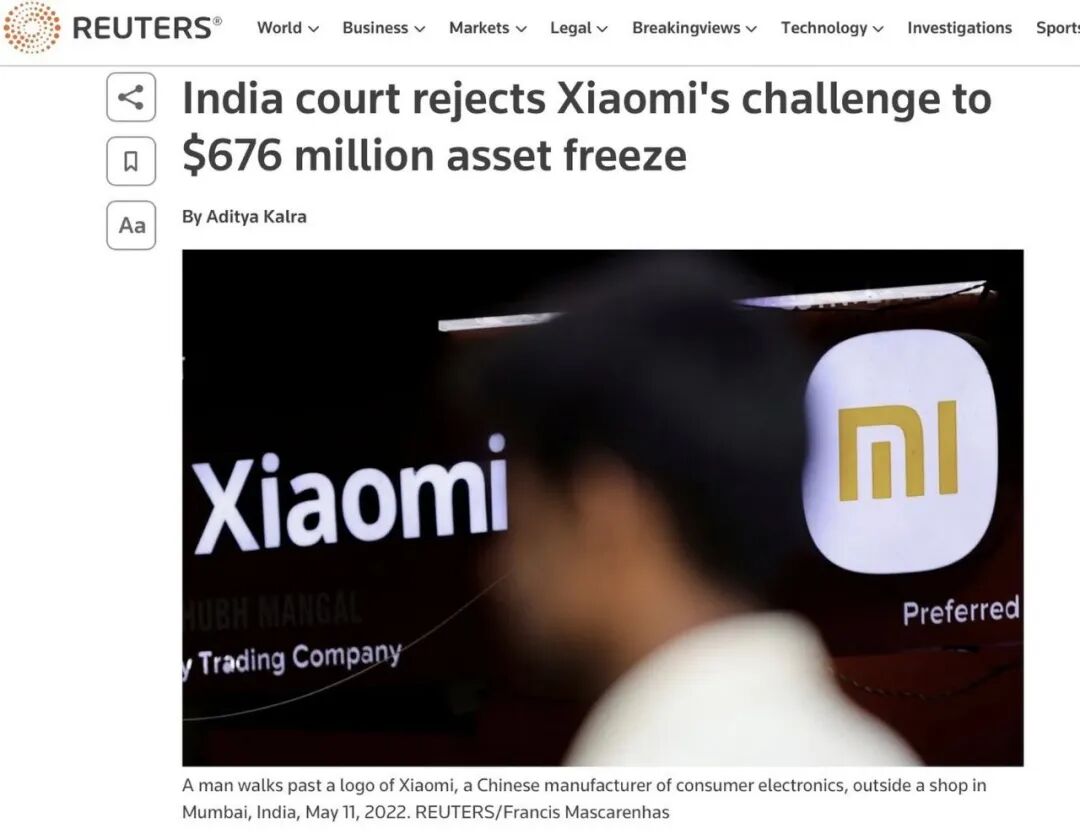
Not putting all eggs in one basket and avoiding depositing overly heavy and immovable assets in a single market remains an irrefutable and wise business philosophy in overseas markets.
However, home appliance products also have an obvious difference from mobile phones: mobile phones have short iteration cycles and high replacement frequency, while the replacement cycle of home appliances is usually calculated in years.
However, this also implies that once brand trust is compromised, the recovery cycle for home appliance brands will be even longer.
Mobile phones can "turn the tables" with their next generation of products, but if consumers lose confidence in a home appliance brand, regaining market share becomes even more challenging. Particularly as "newcomers," home appliance brands actually have less margin for error in patents, compliance, and local relationships compared to mobile phones. From this perspective, the path to globalization for Chinese home appliance brands is inevitably more cautious than that of Chinese mobile phones.
-
NetEase Q3 Revenue Hits 27.9 Billion Yuan: Evergreen IPs Anchor Growth as Diverse New Titles Build Momentum
-
US Launches Surprise Investigation into Mercedes-Benz—Is the Real Issue Its Two Chinese Shareholders?
-
![]()
Chinese Home Appliances: A Bold Push Overseas
-
![]()
AI Needs a "Call Button"
-
![]()
Consumers Have Fallen Out of Love with Tesla—So Why Are Automakers Still Copying Its Homework?
-
![]()
Auto Braking Leader's Performance Keeps Rising, Spends Over 1.1 Billion Yuan on M&A
-
Two-Wheel Drive Plus LiDAR: GAC Trumpchi Yue 7 Smart Driving Edition Lowers the Bar Again—How Many Extra Sales Can It Deliver?
-
Li Yanhong and Baidu May Finally Be About to Catch the "Last Train" of AI