AI Short Dramas Begin to Impact the Gaming Industry?
 11/23 2026
 359
Short dramas have grown at this pace—are games still holding up?
The gaming industry is feeling the impact of short dramas, and NetEase founder Ding Lei made a surprising remark at the earnings conference.
From NetEase's single-quarter revenue and profit decline to the divergent performance of A-share gaming companies, the gaming industry is undergoing change.
But looking solely at revenue and profit, NetEase remains a highly profitable company.
This year, AI short dramas have become major consumers of computing power, and their extremely high efficiency has flooded the short drama market with enormous supply.
How much impact is the gaming industry as a whole actually feeling from short dramas?
01 What did Ding Lei say on the conference call?
On November 19, during NetEase's Q3 2026 earnings conference call, Goldman Sachs asked whether AI-enhanced short dramas would pose a challenge to the gaming industry, and also asked how AI would change game products and forms of entertainment.
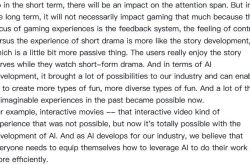
Ding Lei responded this way: he believes that in the short term it will affect attention spans, but he does not believe short dramas will have a major long-term impact on games.
Because the short drama experience is more passive; although users greatly enjoy the story arc while watching short dramas, the core experience of games is feedback and a sense of control—that is, interaction.
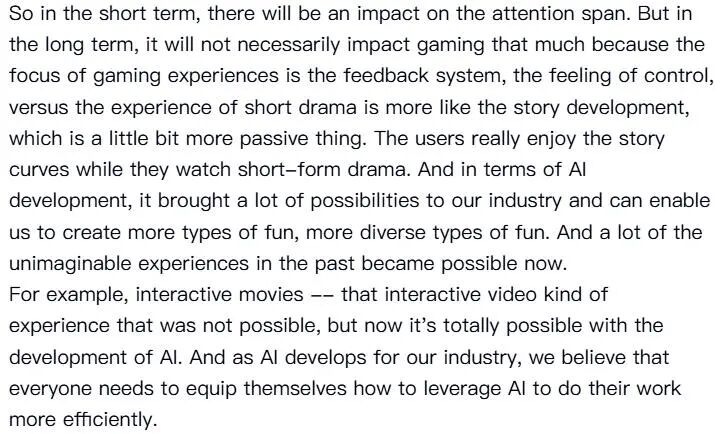
On the conference call, Ding Lei's view of future trends was that AI has brought enormous efficiency improvements to the gaming industry, but it is not good at gameplay creativity. Here he also mentioned interactive movies, which may become possible with AI development.
In fact, in November, NetEase quietly launched NetEase Tianma, essentially a short drama platform, and its differentiated highlight is its emphasis on interactive film and television. Perhaps this is NetEase's backup move.
Currently, the NetEase Tianma App is mainly divided into two sections: interactive dramas and short dramas. Interactive dramas are similar to live-action interactive games.

The Q3 financial report shows that NetEase's single-quarter net revenue was 27.9 billion yuan, down 1.8% year on year; net profit attributable to shareholders was 8.4 billion yuan, down about 2.5% year on year.
The focus was games and related value-added services at 22.9 billion yuan, down 1.7% year on year.
In the first two quarters, this business had risen by 6.9% and 9.7%, respectively.
NetEase management said the decline was mainly due to reduced net revenue from certain self-developed games.
Has the gaming industry been impacted?
The overall market has not fluctuated greatly. According to Gamma Data, in Q3 the actual sales revenue of the domestic gaming market was 92.522 billion yuan, up 5.11% year on year; mobile games were 67.820 billion yuan, up 5.33%.
For the gaming industry, Q3—the summer period—should not be considered an off-season. Let us look at NetEase's current game products in combination with some brokerage analyses.
NetEase has a relatively rich portfolio of game products, including old IPs operated for more than ten years such as Fantasy Westward Journey, Onmyoji, and Identity V, among others. These mature evergreen products contribute most of the revenue;
In the middle tier are Eggy Party, Justice Mobile, Where Winds Meet, Marvel Rivals, and Naraka: Bladepoint, all of which have performed well;
There are also some new products in reserve, such as the flagship Infinite Borders planned for launch in January next year, the buy-to-play AAA game Return to Tang still being polished, and some new products in niche tracks.
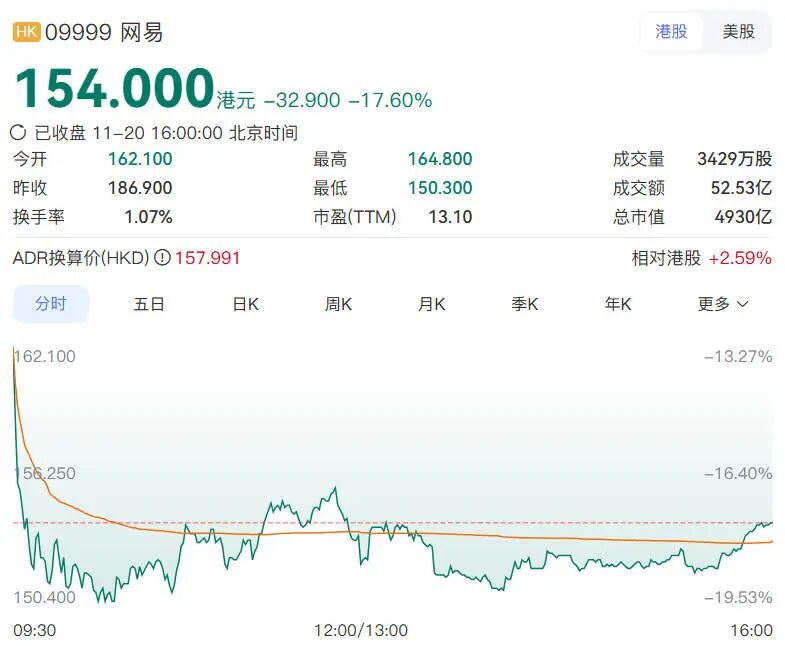
It can be seen here that NetEase is currently in a brief vacuum period. To put it accurately, the product pipeline happens to sit in the gap between two stages.
In terms of channels, over the past year, multiple NetEase mobile games have successively withdrawn from Android channels such as OPPO and Xiaomi. The effect is reflected in lower revenue-sharing costs and higher gross margins in the gaming business.
As for product research and development and production, NetEase can be said to invest heavily. A single-quarter R&D investment of 4.7 billion yuan is competitive even in the global market.
So it can be viewed this way: NetEase builds momentum in 2026, and a slew of new cards will be played in 2027, which will determine the switch in NetEase's performance drivers.
02 How big is the impact on games?
Actually, from the performance data, no direct impact can be seen.
First is Tencent, which remains very stable.
Q3 gaming revenue was 66.5 billion yuan, up 5% year on year; of that, domestic revenue was 47.6 billion yuan, up 11% year on year.
Although Tencent Group's focal battle is in the AI industry, its gaming business has been relatively strong over the past year.
Tencent's financial report stated that its core businesses remain resilient and vibrant, and the daily active users of multiple evergreen games reached record highs.
But this does not mean the gaming industry as a whole is doing well. A-share gaming companies are quite divergent.
Among 22 A-share gaming companies that have disclosed Q3 reports, single-quarter revenue increased by 14.82%, while net profit fell by 46.65%.
The situations differ. For example, Century Huatong's single-quarter net profit was 1.832 billion yuan, with overseas revenue accounting for nearly two-thirds, while Bingchuan Network's net profit attributable to shareholders in Q3 was a loss of 131 million yuan.
Some are transforming. 37 Interactive Entertainment lost 296 million yuan, mainly due to a 506 million yuan non-recurring loss brought by its investment in Zhipu; Youzu Network lost 111 million yuan due to investment in its transition to GPUs and storage.
The rise in selling expenses is one of the main reasons profits were eroded. Bingchuan Network is a typical case: single-quarter revenue was 680 million yuan, and selling expenses were 633 million yuan, equivalent to 93.1% of revenue.
User acquisition costs are rising, but R&D is not.
Among the 22 gaming companies, selling expenses increased by 33.8% year on year, while R&D expenses increased by only 1.27%.
Looking at the global situation, according to the ASGC layoff tracker, as of late October, 10,977 layoffs had been confirmed in the gaming industry during the year, already exceeding all of 2025, and 35 studios had closed.
The institution also predicts that the number will reach 13,077 by the end of the year.
On November 21, Take-Two, the parent company of Rockstar, claimed that first-day sales of GTA 6 reached 3.79 billion US dollars.
This may be the real situation of the current gaming industry. AI has a huge impact on the industry, but short dramas indeed have not formed a visible direct impact on top products.
In particular, some mid-tier and lower-tier products rely heavily on user acquisition. Their marketing will be crowded with short dramas in information feeds, competing over whose first three seconds are more gripping.
This trend has already been discussed in the gaming industry's premium game topics in previous years.
Now let us talk about short dramas. This industrial chain has already been transformed by AI this year. What kind of machine is it now?
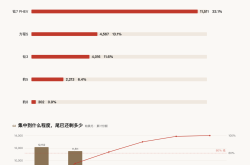
The DataEye Research Institute estimates that in 2026 the market size of domestic micro short dramas (including animated dramas) is expected to reach 121 billion yuan, of which the AI short drama segment will exceed 40 billion yuan. Compared with the scale of 16.8 billion yuan in 2025, the increase is about 138%.
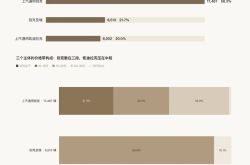
The industry's user base is also expanding rapidly. In May, the industry's user scale was 851 million, covering 66.7% of internet users, adding 133 million users in just four months.
What AI truly brings is production capacity. After production costs were reduced exponentially, short drama production capacity completely exploded.
According to industry statistics, in the first eight months of this year, a total of 430,000 new short dramas were launched, 13 times the total for all of last year, and 90% of them were AI short dramas;
Looking only at the Douyin platform, an average of 2,400 new short dramas were released every day in August.
The volume is large and plentiful, and what is truly being contested is fragmented time, which is also the daily task time of casual games.
-
![]()
BMW i3 and Lexus TZ Step Up: Joint Venture Brands Are Not Backing Down at the Guangzhou Auto Show
-
Understand This AI Evolution Diagram and You Understand the Essence of AI: 'Intelligence Moves Up, Users Stay Down'
-
![]()
NetEase's Latest Financial Report: High Gross Margin, Low Debt
-
![]()
AI Unemployment Buffer Period
-
![]()
"It's a Bit Late Now," Ma Huateng Said Point-Blank: Tencent Has Reached a Life-or-Death Moment
-
![]()
AI Short Dramas Begin to Impact the Gaming Industry?
-
![]()
Fangchengbao's October Domestic Sales Hit 34,761 Units, Titan 7 Duo Accounts for 68%
-
![]()
GM China October Retail: How Are Buick, Cadillac, and Zhijing Performing?