Ternus's First Move: The Most Expensive Foldable iPhone in History
 09/14 2026
 512
512
Apple's autumn 2026 event proceeded as scheduled, marking the first major product launch since hardware engineer John Ternus officially took the helm. The understated affair was his debut as Apple's leader.
When he said, 'Actually, there's one more thing,' the audience's reaction said it all.

This iconic phrase from the Jobs era was reserved for Apple's first foldable iPhone, named the 'iPhone Duo'—not 'Fold' or 'Ultra,' as rumors suggested.
Priced at 26,499 yuan for the 2TB top-tier model, the iPhone Duo is the most expensive foldable phone—and the most expensive iPhone—ever made.
The Foldable Showstopper
Apple has been rumored to be developing a foldable phone for eight years. The Duo's specs largely align with leaks from the past two years.
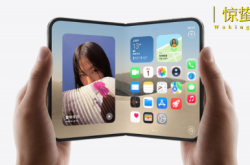
It features a 5.4-inch external display and a 7.6-inch internal display when unfolded—50% larger than the iPhone 18 Pro Max—and is the thinnest iPhone ever in its unfolded state. Both screens support 120Hz ProMotion and peak brightness of 3,000 nits.

The crease is minimized using nano-texture glass, multi-layer coatings, and a titanium hinge backplate. Apple avoided claiming a 'crease-free' design, honestly stating only that crease control is 'promising.'
The internal screen houses an under-display camera, while the external front camera supports 12MP portrait centering. The rear dual 48MP cameras lack telephoto. Apple Pencil support—a first for any iPhone—will arrive via a software update later this year.
Powered by the 2nm A20 Pro chip (6-core CPU + 7-core GPU) with a custom C2 baseband and vapor chamber cooling, the Duo offers a dual-battery system: up to 44 hours of video playback on the external screen and 31 hours on the internal screen. A 20-minute charge restores 50% battery.
The OS is optimized for foldables, with the main dock and app areas moved to the right. It supports split-screen (horizontal/vertical) and multi-window for the same app but lacks Stage Manager. Standard foldable features like hover mode, dual-screen previews, and bedside clock mode are included.

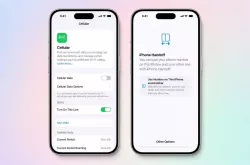
Note: The global version supports only eSIM, with no physical SIM slot.
The Chinese model offers four storage tiers: 256GB (15,999 yuan), 512GB (17,999 yuan), 1TB (21,499 yuan), and 2TB (26,499 yuan), pushing iPhone pricing to new heights.
Counterpoint predicts Apple will capture 28% of the foldable market by 2026, challenging Samsung and Huawei's lead. IDC expects first-year shipments to reach 10 million units.
The iPhone 18 Series
The flagship iPhone 18 Pro and 18 Pro Max debuted alongside the Duo.
Both feature the A20 Pro chip, with a ~20% CPU uplift and up to 40% GPU improvement. The vapor chamber is three times larger than the previous generation, boosting sustained performance by 40%.
The camera introduces a variable aperture main lens (F1.48–F4.0 in four steps) and a Pro camera mode with manual controls for aperture, shutter speed, white balance, and a histogram.
Battery life is a focus: the 18 Pro Max offers up to 43 hours of video playback—6 hours more than its predecessor—which Apple calls its 'biggest battery life increase ever.' A 15-minute charge restores 50%.

Design highlights include a smaller Dynamic Island displaying three real-time activities and new colors: Burgundy and Glacier Blue.
Software-wise, Apple's AI updates feel underwhelming. A new Siri AI supports 16 languages, including English and Simplified Chinese, but initial features are basic: spell check, on-demand photo queries, and AI photo editing—functions Android rivals already offer.
Pricing starts at 9,999 yuan for the 18 Pro and 10,999 yuan for the 18 Pro Max. Pre-orders begin September 12 at 8 PM, with availability on September 18. The standard iPhone 18 and iPhone Air 2 are absent, likely arriving next spring—confirming Apple's staggered release strategy.
Price hikes were expected due to rising DRAM and NAND costs, which have pushed smartphone material expenses higher.
Suppliers note that storage costs for phones have surged from $10 to nearly $100. TrendForce reports that memory costs for the 256GB Pro model rose nearly 400% year-over-year in Q3 2026. Despite Apple's efforts to negotiate other component prices, overall BOM costs remain high.

The AirPods 5 are the most affordable new product, starting at 999 yuan. All models now include active noise cancellation, with Apple claiming a 50% improvement over the previous generation. The redesigned drivers and a 1,149-yuan variant with wireless charging and stem-swipe volume controls effectively halve the Pro's core features. All AirPods models now support noise cancellation.
The Apple Watch Series 12 and Ultra 4 focus on health. Powered by the new S11 chip, they introduce a health-sensing system that monitors heart rate every 5 seconds (17,280 times daily—60x more frequent than before) and heart rate variability every 5 minutes (24x more frequent).

A new 'Body Readiness Score' and enhanced heart rate variability tracking help users assess stress and recovery. AI-driven audio features include Siri Recap, which transcribes and summarizes conversations in real-time, with a 15-second replay buffer (not yet available).
The Ultra 4 offers 45 hours of continuous tracking in Extended Endurance mode. Pricing matches the previous generation, starting at $399 and $799 in the U.S.
An Uneventful Event?
The event's biggest surprise was the lack of surprises.
Samsung has been making foldables for seven years, and Huawei has introduced triple-folding devices. Apple is the last major player to enter the foldable market, and the Duo offers no industry-first features—under-display cameras, hover mode, and split-screen are all borrowed from rivals. This would have been unthinkable in the Jobs era.
However, Apple's late entries have historically succeeded when the market was mature enough for scalability. The iPod wasn't the first MP3 player, and the iPhone wasn't the first smartphone. History favors Apple's approach.
Apple's foldable debut will reshape global competition.
The real question is whether the Duo's 15,999-yuan price tag merely keeps pace with rivals or delivers the disruption Apple once promised. While Apple legitimizing foldables benefits the industry, its role as a follower—not a pioneer—is uncharted territory for the company.
After the event, a net friend commented that Ternus's debut felt like a Cook-era event.
Whether that's a compliment may depend on October 23 sales figures.
Source: Benyuan Finance; Data support: Tianyancha
-
Ternus's First Move: The Most Expensive Foldable iPhone in History
-
![]()
Selling One Car Means a 40 Million Yuan Loss! Porsche Divests from the 'World’s Priciest Supercar Maker'
-
![]()
One Number, Dual SIM Support! Apple Highlights New iPhone 18 Feature—Is It a Push for eSIM?
-
![]()
Mother and Son with a 7-Year Age Gap, Labor Remuneration Soars Over 2 Trillion: Xingyu Shares Faces Information Disclosure 'Mishaps' Amid Layoff Controversy
-
If You're a Disruptor, Let's Ride the Wave of CALB's Business Success Together
-
![]()
Foldable Smartphone Showdown: A Prelude to the 'Tech Spring Festival Gala'
-
![]()
China’s Wealthiest Individual Could Change! DeepSeek Aims for STAR Market IPO—Could Liang Wenfeng’s Net Worth Hit Trillions?
-
![]()
Porsche Sells Bugatti for €7.8 Billion to Cover Pension Obligations