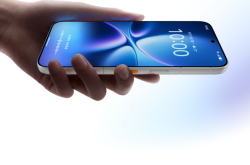
Which would you choose: an iPhone costing 10,000 yuan or a domestic smartphone?
 09/14 2026
 468
468
Consider cost-effectiveness or personal preference?
Image Source | Internet (Please contact us for removal if infringement occurs) Partially generated by AI
In the smartphone circle in autumn 2026, a scene emerged that had not been seen in the past seven years.
From September 7 to September 10, within 72 hours, Huawei, Xiaomi, and Apple collided head-on in the ultra-high-end market segment priced over 10,000 yuan.
Huawei unveiled the Mate XT 2 with a triple-fold design, starting at 19,999 yuan; Xiaomi released its first smartphone priced over 10,000 yuan, the 18 Fold, starting at 10,999 yuan; Apple introduced the long-rumored foldable iPhone Duo, starting at 15,999 yuan for the Chinese version.
Three products, offering three completely different answers, are placed within the same price range.
For ordinary consumers, this poses a very specific question: When you have 10,000 yuan in hand and are faced with domestic smartphones priced at 10,000 yuan and Apple's top-tier models, what exactly are you paying for?

These are three completely different 'answers'
A few years ago, the concept of a '10,000-yuan smartphone' was still seen as a novelty. Samsung's W series, priced at 10,000 to 20,000 yuan, was mostly laughed at by the majority.
Huawei's first-generation foldable smartphone, priced at 16,999 yuan, was criticized as 'robbery,' yet it sold out instantly every time it went on sale.
By 2026, 10,000 yuan is no longer a rare price point. However, the truly noteworthy change is that when you spend 10,000 yuan, the domestic smartphones and iPhones you get are essentially three different things.
Huawei's answer is 'aggressive form factors.' The Mate XT 2 adopts a U-shaped dual inward-folding structure, completely abandoning the previous generation's Z-shaped design.
It packs two screens, internal and external, into a 3.5mm body and is the first to feature the Kirin 9050 Pro chip, a high-performance chip that utilizes logical folding technology, improving multi-core concurrent performance by 52% and overall device performance by 42% compared to the previous generation.
The core narrative of this device is not 'how much faster it is than the previous generation,' but rather 'what else can a smartphone look like.'
Xiaomi's answer is 'rational specifications.' The 18 Fold adopts a mid-folding form factor, and its starting price of 10,999 yuan is not considered expensive among smartphones priced over 10,000 yuan. However, it simultaneously debuts with Xiaomi's self-developed Xuanjie O3 AI flagship chip and domestic Changxin LPDDR6 memory.
Xiaomi's logic is clear: use self-developed chips to control costs, utilize the domestic supply chain to compress premiums, and bring the starting price of a foldable smartphone down to just over 10,000 yuan.
Lei Jun 'complained' about the high cost of memory during the launch event, to some extent telling users that this price is already the limit.
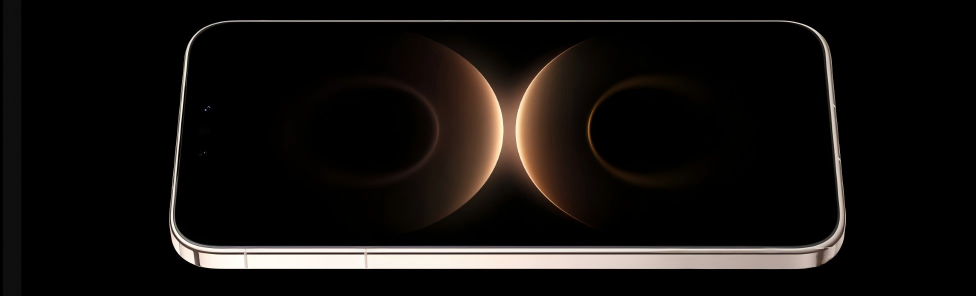
Apple's answer is 'ecosystem stability.' The iPhone Duo features a horizontal book-style folding scheme, with an external screen of about 5.4 inches when closed and an internal screen of about 7.6 inches when unfolded, approaching the display area of an iPad mini.
Apple did not opt for a triple-fold or mid-fold design; instead, it created a 'foldable iPad mini.'
The underlying logic of this choice is not to pursue the ultimate form factor but to integrate the foldable screen into the existing ecosystem, making it a new piece in the puzzle between the iPhone, iPad, and Mac.
These three answers correspond to three completely different consumer psychologies. Those who buy Huawei are purchasing 'something that others don't have.' Those who buy Xiaomi are getting 'flagship experience at the most reasonable price.' Those who buy Apple are ensuring 'it won't cause me any trouble.'
This is not a question of who is right or wrong. But you must first acknowledge that you are not just choosing a smartphone; you are choosing a relationship you are willing to live with for two to three years.

The Threshold for Domestic Smartphones Priced at 10,000 Yuan
A counterintuitive fact is that domestic smartphones priced at 10,000 yuan are not lagging in terms of product strength. Huawei's triple-fold design has already iterated to the second generation, and Xiaomi's mid-fold design is an industry first. Both companies have at least two to three years more accumulation in the foldable smartphone category than Apple.
IDC data shows that in the first quarter of 2026, Huawei's market share in the domestic foldable smartphone market reached as high as 60%.
However, a high market share does not equate to high recognition. A user on a forum put it bluntly: 'If I spend over 10,000 yuan on a domestic smartphone and someone asks me how much it costs, when I say over 10,000 yuan, their reaction is basically 'you're crazy.''
What lies behind this statement is worth pondering more than any comparison of specifications.
Apple has been selling smartphones priced at 10,000 yuan in the Chinese market for nearly a decade. From the iPhone X's 8,388 yuan to the iPhone 17 Pro Max's 11,999 yuan, consumers have become desensitized to 'Apple selling a smartphone for 10,000 yuan.'
It doesn't need to explain why it's worth that price because its price itself has become a default rationality (reasonableness).
Domestic smartphones do not have this default value. When Huawei's Mate XT 2 was priced at 19,999 yuan, Yu Chengdong said at the launch event that 'this is a price with sincerity.' There weren't many exclamations from the audience, but in online discussions, 'expensive' remained a frequent word.
Xiaomi's 18 Fold, priced at 10,999 yuan, marked the first time in Xiaomi's history that its starting price exceeded 10,000 yuan. The first reaction from consumers was 'Xiaomi dares to sell for 10,000 yuan too.'
These two words, 'dares to,' reflect the real situation faced by domestic smartphones priced at 10,000 yuan.
But the situation is changing. A noteworthy data point is that QuestMobile's June 2026 report showed that OPPO's user retention rate for device upgrades reached 53.5%, surpassing Apple's 49.6% for the first time.
The main factors contributing to the decline in Apple's user retention are concentrated on price and lack of innovation. The significance of this number lies not in OPPO being stronger than Apple but in illustrating that consumers are beginning to judge based on 'whether the product itself is worth it' rather than 'whether the brand is qualified enough.'
Another signal is the upgrade cycle. The average upgrade cycle for domestic users has extended to 42 months, changing from a two-year upgrade cycle to a three-and-a-half-year cycle.
The longer the cycle, the more cautious each choice becomes, and the smaller the role brand halo plays. Who can continuously accumulate goodwill during the long ownership period will be the one to retain the user in their next upgrade.
What domestic smartphones priced at 10,000 yuan are experiencing is the most challenging path from 'insufficient brand premium' to 'product value being recognized.'
The products are already there, but the shift in perception takes time, and this time is not determined by manufacturers but by every individual who spends their money.
Behind the Choices: Changes in Consumer Mindset
If you've recently visited offline smartphone stores, you may have noticed an interesting phenomenon.
In Huawei stores, the most frequently asked questions about foldable smartphones are not 'how is the performance?' but rather 'are the creases noticeable?' and 'how long will the hinge last?'
In Xiaomi stores, the most common questions are 'what has been upgraded compared to the previous generation?' and 'can the price be discounted further?'
In Apple stores, the most frequent inquiries are 'can it seamlessly switch with my iPad?' and 'how much can I get for trade-in?'
These three scenarios correspond to three completely different consumer mindsets.
The first mindset is 'form-driven.' These users have moved beyond the stage of 'just enough is fine.' What matters to them is novelty, uniqueness, and 'having something that others don't.'
The act of unfolding a foldable smartphone is, in itself, a form of social currency. The reason Huawei's triple-fold design sold out instantly during the pre-order phase was not because of its strong specifications but because it offered an experience that a traditional bar-shaped smartphone could never provide: folding a tablet into your pocket.
The second mindset is 'value-driven.' These users are not unwilling to spend money, but they want to know exactly where every penny is going. They will carefully compare the screen specifications, chip performance, and memory specifications of the Xiaomi 18 Fold and iPhone Duo, then draw a conclusion on 'which one offers better cost-effectiveness.'
These users are the most likely group for domestic smartphones priced at 10,000 yuan to attract because once hardware specifications are on par, price differences become the most intuitive basis for judgment.
The third mindset is 'path-dependent.' These users may not necessarily think the iPhone is the best choice, but they have already invested too much in the Apple ecosystem: a decade's worth of photos stored in iCloud, two years of exercise data recorded by the Apple Watch, and the seamless handoff between the Mac and iPhone have become muscle memory.
Switching to an Android smartphone means starting all over again. This cost cannot be calculated purely in monetary terms.
There is no hierarchy among these three mindsets, but the reality that manufacturers must face is that, currently, in the price segment above 10,000 yuan, the first and third mindsets have the largest existing user bases, while the second mindset is growing but has not yet become mainstream.
Apple has captured 64.8% of the market share in the price segment above 6,000 yuan by relying on the third mindset, while domestic manufacturers have found a breakthrough with the first mindset, attempting to use form innovation to attract users who are tired of traditional bar-shaped smartphones.
The growth rate of the second mindset depends on a very simple question: After three to four years of validation of the durability of domestic foldable smartphones, will consumers still hesitate to 'spend 10,000 yuan on a domestic smartphone?'

Returning to the original question: Would you choose a domestic smartphone or an iPhone priced at 10,000 yuan?
I cannot answer that for you. Because the answer to this question depends on what smartphone you are currently using, what ecosystem you have accumulated in over the past three years, and how much you are willing to pay for 'novelty' in terms of trial and error costs.
But what I want to say is that in autumn 2026, the nature of this question has undergone a qualitative change.
In the past, 'choosing between a 10,000-yuan domestic smartphone and an iPhone' was a question of 'daring or not.' Now, it is a question of 'worth it or not.'
Domestic smartphones priced at 10,000 yuan have finally earned the right to be weighed on the same scale as Apple, which is itself the biggest change in the industry over the past five years.
And the direction in which the scale tips does not depend on who shouts louder at launch events but on whether, over the next three years, those who have spent their hard-earned money will make the same choice when upgrading to their next smartphone.
This question must be left for consumers to answer themselves.
-
![]()
Rescuing Neta Auto: Even Taiyi Zhenren Steps In, and Associated Company’s Value Soars by 2.5 Billion Yuan
-
Why Does 'Taiyi Shenglian' Step In to Save Neta?
-
![]()
Registered Capital Sees Slight Reduction to 110.7291 Million Yuan! Yongxin Optics Finalizes Industrial and Commercial Registration Amendments
-
![]()
Renaming Marks the Start: Conant Optics’ Smart Glasses Business Gets a Full-Throttle Boost
-
Amazon’s Shift to Passkey Compels Home Furnishing Brands to Overhaul Backend Access Controls
-
![]()
Doubao Mobile Phones: Opting for the Path of Maximum Public Discourse
-
![]()
OpenAI Hits Pause on the AI Race: The Hype Around Large Models Cools Down, and Enterprise AI Enters the Era of Results-Based Adoption
-
![]()
Li Feifei's Atlas Opens the Door to a New World for Embodied AI