Doubao 2nd-Gen Mobile Phone Goes on Sale Today: An Ultimate Experiment on 'Who Controls the Phone'
 09/17 2026
 540
540
In December 2025, an engineering prototype sold out within 48 hours, with second-hand prices soaring to 8,000 yuan. Then, WeChat logins failed, Alipay requested verification, and banking apps refused service. A phone that was once in high demand became a 'useless ornament' within days.
Nine and a half months later, its successor arrived.
On September 16, 2026, the Nubia NaviX Ultra—commonly known as the 'Doubao 2nd-Gen Mobile Phone'—officially went on sale, starting at 5,999 yuan, or 5,499 yuan after national subsidies, with JD.com pre-orders surpassing 370,000. It claims to be the 'world's first AI Agent phone,' equipped with the Doubao Mobile Assistant consumer version, featuring 'one-sentence cross-app operation' with an end-to-end task success rate exceeding 80%. 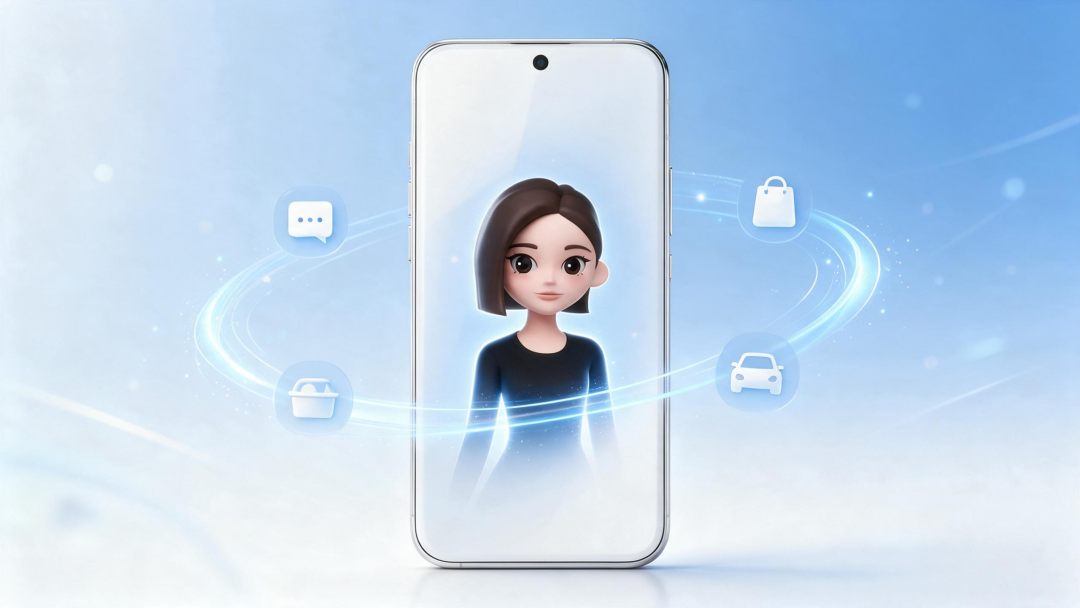
But what deserves more attention than the specs is what this company learned from a brutal failure and what its current choices mean for the entire mobile phone industry.
01 The First Generation's 'Ghost Finger': Technology Won, Ecosystem Lost
To understand the significance of the second generation, we must first examine what happened with the first generation.
In December last year, Doubao released a technical preview of its mobile assistant. Its core capability was obtaining Android system-level INJECT_EVENTS permissions—in layman's terms, the AI assistant could view your screen and simulate your finger to click any button in any app. You could ask it to send a WeChat message, and it would open WeChat, find the contact, type, and send. You could ask it to order food, and it would open Meituan, select a meal, and place the order.
Technologically, it was impressive. Luo Yonghao exclaimed on Weibo, 'The technological revolution is unstoppable,' while Zhou Hongyi of 360 predicted, 'Mobile operating systems are about to change.'
However, technological impressiveness quickly collided with the impenetrable wall of reality.
Two days after the product launched, users began encountering abnormal WeChat logins and blocked access or operations in apps like Taobao and China Construction Bank. Pony Ma publicly stated that using a plugin to record and transmit user screen activity to the cloud was 'extremely unsafe and irresponsible.' A phone that was once in high demand became a 'useless ornament' within days. The first generation's failure boiled down to one sentence: It attempted to bypass commercial rules through technological capabilities, but the backlash from commercial rules was faster than technology.
02 The Second Generation Changes Tactics: From 'Breaking In' to 'Knocking and Asking'
Nine and a half months later, the second generation abandoned the 'ghost finger' approach.
The new phone introduced a screen automation operation declaration protocol and initiated a 30-day rule public notice (public display). Under this protocol, third-party apps can autonomously declare operational boundaries, explicitly allowing or refusing AI assistants to perform automated operations within their apps. 'We will fully respect developers' wishes and will not perform automated operations on third-party apps that explicitly refuse such operations,' Doubao stated. 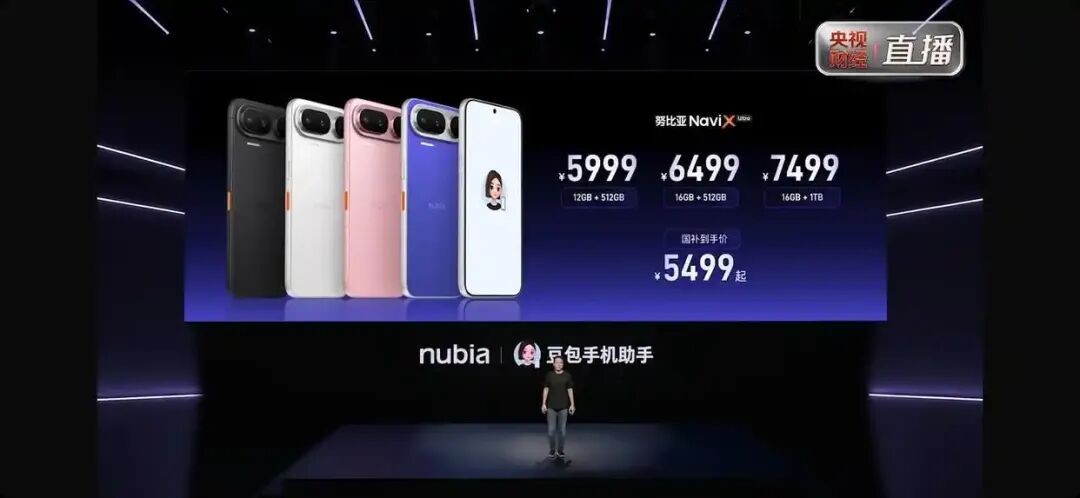
From 'I can operate you' to 'I'll use whatever you're willing to let me use.' From breaking in to knocking and asking.
Real-world experience confirmed this shift. A reporter from National Business Daily tested the Doubao Assistant and found that operations like posting, ordering, and online shopping in apps like WeChat, Xiaohongshu, Meituan, and Taobao could not yet be achieved. After giving Doubao the command 'Help me order a cup of coffee,' external e-commerce apps like Taobao Flash Sales and JD.com were not supported, and Doubao suggested ordering through Douyin instead.
Currently, the voice-operated AI agent prioritizes coverage of ByteDance's products, with access to all ByteDance-owned services, while third-party apps include only a few authorized providers like Caocao Chuxing. However, a noteworthy detail remains: the second generation's coverage of 'cross-app tasks'—its core selling point—may be narrower than the first generation's. While the first generation was blocked, it could forcibly complete tasks before being shut down; the second generation's capabilities depend entirely on app developers' willingness to open up. If they don't, you can't do anything.
Some analysts directly point out that Doubao still uses system-level INJECT_EVENTS permissions, essentially 'holding a master key and waiting for users to refuse,' which contradicts the mainstream approach of requiring apps to proactively authorize structured interfaces. This protocol is equivalent to your neighbor saying, 'I'll give you 30 days—if you don't explicitly refuse me, after 30 days, I can do whatever I want with you'—and even offering a 30-day cooling-off period 'to help you get divorced.'
03 Not Just Doubao: Three AI Agent Phones, Three Approaches
Broaden the perspective, and you'll see that Doubao's phone is not an isolated case.
In July 2026, three AI agent phones debuted at WAIC, becoming one of the most crowded exhibition areas. They took three entirely different approaches: Nubia + ByteDance: Cross-app operation route. Starting by breaking down app barriers, letting AI operate third-party apps for you. It advanced the fastest but also hit walls first.
Jieyue Xingchen STEPX Neo: System-level reconstruction route. Equipped with the native AI agent operating system StepOS, it reconstructed from the Bottom level framework (underlying framework) and included the personal AI agent Amoo. Through API solutions, it established partnerships with platforms like Alipay, Baidu, Meituan, JD.com, Didi, Ctrip, Gaode Maps, and WPS. This approach is more 'legitimate' but requires persuading all platforms to join—a massive undertaking.
Honor RobotPhone: Embodied interaction route. Its iconic design features a four-degree-of-freedom titanium alloy mechanical gimbal, with a mechanical arm lens module that pops out from the back of the phone, rotating 360 degrees freely in 0.8 seconds and supporting 360-degree object tracking. It extends AI's 'perception layer' from the screen into the physical world.
A senior analyst at Counterpoint noted that this generation of AI agent phones is fundamentally different from previous 'AI phones.' Their capabilities extend further, not only completing more complex searches and answers but also automatically executing multi-step operations around predefined goals. The three approaches have different divisions of labor but share the same goal: transforming phones from 'tools' into 'entities that act on your behalf.'
04 Industrial Turning Point Behind the Numbers
This isn't just about a few products. The entire mobile phone industry is undergoing a structural shift.
IDC data shows that in 2025, China's AI phone shipments exceeded 118 million units, accounting for 40.7% of the overall market. By 2026, next-generation AI phone shipments are expected to reach 147 million units, a 31.6% YoY increase, with penetration exceeding 53% for the first time. Counterpoint predicts that by 2026, global GenAI phone shipments will account for 45%, surpassing 52% in 2027 and becoming the industry standard.
Meanwhile, the overall mobile phone market is declining. In Q2 2026, China's market shipped 66.01 million units, down 4.3% YoY, marking the fifth consecutive quarter of decline. The industry desperately needs a new narrative to drive upgrades, and AI Agents are seen as the hope. Policy is also accelerating support. In May 2026, the Ministry of Industry and Information Technology and other departments jointly launched the national standard 'Artificial Intelligence Terminal Intelligence Grading,' ranging from L1 (responsive) to L4 (collaborative), with terminal intelligence levels increasing accordingly.
In July, the Cyberspace Administration of China publicly released, for the first time, Record Filing Information (filing information) for generative AI services on mobile devices from seven vendors: Apple, Huawei, OPPO, Vivo, Xiaomi, Samsung, and Nubia. On-device AI officially received a 'green light' from regulators. For the first time, technical validation, product iteration, mass production conditions, and regulatory approval—all four conditions—are in place simultaneously.
05 Core Conflict: The Allure of Convenience vs. Platforms' Survival Logic
Back to the original question: Can the Doubao 2nd-Gen Mobile Phone succeed?
It depends on resolving a fundamental conflict—the structural clash between the convenience of AI assistants and the business models of super apps. If Doubao can directly order meals, shop, and hail rides for you, do users still need to open Meituan, Taobao, or Didi?
Who will view the splash ads? Who will scroll through recommended feeds? Will platforms still retain their entry-point value? Not to mention, AI acting on your behalf essentially reduces how often and how long users open apps, directly impacting ad revenue.
Tencent's explicit opposition is not unfounded. This isn't just a privacy issue—it's a fundamental clash of business models.
Conversely, ByteDance's own Douyin is one of China's strongest mobile internet traffic entry points. If one day, another vendor's AI assistant could directly operate Douyin, help users browse videos, like, and place orders—what would ByteDance think?
This is the 'Catch-22' faced by all AI agent phone vendors: You need openness to let others in, but openness means your own entry point might be bypassed.
06 Final Thoughts
The first-generation Doubao phone proved that technology can break through, but ecosystems cannot be bypassed.
The second generation chose a pragmatic middle path—seeking space within regulatory frameworks, replacing force with protocols, invasion with negotiation. The direction may be right, but success depends not on the model's capability limits but on the collective choices of phone vendors, app developers, regulators, and the market.
Ni Fei said something that may be closer to the essence than any spec: 'Whether a product is good or not doesn't depend on what others say—it depends on whether consumers actually use it and find it handy.'
2026 may be remembered as the turning point when smartphones transformed from 'tools' into 'action terminals.' But on this path, the Doubao phone is merely the first to truly step inside. Whether the road ahead is smooth or filled with pits will become clearer after the 30-day cooling-off period.
-
Huawei Relinquishes AITO, Seres Assumes Control
-
Entering a New Phase of Auto Exports: BYD and Chery Pursue 'Vehicle Parity Growth'
-
Seres’ Ascendancy in AITO: A Journey Built Over Time
-
![]()
An Apple Product Seven Years Late Enters a Market Where It Can't Set Prices
-
![]()
2026 China Automotive Net Promoter Score (NPS) Index Research: Product Experience Fuels Word-of-Mouth, Brand Marketing Holds the Key to Breakthroughs
-
![]()
Beauty Joins In, ByteDance Ramps Up Investment Game
-
![]()
Jensen Huang Hits Back at Ray Dalio: Is AI the Next Big Financial Bubble?
-
![]()
Battle for the Gateway to the World Model: ByteDance Leans Left, JD.com Leans Right