iPhone 18 Pro Max First Launch Review: Not Many Surprises, But Not Entirely Without Them
 09/20 2026
 377
377
Has Apple Mastered the Adjustable Aperture?
On September 18, the iPhone 18 series officially went on sale, and Leitech got its hands on the iPhone 18 Pro Max at the first opportunity.
Compared to the bold changes made with last year’s iPhone 17 Pro Max, Apple has clearly taken a more conservative approach this year. After watching the launch event, Xiaolei struggled to find a compelling reason to upgrade. However, specifications aside, the usability of a phone can only be truly assessed through hands-on experience. After a day of testing, Xiaolei has formed some distinct opinions about the iPhone 18 Pro Max.
So, how does this “flagship” device, starting at over ¥10,000, perform? Let’s dive right in.
Minimal External Changes, Significant Internal Upgrades
Compared to the dramatic updates seen with last year’s iPhone 17 series, the iPhone 18 Pro Max feels much more subdued. After all, the iPhone 17 Pro Max had just introduced a unibody aluminum design and a new horizontal camera layout. It’s unlikely Apple would overhaul this design just a year later. The camera module, in particular, retains the horizontal “raised platform” design, with no significant changes to the positioning or overall layout of the three lenses. When this design was first introduced last year, it sparked considerable debate—especially the dual-tone effect created by the glass back and aluminum frame. Some appreciated its distinctiveness, while others found it odd.
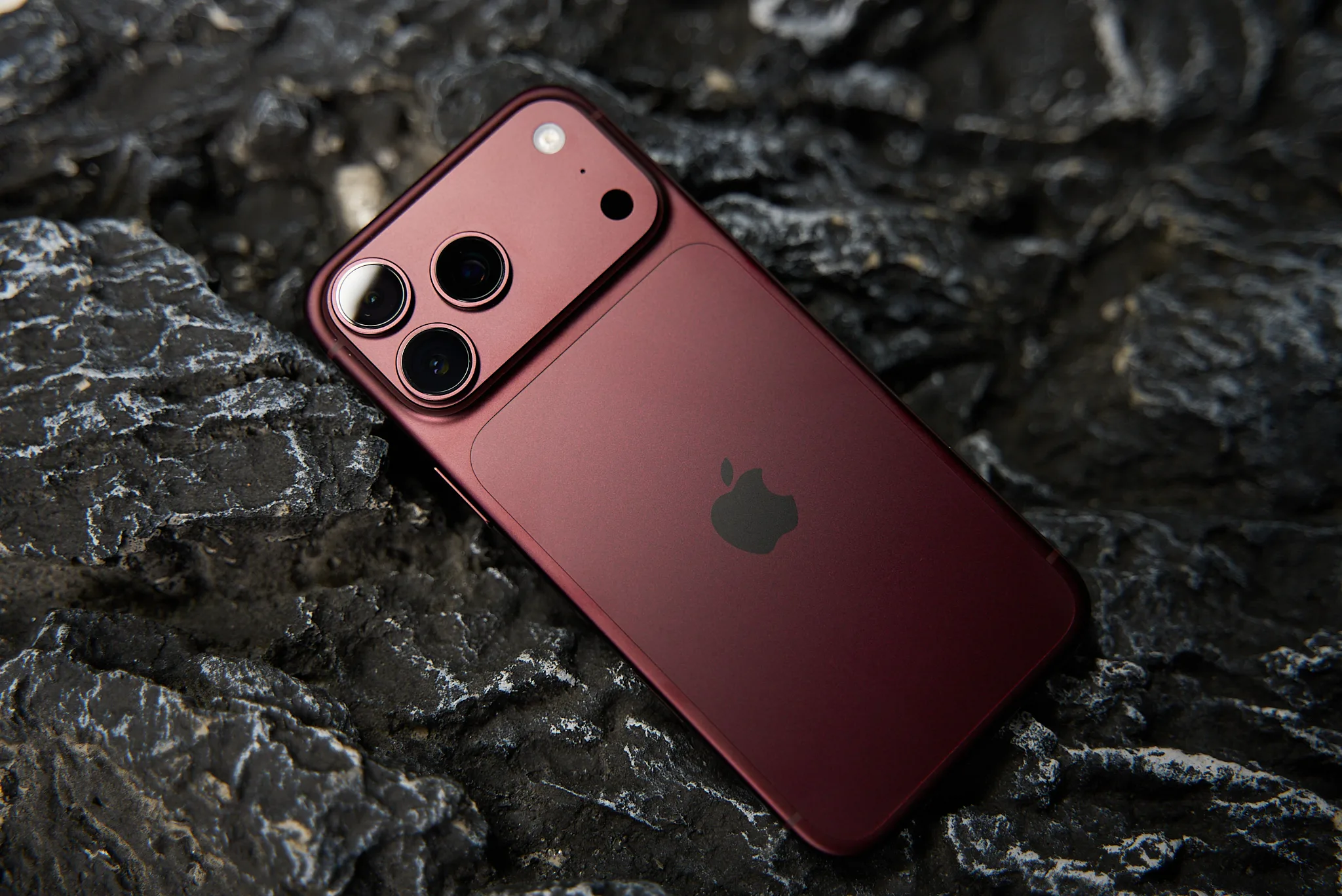
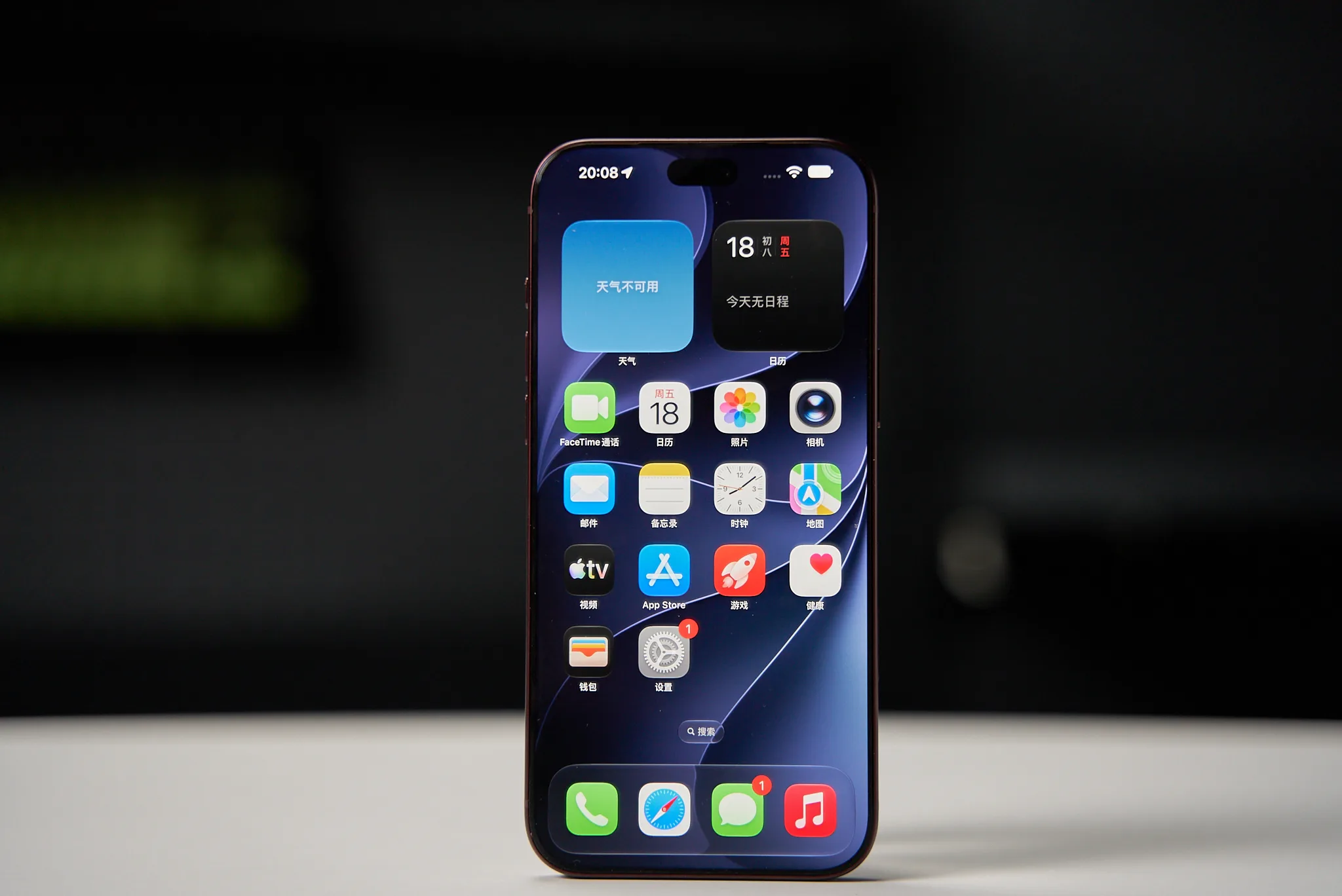
The model we have is the new “Burgundy Wine Red.” Compared to last year’s highly noticeable “Starry Orange,” this year’s wine red is more understated. Indoors or in dim lighting, it appears as a purplish dark red, only showing its true red hue under sunlight or strong light. However, Xiaolei believes the biggest advantage of the wine red is that the color transition on the back panel looks less disjointed, offering a more cohesive appearance.
(Image Source: Leitech)
From a personal aesthetic standpoint, Xiaolei quite likes this color. On one hand, it’s not as bold as bright red; on the other, as this year’s new flagship color, it offers sufficient distinctiveness. During Leitech’s visit to the Apple Store in Tianhuan, Guangzhou, it was clear that wine red was the top choice for scalpers and early adopters, at least solving the issue of “spending over ¥10,000 on a new iPhone only for others not to notice.”
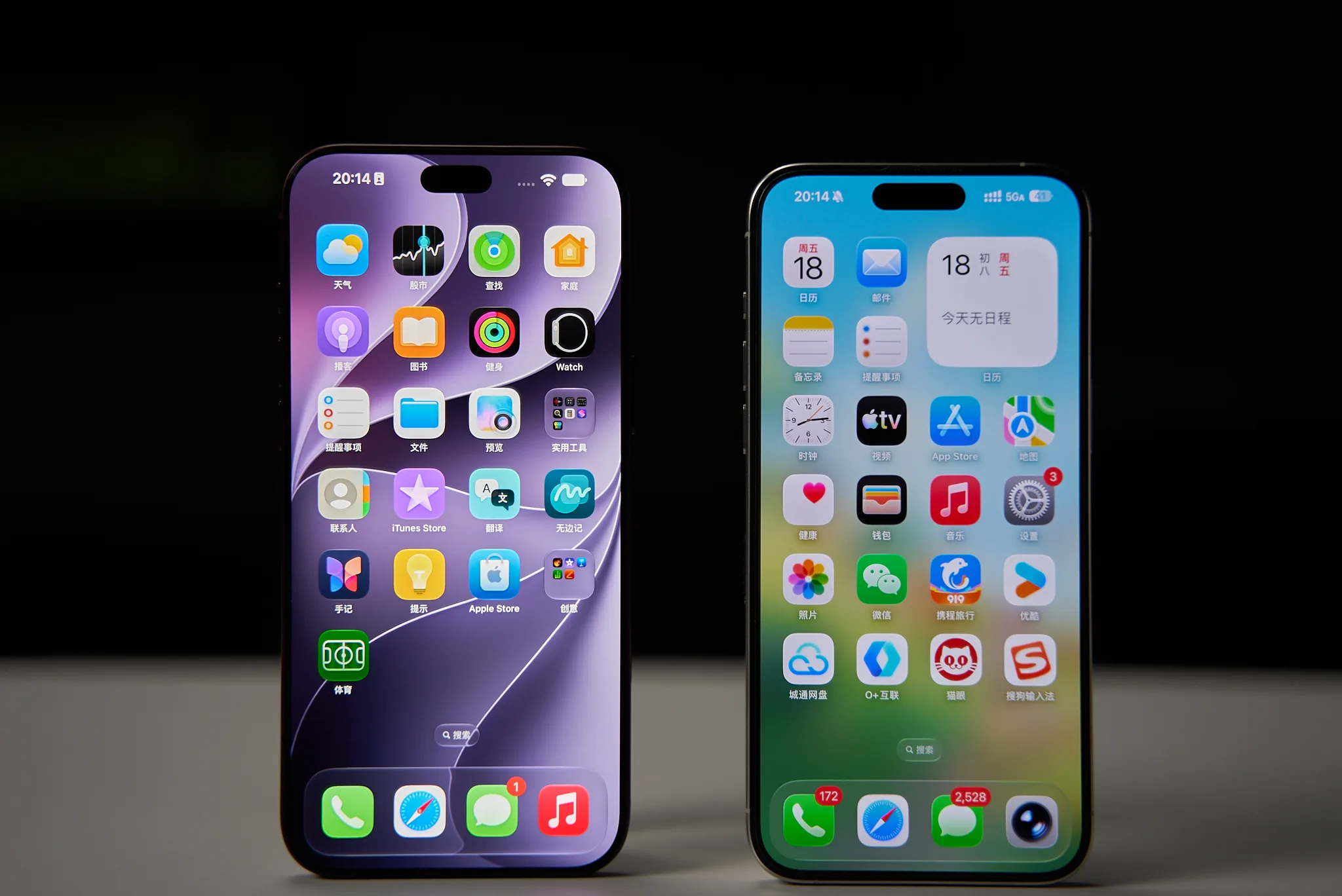
The front of the phone sees little change as well. The screen remains at 6.9 inches, with no complaints about display quality. The most noticeable change is the smaller Dynamic Island. However, for users accustomed to recent iPhone generations, such minor adjustments offer little novelty.
(Image Source: Leitech, left: iPhone 18 Pro Max, right: iPhone 16 Pro Max)
Visually, the iPhone 18 Pro Max feels like a minor refresh over its predecessor. Placing the two phones side by side, it’s hard to tell them apart at first glance, making it difficult to justify an upgrade for iPhone 17 series users.
While external changes are minimal, Apple has focused its upgrades on the internals this year: the A20 Pro chip now uses a 2nm process, the vapor chamber cooling area has been expanded, and battery life and charging speeds have improved. Most importantly, the main camera now features an adjustable aperture, and the native camera app offers professional controls over aperture, shutter speed, and white balance for the first time.
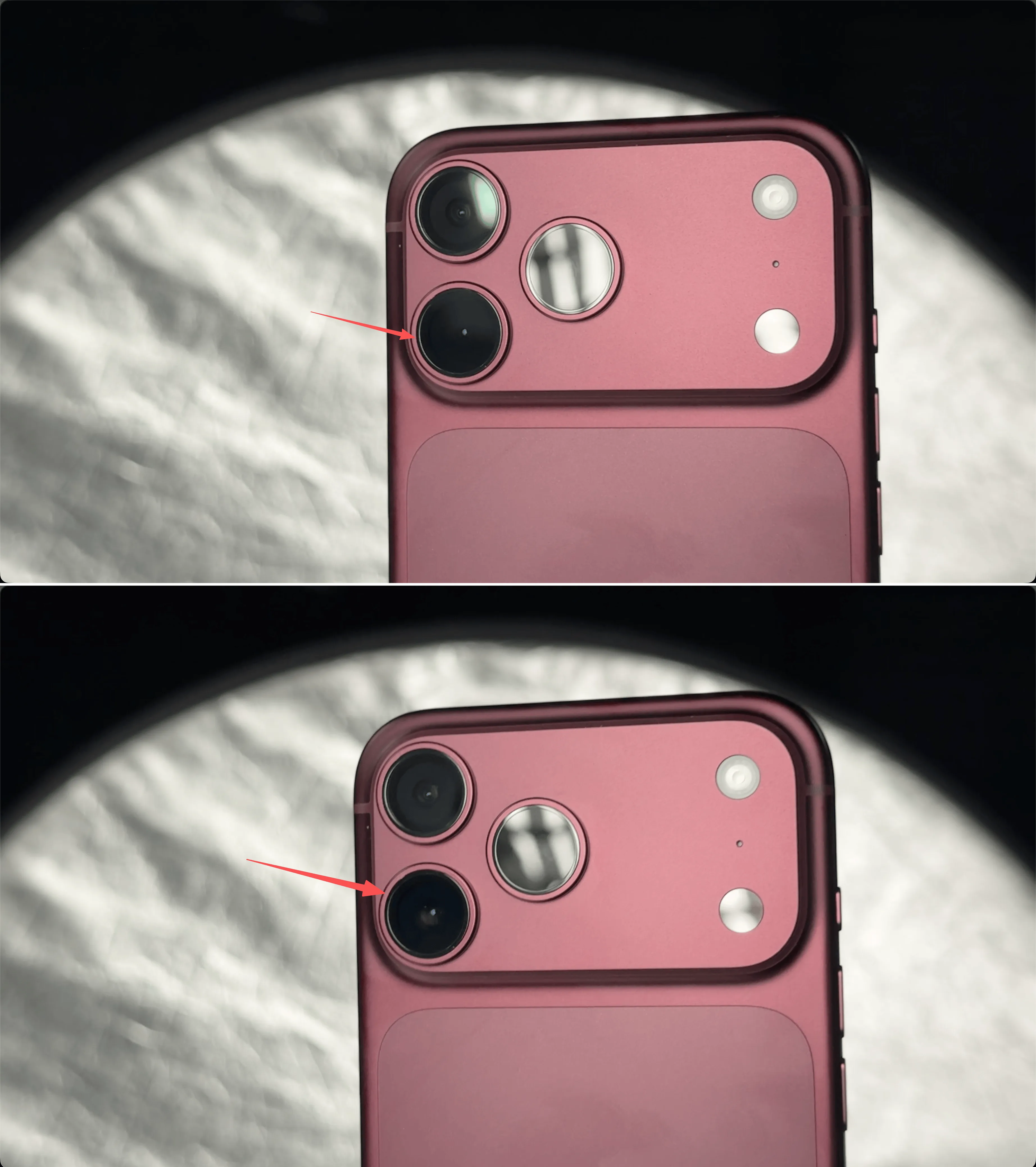
(Image Source: Leitech, top: smallest aperture, bottom: largest aperture)
Let’s focus on the adjustable aperture. This technology is not new in the smartphone industry—Huawei, Samsung, and Xiaomi have all released products with this feature, delivering excellent results. Apple, however, has stuck with a fixed aperture, relying instead on multi-frame synthesis, HDR, and night mode to handle different shooting environments. This approach has proven stable over the years.
However, as smartphone main camera sensors grow larger, the drawbacks of a fixed wide aperture become more apparent. The most noticeable issue for everyday users is depth of field. While a wide aperture’s natural bokeh is great for portraits or still life, it can cause problems in group photos, close-up product shots, or document photography, where a shallow depth of field may result in a sharp foreground but blurred background. This physical limitation is hard to overcome with algorithms alone. With the iPhone 18 Pro Max, users can now adjust the aperture to f/2.8 or even f/4.0 for a greater depth of field.
Conversely, at night, opening the aperture to f/1.48 maximizes light intake.
From Xiaolei’s brief half-day experience, Apple’s adjustable aperture doesn’t deliver an immediate “massive improvement in image quality.” Instead, it adds a professional capability previously unavailable on iPhones. For casual users who simply press the shutter button, it may not be essential. However, for those who use their iPhone for photography, videography, or even content creation, this year’s main camera offers significantly more creative possibilities.
Telephoto Performance: Flagship-Level, But Held Back by Adjustable Aperture?
Historically, the iPhone’s greatest strength in imaging has been consistency. You don’t need to understand photography, adjust shutter speed, white balance, or exposure settings—just point and shoot, and you’ll usually get a decent photo. This approach has made the iPhone an excellent “recording tool,” which is why so many casual users and even professional creators prefer it for video.
On the flip side, Apple hasn’t been as accommodating to enthusiasts who like to tinker. While it has gradually introduced professional formats like ProRAW, ProRes, and Log, even emphasizing that iPhones can be used in real filmmaking, it has long resisted offering basic parameter controls. Adjusting shutter speed, ISO, or white balance required third-party camera apps or external professional equipment.
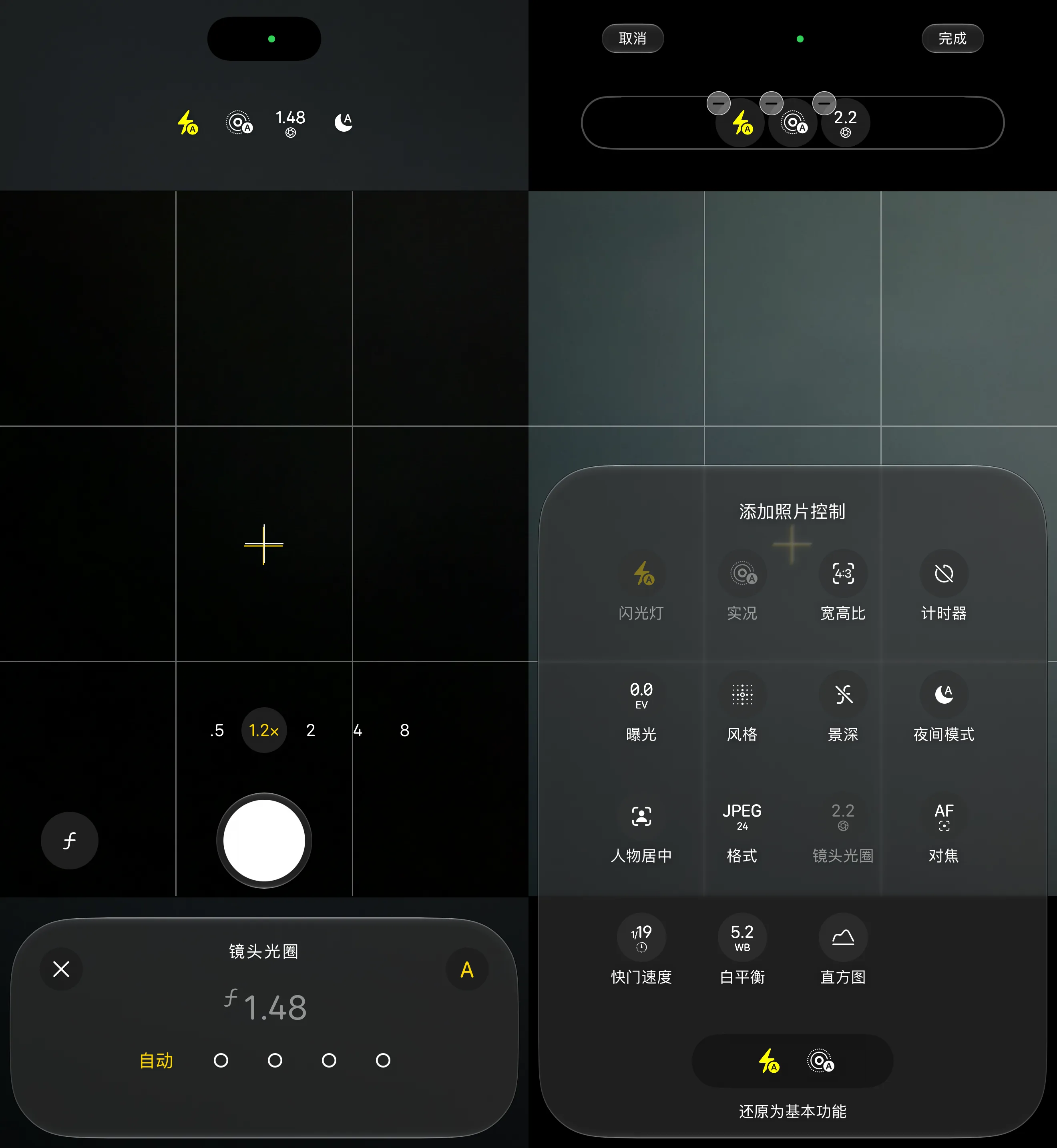
(Image Source: Leitech)
This year, Apple has finally changed its approach. Users can now adjust lens aperture, shutter speed, and white balance while viewing a real-time histogram. Combined with the adjustable aperture, the iPhone now offers a shooting logic closer to that of professional cameras.
Now that we’ve covered the theory, let’s move on to real-world testing, starting with overall image impression.
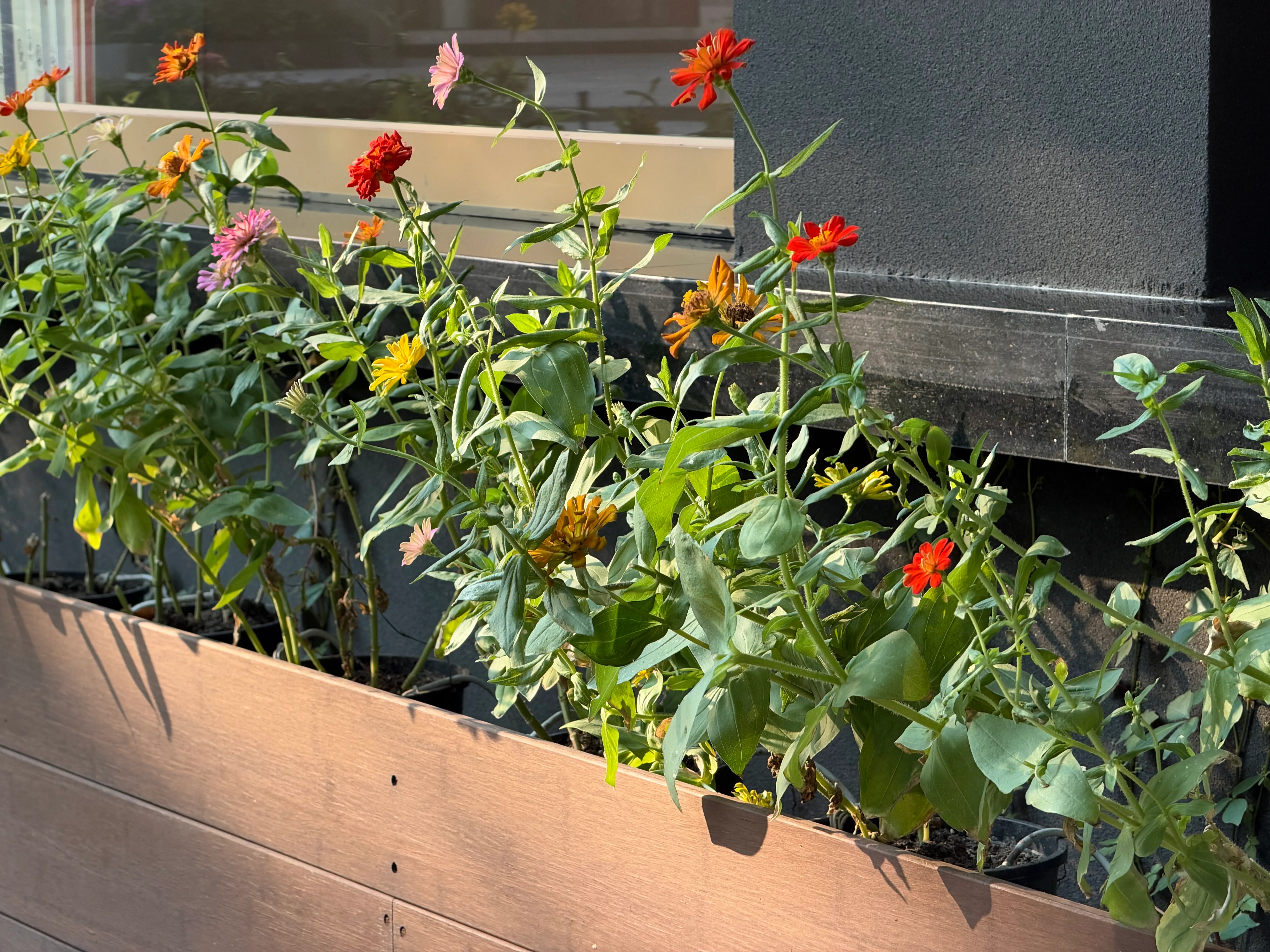
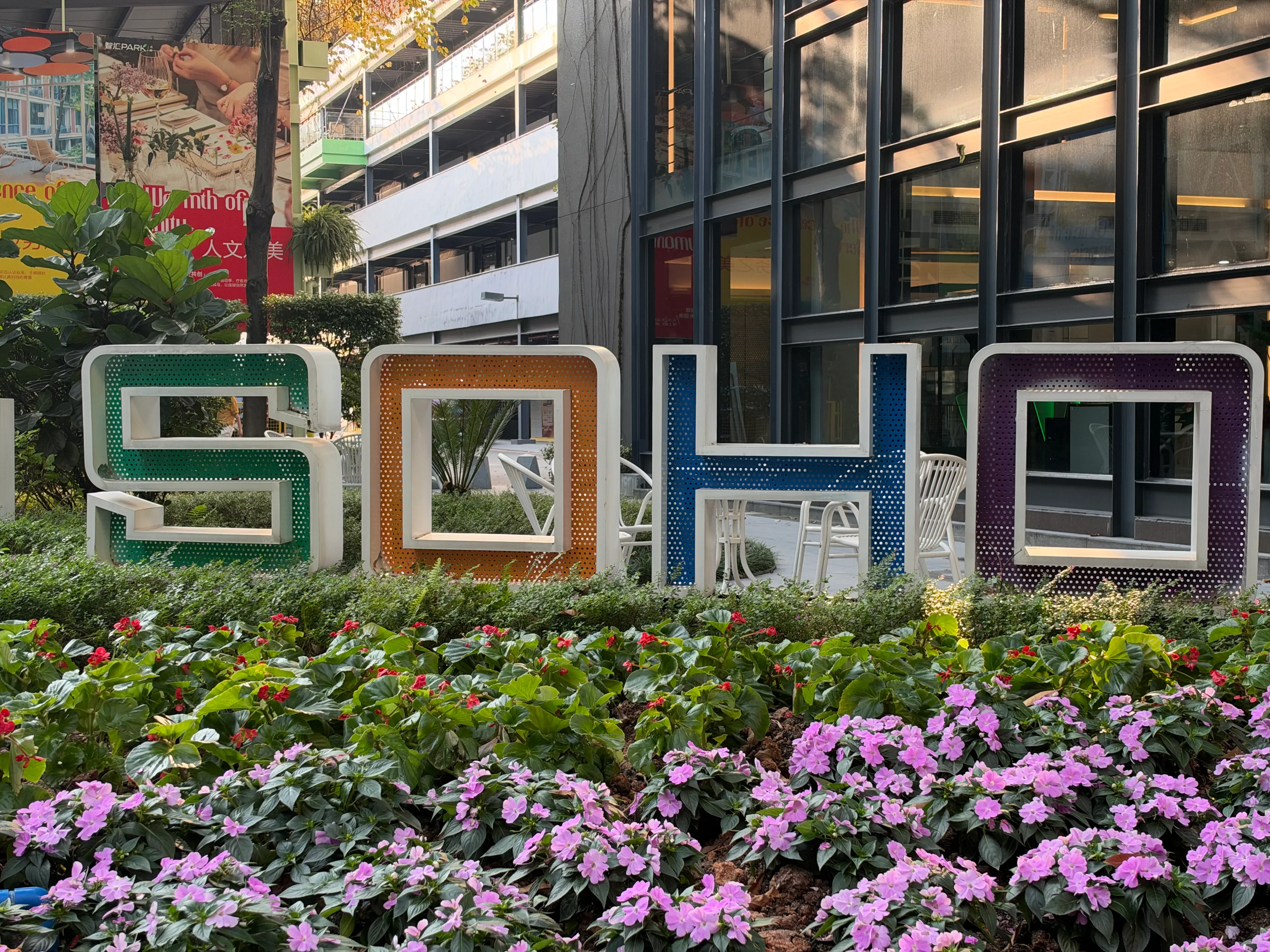
(Image Source: Leitech)
In daylight shots, the iPhone 18 Pro Max maintains Apple’s signature look. It doesn’t artificially boost brightness or saturation excessively. The contrast between white walls, black window frames, and surrounding foliage remains well-preserved, especially avoiding overexposed highlights on walls or forced brightening of dark areas inside windows.
Many smartphones produce immediately eye-catching photos—bluer skies, greener leaves, and brighter shadows—but over time, these can feel overly uniform. The iPhone 18 Pro Max takes a more restrained approach, closer to what the naked eye sees.
(Image Source: Leitech)
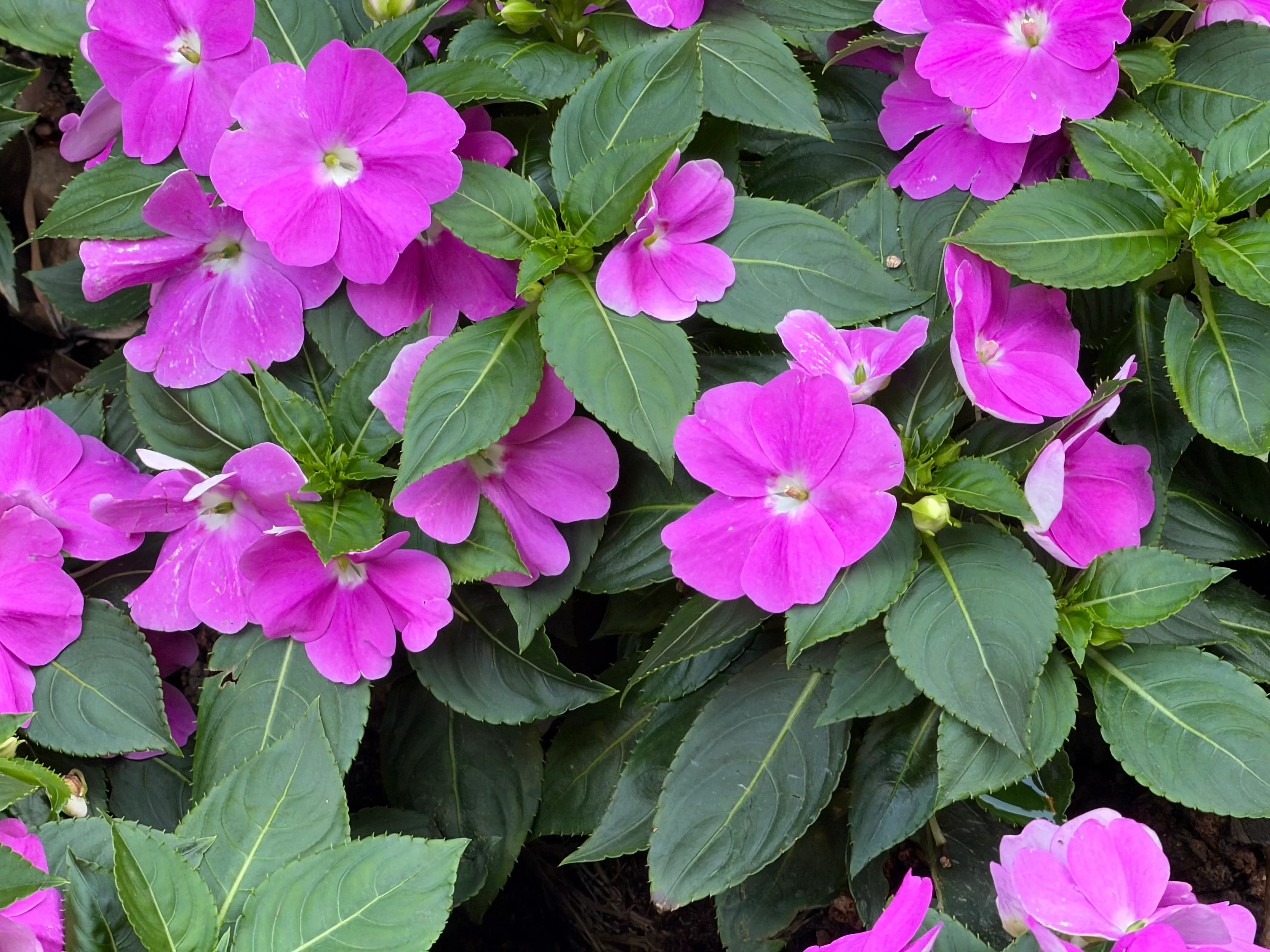
When shooting colors prone to overexposure, like pink-purple hues, the iPhone 18 Pro Max avoids artificially boosting saturation. Petals retain natural color gradients, and leaf textures remain relatively intact.
Of course, the downside is that photos can initially appear somewhat “dull.” If you prefer the bright, vivid, high-saturation look of flagship Android phones, you might not enjoy the iPhone’s default style.
(Image Source: Leitech)
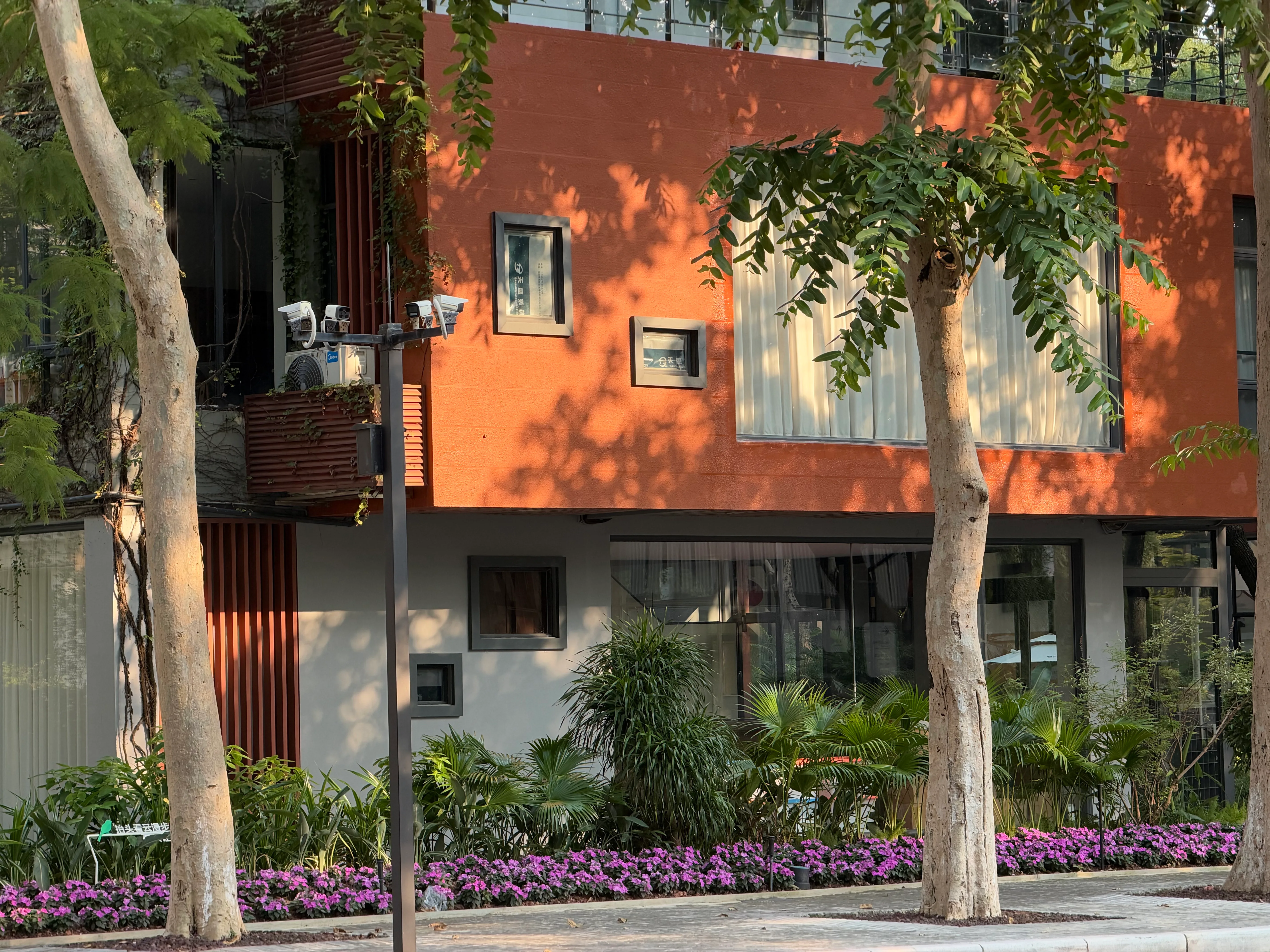
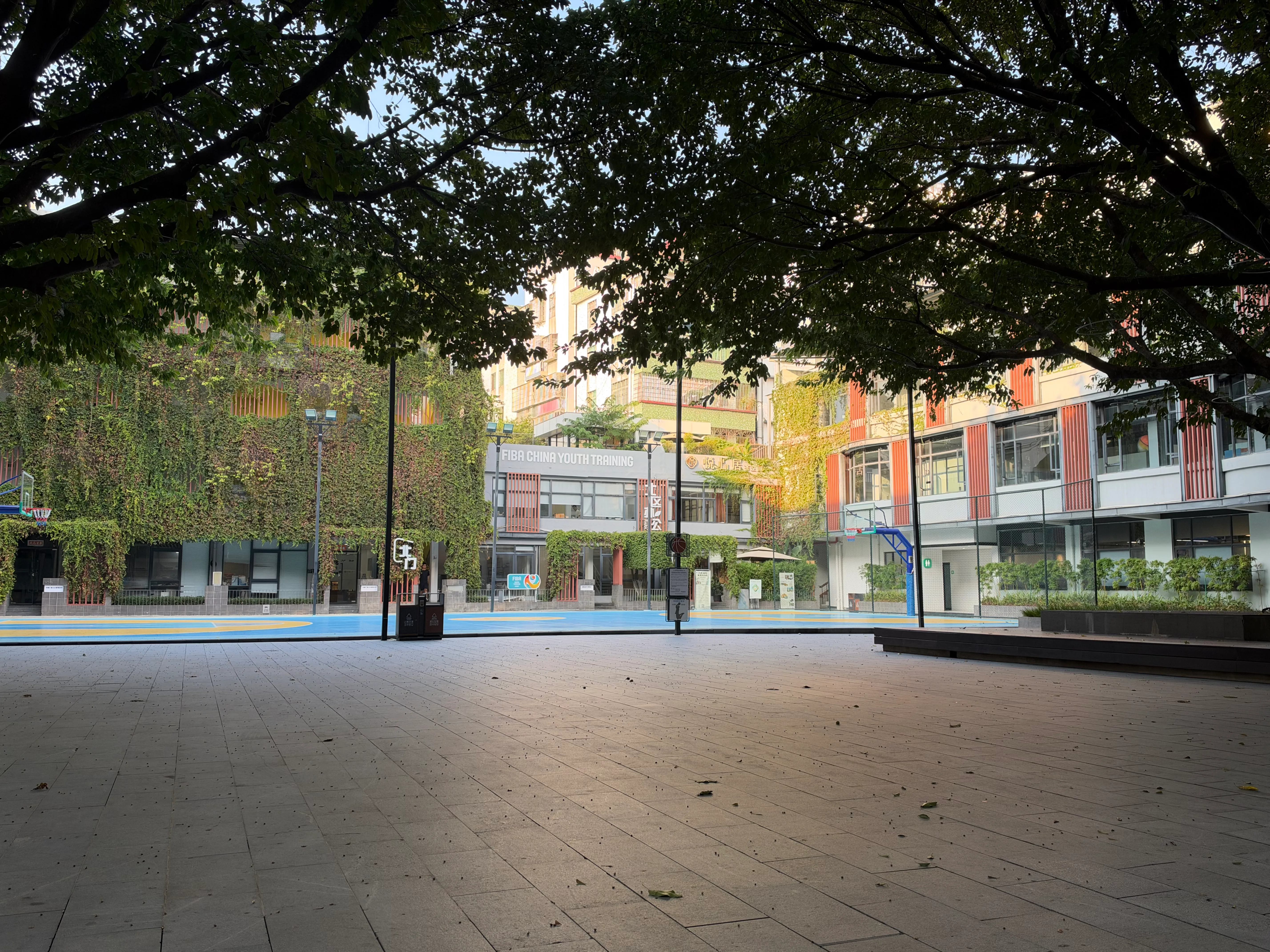
In these high-contrast scenes, the brightness of walls, tree shadows, and foreground trunks maintain clear Hierarchy (Chinese term for “layering” or “gradation”), with lighting effects not overly flattened by HDR algorithms. The iPhone 18 Pro Max doesn’t sacrifice highlights or shadows to an extreme, avoiding an overly HDR-processed look.
However, completely ignoring highlight clipping can sometimes detract from the overall image, which may reflect Apple’s photographic philosophy.
Telephoto performance remains consistently strong.
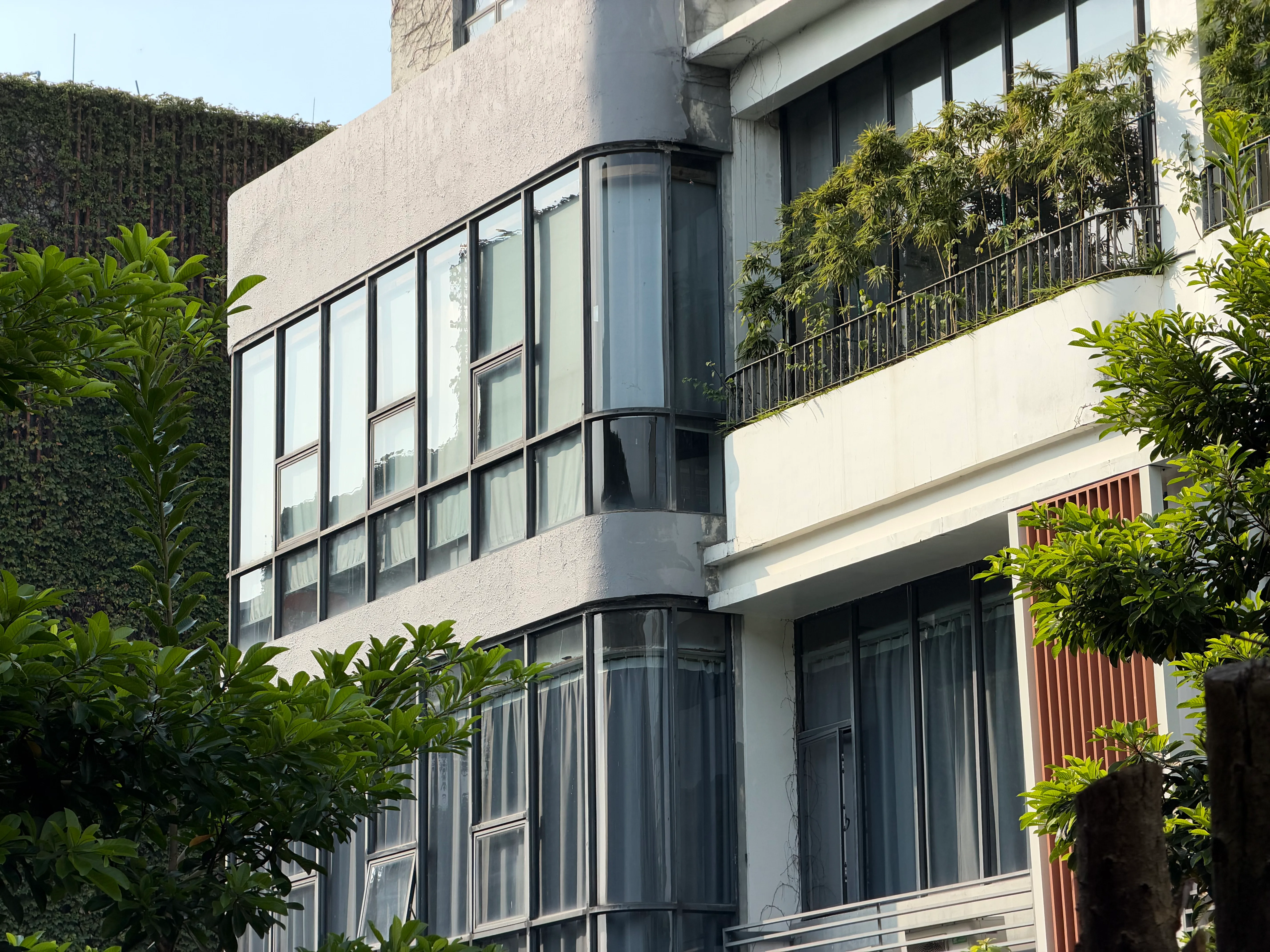
Comparing two architectural shots taken at 4x and 8x zoom, window frames and wall textures retain sharp detail, with no abrupt shifts in image style when switching lenses. Buildings, with their numerous straight lines and regular patterns, test a camera’s resolving power. Upon closer inspection, window edges remain clean without noticeable smudging.
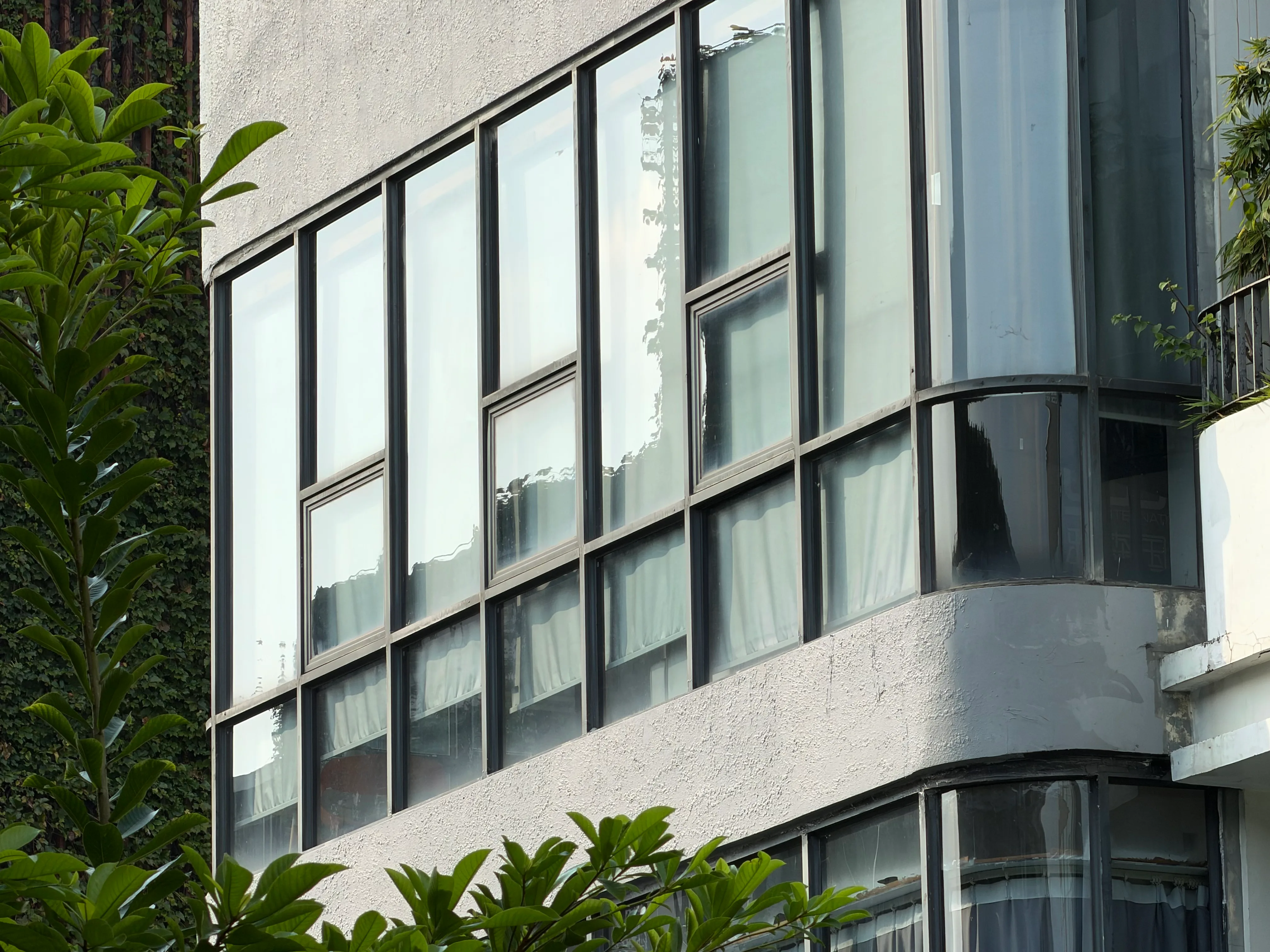
(Image Source: Leitech)
Granted, the iPhone 18 Pro Max’s telephoto hardware isn’t particularly groundbreaking compared to this year’s Android flagships, which boast 200MP periscope lenses capable of even greater zoom. However, Apple’s strength lies in consistency—switching from the main to telephoto camera results in no abrupt changes in exposure, white balance, or color, a key factor in the iPhone’s video leadership over Android.
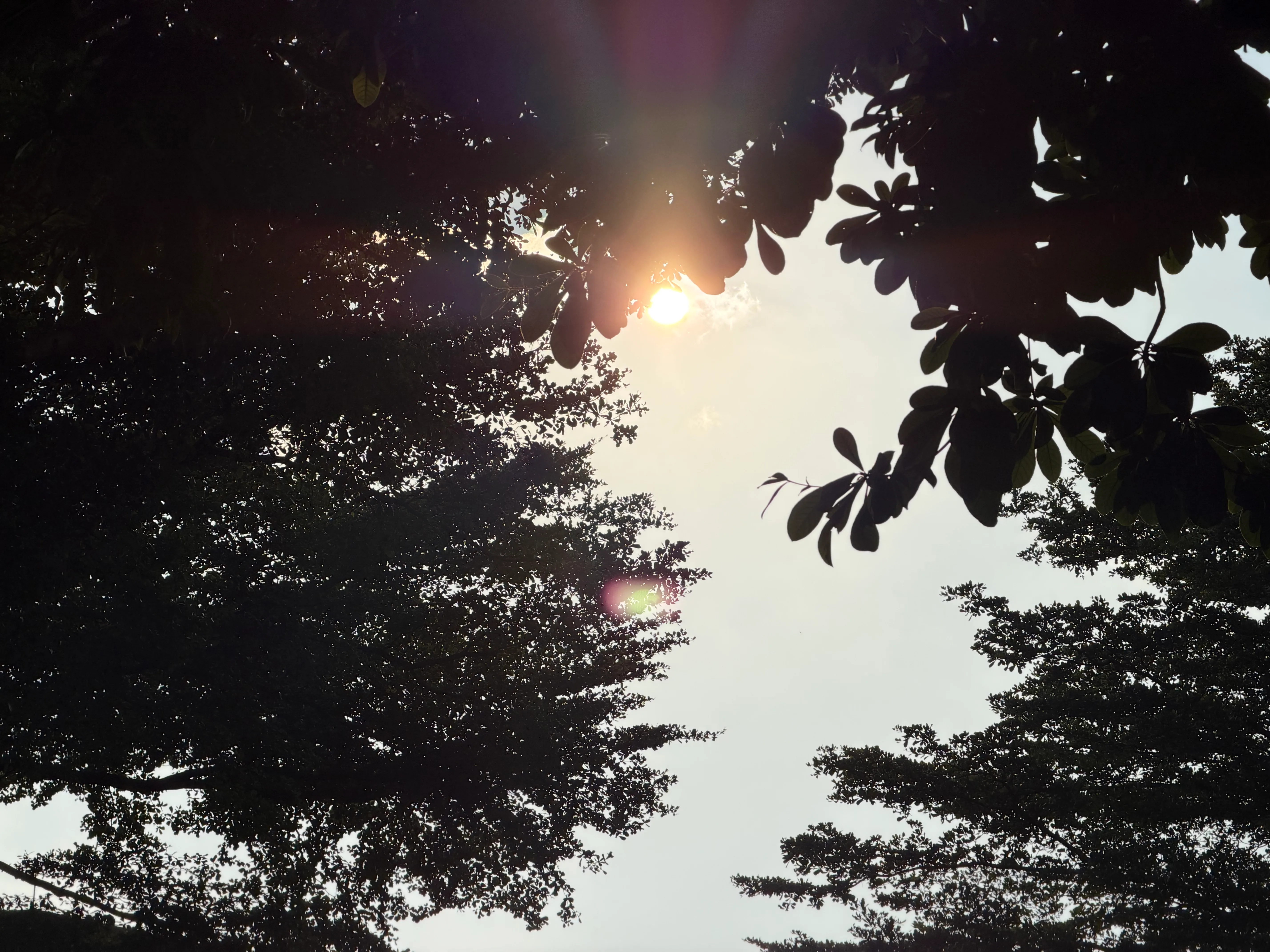
(Image Source: Leitech)
Problems arise, however, in extreme scenarios. Take backlighting, for example—when sunlight directly enters the frame, a prominent purple-green flare appears, along with significant haze around the sun. Normally dark foliage becomes obscured by stray light.
Another example is even more extreme. Even with the sun at the edge of the frame, the entire image appears shrouded in haze, affecting buildings, trees, and even the road surface while drastically reducing image quality. This is no longer a minor flaw—hopefully, Apple can address it via OTA updates.
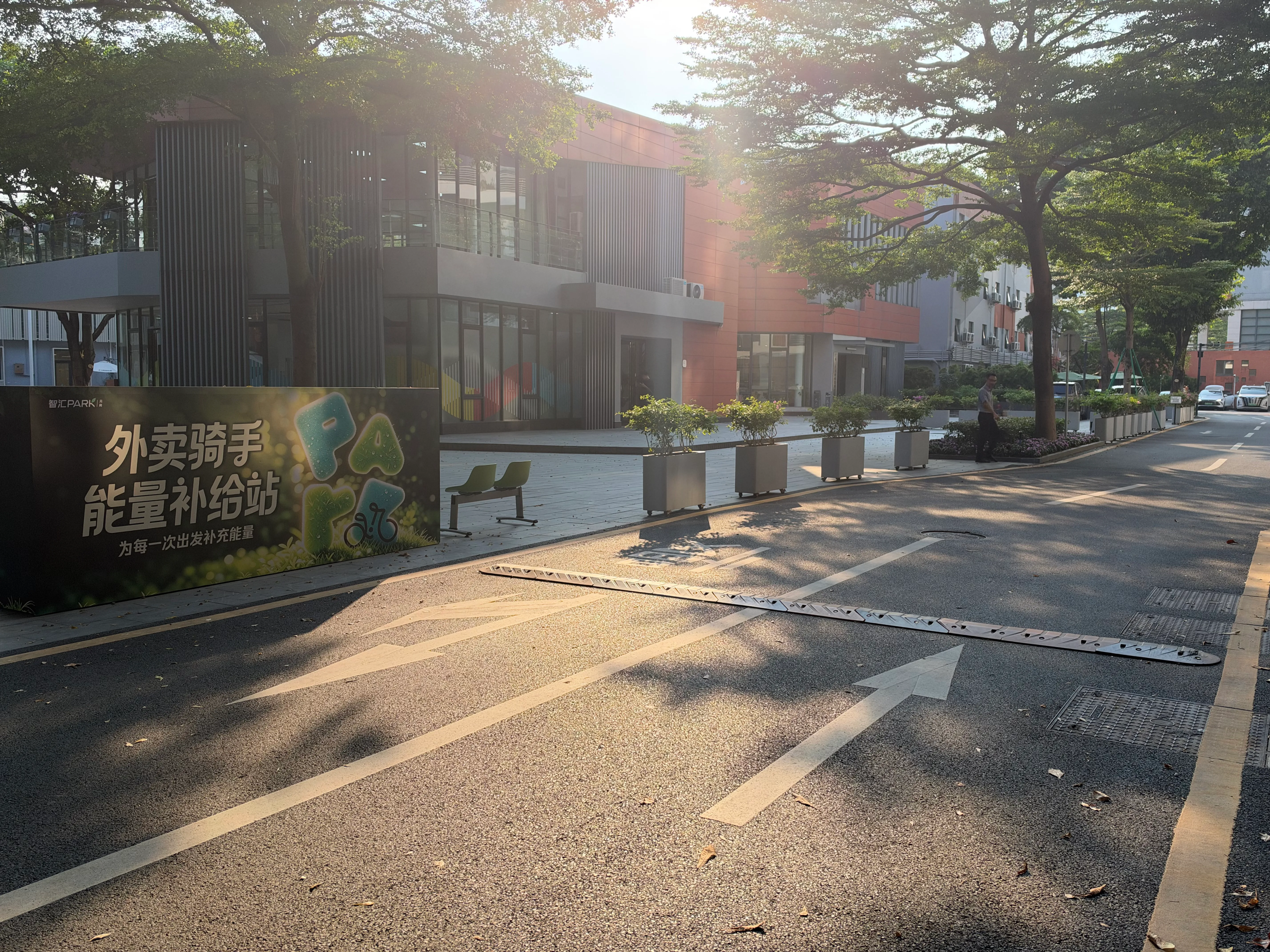
(Image Source: Leitech)
To be honest, this performance was unexpected. Flare isn’t unique to the iPhone 18 Pro Max—even previous iPhone generations were notorious for ghosting when facing strong light sources at night.
However, with the addition of an adjustable aperture this year, the lens’s internal optical structure has become more complex. Based on our samples, anti-flare performance under strong backlighting hasn’t improved and is even worse in some cases.
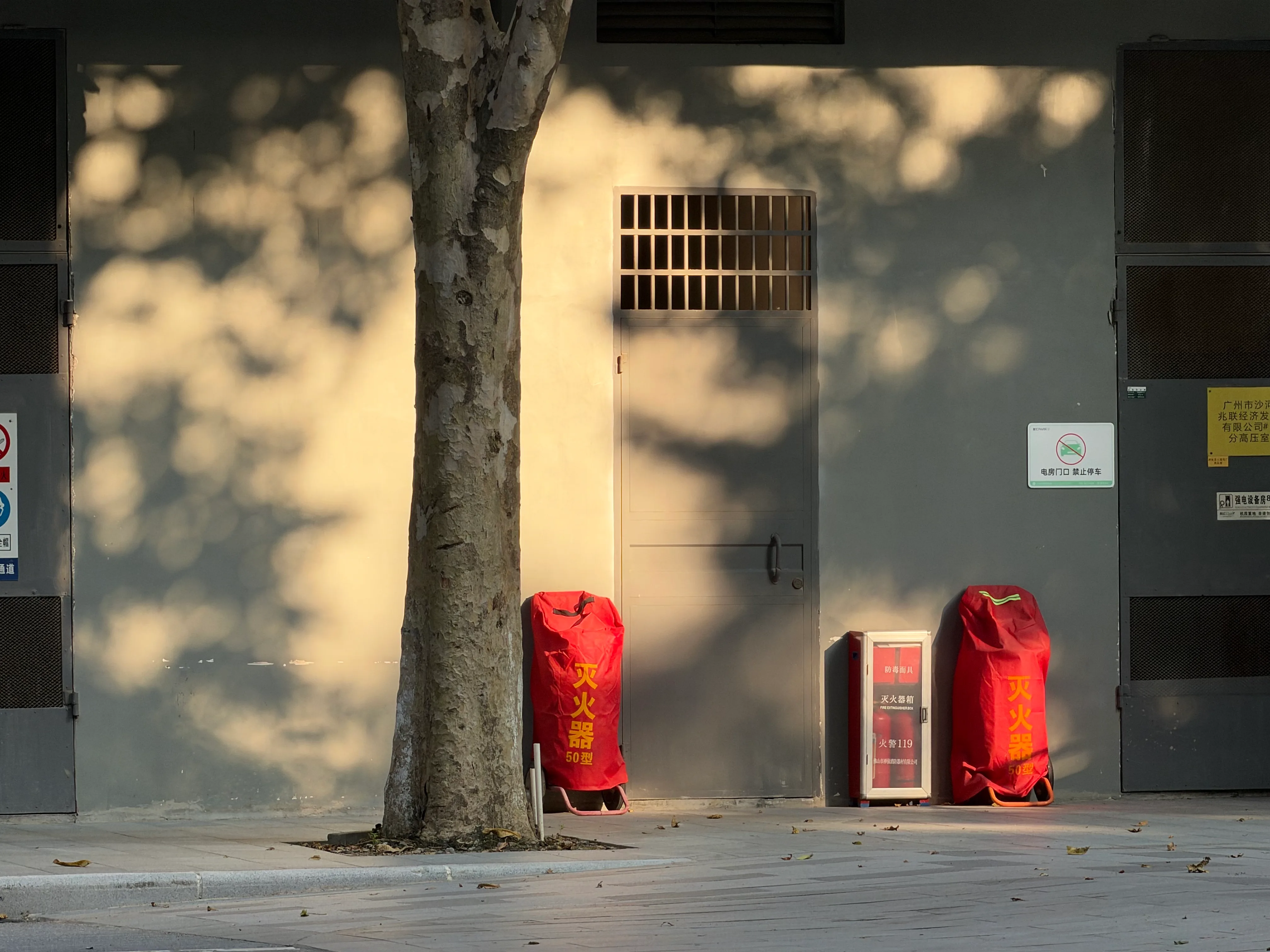
(Image source: Photographed by Leikeji)
Although Xiaolei cannot directly conclude that the problem definitely stems from the variable aperture itself, after all, glare and ghosting are also related to the lens structure, coating, angle of incidence, and the specific aperture setting used at the time. However, what is certain is that the performance of the iPhone 18 Pro Max in strong backlighting scenarios indeed falls short of Xiaolei's expectations.
Of course, since only one afternoon of shooting was done this time, Xiaolei cannot draw too absolute conclusions about the entire imaging system. But at least from the current perspective, the rating for the imaging system of the iPhone 18 Pro Max is not very high: the variable aperture does bring some new ways to play, but there are obviously still some areas that need further refinement.
At least in terms of backlighting, it did not deliver a satisfactory performance this time, and it is even somewhat disappointing.
As for regular upgrades like performance and battery life, Xiaolei will not spend too much time discussing them this year. The iPhone 18 Pro Max is equipped with the new A20 Pro chip, while continuing to strengthen the heat dissipation system. Considering that the performance of the previous generation A19 Pro is still fully adequate today, there is naturally no issue of "adequacy" for the A20 Pro for the vast majority of users. Unfortunately, the time spent with the phone was too short this time to actually test its performance in heavy-load scenarios. Leikeji will also produce relevant reviews in the future.
In terms of battery life, the battery capacity of the iPhone 18 Pro Max has been increased again this year, coupled with the A20 Pro chip, which has decent energy efficiency, the battery life is estimated to be longer. Additionally, there are also varying degrees of upgrades in charging, screen, and wireless connectivity, but the overall improvements are not significant, and they are not even as noticeable as the 249g weight of the device.
Summary: This time, the Pro is finally more than just a name.
Finally, following Leikeji's review tradition, here is a brief summary of the iPhone 18 Pro Max:
Advantages:
1. The texture is in place, and the iPhone still has a sense of refinement;
2. The native camera interface has opened up many functions, enhancing playability;
3. The variable aperture adds some new ways to play;
4. The image quality of the telephoto lens is still adequate after cropping, and the color representation is stable;
Disadvantages:
1. The naked weight of 249g makes it a true half-pound machine;
2. The heat generation is somewhat severe;
3. The performance of the variable aperture is not satisfactory.
After briefly experiencing the iPhone 18 Pro Max, Xiaolei must admit that the surprises brought by this phone are far less than those of the iPhone 17 series. Of course, this does not mean that it is a poor phone. Naturally, the iPhone 18 Pro Max itself is still a sufficiently mature flagship, but compared to last year's 17 Pro Max, there are indeed fewer noticeable changes this time.
If you are currently using an iPhone 17 Pro Max, Xiaolei does not recommend upgrading immediately for the A20 Pro or variable aperture. The performance, battery life, and imaging capabilities of the 17 Pro Max are still at a flagship level today. These upgrades this year are more like icing on the cake, and there is no particularly significant difference.
(Image source: Photographed by Leikeji)
However, if you are still using an iPhone 15 Pro Max or even an older model, it might be worth considering. After all, after skipping three generations, the accumulated changes in performance, battery life, imaging, and device design are sufficient to justify an upgrade.
However, the price of the iPhone 18 Pro series has also reached a new height.
The starting price of the iPhone 18 Pro Max (256GB) for the Chinese market has reached 10,999 yuan, and the 1TB version is sold for 16,499 yuan. When Leikeji visited the Apple Store in Tianhuan, Guangzhou today, it was also found that the 1TB version, which was the most popular among scalpers in previous years, has cooled down this year. The most sought-after version is actually the 512GB version, which is relatively more affordable.
After all, no product can be discussed without considering its price. The starting price of 10,999 yuan determines that it is still a flagship phone targeted at a minority of users. Xiaolei also suggests considering what you actually need before deciding whether it is necessary to spend over ten thousand yuan on a new phone.
The iPhone 18 Pro Max is still an excellent iPhone, but today, "being the latest" is increasingly becoming less of a compelling reason to buy it.
Source: Leikeji
The images in this article are from the 123RF royalty-free image library. Source: Leikeji
-
![]()
Silicon Valley Sparks the AI Office War
-
![]()
Weekly Stock Review | Trump’s Concern Over AI Rivalry: The Auto Industry’s ‘Biggest Competitor’
-
![]()
FAW and GAC's Strategic Move: More Than Corporate Collaboration, a Pioneering Case of National Industrial Anti-Involution
-
![]()
Can the Long-Wheelbase Mercedes-Benz GLE SUV Tread in the Footsteps of the BMW X5?
-
![]()
From Netizens' Perspective, the XPENG G9L Still Seems Pricey
-
![]()
10 Questions I Care Most About Regarding Doubao Mobile Phone II
-
![]()
Quality Performance of China’s New Energy Vehicle Tri-Electric Systems in 2026: Experience-Centric Issues Take Center Stage, Range Remains Top Challenge
-
![]()
AIDrive’s Cooperation Model Undergoes Change: Is Xiaomi Pengcheng the Unexpected Winner?