Find X10 Series: OPPO's Dilemma Between Affordability and Innovation Amidst Memory Price Hike and AI Competition
 09/27 2026
 479
479
On September 22, 2026, OPPO hosted a product launch event, unveiling its latest Find X10 series of smartphones. In contrast to the previous year's release, which featured only the standard and Pro versions, the X10 series introduces the X10 E model, expanding the lineup to three distinct tiers: Find X10 E, Find X10, and Find X10 Pro Max, with starting prices set at 4,999 yuan, 5,499 yuan, and 6,799 yuan, respectively.
While the OPPO Find X10 series offers a broader range of models, consumers seeking configuration upgrades actually find themselves with fewer choices.

To maintain an accessible entry price, the Find X10 E and Find X10 make compromises in core platforms and some configurations. Only the higher-priced Find X10 Pro Max achieves a comprehensive upgrade in chip performance, photography, and video capabilities.
As a leading Chinese smartphone manufacturer, OPPO's Find X10 series epitomizes the dilemma faced by brands amidst soaring memory prices.
Faced with the escalating memory price crisis, OPPO must strike a delicate balance between meeting market expectations for improved product configurations and maintaining price affordability to avoid significant hikes. The result is the Find X10 series, a lineup rife with compromises.
Although the OPPO Find X10 series manages to keep entry prices relatively low, its selling point as an "imaging flagship" is increasingly becoming outdated. With AI reshaping smartphone access points, interactions, and ecosystem value, OPPO urgently needs to find a growth strategy that transcends merely enhancing imaging capabilities.
OPPO's Mid-to-Low-End Market Struggles Amidst Memory Price Increases
For Chinese smartphone manufacturers like OPPO, the most significant challenge posed by rapidly rising memory prices is the increasing difficulty of sustaining mid-to-low-end products that drive massive sales volumes.
Data disclosed by RD Observation reveals that in 2025, OPPO smartphones priced between 0-2,000 yuan accounted for over 50% of sales, while those priced between 0-3,000 yuan represented a staggering 70.9% of the market.

Due to limited pricing power, the market space for mid-to-low-end products has been shrinking as memory prices climb. A research report by Omdia indicates that global smartphone shipments priced at $400 (approximately 2,687 yuan) or less are expected to decline by over 22% year-on-year in 2026.

Against this backdrop, OPPO, which heavily relies on mid-to-low-end products, has naturally been affected. Omdia's data shows that in the first and second quarters of 2026, OPPO's global smartphone shipments fell by 6% and 17% year-on-year, respectively, with the decline widening.
At the market level, unable to sustain a "machine sea tactic," OPPO integrated OnePlus and realme in the first half of 2026. Going forward, OnePlus will focus on the Chinese market with a performance-oriented strategy, while realme will pause new product launches in China to concentrate on overseas markets. Subsequently, all products under the OPPO, OnePlus, and realme brands will run on the ColorOS system.
While streamlining its three major brand portfolios and reducing entry-level product models may boost OPPO's operational efficiency in the short term, it is unlikely to unlock long-term growth potential.
With declining shipments of mid-to-low-end products, OnePlus focusing on performance, and realme shifting overseas, OPPO has no choice but to pursue a premium strategy.
Find X10 Series: OPPO's Strategic Compromise and Perseverance
In fact, as early as around 2020, with the disappearance of incremental dividends in the smartphone market, OPPO had already begun laying the groundwork for a premium strategy.

After years of development, OPPO's premium strategy has yielded significant results. Data from IDC shows that from 2022 to 2025, OPPO's market share in the global mid-to-high-end smartphone segment priced between $500-550 (approximately 3,357-3,693 yuan) rose from 9.6% to 15.9%.
The 2026 memory price surge provided OPPO with a window to adjust prices, but there is ultimately an upper limit to consumer acceptance of high-priced smartphones. Manufacturers can continue to raise prices, but persuading consumers to pay more will become increasingly difficult.
On one hand, OPPO needs to launch flagship smartphones with comprehensive configuration upgrades; on the other hand, it cannot ignore market acceptance. Caught between these two pressures, OPPO introduced the Find X10 series.
Overall, the three models in the OPPO Find X10 series serve different purposes. The Find X10 E maintains the price threshold, the Find X10 offers a standard flagship option, and the Find X10 Pro Max delivers generational upgrades.

The OPPO Find X10 E is powered by the Dimensity 9500s processor, equipped with a 7,025mAh battery, and features a triple rear camera setup with 50MP lenses. The 12GB+256GB version is priced at 4,999 yuan, with a national subsidy price of 4,499 yuan.
Although the Dimensity 9500s was released in January 2026, its process technology, architecture, and clock speed closely resemble those of the Dimensity 9400+ released a year earlier, making it significantly less powerful than this year's flagship processors.
Clearly, OPPO introduced the Find X10 E model primarily to reduce performance configuration costs, maintain a base price in the 4,000-yuan range, and attract more consumers.

Unlike the OPPO Find X9 and X9 Pro, which both featured the Dimensity 9500 flagship processor, the Find X10 standard model adopts the Dimensity 9600M processor, packs an 8,000mAh battery, and boasts a 200MP main camera, a 50MP ultra-wide lens, and a 200MP telephoto lens module. The 12GB+256GB version is priced at 5,499 yuan, a 1,100 yuan increase over the previous generation.
Although the Dimensity 9600M is MediaTek's latest processor, it still uses a 3nm process and shares the same architecture as the Dimensity 9500, making it not a top-tier flagship processor. The Find X10's performance remains stagnant, with upgrades focused on battery, imaging, and display configurations.
However, with the Find X10's price rising to 5,499 yuan, consumers will compare it not only to the X10 E but also to competing products from Huawei, Apple, vivo, and Xiaomi in the same price range, as well as discounted previous-generation flagships. Whether the peripheral configuration upgrades justify the 1,100 yuan price increase remains to be seen in the market.

Among the OPPO Find X10 series, the model that truly achieves generational upgrades is the Find X10 Pro Max. Powered by the 2nm Dimensity 9600 Pro processor, it features a triple 200MP camera setup, an 8,000mAh battery, a flagship display, and 80W wired and 50W wireless charging. The 12GB+256GB version is priced at 6,799 yuan, with the top-tier variant reaching a lofty 8,999 yuan.
While the OPPO Find X10 Pro Max boasts more powerful configurations, its high price tag suggests it serves more as a symbolic flagship for OPPO's premium lineup rather than a volume driver.
Overall, through precise configuration differentiation, OPPO has indeed created a clearly stratified product lineup, lowering the price barrier for consumers to purchase the Find X10 series. However, the lack of distinct generational upgrades in the core configurations of entry-level products may leave consumers feeling shortchanged.
AI Technology Emerges, Yet OPPO Remains Tethered to "Old Era" Imaging Narratives
In recent years, to strengthen its premium brand image and improve pricing power, OPPO has been dedicated to enhancing the imaging capabilities of the Find X series, and the newly launched Find X10 series is no exception.
The problem is that as smartphone imaging capabilities reach a certain threshold, most users will not upgrade their devices solely for improved imaging performance.

According to a research report by iiMedia Research, among the primary reasons Chinese consumers upgrade their smartphones in 2026, lagging performance, insufficient storage, and battery degradation rank top, while "pursuing a better imaging experience" accounts for only 24.17%, ranking seventh.

At this stage, compared to the diminishing marginal returns of imaging upgrades, AI technology holds greater potential. Counterpoint Research notes in its report that as on-device Agent technology matures, the market influence of AI smartphones will gradually expand, with an estimated 45% global shipment share in 2026, rising to 52% in 2027.
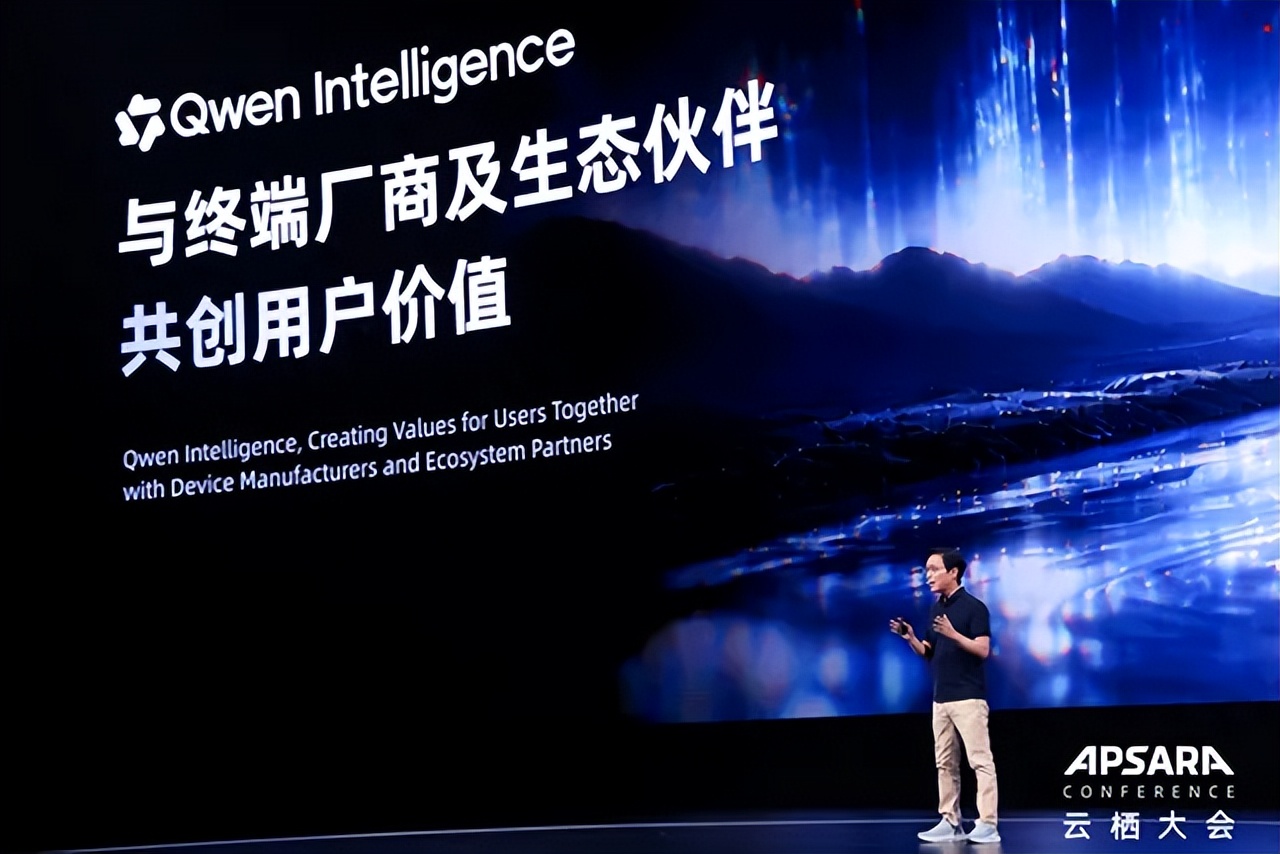
Against this backdrop, tech companies like Alibaba and ByteDance are actively developing AI smartphone-related products. For example, on September 22, Alibaba unveiled Qwen Intelligence, a full-stack AI smartphone solution, providing smartphone manufacturers with a model and Agent technology platform that supports capabilities such as task planning, cross-application execution, and imaging creation.
OPPO has not overlooked AI technology. It has proposed technical frameworks such as AIOS, PersonaX Memory Engine, and Agent Matrix, and incorporated features like proactive reminders, AI note-taking, recognition, and image editing into ColorOS 17.
However, based on the current demonstration of the Find X10, OPPO's AI capabilities remain focused on optimizing individual functions and have yet to fully prove their ability to reliably complete complex, cross-application, and long-chain Agent tasks.
Therefore, AI technology can currently only enhance certain aspects of the OPPO smartphone experience and is not yet a compelling reason for differentiation-driven upgrades.
For today's smartphone industry, it's not that imaging configurations are no longer important, but rather that the era of defining premium value solely through imaging is over.
OPPO excels at capturing better photos but has yet to clearly answer the more critical question in the AI era: What tasks can smartphones help users accomplish?
In essence, the Find X10 series represents not a confident upgrade but rather OPPO's struggle to survive between two eras. The old "machine sea tactic" is no longer sustainable, while the new AI-driven value proposition has yet to take shape. OPPO can only continue to allocate its most certain resources to the familiar areas of imaging and hardware.
-
![]()
Find X10 Series: OPPO's Dilemma Between Affordability and Innovation Amidst Memory Price Hike and AI Competition
-
Online Rumors Abound as Audi Refutes Claims of Disowning AUDI Amid Legal Action
-
Apple Finds Itself in a Tight Spot: Can't Sidestep Qualcomm's Reach, Even with Its Own Baseband Chips!
-
When Did Samsung Products Fade from Our Lives?
-
The Next Battle in AI Computing Power: The Rise of "Light"
-
![]()
Whose Golden Week Desperately Needs a Pair of AI Glasses?
-
Yunbao Intelligence Charges Towards IPO: Over 5,000-Fold Revenue Surge in 2.5 Years, Tencent Contributes Nearly 98% of Revenue
-
Field Test of Doubao at Work: Can a Company That Helps Users Kill Time Build a Product That Saves Them Time?", "Doubao, AI, Office Agent, User Growth, Commercialization