BlackBerry’s Keyboard Phone: Is It Making a Comeback? The Former $83 Billion Smartphone Giant Now Prospers by Selling Its System
 10/08 2026
 555
555
A Resurgence Through QNX After the Mobile Business Declined

Is BlackBerry Making a Comeback?
In 2026, keyboard phones are experiencing a revival. Shanghai-based Unihertz launched the Titan 2 Elite, an Android phone featuring a physical full keyboard. It raised over $4 million on the crowdfunding platform Kickstarter, breaking category records. Overseas, the device was in high demand and difficult to obtain.
On social media, people exclaimed: “Isn’t this just BlackBerry?”
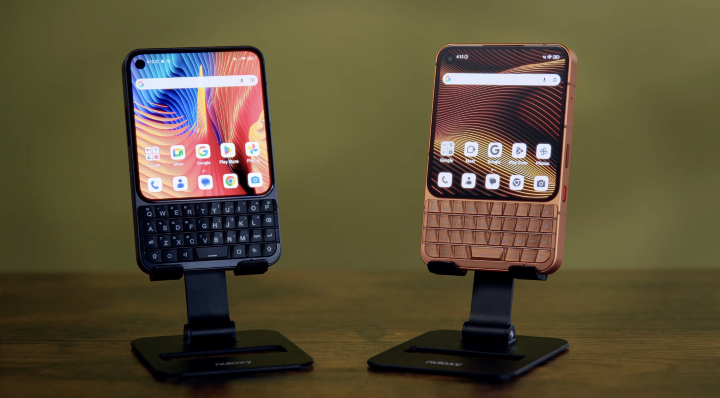
Image: Titan 2 Elite
As people reminisce about “BlackBerry phones,” the real BlackBerry company has shifted its strategy.
In fact, BlackBerry has not sold phones for many years. Instead, it has relied on an operating system to sustain itself, and with remarkable success.
In the first quarter of the 2027 fiscal year, BlackBerry’s parent company, RIM, reported revenue of $150 million, up 26% year-over-year, with net income of $8.5 million, soaring 347% year-over-year. It also achieved positive operating cash flow for the first time since 2017. Following the earnings report, the stock price surged 21% in a single day and doubled year-to-date, with the market cap returning to above $5 billion.
The once-beloved phone brand that captivated business professionals and celebrities has faded, yet the company’s financials are thriving. What lies behind this success, and what is the strategic layout of its parent company, RIM?

From the White House to Wall Street: A Massive Fanbase
For those born in the 2000s, “BlackBerry” might just be a retro “CCD alternative” or an “offline study tool” on social media. But in the early 2000s, it was the undeniable “first-generation luxury” in the smartphone world.
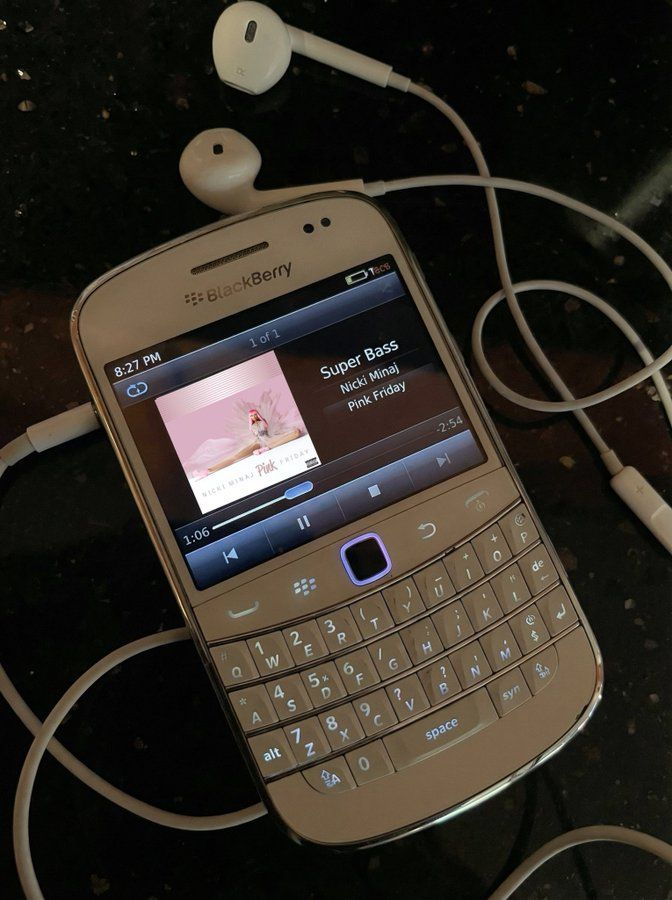
Back then, phones were primarily for calls, and email belonged to office computers. BlackBerry ingeniously combined the two.
In 1998, it launched the BlackBerry 950 pager with a full QWERTY keyboard. Named for its dense keys resembling berries, the “BlackBerry” allowed users to send and receive emails on the go, albeit with a monthly service fee.
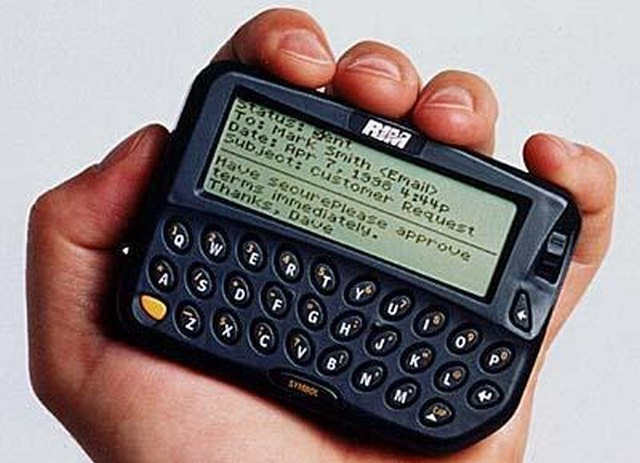
The physical full keyboard enabled rapid input, while Push Mail allowed instant email delivery. Combined with encrypted communication and its own network infrastructure, BlackBerry created an early “mobile office system,” attracting a large corporate user base.
The integration of hardware, network, software, and service fees was a groundbreaking design in the market, undoubtedly increasing B2B user loyalty.
In the following years, BlackBerry surged ahead, leveraging its strong enterprise-level B2B PMF (Product-Market Fit) to bypass corporate IT departments and secure purchases from CEOs, capturing a high-net-worth clientele. It went public on NASDAQ in 1999.
Beyond serving as a “mobile office system,” BlackBerry established its own server and data transmission infrastructure, giving it a significant advantage in the mobile internet environment of the time.
On September 11, when New York’s communication towers collapsed under massive traffic, all phones became useless—except BlackBerry, which relied on its unique dedicated channels to send and receive emails normally. Officials used it to issue directives, rescuers to share lists, and trapped individuals to message their families. During subsequent blackouts in North America and Hurricane Katrina, BlackBerry was again hailed as the “lifeline in disasters.”
Thus, a strong brand identity formed: BlackBerry = Business + Efficiency + Security + Reliability.
With these strengths, BlackBerry quickly won over the global elite. Wall Street traders, law firm partners, and others embraced it, making BlackBerry a symbol of business professionalism.
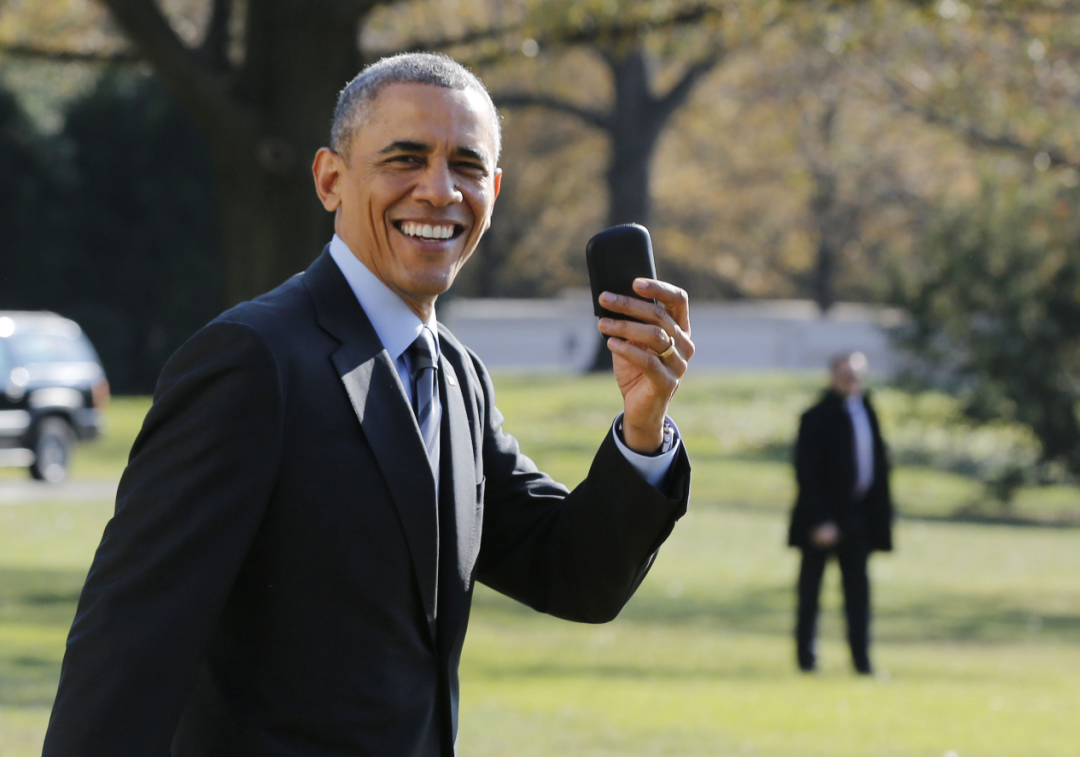
Its roster of celebrity endorsers was impressive. Kim Kardashian, Lady Gaga, Justin Bieber, Beyoncé, and others used BlackBerry. Barack Obama was such a fan that, after becoming president, he refused to part with his BlackBerry, prompting the Secret Service to develop a super-encrypted “presidential edition” for him.
With this precise positioning, BlackBerry dominated the B2B and premium markets. In 2004, its user base grew from 1 million to 2 million in just 9 months, then to 3 million in another 6 months. RIM was even named “Fortune’s Fastest-Growing Company of 2009.”
At its peak, BlackBerry held a 48% share of the U.S. smartphone market, meaning one in every two smartphones sold was a BlackBerry. Its market cap soared to $83 billion, with over 85 million users worldwide.
In 2010, as BlackBerry entered the Chinese market, RIM reported revenue of $19.9 billion, net income of $3.4 billion, and annual shipments of 52.3 million phones. So, what was the origin of BlackBerry, which dominated the mobile market?

The Collapse of the $83 Billion Empire
BlackBerry began as a small company in a Canadian garage. In 1984, Mike Lazaridis, passionate about quantum mechanics and electronics, co-founded Research In Motion (RIM) with a friend, initially surviving on small electronics contracts from General Motors.
The turning point came in 1992 when Jim Balsillie, skilled in business negotiations and “The Art of War,” joined RIM, forming a dual-CEO structure with the technically focused Mike.
BlackBerry’s consecutive product launches were hits. From the 1998 BlackBerry 950 pager to the 2002 BlackBerry 5810, it sparked a global business revolution. BlackBerry achieved high ARPU and profits, expanding its user base through carrier channels.
After succeeding in the B2B market, RIM targeted consumers, releasing the first color-screen model, the BlackBerry 7210, in 2003.
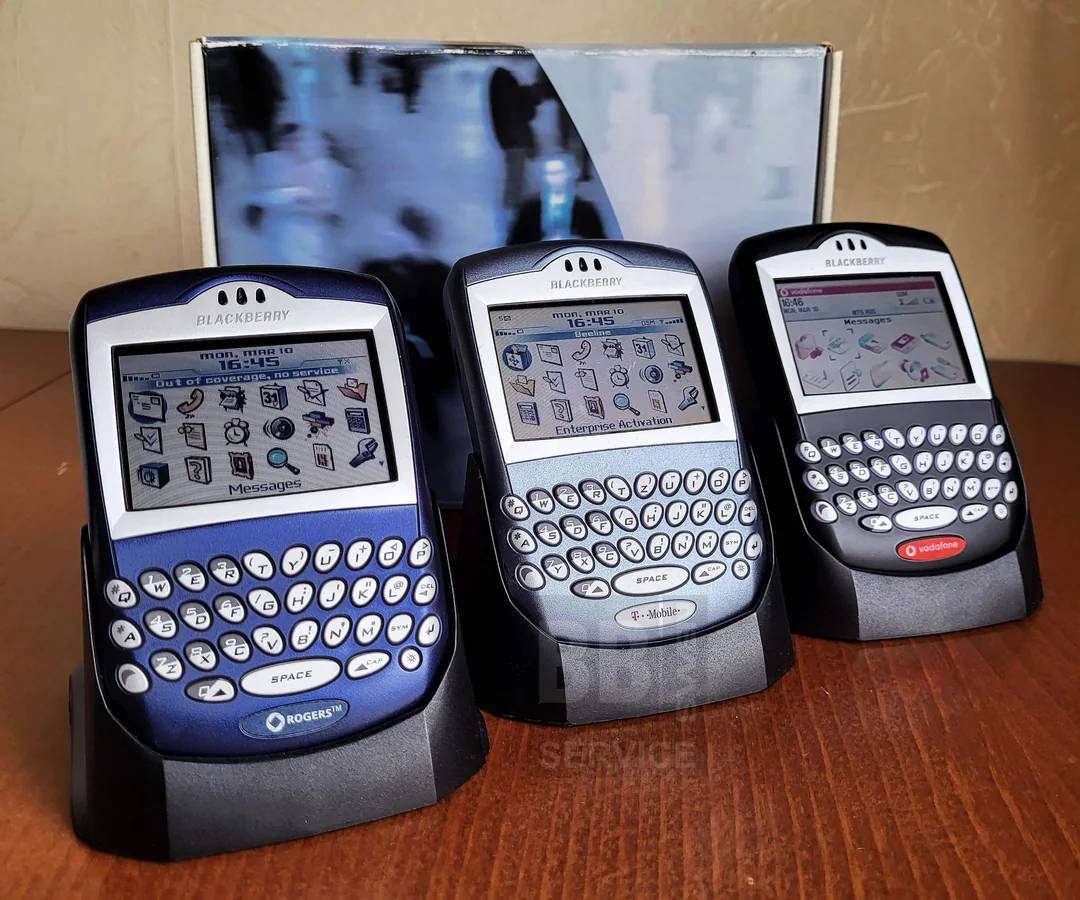
After reaching its peak as the “king of smartphones,” BlackBerry soon faced competition from the iPhone. However, the company underestimated this rival.
When the iPhone launched the touchscreen revolution in 2007, BlackBerry’s co-CEO Mike Lazaridis dismissed it, saying, “Remove the keyboard and replace it with glass? Will that work? Business users won’t like it.”
Mike believed the iPhone’s security, battery life, and keyboard input were inferior to BlackBerry’s, even fearing that the iPhone’s expanded internet capabilities would “crash” carrier networks.
Beyond product issues, RIM faced internal management turmoil. Mike insisted on focusing on phones and new systems, while co-founder Jim favored a shift to software and instant messaging. When decisions were needed, the leadership struggled to align.
Patent lawsuits and accounting scandals further weakened the company, followed by employee stock option accounting issues. As the global phone market transitioned from mobile office tools to personal digital entertainment centers, RIM’s internal chaos caused it to miss the best transformation window.
To recover, RIM hastily launched the poorly received Storm touchscreen phone and PlayBook tablet, both failing and eroding brand trust.
In 2010, RIM’s U.S. quarterly revenue still reached about $2 billion, but by the second quarter of 2011, it had dropped to $1.1 billion, with profits plummeting 26% and the stock price halving. BlackBerry’s U.S. market share fell to 7.3%, while Android reached 53.7% and Apple 35%.
In 2013, BlackBerry attempted to rejoin the smartphone wars with the new BlackBerry 10 OS and touchscreen models Z10 and Q10, even rebranding the company as “BlackBerry.” However, this failed to win over consumers, and both CEOs resigned.
Subsequently, BlackBerry began scaling back its phone business, outsourcing design, manufacturing, and distribution to third parties and licensing the brand to TCL and others, with little success.
With the phone market lost, the company seemed on the verge of collapse. But unexpectedly, a strategic move made by the founders years earlier saved the company.

BlackBerry’s Comeback via Operating System
In 2010, RIM acquired QNX, a software company, for about $200 million, intending to use QNX as the OS for next-gen BlackBerry phones and tablets.
While the phone OS couldn’t compete with iOS and Android, QNX’s foundational strengths allowed BlackBerry to capitalize on the smart car boom.
QNX is a microkernel real-time operating system with minimal core code and isolated modules, emphasizing stability, real-time response, and security. It was initially used in high-reliability fields like nuclear power, healthcare, and industrial control.
Even if an upper-layer application crashes, the entire OS remains functional. Simply put, if the infotainment screen freezes, it only affects music playback, but a crash in the dashboard, braking system, or autonomous driving software could be fatal.
Critically, QNX obtained the highest ASIL-D certification under global automotive functional safety standards, a threshold that monolithic systems like Linux and Android rarely meet.
After abandoning phone hardware in 2016, QNX returned to the automotive sector, where it truly belonged.
A decade later, the landscape had changed dramatically.
By 2025, BlackBerry announced that QNX was used in over 275 million on-road vehicles, with clients including BMW, Mercedes-Benz, Volkswagen, Toyota, Geely, and other automakers and suppliers. QNX dominated over 50% of the in-car real-time OS market and a staggering 90% of the vehicle control and autonomous driving OS sector.
In April 2026, BlackBerry announced a deep collaboration with NVIDIA, integrating the QNX OS into NVIDIA’s edge AI computing platform. Boston Dynamics’ humanoid robots, Agility Robotics’ Digit robots, Da Vinci surgical robots, and even industrial automation equipment and naval submarines all run on QNX.
Beyond QNX, BlackBerry acquired Secusmart, a German encryption software company specializing in secure communications, now used by over 20 governments and banks.
How lucrative is “selling systems”? Software business gross margins reach 83%, far exceeding the 40% from phone sales, and once clients adopt it, loyalty is extremely high, lasting decades.
The financials are impressive too. In the 2026 fiscal year, BlackBerry reported net income of $53.2 million, turning a profit. In the first quarter of the 2027 fiscal year, revenue surged to $150 million, up 26% year-over-year, with net income of $8.5 million, soaring 347% year-over-year. It also achieved positive operating cash flow for the first time since 2017.
Current CEO John Giamatteo proudly announced to the public, “The company has completed its transformation and is officially moving from a recovery phase into a growth phase.” The senior management has also raised BlackBerry’s full-year revenue guidance to between USD 594 million and USD 621 million.
BlackBerry has shifted three things it has accumulated over decades: security, real-time capability, and reliability, from consumer devices to the underlying layers of automobiles and smart devices.
This also highlights a thought-provoking business principle: the real barrier is sometimes not what you sell, but what problems you are best at solving.
Reference Articles:
“BlackBerry Becomes More Profitable After Stopping Selling Phones,” Kejihu (TechFox);
“Why Did BlackBerry, Once a Leader, Fall?”, China Entrepreneur Magazine;
“This Once-Popular Phone is Officially Discontinued!”, China Economic Net;
“A Former BlackBerry Executive Believes the iPhone Led to BlackBerry’s Decline,” Tencent Digital.
THE END
Special Statement: This article is for reference only and does not constitute any investment advice. It may not be reproduced without permission.
-
![]()
After a model evaluation, I began to re-understand WorkBuddy
-
[Shanhu Talks] The Diverse Lives Unfolding in the AI Era: A Ten-Month Journey
-
【Tibetan Fox Talks】These Ten Months in 2026: People and Me Amidst AI Anxiety
-
Second-Gen Doubao Phone Falls Short in Resolving Previous Flaws
-
Second-Generation Doubao Phone Falls Short in Resolving Previous Limitations
-
![]()
"Dark Side of the Moon" Completes Final Pre-IPO Funding Round with Valuation of Approximately $50 Billion, Kimi Set to List in Hong Kong!
-
![]()
Apple Imposes Mandatory Adaptation Directive for iPhone Duo, Marking Unprecedented Assertiveness
-
![]()
Huawei's Xu Zhijun: The Real Challenge of Super Nodes Transcends Technology