ZTE's bond issuance to "supplement working capital" behind the scenes: total liabilities hit a record high of 168.5 billion yuan
 11/19 2026
 475
Recently, ZTE (000063.SZ) announced that the company had completed the issuance of renewable corporate bonds with a scale of 1 billion yuan. The net proceeds from this bond issue will all be used to "supplement working capital." On paper, the company does not lack money. But another set of data reveals another picture: in the first three quarters of this year, the company's net operating cash flow plunged nearly 60% year-on-year, at a low level for the same period in nearly eight years; the company's total liabilities climbed to 168.5 billion yuan, a record high.
Securities Star noted that in recent years, ZTE's revenue growth has slowed markedly. Affected by changes in the company's business structure, the company's gross margin has continued to decline, and its profitability has also come under sustained pressure. In the first three quarters of this year, although the company's revenue increased year-on-year, dragged down by the decline in gross margin, the company's profit fell more than 23% year-on-year. Regarding the operating dilemma of continued pressure on gross margin, ZTE recently said that this was mainly affected by the rapid growth in revenue from computing power products with relatively low gross margins, and that the company will in the future improve the profitability of computing power products through measures such as strengthening key technology layout and continuously increasing R&D investment in computing power products and solutions.
01. Behind the bond issuance: cash flow continues to contract, debt scale hits a record high
Recently, ZTE announced that the company's public issuance of technology innovation renewable corporate bonds (first tranche) to professional investors had completed issuance. The issuance scale of this tranche of bonds was 1 billion yuan, with a coupon rate of 1.7%.
According to the company's previous announcement, the company's public issuance of no more than 8 billion yuan in corporate bonds to professional institutional investors obtained registration approval from the CSRC in September this year, with the approval valid for 24 months. The bonds issued this time are the first tranche under the registration document. The base term of this tranche of bonds is 3 years, and at the end of the agreed base term and the end of each renewal cycle, the company has the right to exercise the renewal option. After deducting issuance expenses, the proceeds from this tranche of bonds will all be used to supplement working capital.
Financial reports show that as of the end of the third quarter of this year, ZTE's short-term borrowings were 4.596 billion yuan, non-current liabilities due within one year were 12.38 billion yuan, and the company's cash and cash equivalents balance was 14.92 billion yuan. The sum of the former two has exceeded the cash and cash equivalents balance. However, the company held 29.69 billion yuan in trading financial assets. On paper, the company does not have obvious liquidity pressure. But if combined with the company's cash generation capacity and debt repayment indicators in recent years, the motivation for ZTE's bond issuance is not difficult to understand.
As of the end of the third quarter of this year, ZTE's inventory reached 73.63 billion yuan, a sharp increase of 56.61% from the beginning of the year. At the same time, the company's accounts receivable reached 24.177 billion yuan, an increase of 11.57% from the beginning of the year. The combined scale of these two indicators reached 97.8 billion yuan, accounting for more than half of the company's current assets.
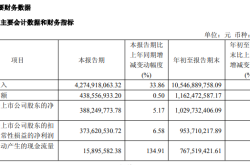
In the first three quarters of this year, due to a sharp increase in cash paid for goods purchased and services received, ZTE's net operating cash flow plunged nearly 60% year-on-year to 715 million yuan, at a low level for the same period in nearly eight years. At the same time, due to an increase in net investment in purchasing yield-generating products, the company's net cash flow from investing activities fell from -4.54 billion yuan in the same period last year to -13.7 billion yuan. The company's net decrease in cash and cash equivalents reached 10.57 billion yuan, significantly higher than 1.225 billion yuan in the same period last year.
Taking a longer view, from 2023 to 2025, ZTE's net operating cash flow was 17.41 billion yuan, 11.48 billion yuan, and 3.919 billion yuan, respectively, continuing to shrink sharply. Over the same period, the company's cash and cash equivalents cumulatively decreased by about 21.6 billion yuan.
ZTE's debt scale has also continued to rise in recent years. As of the end of the third quarter, the company's total liabilities were 168.5 billion yuan, an increase of 18.6% from the beginning of the year, setting a record high. The company's asset-liability ratio was 68.32%, up about 3 percentage points from the beginning of the year. Over the same period, peers FiberHome and Accelink Technologies had debt ratios of 63.45% and 41.84%, respectively.
Against the backdrop of continued contraction in operating cash flow and high inventory and accounts receivable, if ZTE continues to rely on debt financing recorded as liabilities to maintain daily operations, it may face multiple pressures such as rising debt ratios and increased financial burdens. However, this tranche of bonds is classified as an equity instrument upon initial accounting recognition, which, while supplementing working capital for the company, can effectively reduce the asset-liability ratio and help the company optimize its debt structure, smooth cash flow fluctuations, and lock in medium- and long-term funding costs.
02. Performance remains under pressure, continuous decline in gross margin erodes profit
Behind ZTE's bond issuance to "supplement working capital," the company's performance has come under sustained pressure in recent years.
ZTE was listed on the Shenzhen Stock Exchange in 1997 and is a leading global provider of integrated information and communications technology solutions. The company's main business focuses on three major segments: carrier networks, government and enterprise business, and consumer business.
Financial reports show that ZTE's profit reached a peak in 2023, but has continued to decline year-on-year since then. Last year, the company's profit fell by more than 30% year-on-year. On the revenue side, the company's revenue last year hit a record high, but the company's revenue growth has slowed markedly in recent years and has shown a fluctuating trend.
Behind this, ZTE's revenue was once highly dependent on the carrier network business, which accounted for more than 66% of revenue in 2023. But in recent years, affected by the overall decline in carrier investment and structural changes, revenue from this business has come under continued pressure. In the face of changes in the market environment, ZTE has actively expanded its government and enterprise business and consumer business, trying to make the former a new core growth engine.
Securities Star noted that in recent years, the revenue share of ZTE's government and enterprise business has continued to increase, but the gross margin of this business is far lower than that of the carrier network business and is trending downward. With changes in the revenue structure, the company's gross margin has declined year by year, from 41.5% in 2023 to 30.3% last year, greatly narrowing the company's profit space.
In the first three quarters of this year, ZTE's performance came under pressure again. The company achieved revenue of 116.8 billion yuan, up 16.23% year-on-year; achieved net profit attributable to shareholders of 4.06 billion yuan, down 23.71% year-on-year; and achieved net profit after deducting non-recurring gains and losses of 2.814 billion yuan, down 27.46% year-on-year.
During the reporting period, ZTE's revenue growth rate expanded year-on-year, while the company's net profit attributable to shareholders and net profit after deducting non-recurring gains and losses continued the downward trend of the same period last year.
It is worth noting that in the first three quarters of this year, ZTE's non-recurring gains and losses reached 715 million yuan, of which gains and losses from changes in fair value and disposal of financial assets and financial liabilities reached 691 million yuan, becoming an important support for the company's profit this period.
In the first three quarters of this year, ZTE still faced relatively large cost pressure. During the reporting period, the company's operating costs increased 25.22% year-on-year, which led to a sharp decline in the company's gross profit year-on-year, and the company's gross margin fell from 30.55% in the same period last year to 25.18%. This was already the third consecutive third-quarter report in which its gross margin declined year-on-year.
In addition, during the reporting period, ZTE's other income fell 30% year-on-year, further dragging down profit performance. At the same time, the company's credit impairment losses reached 257 million yuan, turning from positive to negative year-on-year. Although the company's expenses fell year-on-year during the reporting period, it was still difficult to reverse the overall decline in the company's profitability.
Securities Star noted that regarding the decline in the company's gross margin in the first three quarters of this year, ZTE recently said in communication with investors that this was mainly affected by the rapid growth in revenue from the company's computing power products. In the first three quarters of this year, the revenue share of the company's computing power products had increased to 38%, and their gross margin improved year-on-year but remained lower than the gross margin of network products, which led to a year-on-year decline in the company's gross margin. In the future, the company will continue to layout key future technology directions such as 6G and is confident in maintaining a leading advantage in the next-generation network; at the same time, the company will continue to increase R&D investment in computing power products and solutions, and improve the profitability of computing power products through collaborative innovation in chips, algorithms, and architecture. (This article was first published by Securities Star, author | Liu Haohao)
- End -
-
NetEase Q3 Revenue Hits 27.9 Billion Yuan: Evergreen IPs Anchor Growth as Diverse New Titles Build Momentum
-
US Launches Surprise Investigation into Mercedes-Benz—Is the Real Issue Its Two Chinese Shareholders?
-
![]()
Chinese Home Appliances: A Bold Push Overseas
-
![]()
AI Needs a "Call Button"
-
![]()
Consumers Have Fallen Out of Love with Tesla—So Why Are Automakers Still Copying Its Homework?
-
![]()
Auto Braking Leader's Performance Keeps Rising, Spends Over 1.1 Billion Yuan on M&A
-
Two-Wheel Drive Plus LiDAR: GAC Trumpchi Yue 7 Smart Driving Edition Lowers the Bar Again—How Many Extra Sales Can It Deliver?
-
Li Yanhong and Baidu May Finally Be About to Catch the "Last Train" of AI