"Living Room on Wheels": Pie or Trap?
 09/15 2026
 336
336
Layout | Xiaoxi
What exactly is a car? A decade ago, there was little disagreement in the industry: it is essentially a means of transportation, with its core value being to safely and efficiently transport people from point A to point B. Smooth power delivery, energy efficiency, chassis stability, and long-distance reliability are the fundamental metrics for evaluating a vehicle's quality. Aspects like interior luxury, fancy seat functions, or the experience of transforming the cabin into a living room are more like icing on the cake and should not be the core marketing focus of a product.
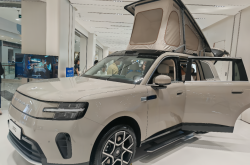
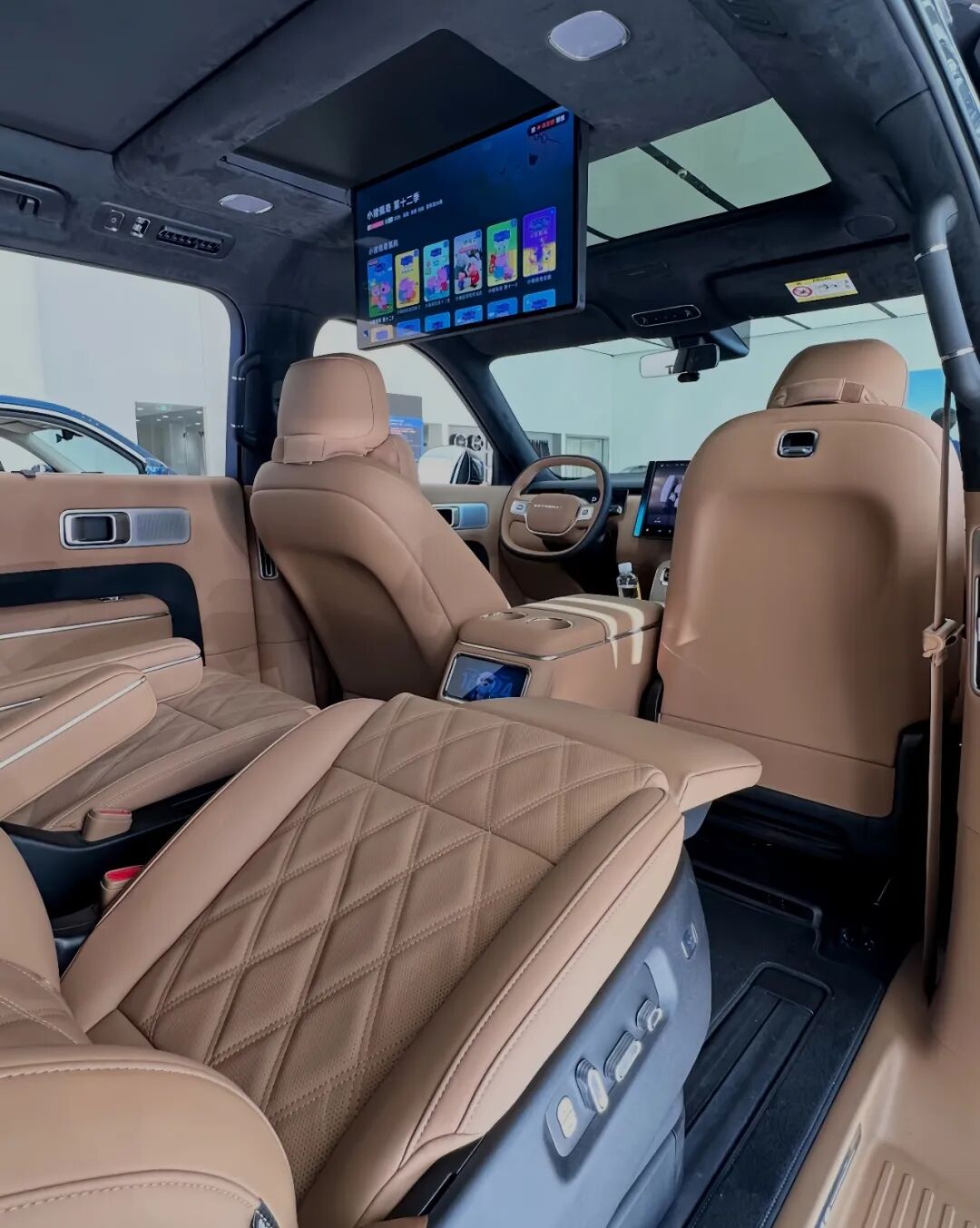
However, in recent years, the domestic new energy vehicle sector has undergone concerning changes. Many automakers no longer prioritize refining the fundamental mechanical qualities of their vehicles but instead engage in fierce competition over interior cabins and entertainment features. Refrigerators, TVs, and plush sofas have become industry standards. The newly launched Xiaomi Pengcheng N90 takes this product logic to new heights with its "living room on wheels" concept. Leveraging rotating seats, ultra-long sliding rails, and a flat floor, the vehicle allows seats to be arranged facing each other when parked, transforming the cabin into a space for socializing, relaxation, or even temporary rest. Camping and family gatherings can all be accommodated inside the vehicle. This imaginative cabin solution quickly sparked public interest upon release, leading to a surge in initial orders.
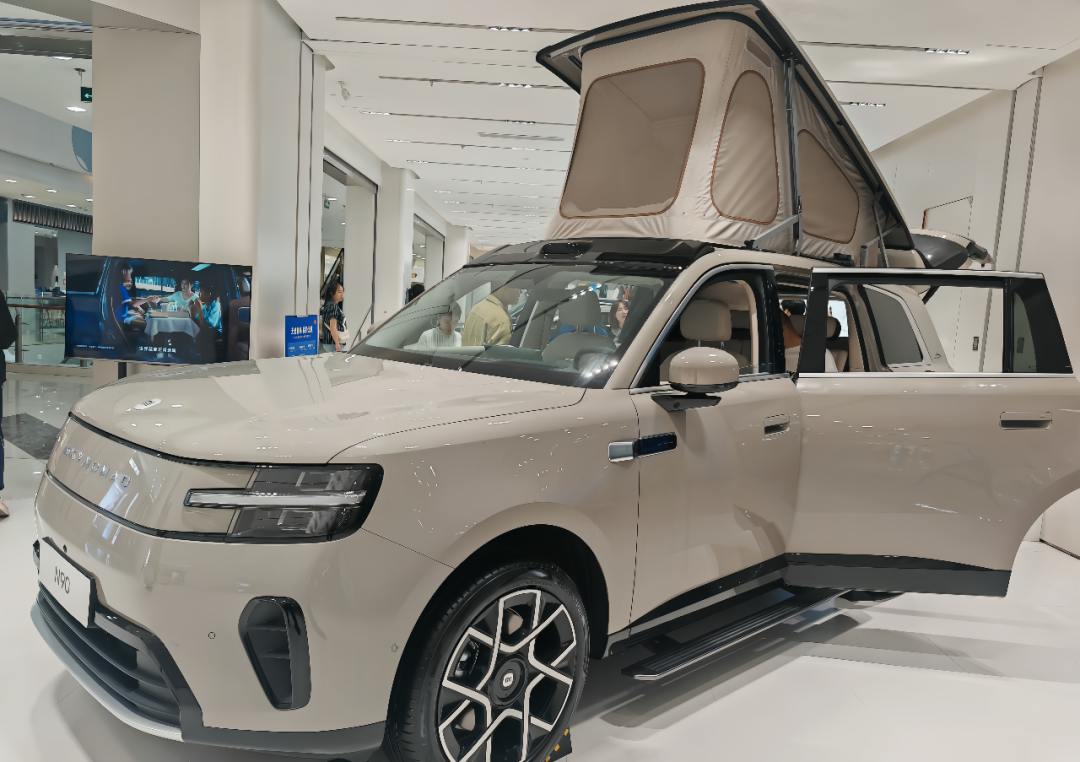
Amid the hype, a return to rational thinking is essential: when a vehicle's greatest selling point is transforming the cabin into a living room, does this truly meet user needs, or is it a pseudo-need deliberately created by automakers? Stripping away the marketing hype and examining the Xiaomi Pengcheng N90 from four dimensions—cost of ownership, repair risks, long-term reliability, and real-world usage scenarios—reveals both opportunities and concerns.
| The Hidden Costs Behind the Hype: Complex Cabins Raise Ownership and Repair Thresholds |
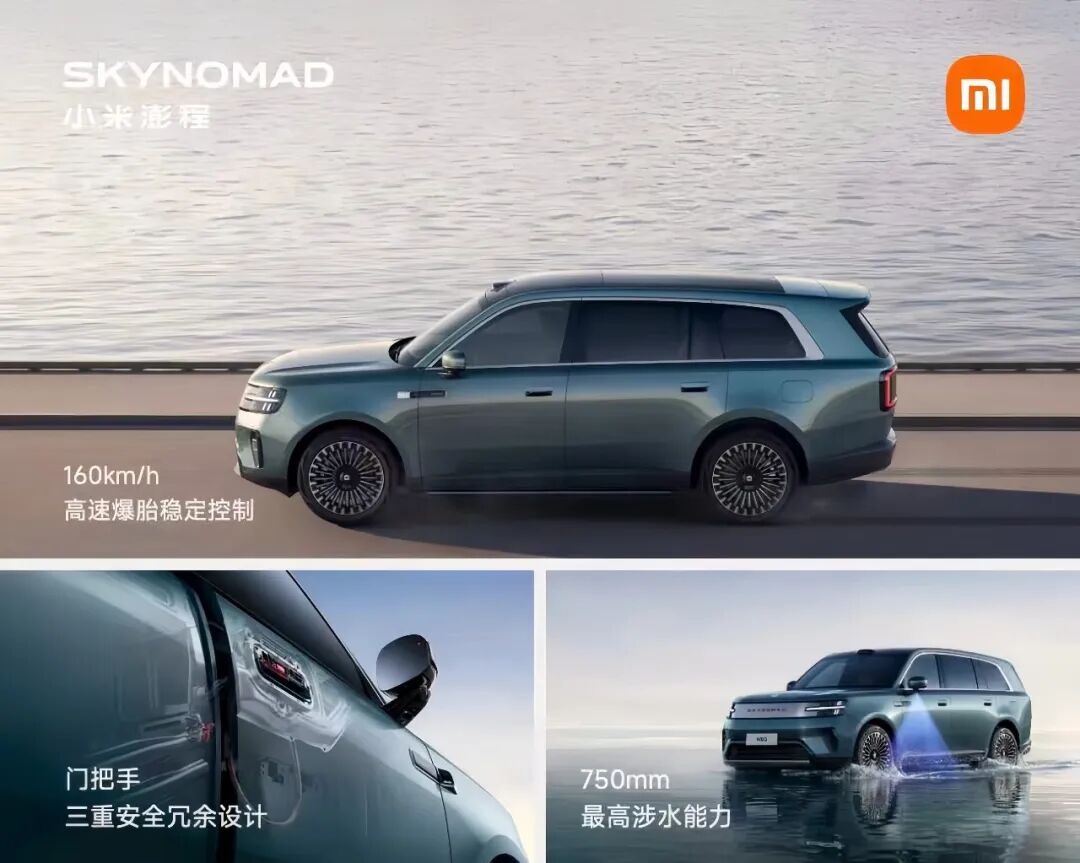
Let's first examine the product's basic positioning. The Xiaomi Pengcheng N90 is a full-size extended-range SUV, measuring 5,285 mm in length, with a curb weight of nearly 2.8 tons and a price range of RMB 269,900–299,900. It targets multi-child families and long-distance travelers within the RMB 300,000 price range. Comparing it to the Tesla Model Y at the same price point is insightful. The latter, a mid-size all-electric SUV, lacks flashy cabin features and has an extremely minimalist interior, yet it consistently tops sales charts in its class. The two represent vastly different product strategies: Tesla allocates significant R&D resources to vehicle integration, lightweighting, powertrain calibration, and energy efficiency control, while minimizing configurations that do not directly enhance the driving experience. In contrast, the Pengcheng N90 invests heavily in implementing a complex mechanical structure for its variable cabin to deliver a mobile living room experience. Neither approach is inherently right or wrong, but each choice comes with its own costs.
Most consumers focus on the upfront purchase price when selecting a vehicle but often overlook the long-term ownership costs over a 5–10-year period. Maintenance and accident repairs are the true determinants of a vehicle's cost of use. These can be broken down into routine maintenance and accident repairs.
In terms of maintenance, the Pengcheng N90, as an extended-range vehicle, consists of two systems: a battery-electric drivetrain and a 1.5T range extender. Its official maintenance policy is relatively friendly, with the range extender's maintenance interval extended to 30,000 km and the first service free. If daily commuting is primarily in electric mode and annual mileage is low, routine maintenance costs for the first three years will not be significantly higher than those of comparable new energy vehicles. This reflects optimizations made for the home market. However, the real cost differences arise not from routine maintenance but from repair expenses after collisions.
The Pengcheng N90's greatest vulnerability lies in the complex mechanisms supporting its "mobile living room." To enable seat rotation and long-distance sliding, each seat is equipped with heavy-duty sliding rails, rotating bases, locking components, and numerous motors and sensors. In ordinary SUVs, seat bases are fixed and structurally simple, making post-collision repair and replacement costs manageable. In contrast, the Pengcheng N90's rotating and sliding seats are highly integrated precision assemblies. Even minor collisions, such as rear-end or side impacts, can cause rail deformation, motor seizures, or sensor failures. In many cases, localized repairs are impossible, necessitating full assembly replacements and significantly driving up repair costs.
The vehicle's nearly 2.8-ton curb weight further amplifies accident costs. Heavier vehicles generate stronger impact forces in collisions, increasing the likelihood of damage to body panels and chassis components. Although the Pengcheng N90's cage-style body uses over 90% high-strength steel, offering decent passive safety, the cascading effects of its weight are unavoidable. A heavier body accelerates brake pad and tire wear, leading to additional long-term expenses for replacement parts. While air suspension provides a comfortable ride, air springs are wear items, and replacing an entire set after damage is costly. These hidden costs are easily overlooked by families during the purchase process and only become apparent after an insurance claim.
Repair complexity ultimately affects Second hand car resale value (second-hand resale value). When evaluating trade-in prices, dealers consider post-accident repair costs. Vehicles with more complex mechanical structures, proprietary parts, or limited third-party repair options experience sharper depreciation. The Tesla Model Y, with its simple interior structure and highly standardized parts, maintains strong resale value despite debates over its integrated casting repairability. Its straightforward mechanical design, large market presence, and mature parts supply chain keep its three-year resale value among the highest for electric vehicles. In contrast, domestically produced models emphasizing complex cabin structures generally see weaker residual values after three years compared to simpler designs—a challenge the Pengcheng N90 cannot avoid.
| Pseudo-Needs vs. Genuine Pain Points: The Mobile Living Room Struggles to Fit Mainstream Home Use |
After discussing ownership costs, the core question remains: how often is the "living room on wheels" truly used?
For the vast majority of ordinary vehicle owners, over 95% of usage involves commuting, child transportation, and daily errands. While driving, seat rotation functions are fully locked for safety, rendering the living room concept unusable. Its full value only emerges when the vehicle is stationary. For most families, the number of scenarios requiring in-car camping or socializing in a year may be negligible. Are consumers willing to accept higher vehicle weight, increased energy consumption, and potential repair risks for an experience used only a few times annually?
Of course, the design is not without merit. For avid travelers and frequent family outing users, transforming the cabin into a recreational space after parking holds strong appeal—this is the core reason the Pengcheng N90 secures orders, precisely targeting a niche demographic. However, whether a product becomes a market hit depends on whether it serves the mainstream or a small enthusiast group.
Energy efficiency is another unavoidable issue. The vehicle's nearly 2.8-ton curb weight directly increases energy consumption. With the same powertrain, a heavier body requires more energy to overcome resistance. While the 76 kWh battery enables over 500 km of electric range, highway driving will inevitably consume more power than lighter vehicles. On long highway trips, the extra weight translates into higher electricity or fuel costs. The Tesla Model Y's excellent highway range efficiency owes much to its lightweight design—an advantage built through long-term systems engineering, not merely by adding battery capacity. Objectively, domestic automakers still have room to catch up in fundamental engineering capabilities like lightweighting and system integration. Acknowledging this gap is not denial; avoiding it hinders progress.
| Industry Reflection: Cabin Competition Should Not Mask Fundamental Technological Shortcomings |
Despite its risks, the Pengcheng N90 also presents opportunities. It does not merely pile on cabin gimmicks but has a solid hardware foundation. It comes standard with air suspension and CDC variable damping, complete high-level autonomous driving hardware, and a large-battery extended-range architecture that eliminates range anxiety for both urban electric commuting and long-distance travel. Priced to bring full-size seven-seat extended-range SUVs below the RMB 270,000 mark, it offers significant advantages over competitors like Li Auto and Seres, coupled with Xiaomi's ecosystem for a strong user base.
The vehicle's market trajectory will likely diverge into two outcomes.
The first scenario: if buyers are camping enthusiasts or large multi-child families who fully accept the vehicle's higher weight and understand the maintenance risks associated with its complex mechanisms, the Pengcheng N90 has the potential to become a stable hit in its niche. It does not need to achieve Model Y-level mass adoption; by firmly serving its community and maintaining monthly sales above 10,000 units through word-of-mouth, it can succeed commercially.
The second risk arises if brand marketing overhypes the "mobile living room" concept, misleading ordinary consumers into viewing it as a perfect daily commuter vehicle. If many users impulsively purchase without anticipating hidden costs, they may discover after two or three years that the unique features are rarely used while facing high energy consumption and repair bills. This could rapidly erode the product's reputation and severely impact its long-term market performance.
From an industry perspective, the Xiaomi Pengcheng N90 serves as a mirror reflecting a current dilemma in China's new energy sector: where should R&D resources be directed?
We do not deny the value of comfort. A car is not merely a cold machine; the experience of family passengers matters greatly. However, comfort does not equate to indiscriminately adding complex and flashy mechanisms. True high-level driving comfort stems from chassis tuning, NVH control, and ergonomic seat design—hard skills at the driving level—rather than relying on numerous motors and rails to create a living room function usable only when parked.
The Tesla Model Y provides a straightforward reference for the industry: even with a minimalist interior, consumers are willing to pay a premium if a vehicle excels in fundamental performance. Sales and profitability are the market's most objective verdicts. Domestic automakers can certainly pursue differentiation, but it should not become an excuse to avoid addressing fundamental technological shortcomings.
Over the next three to five years, the new energy market will continue its shakeout. Brands that patiently refine vehicle integration, control energy consumption, and solidify mechanical fundamentals will establish themselves. Products relying solely on scenario concepts and cabin gimmicks to attract attention will gradually be eliminated by the market.
For ordinary consumers, before purchasing a vehicle like the Pengcheng N90, consider three questions: How often will you actually use the cabin as a living room in a year? Can you accept high repair bills after a minor rear-end collision? What is your core requirement when buying a car?
Ultimately, a car is first and foremost a machine for getting from one place to another. A living room belongs at home—not necessarily on wheels.
Image sourced from the internet. Rights reserved.
-
The 'Three-tier Deconstruction' of the Restructuring Intentions Between FAW and GAC
-
![]()
"Living Room on Wheels": Pie or Trap?
-
![]()
Zhipu Secures Nearly US$5 Billion in Funding
-
![]()
FAW and GAC Integration: Will China's North and South Toyota Further Merge, and Will Dongfeng Continue Its Consolidation Efforts? | MINGJINGpro
-
![]()
Goldman Sachs Sets Its Sights on a City: Ulanqab!
-
![]()
The City in Goldman Sachs’s Spotlight: Ulanqab!
-
How Should Gas Stations Adapt Amid Declining Fuel-Powered Vehicle Sales?
-
![]()
Should GAC Shareholders Be Concerned: FAW Opts Not to Invest Cash but Lightens Its Joint Venture Load to Become Second-Largest Shareholder!