Huawei Steps Back, Seres Faces the Music
 09/20 2026
 361
361
By Ke Jiyue
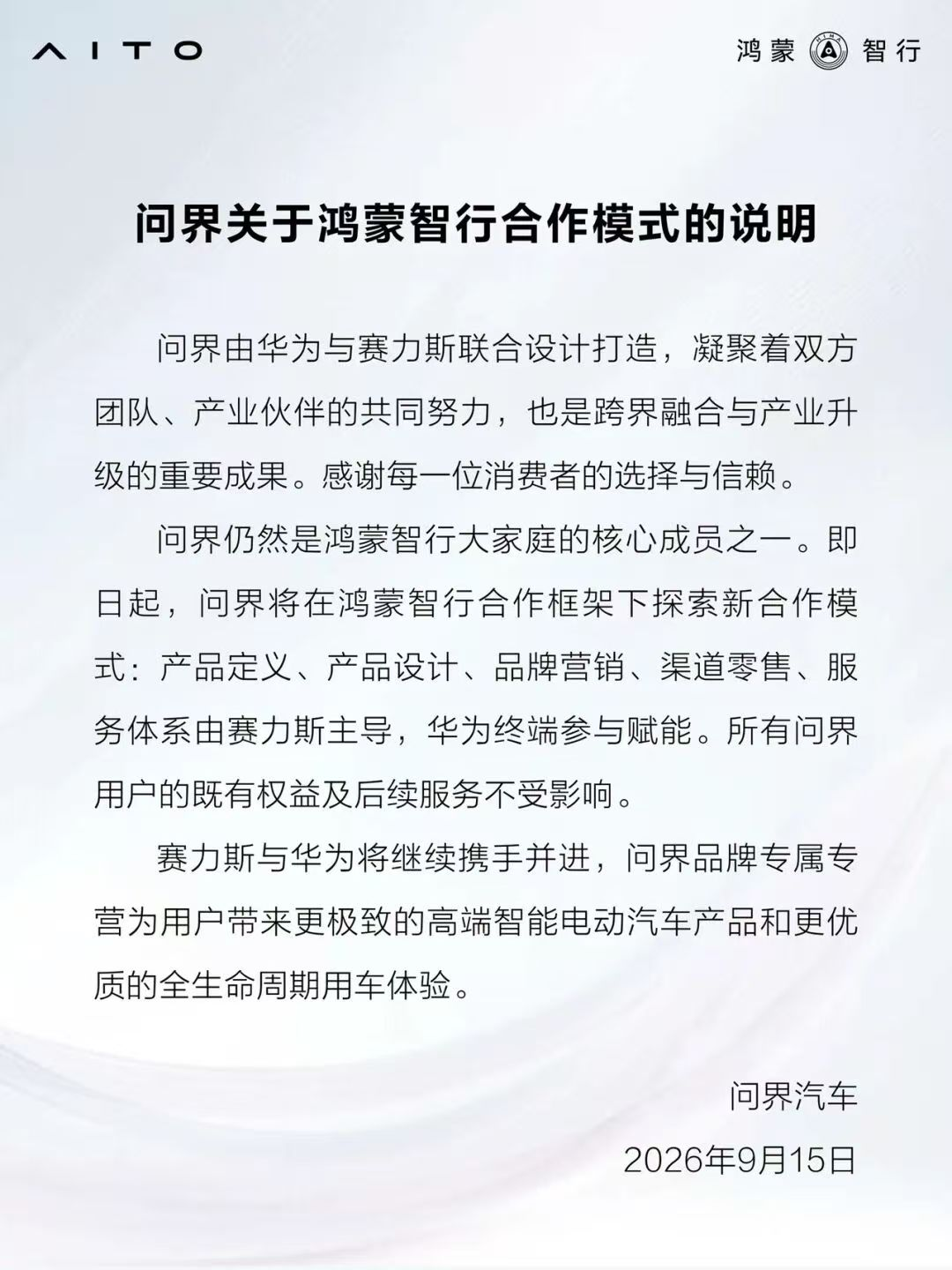
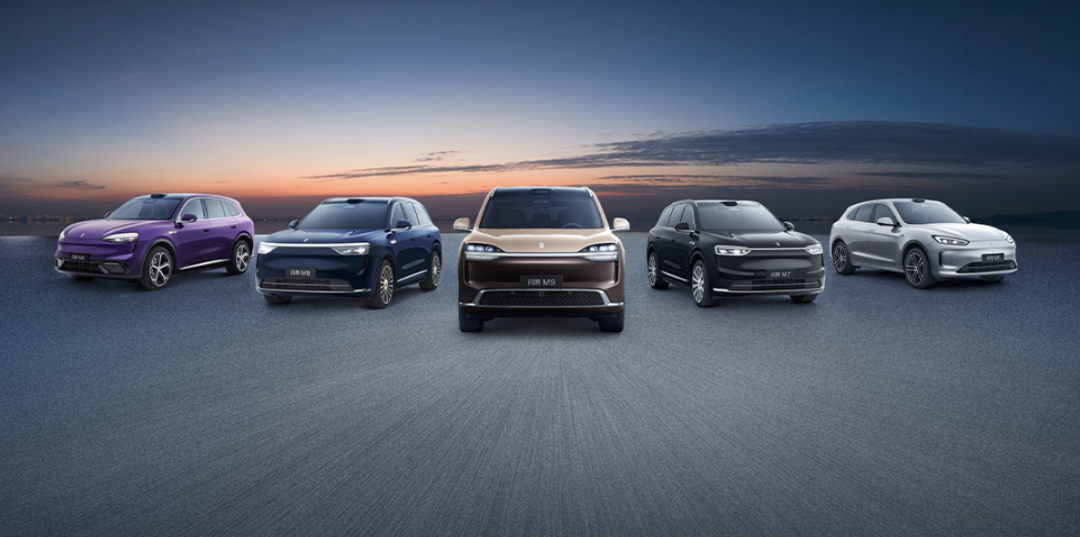
On September 15th, HiMode and AITO Auto issued a joint statement, reaffirming AITO’s position as one of HiMode’s five key brands. Seres is now set to lead in product definition, design, marketing, channels, and services, while Huawei Consumer BG will offer supporting services, with the rights of 1.2 million car owners remaining intact.
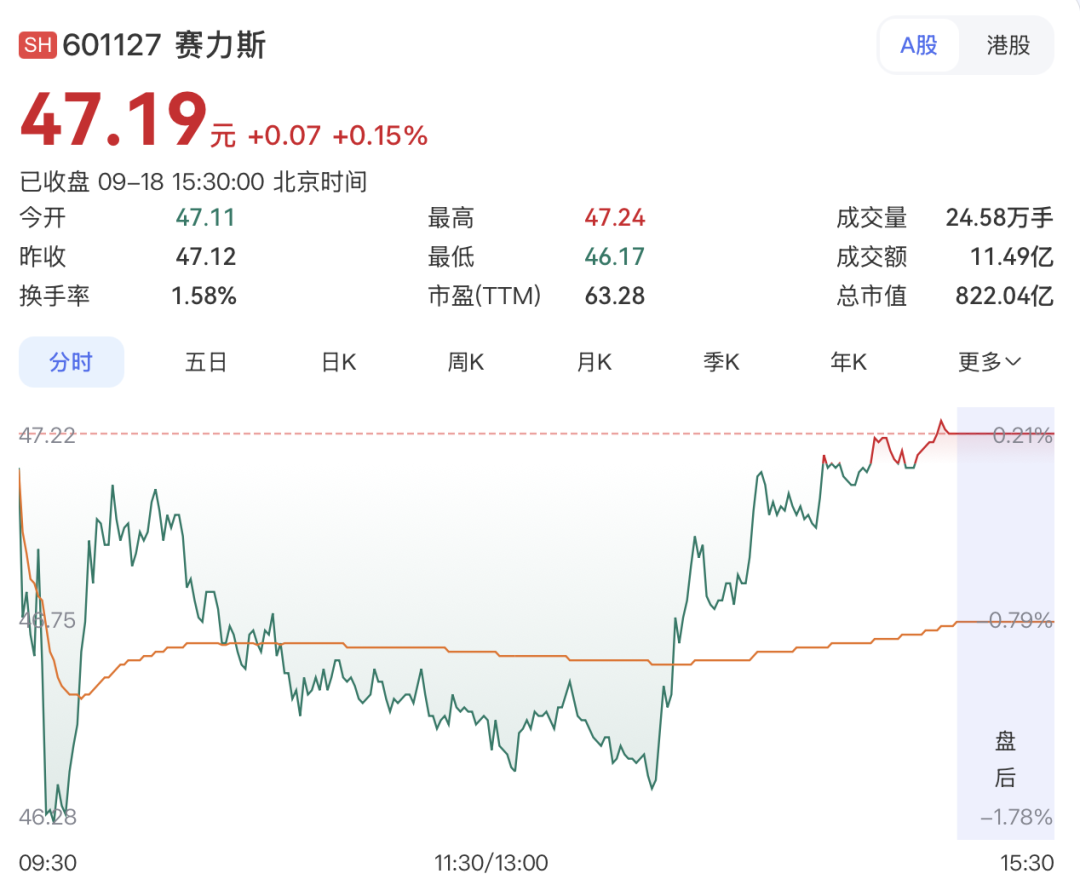
Despite the seemingly reassuring tone, the market reacted with concern, and stock prices took a hit: Seres' A-shares plummeted by 5.09%, while its Hong Kong shares dropped 6.12%, marking a new low since their listing.
In the days that followed, media reports unveiled the real channel arrangements: AITO will transition to exclusive franchise operations, with some HiMode stores being transferred to Seres to exclusively sell AITO vehicles. Dealers will be compelled to choose between AITO, the remaining four brands, and Huawei’s existing business, with the transition slated for January 1, 2027.
This transfer of control marks the onset of Seres’ looming crisis.
Over the past five years, AITO has surged from zero to a million units, not solely relying on Seres: cars were marketed in Huawei stores, defined by Huawei’s standards, with suppliers vetted by Huawei, launched by Richard Yu, and purchased by consumers placing their trust in Huawei. Now, with all these elements handed back, Seres must navigate a battlefield where it has yet to prove its mettle.
Financial reports have already sounded the alarm. In the first half of this year, Seres swung from profit to a loss of 1.717 billion yuan, with AITO sales halving in July and August, even before the full channel separation took effect.
With the business now resting squarely on its shoulders, Seres’ crisis is just unfolding.
01 Leaving Huawei Stores, AITO Loses Half Its Edge
How did AITO achieve its remarkable sales?
In 2021, the Seres Huawei Smart Selection SF5 became the first car showcased in Huawei stores. For the next five years, Huawei stores effectively served as AITO’s 4S shops: strategically located in prime shopping districts, adjacent to phones and tablets, they attracted ready-made customer traffic and trust. In autumn 2023, the Mate60 series and the new M7 became instant hits, nearly tripling foot traffic in Shanghai Huawei stores, with some customers booking cars after viewing phones.
Such traffic is unattainable for automakers building their own channels, regardless of their investment.
The original division of labor was clear: Huawei stores handled displays, test drives, and customer acquisition, while Seres-managed user centers took care of sales, delivery, and after-sales. The problem was that AITO’s own user centers, mostly situated in auto parks and suburbs, were not natural customer entry points.
Currently, AITO boasts over 400 user centers covering more than 200 cities. While this number seems substantial, it pales in comparison to Huawei’s thousands of stores in shopping districts—two entirely different scales.
Early on, Huawei channel personnel revealed to the media that about 80% of orders in their city were finalized at Seres-led user centers. However, where transactions occur and where customer traffic originates are two distinct matters: without Huawei stores drawing people in, user centers wouldn’t even have the opportunity for price comparisons.
Now, let's consider the actual arrangements of this channel separation.
Only some HiMode stores will be transferred to Seres, with their number, locations, and quality undisclosed. Among the three options dealers face, choosing AITO means signing contracts under Seres’ system and operating as a single-brand, heavy-asset franchise. Choosing the four other brands means staying within Huawei’s system to sell multiple brands, along with Huawei’s existing business.
On one side is a brand in a generational transition with halving sales; on the other is Huawei’s entire brand ecosystem. The choice for dealers is not complex.
Dealers willing to bet on AITO must consider another factor: exclusive stores can only sell one brand, requiring substantial investments in store construction, inventory, and staffing—essentially tying their fortunes to AITO’s performance. With price wars ongoing, attracting dealers itself represents a hidden cost in the channel transition.
More critically, the consumer path is severed.
Huawei stores provided AITO with implicit endorsement: consumers viewing cars within Huawei’s ecosystem assumed transparent pricing and accessible service. In independent channels, this trust must be rebuilt store by store by Seres.
Financial reports have already offered a glimpse of what’s to come. In July and August, Seres’ car sales were 20,480 and 20,652 units, respectively, halving year-on-year—and this was before the full store separation and the launch of the new M9.
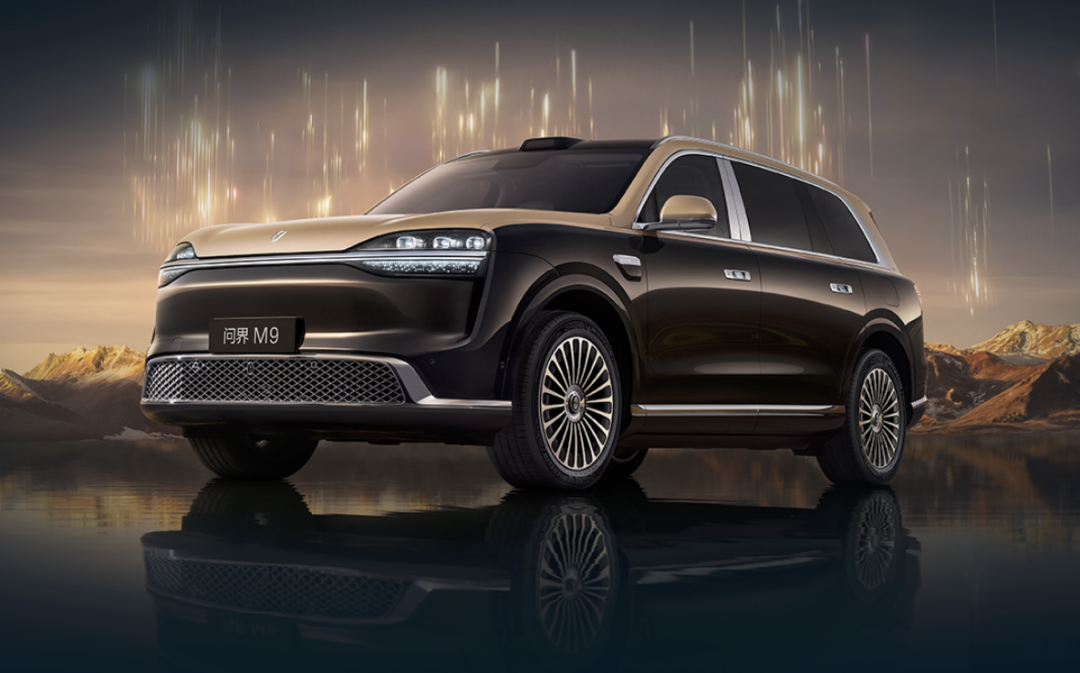
The M9 performs well, leading sales in the 500,000-yuan-plus market for months, but one flagship model cannot fill the gap left by an entire product lineup in transition. By early next year, when the channel transition is complete, rent and staffing costs for over 400 stores will still need to be paid. If sales don’t recover, stores will shift from channels to burdens.
AITO can leave Huawei’s stores, but its sales cannot yet leave Huawei’s influence. This is the first and most fatal link in Seres’ crisis chain.
02 Product and Marketing Control Changes, Premium Status Must Be Re-earned
Beyond stores, more hidden risks lie within the products. Many attribute AITO’s success to Huawei helping sell cars, but this underestimates Huawei’s deep involvement.
In 2023, when both sides deepened their cooperation, it was clarified that Huawei Consumer BG would handle user insights and new product definitions, while Seres would manufacture the cars. AITO’s product lead once publicly stated that joint working groups operated on-site, with research, procurement, and supplier quality engineers following key components through production lines, and Huawei’s quality inspections extending further downstream to suppliers.
AITO’s product standards over the past five years were largely shaped by Huawei’s stringent consumer electronics standards.
Now, with product definition, design, and services handed back to Seres, the market’s immediate question arises: Will standards slip as Huawei’s strictly controlled supply chain changes hands? Under cost and profit pressures, will corners be cut?
Such concerns are not baseless. In the first half of this year, Seres incurred a net loss of 1.7 billion yuan, with declining per-unit revenue and rising costs for chips and battery materials. Seres needs profits more than ever, and quality control is often the first area sacrificed during cost-cutting.
The same applies to product definition. The M9 propelled AITO into the 500,000-yuan-plus market, relying on Huawei’s judgment of demand and timing. Whether this judgment transfers with the baton, and how high subsequent sedans and MPVs can reach, remains unanswered.
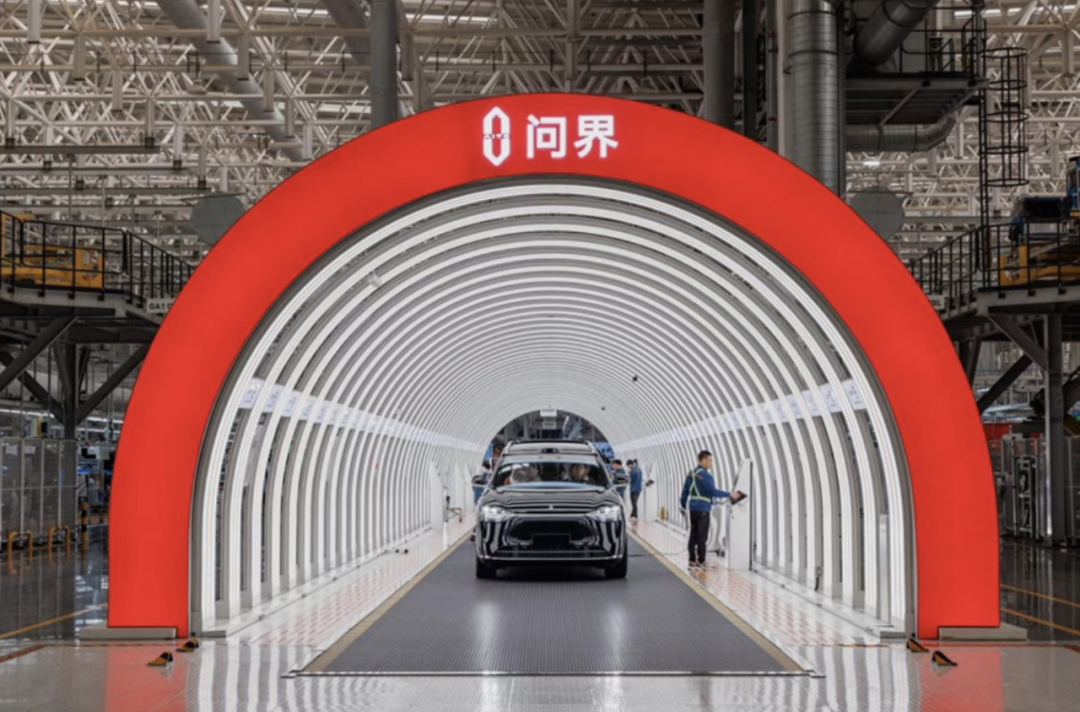
In the past, Huawei stood in front of any issues; henceforth, every quality incident will directly tarnish AITO’s own brand. Seres is not new to car manufacturing—before partnering with Huawei, it built microcars and affordable SUVs under Sokon. However, it lacks a successful example of independently operating a premium brand before AITO’s debut.
Third-party research puts it more bluntly. Jeran Road’s survey of the first batch of M9 owners showed that 52.4% cited intelligent assisted driving as their purchase reason, ranking first, with brand and intelligent cockpit tied for second. The intelligent driving system is Huawei’s ADS, and the cockpit is HarmonyOS—users are buying AITO in name but Huawei in essence.
The marketing gap will be even more apparent. AITO’s successive new car highlights almost always occurred at Huawei launches: Yu Chengdong placed cars and phones on the same screen, reaching hundreds of millions of tech enthusiasts in one event.
Marketing is not just about launches. Previously, Seres’ marketing, PR, and advertising systems largely operated under Huawei’s framework. Now, building these capabilities from scratch—hiring, team-building, understanding user preferences—will all require learning from mistakes.
For a car model to succeed, product definition, marketing, sales, and stores must align. In the past, Huawei controlled three and a half of these rings; now, Seres must navigate them alone.
03 Could Avatr’s Today Be AITO’s Tomorrow?
The brand challenge is the toughest, directly determining a car’s pricing power.
As early as April 2023, Huawei requested that promotional materials remove Huawei branding, prompting some consumers to state they bought the car for Huawei’s reputation and would reconsider if the official connection was denied.
At the time, the cooperation model remained unchanged—only promotional messaging tightened—yet this was enough to shake some buyers’ resolve. A significant portion of AITO’s premium pricing comes from Huawei’s brand premium.
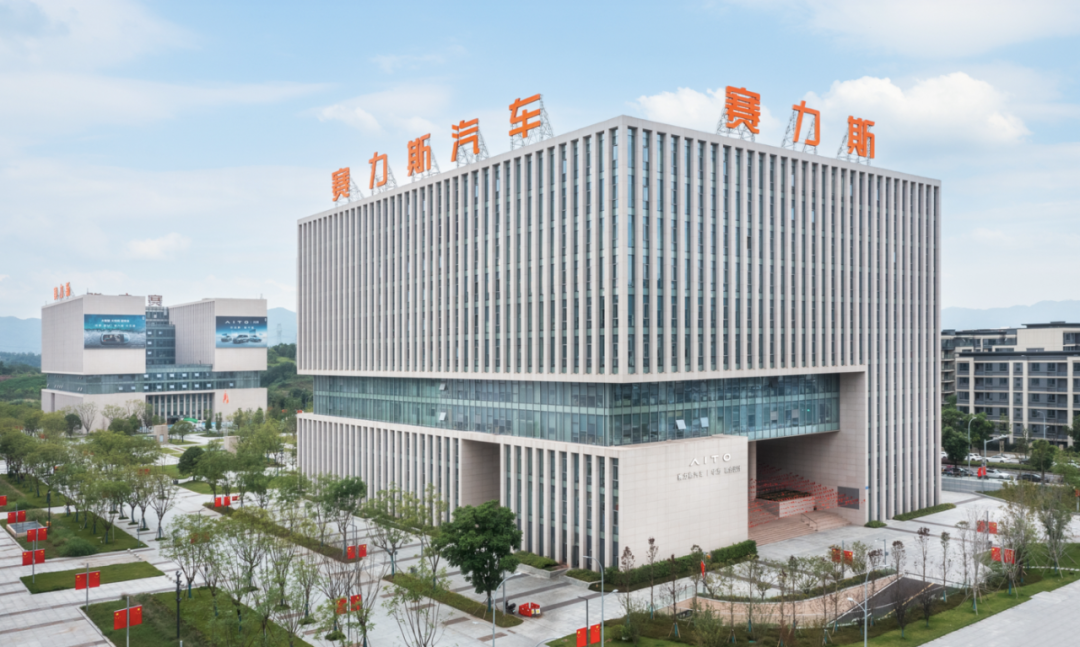
The statement repeatedly emphasizes that AITO remains a core member of HiMode, but looking at the actual cooperation: Huawei no longer defines products, operates channels, or leads marketing, leaving only technical supplies like intelligent driving and cockpits. This differs fundamentally from HiMode’s full-process leadership, with boundaries shifting toward the HI model—whose most typical example is Avatr.
Avatr’s trajectory serves as a mirror. Backed by Changan, Huawei, and CATL, it features Huawei’s ADS and HarmonyOS cockpit, with cooperation upgraded from HI to HI PLUS. In 2025, it sold 120,000 units, nearing the top; this year, it delivered only 27,619 units in the first half, down 53% year-on-year, averaging just over 4,000 monthly. Its annual sales target of 220,000 units now seems unattainable, while leading new forces have already raised their monthly thresholds to 30,000 units.
A telling detail: In August, Avatr held a delivery ceremony for Huawei employees at Huawei’s Songshan Lake campus in Dongguan, with over 5,000 units delivered—even tapping into employee purchase programs—yet failed to reverse its monthly sales around 4,000 units. With identical technical suites, the brand simply did not hold. Technology can be purchased, but branding cannot be outsourced; when Huawei shifts from co-operator to supplier, no amount of Huawei content can sustain a brand without independent recognition.
This mirror is particularly harsh for AITO: Avatr never truly enjoyed Huawei’s full-channel, full-process support, while AITO did—and is now losing it.
The difficulty of downgrading is not just about automakers’ mindsets but also about simultaneously receding user expectations and dealer confidence.
Seres is not without self-help efforts: spinning off loss-making Seres Blue Electric, introducing external capital for AIVA, switching to Yuanron’s intelligent driving, adopting Volcano Engine for cockpits, and debuting its first model this year—essentially rehearsing without Huawei. Its stake in Tognet, 20 core suppliers, the Paris Motor Show in October, and planned sedans and MPVs are also in its arsenal. However, AIVA’s existence itself proves Seres is preparing for a Huawei-independent future. Building a new brand from scratch typically takes five to ten years—far too long to address immediate needs.
More pressingly, technology is never free. Seres’ purchases from its largest supplier surged from 5.8 billion yuan to 56 billion yuan over four years, accounting for over one-third of procurement by 2025—widely believed to be Huawei-related. Post-independence, these technology costs remain, while new channel and marketing expenses add pressure, further weighing on short-term profits.
From now until early 2027, when the channel separation is complete, the next two to three quarters will serve as a critical observation window: order conversion, average transaction prices, store survival rates, and launch event impact will reveal the market’s verdict.
Exclusive franchising can be framed as a step toward premiumization or as Huawei lightening its load while Seres takes on heavier burdens: Huawei sheds operational responsibilities for mature brands to continue exporting technology to more automakers, while Seres must shoulder stores, products, marketing, and branding simultaneously amid halving sales. Huawei can help an automaker create a hit, but no one can grow a brand for another.
Avatr’s seat at the table is one AITO should not assume is irrelevant to itself.
-
![]()
Silicon Valley Sparks the AI Office War
-
![]()
Weekly Stock Review | Trump’s Concern Over AI Rivalry: The Auto Industry’s ‘Biggest Competitor’
-
![]()
FAW and GAC's Strategic Move: More Than Corporate Collaboration, a Pioneering Case of National Industrial Anti-Involution
-
![]()
Can the Long-Wheelbase Mercedes-Benz GLE SUV Tread in the Footsteps of the BMW X5?
-
![]()
From Netizens' Perspective, the XPENG G9L Still Seems Pricey
-
![]()
10 Questions I Care Most About Regarding Doubao Mobile Phone II
-
![]()
Quality Performance of China’s New Energy Vehicle Tri-Electric Systems in 2026: Experience-Centric Issues Take Center Stage, Range Remains Top Challenge
-
![]()
AIDrive’s Cooperation Model Undergoes Change: Is Xiaomi Pengcheng the Unexpected Winner?