Weekly Stock Review | Trump’s Concern Over AI Rivalry: The Auto Industry’s ‘Biggest Competitor’
 09/20 2026
 455
455
Taking a Weekly Look at Auto Stocks and Observing Market Trends.
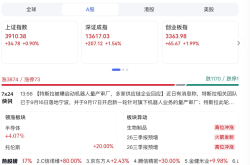
Recently, the stock market has witnessed a significant rebound, with the Shanghai Composite Index surging past 3,900 points. Trading volume, which had initially contracted in the morning session, saw a surge of buyers, steadily boosting turnover. Within the first two hours of trading, over 700 stocks across the market surged by more than 3%, with over 4,000 stocks experiencing widespread gains.
Overall, the bullish sentiment in the stock market is gaining momentum, and investor confidence is on the rise. However, the automotive industry's highly anticipated 'Golden September, Silver October' sales peak has failed to materialize.
Apart from increased discussions around the collaboration between FAW and GAC, the traditional peak sales season has not arrived as expected. This trend is even more pronounced in the stock market.
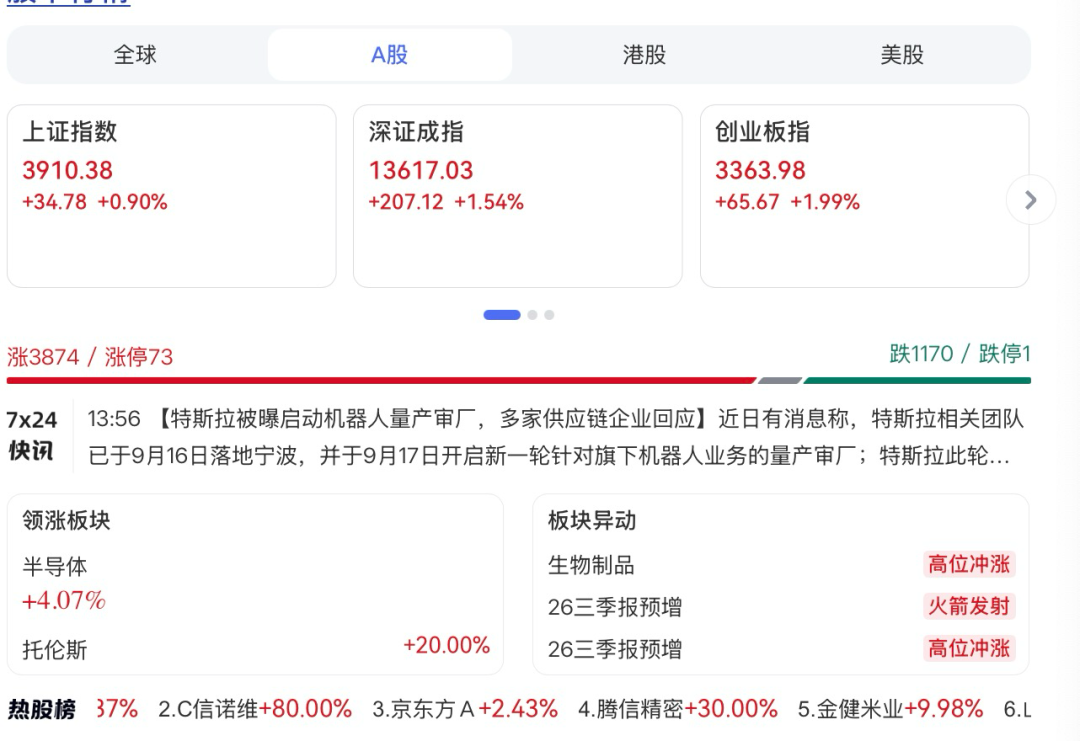
Auto stocks have been on a steady decline.
Several factors have contributed to this downturn. Tightening policy regulations, overseas tariff negotiations, and supply chain profit reallocations have posed multifaceted challenges. Under the influence of these complex factors, the majority of the 145 listed auto stocks have experienced varying degrees of decline.
'The pressure is immense,' industry insiders lament.
Domestically, on September 7, the Ministry of Industry and Information Technology and the State Administration for Market Regulation issued the first industry document on account period management, promoting the reallocation of cash flow between complete vehicle manufacturers and auto parts companies, with the latter benefiting relatively.
A few days later, the '15th Five-Year Plan for the Development of the Intelligent Connected New Energy Vehicle Industry' was officially released, setting a target for new energy passenger vehicle sales to account for 70% by 2030. The intelligent driving supply chain also received continued policy support, with stricter oversight and a mature compliance system giving certain automakers a competitive edge.
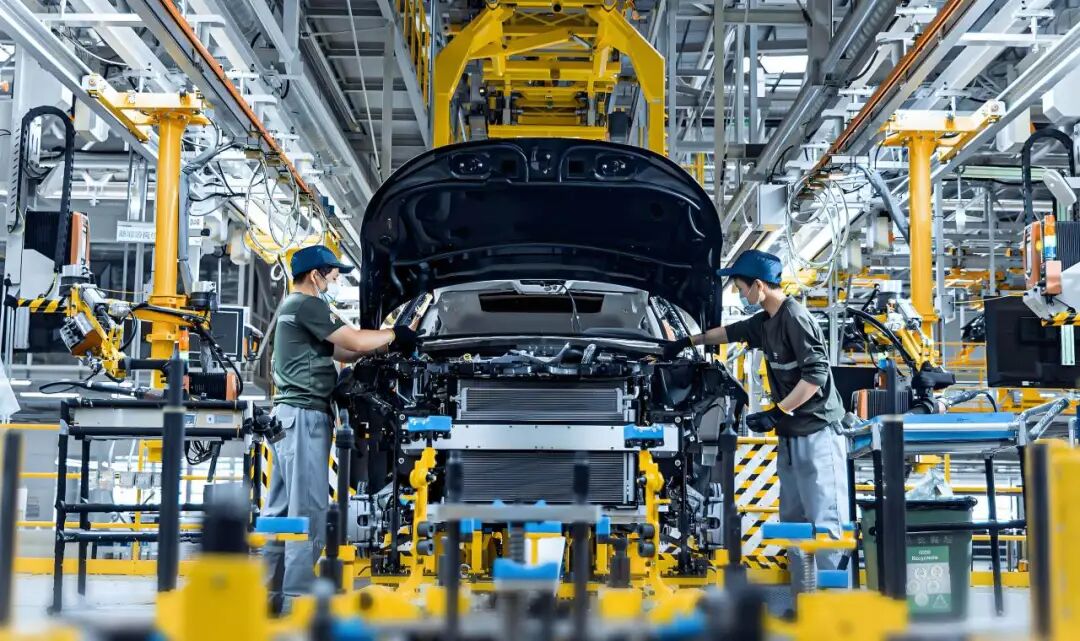
Data from the China Passenger Car Association reveals that from January to August, cumulative retail sales reached 11.716 million units, down 20.8% year-on-year, with fuel vehicle retail sales in August at 540,000 units, nearly halving year-on-year. In other words, automakers that fail to adapt during this period will face an accelerated decline.
Domestic regulatory tightening is compounded by overseas obstacles. The EU's tariff negotiations on Chinese automobiles have intensified, with the Italian Automobile Industry Association calling for an 80% tariff, and the EU planning to vote on September 25.
The Trump administration, known for its assertive stance, has also criticized Ford's cooperation with Chinese companies, with geopolitical risks suppressing the valuations of companies like Geely, BYD, and CATL. Polestar's stock price has plummeted due to a U.S. sales ban and contraction in the Chinese market.
Defending against all these challenges is no easy feat. However, the global restructuring of the automotive supply chain is an irreversible trend.
Moreover, as the supply chain undergoes restructuring, automotive valuations are entering a new phase of 'transformation.'
In 2022, high-valuation new entrants lacked profit support, leading to a valuation correction. Beginning in 2023, intense price wars accelerated the diminishing marginal effects of 'growth narratives,' with market logic returning to fundamentals. By 2025, as emerging sectors like AI and humanoid robots became the new favorites of the capital market, funds continued to shift away from traditional automotive sectors.
In short, traditional automotive models are no longer favored by capital. In the era of intelligence, capital invests in technology and ecological value. However, inevitably, every era must come to an end.
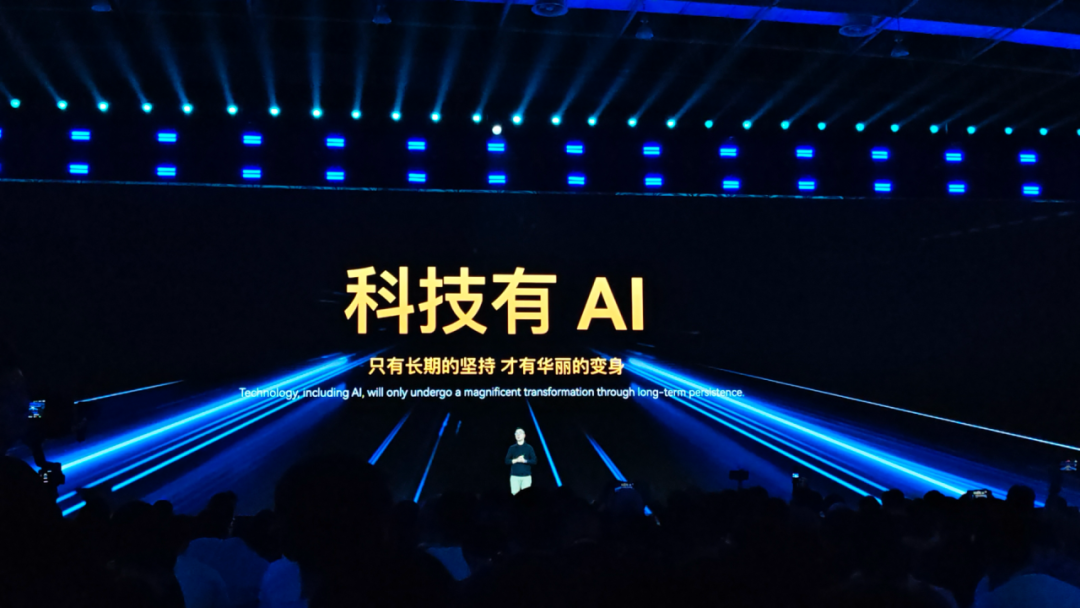
The AI era is no exception.
In today's global tech race, the fiercest competition is no longer in chips or new energy but in artificial intelligence (AI). This field will shape the global landscape for decades to come. Currently, the dilemma in AI competition lies in the prisoner's dilemma of 'who slows down first loses.'
In other words, while everyone recognizes the safety in slowing down together, unilateral deceleration means ceding technology, market share, and advantages to competitors. The result is a situation where 'everyone shouts 'brake' but steps on the gas.'
Data shows that AI training costs are growing approximately 2.7 times annually, while data center power demand is increasing about 2.3 times yearly. Continuing this race will lead to unsustainable costs. The rapidly evolving AI technology has already exceeded the carrying capacity of existing safety systems.
Yet, no one dares to slow down.
Recently, Trump, visibly anxious, publicly addressed the media, issuing a rare urgent warning: At the current pace of development, the U.S. risks being overtaken by China in AI. 'We still lead China; the U.S. has the world's top AI technology, but I must defend this advantage,' he stated.
He is anxious.
But Silicon Valley's tech giants are also anxious. They have collectively called for the industry to voluntarily slow down, improve safety mechanisms, and avoid the unknown risks of AI runaway.
Trump disagrees. With a wave of his hand, he vowed to continue relaxing AI industry oversight and increase investments in data centers, semiconductors, and power infrastructure. He aims to use 'speed' to suppress competitors and seize the technological high ground.

Safety? Rules? Those are secondary considerations.
This development logic differs significantly from China's approach. Rather than competing solely on speed with the U.S., China is rallying global partners to build a large-scale AI ecosystem, relying on open-source ecosystems and scale advantages to establish long-term barriers.
Yet, neither side dares to halt.
As AI competition intensifies, memory has become a significant challenge for the automotive industry, second only to 'price wars,' due to cost pressures.
According to TrendForce, starting from the second half of 2025, automotive-grade DDR4 memory prices have continued to rise, with cumulative increases exceeding 150%, and DDR5 prices surging even more, by over 300%.
Lei Jun mentioned that the current memory price hikes are substantial, and at this trend, the memory cost per vehicle could increase by thousands of yuan this year. Li Bin directly stated that memory price increases have become one of the biggest cost pressures in the automotive industry this year.
'Automobiles are now competing with AI for the same semiconductor resources,' becoming the core of the conflict. AI is, without a doubt, a more formidable competitor for automakers today.
For storage giants like Samsung, SK Hynix, and Micron, the AI server market is clearly more attractive. On one side, AI is voraciously consuming production capacity, while on the other, the automotive industry struggles to switch quickly. The ultimate result is an increase in vehicle costs ranging from hundreds to thousands of yuan.
Not a small figure, and as the saying goes, 'the cost ultimately comes from the consumer,' passing the burden onto them. Automaker profits continue to decline as costs rise.
What worries automakers most is not just price hikes but supply disruptions. Hence, capable automakers have decided to develop their own chips to enhance competitiveness in the AI era.
Because, 'the essence of automotive intelligence is AI,' as He Xiaopeng posited in early 2025.
The automotive industry has never lacked AI concepts. Starting in 2024, a surge of large models being integrated into vehicles emerged, with nearly all mainstream domestic automakers completing the deployment of in-vehicle large models. By 2026, AI Agents in vehicles have become a new trend. Today, automobiles have transformed from 'feature stacking' to 'system cores,' with AI completely rewriting the underlying logic of the automotive industry, shifting from hardware manufacturing to intelligent agent creation.
In 2026, 'cabin-driving integration' has become a market breakthrough point, with data, computing power, and ecosystems determining success. The competition is far from over, but automotive industry valuations have fully declined due to the 'AI transformation period.' Capital markets no longer pay for long-term visions or scale growth; automakers need to find a 'competitive edge' that allows the capital market to reprice them.
This competitive edge involves establishing profitable pathways, cash flow, and compliance costs—all indispensable.
Difficult.
Note: Some images are sourced from the internet. If there is any infringement, please contact us for removal.
-END-
-
![]()
Silicon Valley Sparks the AI Office War
-
![]()
Weekly Stock Review | Trump’s Concern Over AI Rivalry: The Auto Industry’s ‘Biggest Competitor’
-
![]()
FAW and GAC's Strategic Move: More Than Corporate Collaboration, a Pioneering Case of National Industrial Anti-Involution
-
![]()
Can the Long-Wheelbase Mercedes-Benz GLE SUV Tread in the Footsteps of the BMW X5?
-
![]()
From Netizens' Perspective, the XPENG G9L Still Seems Pricey
-
![]()
10 Questions I Care Most About Regarding Doubao Mobile Phone II
-
![]()
Quality Performance of China’s New Energy Vehicle Tri-Electric Systems in 2026: Experience-Centric Issues Take Center Stage, Range Remains Top Challenge
-
![]()
AIDrive’s Cooperation Model Undergoes Change: Is Xiaomi Pengcheng the Unexpected Winner?