"Endured" for Six Years? Li Auto's Battery Self-Development Goes "Open"
 09/20 2026
 420
420
On September 16, the Li Auto i9 was launched. The press release stated, "Standard equipped with a ternary lithium 5C ultra-fast charging battery, CLTC range of 705 kilometers, and 500 kilometers of charge in 10 minutes." The battery brand was not mentioned.
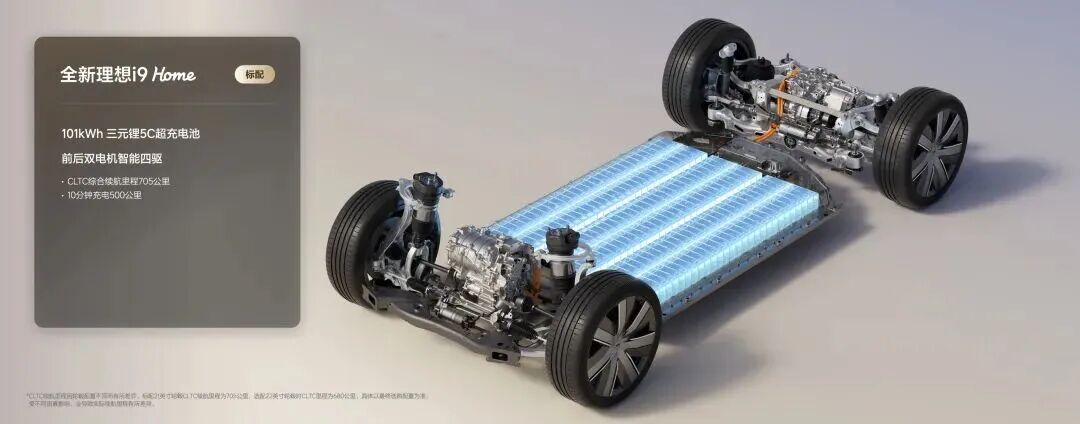
Two years ago, this would have been unimaginable. Li Auto was once one of CATL's most loyal customers, with approximately 1 million out of 1.4 million cumulative deliveries equipped with CATL batteries. Now, Li Auto is systematically transforming batteries from "purchased components" to "self-developed components."
However, the starting point for this shift was much earlier than many people realize.

Planned Six Years Ago
The battery supply challenges faced by the Li Auto i8 and i6 in 2025 are often interpreted as the catalyst for Li Auto's decision to self-develop batteries. This is a misconception that needs correction.
Li Xiang himself clarified in a WeChat Moments post on September 7: "The technology strategy for self-developed batteries (cells) and self-developed chips was formulated during the autumn 2020 strategic meeting. Since then, R&D expenses have significantly increased, and we have made matching industrial strategic investments. We have patiently spent six years achieving the full integration of self-developed batteries and chips into our vehicles."
In autumn 2020, the Li Auto ONE had just gained a foothold, and the extended-range route was initially accepted by the market. At that time, Li Xiang set two strategic goals at the meeting: self-develop battery cells and self-develop chips.
However, formulating a strategy does not mean immediate execution. Li Auto chose a gradual approach: In 2022, an affiliated entity invested 400 million yuan in the Pre-A round financing of Sunwoda Electric Vehicle Battery, entering the battery industry chain as a shareholder. In February 2023, the first self-developed battery pack developed jointly by both parties was rolled off the production line and equipped in the Li Auto L8 Air and L7 Air. On September 19, 2025, the two parties established a joint venture, Shandong Li Auto Battery Co., Ltd., each holding a 50% stake with a registered capital of 300 million yuan.
From the strategic initiation in 2020 to full-scale integration in 2026, this path took a full six years. The supply challenges faced by the i8 and i6 were not the "cause" of self-developed batteries but rather a "catalyst" that accelerated the deployment of already-prepared technologies.
A "Frustrating" Supply Game
In the second half of 2025, Li Auto's pure electric i-series took a crucial step forward. The i8 was released at the end of July, followed closely by the i6. Order volumes surged, but significant delivery issues arose.
The problem lay with the batteries.
According to multiple media reports, Li Auto faced a dual impact of "sales forecast errors + battery capacity negotiations" in 2025. In the first half of the year, sales of extended-range models fell short of expectations, resulting in approximately 20,000 sets of surplus batteries at CATL's Liyang plant. Disagreements over commercial terms led CATL to temporarily suspend technical support for Li Auto's new vehicle models. In the second half of the year, the launch of the i8 and strong sales of the i6 drove a sharp increase in demand for Qilin batteries, leading to obvious supply constraints.
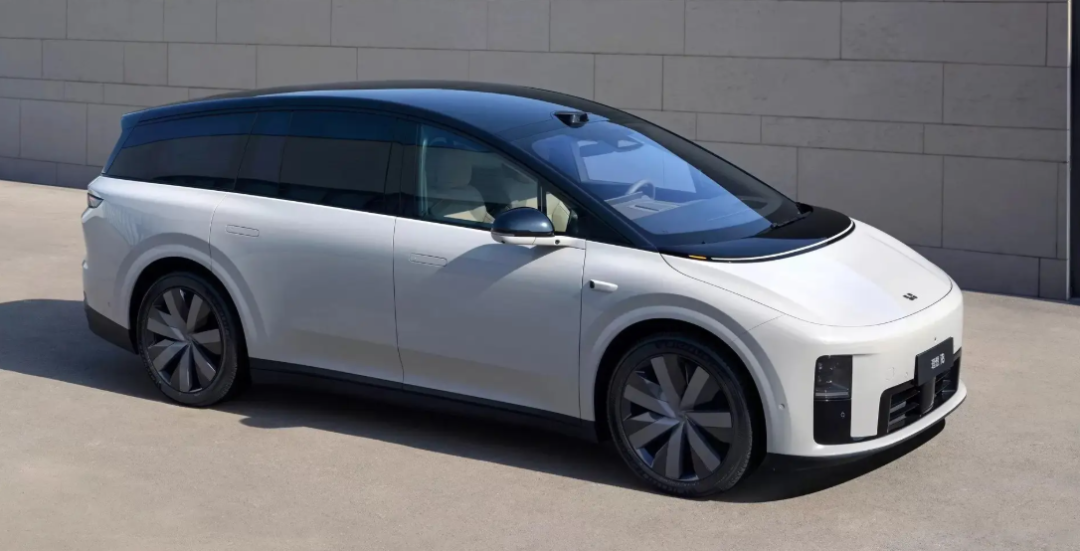
More acute conflicts emerged at the commercial level. Sources close to Li Auto revealed that CATL, citing capacity constraints, refused to increase battery orders for the i8 and i6.
Delivery data for the i8 supports the severity of the situation. In September 2025, 5,716 i8 units were delivered, followed by 5,749 in October. After peaking at 6,719 units in November, deliveries plummeted in 2026. For a flagship SUV to see monthly sales drop to the low thousands indicates that supply-side issues were far more critical than product-related factors.
The i6 fared slightly better. In March 2026, 24,198 i6 units were delivered, followed by 20,878 in May, maintaining deliveries above 20,000 for three consecutive months. However, this highlighted the problem: with over 120,000 i6 units delivered in the first half of the year, accounting for more than half of Li Auto's total sales, any fluctuations in battery supply directly impacted overall deliveries.
During the Q3 2025 earnings call in November, Li Auto's president, Ma Donghui, acknowledged that a "dual-supplier" model had been implemented for the i6's battery supply to ensure "consistency" in performance and quality.
The term "consistency" was the best rationale Li Auto could offer at the time. However, consumers were not convinced. The mixed use of CATL and Sunwoda cells in the same vehicle model could lead to subtle differences in range performance and low-temperature capabilities, which might become noticeable over long-term use. Li Auto subsequently extended warranty periods in an attempt to reassure the market, but the effect was limited.
Notably, in September 2025, coinciding with the establishment of the joint venture with Sunwoda, Li Auto signed a five-year comprehensive strategic cooperation agreement with CATL, attended by both Li Xiang and Robin Zeng. Li Auto's strategy has never been about "cutting ties" but rather about "gaining leverage."
A Carefully Designed Intermediate State
Li Auto's battery strategy is neither a BYD-style vertical integration nor simple joint development. Instead, it follows a more nuanced approach: self-define, others manufacture.
The division of labor at Shandong Li Auto Battery Co., Ltd. is clear: Li Auto leads cell design and all underlying development for battery packs and BMS, while Sunwoda handles large-scale manufacturing.
Liu Zhimin, Senior Director of Power Batteries at Li Auto, stated, "Self-developed batteries are defined by Li Auto, which leads cell-level development, including material formulations, structural systems, and all underlying development for battery packs and BMS. R&D design, manufacturing processes, and quality standards are uniformly specified and required by Li Auto, with cells being contract-manufactured by Sunwoda for Li Auto."
This effectively downgrades the battery manufacturer's role from a "solution provider" to a "contract manufacturer." In the past, CATL set the questions, and automakers chose from the answers. Now, Li Auto sets the questions, and suppliers provide the answers as required.
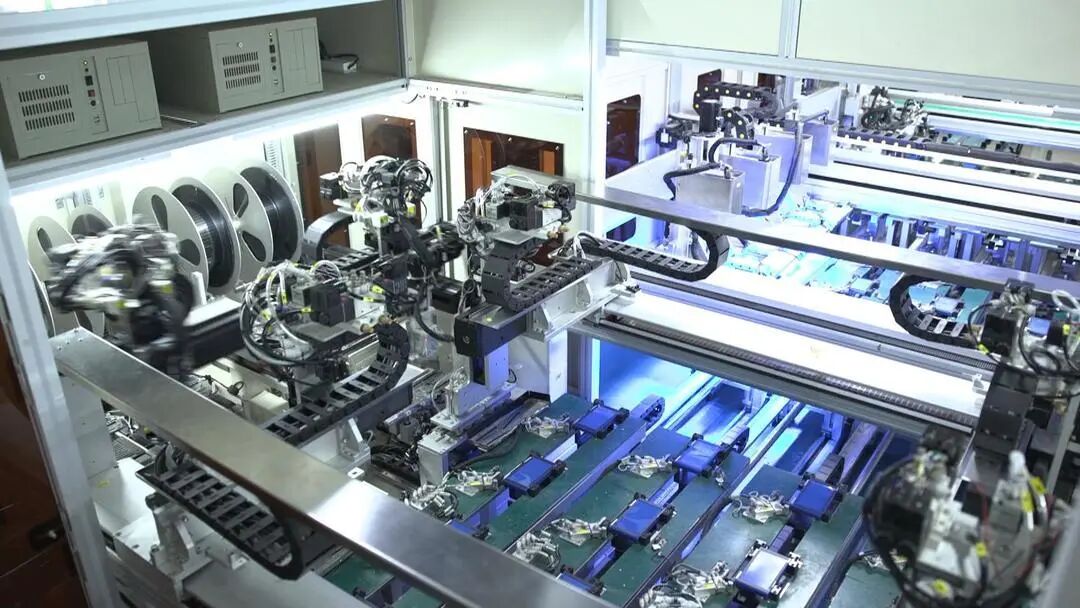
The 2026 i6 best illustrates this role reversal. The 2025 i6 used cells from CATL and Sunwoda, with battery packs supplied as a whole by the suppliers. For the 2026 model, the battery assembly is produced by Shandong Li Auto, with cells sourced from Sunwoda and Calb, the latter being the first new supplier introduced by Li Auto. CATL, a supplier for the 2025 model, is no longer on the supplier list for the 2026 model.
Li Auto's investment in this power shift extends beyond the joint venture. In September, Li Auto invested an additional 2.65 billion yuan in Sunwoda Electric Vehicle Battery, bringing its total stake (including affiliated entities) to approximately 11.17%, making it the second-largest shareholder. This is not purely a financial investment. Li Auto explicitly stated that the core objective is to "increase influence and ensure quality, delivery, and next-generation R&D."
The 2026 Transition Rhythm
On September 7, Li Auto officially announced the integration plan for its self-developed batteries, with a clear rhythm:Already integrated: The L8, L6, and i8 models have completed mass production integration of self-developed batteries.
The first batch of the new MEGA will still use CATL's 5C ternary lithium batteries. Users who lock in orders after 15:00 on September 7 will switch to Li Auto's self-developed 5C ternary lithium batteries, with deliveries expected to begin in November.
The first batch of the new i9 will be equipped with CATL's 5C ternary lithium batteries, with a full switch to self-developed batteries after production capacity ramps up.
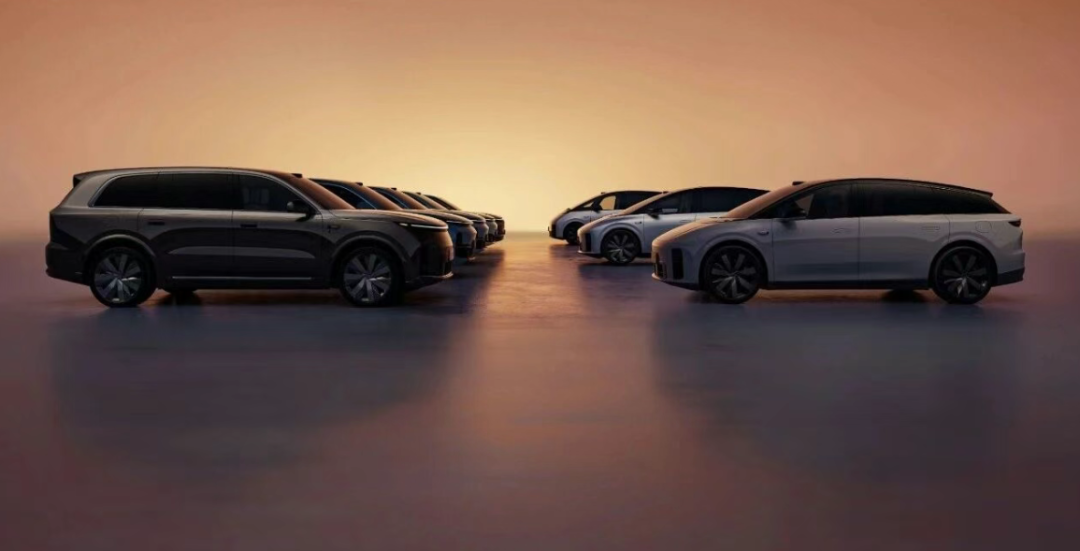
The 2026 i6 will be launched in the fourth quarter, standard equipped with self-developed 5C batteries and self-developed Mach chips. Pre-orders opened at the end of September, with deliveries beginning in early November.
The "two rhythms" of the i9 and i6 are noteworthy. The i9 is a flagship model priced at the 400,000-yuan level, with the first batch using CATL as a safety net. The i6 is a high-volume model priced at the 200,000-yuan level, switching to self-developed batteries outright. Li Auto's logic is pragmatic: flagship models have little room for error, so mature suppliers are used to stabilize the foundation. For high-volume models, where economies of scale are more critical, the cost structure improvements from self-developed batteries are most evident.
Clearly, batteries will no longer be a new "bottleneck" affecting Li Auto's deliveries.
Is "De-CATLization" a False Proposition?
Cui Dongshu, Secretary-General of the China Passenger Car Association, offers a noteworthy perspective on this transformation. He states that using "de-CATLization" to summarize this trend is inaccurate. In the future, the key will not be who replaces whom but who can truly integrate vehicle requirements, electrochemical innovation, engineering manufacturing, and quality management.
In reality, Li Auto has not completely cut ties with CATL. The first batch of the new MEGA will still use CATL's 5C ternary lithium batteries, and the i9 will follow the same pattern initially. In September 2025, the two parties signed a five-year comprehensive strategic cooperation agreement. Li Auto's strategy is to "rely on CATL as a foundation while gaining leverage through self-development."
However, the power structure is indeed changing. In the past, automakers selected batteries from suppliers' product catalogs. Now, Li Auto is defining cell specifications, pack solutions, and BMS strategies, instructing suppliers to execute accordingly. In this model, the core competitiveness of battery manufacturers is reduced from "electrochemical innovation capabilities" to "manufacturing efficiency and cost control."
In the short term, this has limited impact on CATL, which still monopolizes high-end production capacity, with its domestic market share rebounding to 50.1% in the first quarter of 2026. However, in the long term, if Li Auto's model is validated, more automakers with significant sales volumes will follow suit.
Xiaomi has taken a similar path, and XPENG is also customizing cells. As the "question-setting power" shifts from battery manufacturers to automakers, CATL's technological leadership will carry less weight in commercial negotiations.
What truly gives Li Auto confidence is that orders have not declined. According to sources close to Li Auto, although self-developed batteries will cover almost all models, this news has not caused a significant drop in current model orders.
Li Auto's vehicle gross margin fell to 9.4% in the second quarter of 2026 from 19.4% year-on-year, with a net loss of 1.705 billion yuan. Under such financial pressure, the cost structure improvements and supply chain certainty brought by self-developed batteries are cards Li Auto must play.
Where Are the Barriers in the Battery Industry?
Automakers self-developing batteries is not a new story, but successful cases are rare.
In 2025, apart from BYD, which produces and sells its own batteries, only Geely's Jiyao Tongxing and GAC's Inpower Batteries cracked the top 15 in domestic battery installation volume, with a combined market share of just 2.78%. Even including SVOLT Energy Technology, spun off from Great Wall Motors, the share reaches only 5.48%, a fraction of CATL's.
Where are the barriers? First is capital. GAC's Inpower Batteries involves a total investment of 10.9 billion yuan, with a planned capacity exceeding 60 GWh. Geely consolidated assets to establish Jiyao Tongxing, planning to reach 70 GWh by 2027. PACK-level production is difficult to share across lines, creating extremely high thresholds for economies of scale and imposing stringent requirements on sales volume.
However, the deeper barrier lies in process accumulation. Bringing a new line from trial production to stable operation requires incremental improvements in yield. Li Auto's choice of "self-developed contract manufacturing" essentially avoids capital expenditures and yield risks on the manufacturing side, leaving the heaviest asset link to Sunwoda while focusing on product definition and BMS.
But the trade-off is that Li Auto must assume full quality responsibility for the "seam" between design and manufacturing. As one analyst pointed out: With finished products, consistency is guaranteed by the supplier. With self-developed contract manufacturing, design is in-house, and manufacturing is outsourced, leaving Li Auto responsible for the seam in between.
Ultimately, success hinges on whether users recognize the four words "Li Auto Battery."
-
![]()
ZTE’s New Doubao Phone: Playing It Safe in the AI Race
-
ZTE’s New Doubao Phone: A More Cautious Approach
-
![]()
Samsung, Spurred by Apple, Steps Up Its Game, with LY Technology Reaping the Greatest Benefits
-
Blue Heart Xiaov Set to Introduce Paid Pro Version, Revealing vivo’s Large Model Strategy
-
Three-Way Struggle for Market Share: BYD, Chery, and Geely Challenge Great Wall, Posing Immediate Risks to Wei Jianjun
-
![]()
The Reason Behind Valve's Headset Price Surge of 2400 Yuan: The End of an Era of Selling at a Loss
-
![]()
Decoding the '4S' Architecture | Report on Enterprise-Level AI Services in China
-
![]()
Li Auto Aims to Sell Three Technologies, First Buyers Unlikely to Be Major Automakers