【Electric Equipment】Weichai Foton Signs Agreement Again
 09/24 2026
 361
361
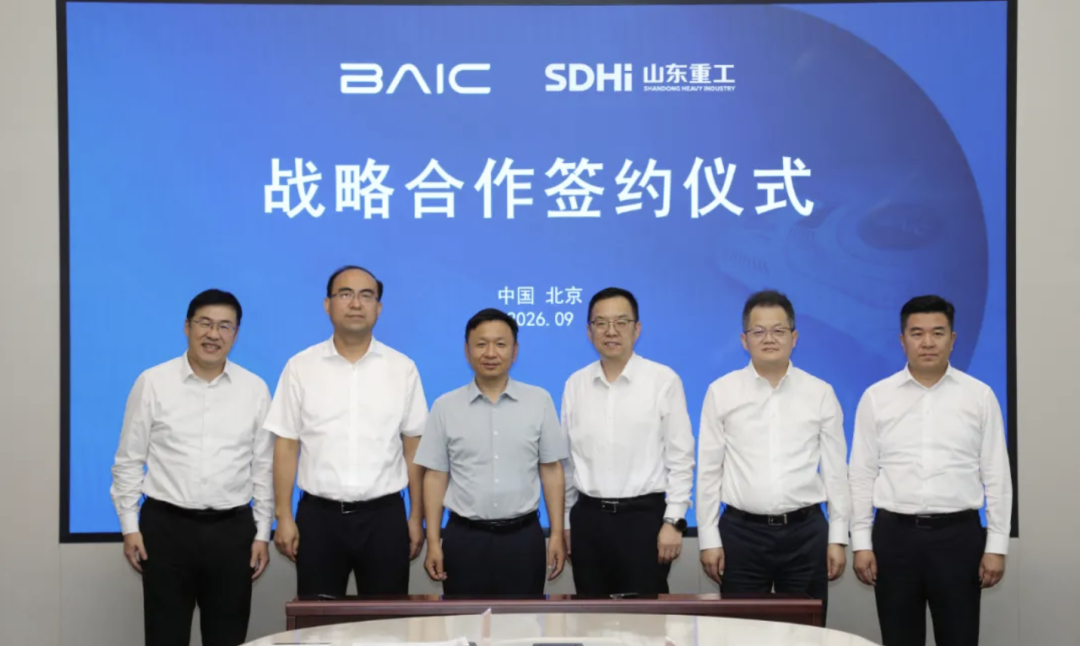
On September 21, Shandong Heavy Industry Group and BAIC Group signed a strategic cooperation framework agreement at BAIC's R&D base, with core subsidiaries Weichai Power and BAIC Foton simultaneously signing a specialized strategic cooperation agreement. This signing signifies that the cooperation between these two key domestic local state-owned enterprises in the commercial vehicle sector has officially upgraded from traditional component supply relationships to full industrial chain collaboration, encompassing new energy R&D and the integration of intelligent connected vehicle technologies.
The signing ceremony was jointly attended by Zhang Jianyong, Party Secretary and Chairman of BAIC Group, and Wang Zhijian, Party Secretary and Chairman of Shandong Heavy Industry Group, with Chang Rui, Deputy Party Secretary and General Manager of BAIC Group and Chairman of BAIC Foton, also present. Ma Changhai, Member of the Party Committee and Deputy General Manager of Shandong Heavy Industry Group, as well as Party Secretary and Chairman of Weichai Group, and Chen Wei, Deputy General Manager of BAIC Group, signed the framework agreement at the group level on behalf of both sides. Wang Decheng, Deputy Party Secretary and General Manager of Weichai Power, and Lu Zhenghua, Party Secretary and General Manager of BAIC Foton, signed the specialized agreement at the subsidiary level.
According to the agreement, the two sides will conduct comprehensive cooperation in areas such as core component collaboration in powertrain systems, new energy product R&D collaboration, intelligent connected vehicle technology integration, and management improvements, jointly promoting the intelligent and green development of the commercial vehicle industry.
Weichai Power and BAIC Foton have a long history of cooperation. Their collaboration began in 2002, followed by four strategic cooperation agreements signed in 2006, 2008, 2014, and 2020, gradually expanding from initial engine supply to full-chain cooperation in engines, transmissions, and axles—the golden powertrain combination. By 2014, sales of Foton Auman heavy trucks equipped with Weichai engines had reached 600,000 units. Since then, cooperation has continued to deepen, with over 1.1 million Foton vehicles powered by Weichai engines sold globally.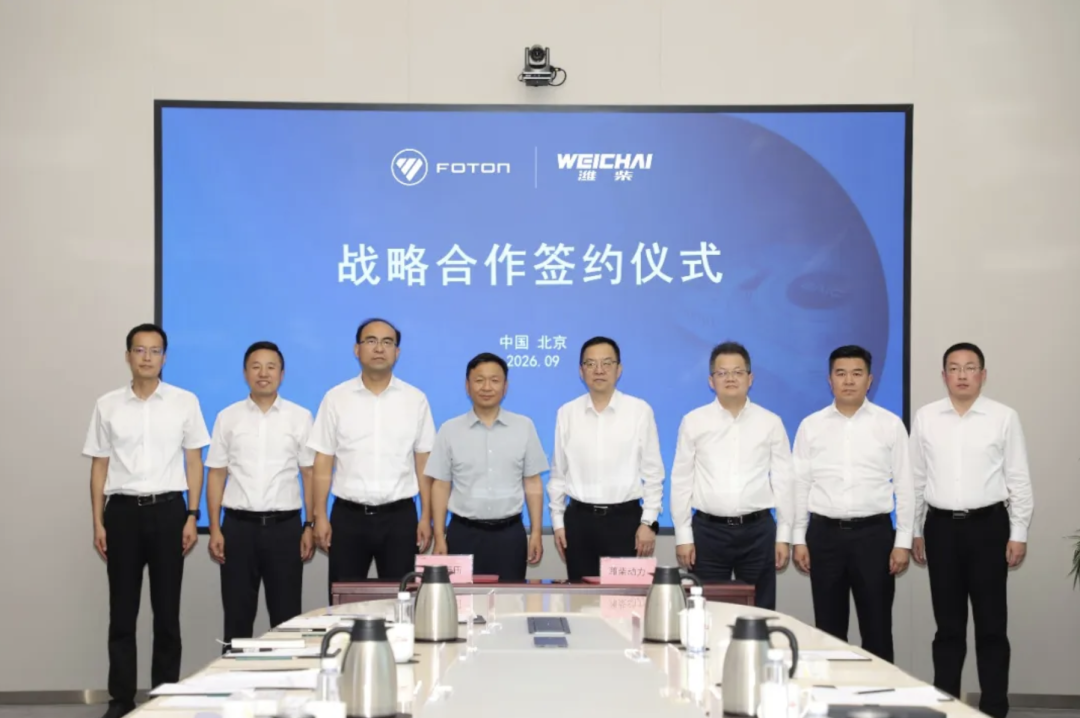
However, the significance of this signing far exceeds previous collaborations. Past cooperation was essentially a supplier-buyer relationship of "I supply, you buy," whereas the "new energy product R&D collaboration" and "intelligent connected vehicle technology integration" in the new agreement mean that joint development will begin at the product definition stage, representing a qualitative shift in the depth of cooperation.
Behind this transformation lies a fundamental change in the competitive logic of the commercial vehicle industry. In the first half of 2026, the penetration rate of new energy in domestic commercial vehicles rose to 23.9%, with particularly notable progress in the electrification of medium and heavy trucks. In the new energy era, powertrains need to be deeply integrated with the vehicle's electronic and electrical architecture and intelligent driving systems, blurring the boundaries between suppliers and OEMs. The risks of going it alone have surged, making "R&D collaboration" no longer optional but essential for survival.
BAIC Foton has established full-stack self-developed capabilities in intelligent driving, with technology deployments covering diverse scenarios such as highway trunk logistics, port and mine operations, last-mile delivery, and closed campuses. It is also advancing in-house R&D and manufacturing of core three-electric technologies under its "Aiyike" global smart ecosystem brand. Shandong Heavy Industry's commercial vehicle business has similarly integrated advanced driver assistance systems and telematics technologies into its heavy truck products. The complementary strengths of both sides in intelligent connected vehicles and new energy powertrains may become the most imaginative aspect of this cooperation.
In terms of scale, BAIC Foton is the world's largest commercial vehicle group by production and sales volume, offering a full spectrum of commercial vehicle products covering heavy trucks, light trucks, buses, pickups, and VANs for all transportation scenarios. Weichai Power is a globally renowned provider of powertrain solutions, with deep expertise in core areas such as engines, transmissions, complete vehicle powertrains, and new energy powertrains. It holds the world's highest thermal efficiency core technology, with products exported to over 170 countries and regions globally.
This cooperation also represents an important attempt at cross-regional collaboration among local state-owned enterprises. Against the backdrop of the SASAC's push for strategic restructuring and specialized integration of state-owned enterprises, whether this "strong-strong alliance" model can succeed will provide a reference sample for subsequent industrial collaborations among more state-owned enterprises.
Of course, signing the agreement is just the starting point. The true test lies in execution—from "strategic agreement" to "implementation"—in areas such as technology roadmap selection, profit-sharing mechanisms, and management cultural integration. Particularly in the current context where multiple technology roadmaps for new energy remain viable—pure electric, hybrid, and hydrogen fuel cell each have their applicable scenarios—whether the two sides can align their directions and form synergies in R&D collaboration will directly determine the practical value of this cooperation.
At a critical juncture where the commercial vehicle industry is shifting from "scale expansion" to "value leadership," whoever first completes deep industrial chain integration is more likely to gain the upper hand in the next round of competition. The move by Shandong Heavy Industry and BAIC Group is worth watching closely.
-
Yunbao Intelligence Charges Towards IPO: Over 5,000-Fold Revenue Surge in 2.5 Years, Tencent Contributes Nearly 98% of Revenue
-
Field Test of Doubao at Work: Can a Company That Helps Users Kill Time Build a Product That Saves Them Time?", "Doubao, AI, Office Agent, User Growth, Commercialization
-
Ofilm Wins Consecutive Orders for Xiaomi’s Flagship Periscope Telephoto Modules Across Two Generations!
-
![]()
Net Profit Soars by 578% in First Half of the Year! How Promising Is Hycreate Optoelectronics’ IPO on the Beijing Stock Exchange?
-
Reshaping the Supply Chain Landscape: CATL Faces a New Industry Cycle
-
![]()
US$1.2 Million for 'Digital Territory': Global Tech Giants Scramble for '.ai' Domain Names
-
![]()
Apple’s Dependence on Scalpers Hits an All-Time High
-
![]()
Lei Jun’s 200 Billion Yuan Gamble: Why Does He Wait for Trends to Solidify Before Making Big Moves?