Chery Leadership Restructured as Globalization 3.0 Advances to Organizational Execution
 09/24 2026
 538
538
On September 23, Chery Holdings Group and Chery Automobile Co., Ltd. jointly announced executive role adjustments. Zhang Guozhong has been appointed Executive Vice President of Chery Holdings Group, while Zhang Guibing assumes the same title at Chery Automobile Co., Ltd., with both appointments taking immediate effect.
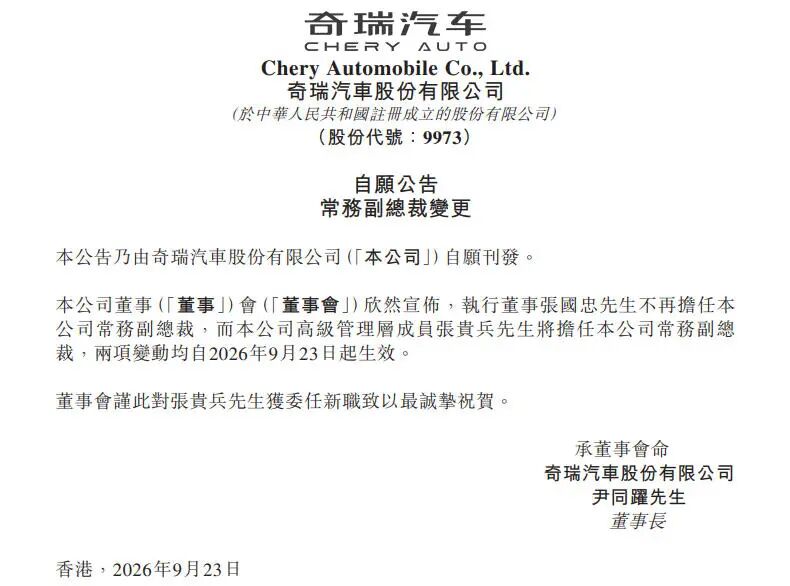
Though the announcement is concise, its significance and timing become clearer when examined alongside Chery's operational performance over the past two years.
Simultaneous Changes in Two Strategic Roles
Zhang Guozhong, who joined Chery in 1997 and rose through the ranks to become Executive Vice President of the listed entity, has overseen daily operations and led the development of Chery's brand portfolio, which includes "Chery, Exeed, Jetour, iCAR, and EZ6." During the height of domestic auto market price wars, he played a pivotal role in guiding the listed company's operations.
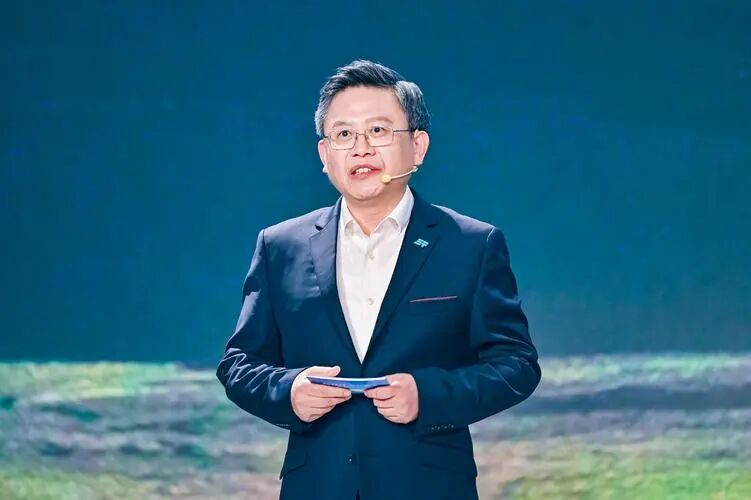
Zhang Guibing, with over two decades of experience primarily in international markets, has been involved in every facet of Chery's global expansion, from R&D and production to service systems. He currently serves as President of Chery International and, since August this year, has overseen the Exeed business unit before taking on his new role as Executive Vice President of the listed company. Exeed is Chery's strategic initiative to penetrate premium markets such as Europe. Appointing a leader with deep international business expertise to oversee both listed company operations and a premium brand signals a clear strategic intent.

Zhang Guozhong's transition to the Holdings Group involves integrating financial, trade, and diversified industrial assets. Meanwhile, Zhang Guibing, now at the helm of the listed company, will oversee operations from a global perspective. This restructuring effectively redistributes responsibilities between "frontline operations" and "backend support."
Deepening Global Engagement After Overseas Revenue Surpasses 50%
Executive reshuffles in the automotive sector are rarely coincidental. September and October represent a critical period for budget planning for the upcoming year. Implementing high-level changes at this juncture allows new leaders to bring fresh insights directly into budget discussions, minimizing the need for mid-year adjustments.
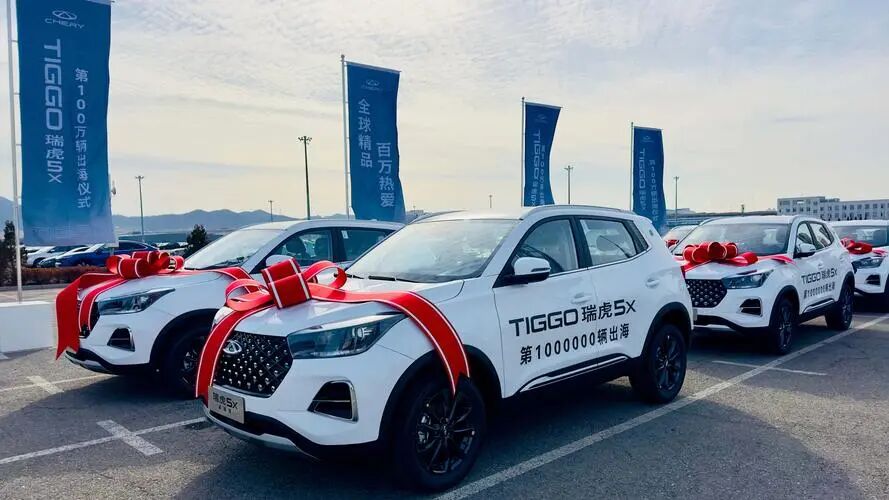
More significantly, the numbers speak for themselves. Chery Group's sales report indicates that in 2025, exports reached 1.344 million units, a 17.4% year-on-year increase, securing the top spot among Chinese brand passenger car exports for the 23rd consecutive year. Overseas revenue amounted to RMB 157.42 billion, accounting for 52.4% of total revenue.
What does this proportion indicate? Over half of Chery's revenue now originates from overseas markets. For a company where international earnings surpass domestic ones, focusing daily operations primarily on domestic market share would hinder a strategic shift in mindset.
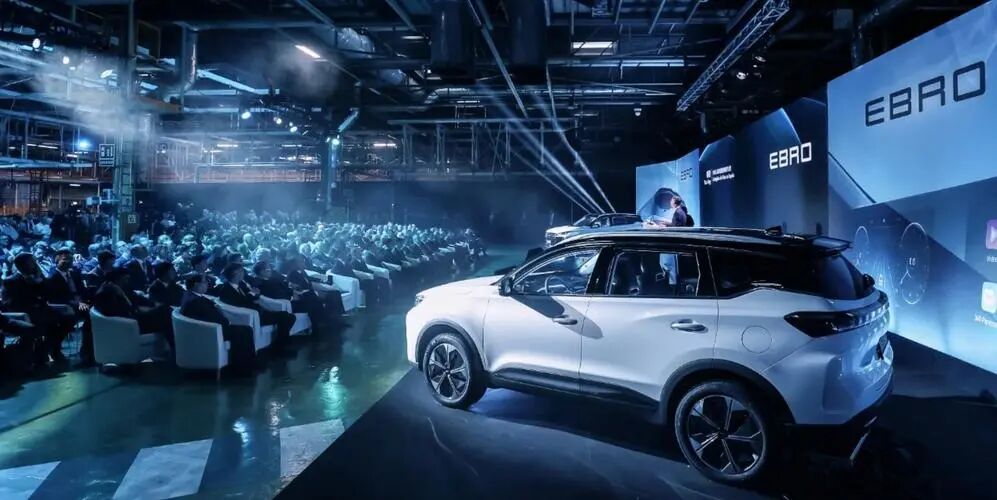
In recent years, Chery has embraced the principle of "In somewhere, For somewhere, Be somewhere." The first two aspects—"tailoring products to local markets and establishing nearby production facilities"—are relatively straightforward. The third aspect, "Be somewhere," represents a significant leap in complexity. It involves more than just exporting vehicles; it requires setting up local manufacturing bases, building supply chains, nurturing local teams, and addressing compliance and labor issues.
Chery's partnership with EV MOTORS in Spain revitalized the idle Nissan Barcelona plant, breathing new life into the historic EBRO brand. In South Africa, the Rosslyn plant retained its original 692 employees. This asset-heavy, long-term approach marks a fundamental shift from the early days of relying solely on exports. Zhang Guozhong's move to the Holdings Group, officially described as integrating "financial, trade, and diversified industrial resources," aims to channel the Group's backend resources to support frontline operations.
Three Key Factors Will Shape the Future Course
While the executive reshuffles are now in place, the true measure of success lies in whether resource synergies can be effectively realized.
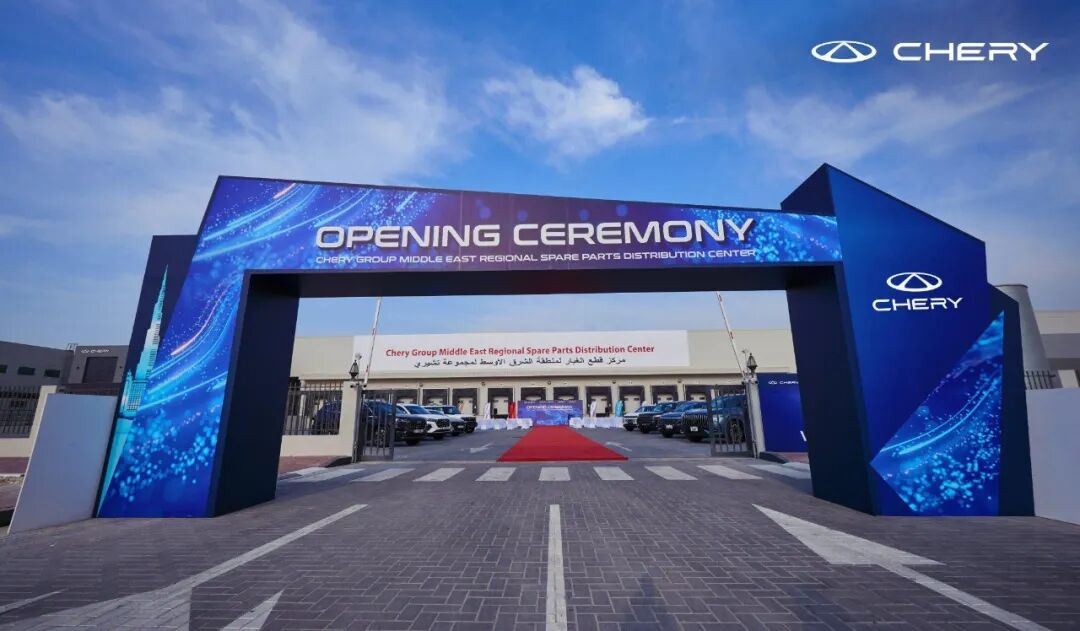
Developed markets present a different level of competition. Anti-subsidy tariffs, data compliance, and brand recognition pose far greater challenges than in emerging markets. While cost-effectiveness and distribution channels can drive volume in emerging markets, success in developed markets requires genuine integration into the local industrial ecosystem—a far more demanding task than simply building factories and selling vehicles.
To gauge whether this strategic move is on the right track, three critical factors must be closely monitored. First, the allocation of the 2027 budget to overseas R&D and local factory construction will serve as a key indicator. Budgets are the most honest reflection of a company's strategy. While Chery's overseas sales have grown rapidly in recent years, R&D and manufacturing have remained predominantly domestic-focused. If the new budget significantly increases investments in overseas R&D centers, accelerates local factory production schedules, and expands the launch of new energy vehicle models for Europe and Southeast Asia, it would signal that Globalization 3.0 is more than just rhetoric. Conversely, if the figures remain unchanged, the organizational adjustments would carry more symbolic than substantive significance.
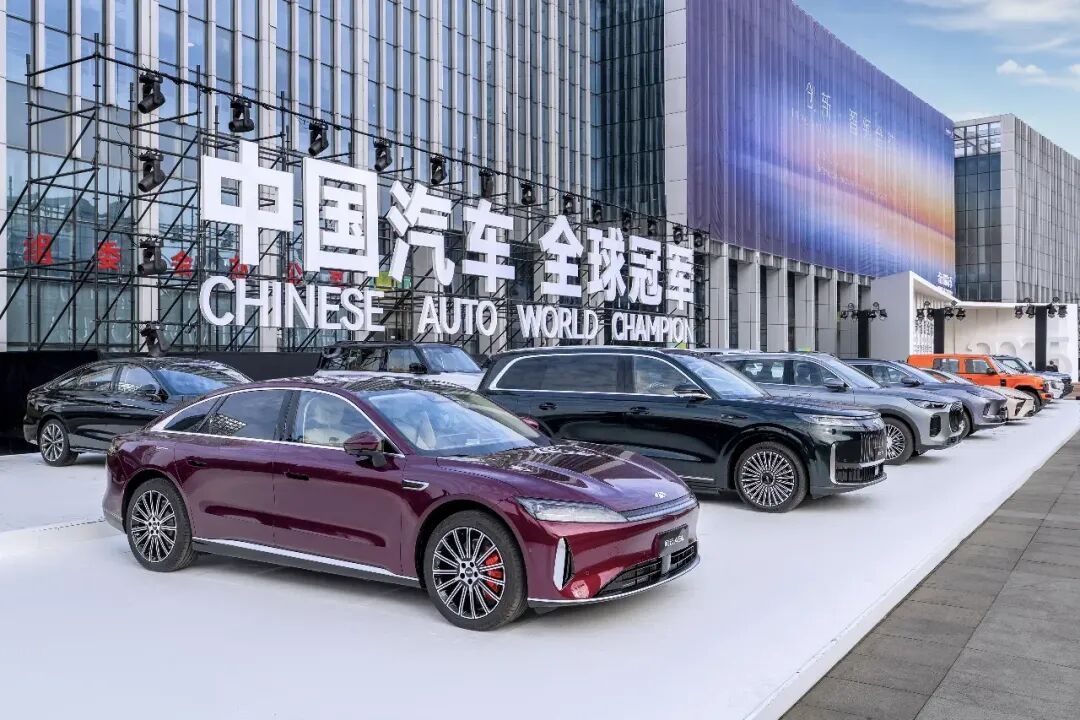
Second, the Holdings Group's financial, trade, and diversified industrial resources must genuinely support overseas operations. Chery Holdings encompasses automotive finance, international trade, and parts businesses, which have primarily served the domestic market. Whether Zhang Guozhong can effectively coordinate overseas dealer financing, local supply chain procurement, and cross-border financial services—ensuring that frontline operations receive the necessary support rather than operating in isolation—will be critical to testing the "Greater Chery" synergy.
Third, whether developed markets can transition from "vehicle exports" to "local deep engagement" remains to be seen. Currently, Chery relies primarily on price and product competitiveness in developed markets, still in an expansionary phase. The real challenge lies in whether, over the next year or two, the proportion of local teams, local R&D investment, compliance system development, and brand recognition can keep pace. Achieving rapid sales growth is not difficult; the true test is whether local consumers will view Chery as a genuine local option rather than a transient foreign brand.

For Chery, Globalization 3.0 is not just a new slogan but a practical operational challenge. With overseas revenue accounting for half of the total, the key questions are whether the organization can keep pace and whether resources can be effectively integrated. None of these issues can be resolved through executive changes alone. The stage is now set. What matters next is not what is announced at press conferences but whether the next budget sheet shows a meaningful increase in overseas R&D and factory construction investments.
-
Yunbao Intelligence Charges Towards IPO: Over 5,000-Fold Revenue Surge in 2.5 Years, Tencent Contributes Nearly 98% of Revenue
-
Field Test of Doubao at Work: Can a Company That Helps Users Kill Time Build a Product That Saves Them Time?", "Doubao, AI, Office Agent, User Growth, Commercialization
-
Ofilm Wins Consecutive Orders for Xiaomi’s Flagship Periscope Telephoto Modules Across Two Generations!
-
![]()
Net Profit Soars by 578% in First Half of the Year! How Promising Is Hycreate Optoelectronics’ IPO on the Beijing Stock Exchange?
-
Reshaping the Supply Chain Landscape: CATL Faces a New Industry Cycle
-
![]()
US$1.2 Million for 'Digital Territory': Global Tech Giants Scramble for '.ai' Domain Names
-
![]()
Apple’s Dependence on Scalpers Hits an All-Time High
-
![]()
Lei Jun’s 200 Billion Yuan Gamble: Why Does He Wait for Trends to Solidify Before Making Big Moves?