Xpeng Optimizes Product Lines, Changan Merges Similar Businesses: China's Auto Industry Embarks on a Major Consolidation Era
 10/08 2026
 469
469
Editor: Liu Zhicheng
Reviewer: Xu Xu
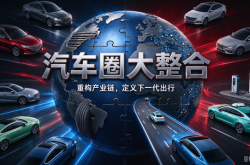
Recently, the automotive industry has been swept by a wave of internal consolidation.
According to 36Kr, Xpeng Motors has recently initiated significant reforms in its product lineup.
The original two product lines, F (P-series sedans) and I (overseas products), have been officially merged into the G product line. Moving forward, the company will focus on two core product lines: G and D (MONA series), aiming to concentrate resources and create more competitive core vehicle models by streamlining its product sequence.
Around the same time, on September 27th, Yicai reported that Changan Automobile's integration of its two major brands, Shenlan and Avatr, has entered a substantive implementation phase. Changan Automobile has announced the establishment of the AD (initial letters of Avatr and Shenlan) Collaborative Development Department, a first-tier department. It will encompass several second-tier departments, including the Planning and Cooperation Department, Market Product Department, Human Resources Sharing Center, Financial Sharing Center, and General Affairs Department, which will handle corresponding businesses entrusted by the two brands.
While the two automakers have taken different actions, they are moving in a surprisingly consistent direction.
This is no mere coincidence.
The automotive industry is rapidly entering a phase of intense market saturation competition, prompting major automakers to shift their focus from mere scale expansion to maximizing internal operational efficiency.
Thus, the automotive industry has entered an era of major consolidation.
The Auto Industry Enters an Era of Major Consolidation
In fact, the trend of internal consolidation in the auto industry began earlier but is now reaching its peak.
Geely was the first to take action.
In September 2024, Li Shufu unveiled the "Taizhou Declaration," integrating Geometry into Galaxy, assigning Leitmotor to China Star, and having Zeekr acquire a controlling stake in Lynk & Co—consolidation moves that were both concentrated and thorough.
At that time, the Chinese auto market had not yet fully entered a phase of market saturation competition, but this 30-year veteran of the automotive industry had already sensed the changing winds.
Now, the results are evident.
According to the Tianyancha App, in the first half of 2026, Geely achieved revenue of 173.6 billion yuan, a 15% year-on-year increase, reaching a historical high. Its core net profit attributable to shareholders was 9.68 billion yuan, a 46% year-on-year increase.
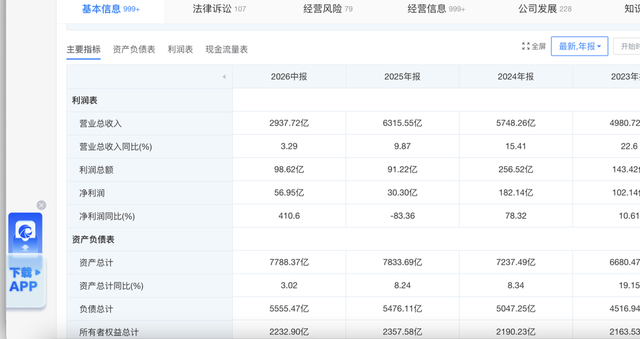
While peers are either incurring losses or experiencing significant profit declines, Geely stands out as a refreshing exception.
The most impressive performer is Zeekr: Amidst an overall decline in domestic auto sales, Zeekr sold 178,000 vehicles in the first half of the year, accounting for only 12.5% of Geely Group's total sales but contributing 31.7% of its revenue, with an average selling price of 370,000 yuan.
Perhaps inspired by the integration results of Zeekr and Lynk & Co, Changan Automobile announced in April this year the strategic integration of Avatr and Shenlan, aiming for a combined annual sales target of 1.5 million vehicles for the two brands by 2030.
This is also good news for Avatr.
It is moving forward with a Hong Kong stock exchange listing and urgently needs to improve its financial performance. After integrating with Shenlan, by sharing Avatr's high-end technologies (such as platforms and intelligent driving) and Shenlan's large-scale procurement capabilities, it can help reduce procurement costs, improve financial narratives, alleviate the financial pressure caused by continuous losses, and thus support its listing valuation.
The new energy vehicle (NEV) camp is also busy. NIO initiated sub-brand integration in May 2025, fully incorporating Leo and Firefly into its main brand system and dissolving independent business units. By streamlining brands and concentrating resources, it aims to address the issues of scattered resources and profitability pressures among its sub-brands.
At the end of last year, Li Auto also merged its first and second product lines, integrating a nearly thousand-strong "components cluster" department into its manufacturing division to address functional overlaps and fragmented decision-making that had arisen from the independent operation of its product lines.
From Geely to Changan, from NIO to Li Auto, and now to Xpeng—focus and simplification have become the core keywords of the entire industry.
This reminds one of a classic business case.
When Steve Jobs returned to Apple in 1997, he faced a chaotic array of about 350 product lines and a company on the brink of bankruptcy.
The first thing he did was not to launch new products but to drastically cut—reducing the product lines from 350 to 10, eliminating about 70% of the products.
It was this extreme focus on "simplification" that enabled Apple to turn around and lay the foundation for the subsequent launch of blockbuster products like the iMac, iPod, and iPhone.
More than two decades later, Chinese automakers are standing at a similar crossroads.
Automakers have collectively shifted from rapid expansion to meticulous operation.
But if internal integration is merely about "strengthening internal capabilities," it would not be enough to call this the "era of major consolidation."
What truly elevates this transformation is the breaking down of boundaries between automakers, leading to external integration and alliances.
First, consider the charging and battery swap sector.
On September 28th, NIO and Geely officially signed a strategic cooperation agreement on charging and battery swap services.
The transaction structure is as follows: Geely will contribute 100% of its Yi Yi Interconnect stock plus 640 million yuan in cash to acquire a 30% stake in NIO Power. In return, NIO will take a 10% stake in Geely's Haohan Energy.
This is not a simple "you invest in me, I invest in you."
What both sides are connecting are even more so charging and battery swap networks and technical standards—Geely will launch models that access NIO's battery swap system, and NIO will also connect to Geely's energy replenishment network.
For NIO, the heavy asset investment in battery swap stations finally has an outlet for cost-sharing. For Geely, it instantly acquires battery swap capabilities, saving years of construction time and huge investments.
Similarly, external integration also includes central and local state-owned enterprises.
Also on September 28th, GAC Group disclosed a major asset restructuring plan: it intends to acquire a 50% stake in FAW Toyota held by FAW Group through the issuance of shares.
If the transaction is completed, FAW Group will become GAC Group's second-largest shareholder with strategic influence, and GAC will deeply participate in both GAC Toyota and FAW Toyota's systems in China.
The background to this transaction is noteworthy: GAC incurred a net profit attributable to shareholders loss of 4.467 billion yuan in the first half of 2026. Two months earlier, GAC was involved in the "Banana Battery Incident."
FAW's sales volume declined by more than 15% year-on-year in the first half of the year, and Toyota's sales in China declined by 17.1% year-on-year in the same period.
The internal friction caused by the long-standing "twin car strategy" of Southern and Northern Toyota—Corolla vs. Levin, RAV4 vs. Wildlander—has resulted in significant waste of R&D and marketing resources on their own brands.
This integration is not about "who acquires whom" but a strategic binding based on mutual needs: FAW exchanges its FAW Toyota stake for GAC Group shares, revitalizing assets and accessing a more market-active platform. GAC uses its central enterprise shareholder to stabilize its strategic backend.
Looking at these transactions together, a clear trend emerges:
Internal integration addresses the issue of "too many brands and scattered resources within a group." External integration resolves the problem of "redundant construction and homogeneous competition among different groups."
The former is about "slimming down," while the latter is about "forming alliances," but both aim to reduce burdens and refocus enterprises.
Looking back, seemingly dispersed actions in the industry also point to the same direction.
Automakers collectively turn to CATL while simultaneously opening up market share to second-tier battery manufacturers.
The cross-border cooperation between Seres and Huawei has been upgraded to an AITO-exclusive franchise model, enhancing brand value and sales through dedicated channels, service teams, and brand operations—a common practice among global luxury brands.
This new cooperation model represents another innovation based on cross-border integration and strengthened cooperation, further upgrading systems and synergies, focusing resources, and improving channel efficiency and quality, favoring the high-quality and sustainable development of AITO.
These are not just minor adjustments in procurement strategies but essentially alternative forms of "integration" and "slimming down" for automakers: reducing premiums, regaining strength, and deploying stronger cash flow capabilities for the future.
Internally, it involves brand mergers and cancellations. Externally, it involves equity and business trade-offs. Upstream, it involves readjusting supplier relationships.
These may seem like three separate actions, but they all answer the same question of the times.
So, rather than saying this is a strategic preference of automakers, it is more accurate to say it is an inevitable product of the industry's stage.
When the marginal benefits of expansion fall below those of integration, simplification shifts from a choice to a necessity.
The difference lies only in who sees this first and who delays until they have no choice.
The underlying logic driving all this is twofold:
First, nine departments including the Ministry of Industry and Information Technology issued the "15th Five-Year Plan for the Development of the Intelligent Connected New Energy Vehicle Industry," explicitly calling for strict control of new capacity and encouraging mergers and acquisitions.
Second, the automotive industry is in significant pain.
From January to August 2026, the profit margin of China's automotive industry was only 3.6%, with profits down 16% year-on-year.
It can be said that this is one of the most difficult times in the history of China's automotive industry.
When industry-wide profits are this thin, every automaker faces the question of how to continue surviving.
Therefore, having more brands is inferior to focusing on a few, and going it alone is inferior to forming alliances.
Battery swap stations must be jointly built, technology platforms shared, supply chains concentrated for lower procurement costs, and channels interconnected—not because everyone has suddenly become friendly, but because without doing so, no one can guarantee they will survive to the end.
Will the automotive market quickly escape involution under major consolidation?
Now that the auto industry is collectively slimming down and group resources are being integrated, the question arises: Can the domestic automotive market quickly escape the stage of involution?
The adjustment is unlikely to happen so quickly.
Domestic passenger vehicle capacity has approached 55 million units, while the terminal market size stabilizes at around 25 million units. This nearly doubled capacity redundancy is the true source of the ongoing price war.
According to pure market logic, weaker production capacities should accelerate their exit, but the uniqueness of China's automotive industry lies in the deep integration of automakers with local GDP, taxation, employment, and the parts supply chain.
For many industrial cities, complete vehicle projects are not just economic pillars but also crucial for employment support and industrial upgrading.
Yu Kai, CEO of Horizon Robotics, once said, "I don't think Chinese automakers will consolidate that quickly. It involves significant local investments, employment, and industrial output. The automotive industry is too important."
Therefore, capacity clearance in China's automotive industry is more likely to be gradual.
The advantage of this path lies in preserving employment and avoiding systemic disruptions to the supply chain.
However, the cost is that some loss-making enterprises and inefficient production capacities are forced to continue operating on "life support," prolonging the cycle of industry involution.
The cooperation dynamics between FAW and GAC also reflect this gradual logic—integration begins with joint venture brands rather than directly impacting proprietary brands.
The reason is that integrating proprietary brands would require restructuring the entire group system, involving broader implications and greater resistance. Starting with joint venture brands represents a less resistant and more operable transitional strategy.
Therefore, a fundamental change in the logic of industry involution is unlikely in the short term.
Is the market equally "crushing" every automaker?
Against this backdrop, the result is that automakers are finding it increasingly difficult to establish lasting competitive moats, and the market seems to be equally "crushing" every player.
This is evident among the new energy vehicle (NEV) startups.
Interestingly, the time points when NIO, Li Auto, and Xpeng initiated internal integration all coincided with their most challenging periods.
For them, integration was not an active choice for expansion but a passive correction under profitability pressure.
NIO initiated sub-brand integration in May 2025, fully incorporating Leo and Firefly into its main brand system.
The pressure behind this move was direct: a net loss of 22.4 billion yuan in 2024, with multi-brand parallel operations pushing marginal costs higher.
By the first quarter of 2025, the net loss attributable to shareholders had reached 6.891 billion yuan, marking a 31.06% year-on-year surge.
This financial report thrust the company into the spotlight, as the market generally cast doubt on its ability to fulfill profitability pledges by the fourth quarter. Even prospective buyers postponed their purchases, worried about the brand's viability.
When profitability transitions from a strategic aim to a non-negotiable deliverable, integration and streamlining emerge as the sole viable options.
Li Auto, too, faced similar pressure with its product line integration at the end of the previous year. In the third quarter of 2025, it reported a loss of approximately 600 million yuan, its first since returning to profitability in the fourth quarter of 2022.
Xpeng finds itself in a similar predicament.
Its current product line adjustments are also contractionary moves necessitated by external pressures.
On July 24th, the recall announcement by the State Administration for Market Regulation disclosed that 33,473 units of certain Xpeng X9 models were being recalled due to safety risks.
The repercussions impacted Xpeng's highest-priced offering, somewhat hampering its efforts to ascend the premium market and hitting a snag in expanding its high-margin product portfolio.
Coupled with a net loss of 3.12 billion yuan in the first half of the year—a 173.4% year-on-year increase—this round of scrutiny has become particularly pressing.
The market's invisible hand appears to be deliberately steering each player into a trough.
Ultimately, this brings us back to the industry's core dilemma: in a race where winners can't fully capitalize on their victories and losers can't gracefully exit, forging a "sustainable competitive moat" proves truly arduous.
Consider the winners first. Li Auto serves as a prime example—its extended-range technology combined with "fridge, TV, sofa" features once constituted its unique product formula, which it also regarded as its competitive edge.
Yet, the reality is that before this edge could be solidified, it had already become commonplace.
In the automotive sector, a proven successful formula can be replicated or even outdone by rivals in just two to three years. Leapmotor, dubbed the "Half-Price Li Auto," exemplifies this; another instance is the rapid rise and adoption of Huawei's intelligent driving technologies by others.
This implies that any automaker's lead is essentially a temporal advantage, not a lasting barrier.
Differentiators built over three years can be matched by competitors within six months.
Now, consider the losers, whose exit pace lags far behind the winners' expansion speed.
In a normal market, pioneers capture market share from laggards, scale reduces costs, and cost advantages reinforce market dominance, forming a self-reinforcing competitive moat.
However, as previously mentioned, automakers are deeply intertwined with local economies, making capacity clearance a gradual process.
Coupled with the heavy asset investment inherent in the automotive industry, losers are reluctant to exit easily.
The consequence is that weak brands, even when incurring losses, can clear inventory through discounts, dragging down entire price segments; strong brands are then compelled to follow suit with price cuts, surrendering their newly acquired margins.
Winners gain market share but not profits—here, the moat's closed loop fractures.
Furthermore, as automobiles are high-value, low-repurchase-rate consumer goods, price comparison behavior is rampant, making it challenging to cultivate the high brand loyalty seen in fast-moving consumer goods. Automakers must perpetually revisit the table of price and feature comparisons.
Thus, the industry's throne changes hands more frequently: a few years ago, Li Auto was in the limelight; now, it's Leapmotor; next year, it could be anyone else.
Such rapid iteration would have been unfathomable a decade ago.
On the whole, competition itself is not the issue; the crux lies in whether profits and order can be sustained post-competition.
The Chinese automotive industry has demonstrated its competitiveness. The next hurdle is to prove that it can secure profits while conquering the market—that would signify a healthier, more mature industry.
Disclaimer: The information cited in this article is sourced from legally disclosed company documents and publicly available materials. The author makes no guarantees regarding its completeness or timeliness. Stock market investments carry inherent risks, so caution is advised. The content herein represents commentary only and does not constitute investment advice. The decision to participate in investments rests solely with you, and you assume all associated risks.
-
![]()
Is the Mate 90 Huawei's Ace, and Is the Rumored Sub-Brand 'Xingyao' Its Trump Card for AI?
-
![]()
Xpeng Optimizes Product Lines, Changan Merges Similar Businesses: China's Auto Industry Embarks on a Major Consolidation Era
-
![]()
September Sales Soar: BYD Shifts 464,000 Vehicles, with Half of Growth Driven by Overseas Markets. Fangchengbao Shines!
-
![]()
HiMode Intelligent Travel Sees September Dip with 37,000 Units; AITO Rebounds Amid Seres-Huawei Five-Year Pact
-
![]()
September Sales Rankings for Emerging Auto Brands: Leapmotor Exceeds 100,000 Units, Xiaomi Surpasses 40,000, Harmony Intelligent Mobility Hits 37,000+, Multiple Brands Show Recovery | Mirror Pro
-
![]()
OpenAI Hits the Brakes, Meta Accelerates
-
![]()
Tech Titans Compete for Dominance in the ‘AI Personal Assistant’ Market
-
![]()
Transsion's Mobile Phone Profits Halved, Yet Energy Storage Revenue Surges 825% in Two Years! Africa's Mobile Phone King Pivots to Energy Storage—Can Channel Strength Outpace Technological Barriers?