Chinese Automakers: Propelling Autoliv into a Growth Phase? Navigating the High Barriers of Passive Safety
 10/10 2026
 607
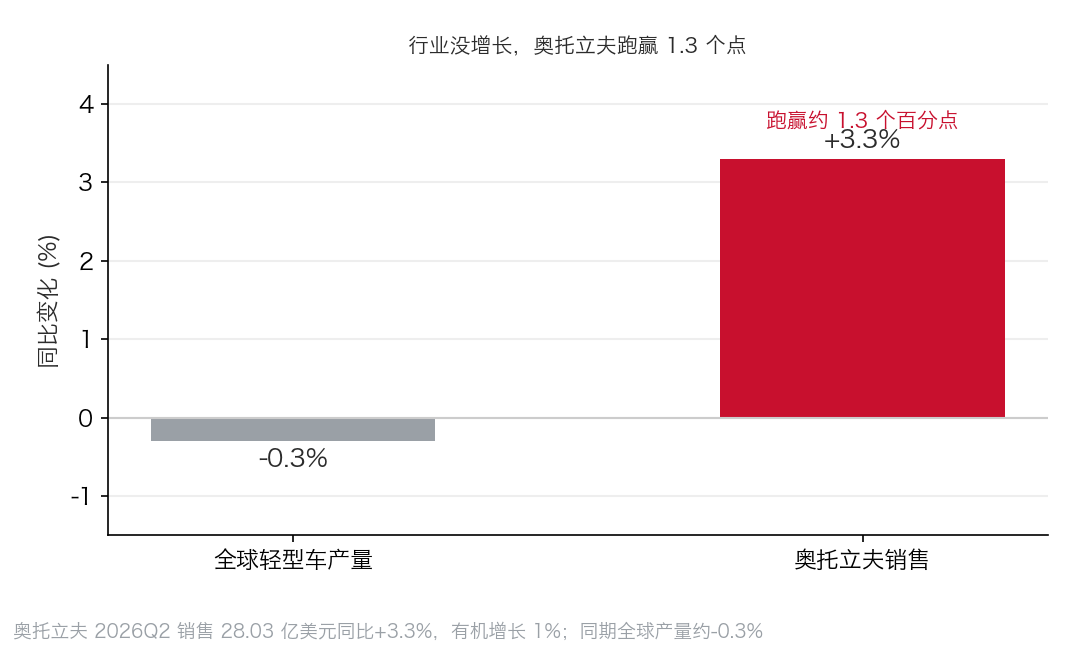
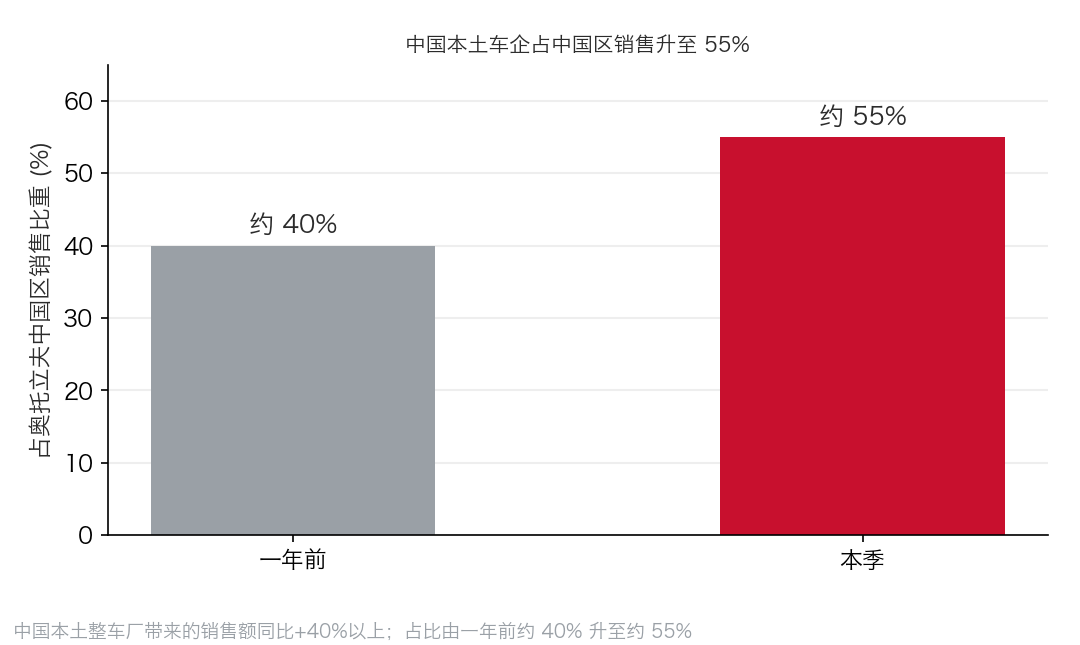
Despite a lack of substantial growth in the global automotive production landscape, Autoliv reported second-quarter sales of $2.803 billion, marking a 3.3% year-on-year increase and outperforming the industry average by approximately 1.3 percentage points. Notably, Chinese domestic automakers accounted for over 40% of this growth, with their sales share in China escalating to 55%. Meanwhile, India witnessed growth surpassing 35%.
However, the GAAP profit margin dipped from 9.1% to 6.8%, while the adjusted profit margin climbed to 9.6%. The full-year profit margin target, set between 10.5% and 11%, now heavily depends on fourth-quarter performance.
Produced by Zhineng Zhixin
Despite the absence of significant global automotive production growth, Autoliv has managed to secure incremental growth through partnerships with Chinese domestic automakers. Passive safety systems, including airbags and seatbelts, represent products that Chinese automakers are reluctant to modify.
In the second quarter, Autoliv's sales soared to $2.803 billion, up 3.3% year-on-year, with organic growth contributing 1%. During this period, global light vehicle production experienced a slight decline of about 0.3%, underscoring Autoliv's outperformance by approximately 1.3 percentage points.
While the overall outperformance may not be striking, the亮点 (highlights) lie in the customer structure.
◎ Sales from Chinese domestic automakers surged by over 40% year-on-year, with their share of Autoliv's sales in China rising from around 40% a year ago to approximately 55%.
◎ Sales in India soared by over 35%, significantly outpacing local production.
◎ Business in the Americas, however, lagged behind.
Autoliv's growth has not been uniform across all regions; resources and orders have been redirected towards automakers experiencing faster growth.
Airbags and seatbelts are highly certified system components, integral to vehicle safety. Once integrated into a vehicle platform, suppliers must collaborate closely with automakers to complete crash verification, establish factory quality systems, adhere to delivery schedules, and ensure compliance with local regulations.
Replacing suppliers during a vehicle's lifecycle is a complex and challenging process. If Chinese automakers introduce new models domestically and subsequently expand into overseas markets, safety system suppliers like Autoliv have the opportunity to grow alongside the platform.
Autoliv has revealed collaboration agreements with Great Wall Motors and XPeng. As the revenue share from Chinese domestic automakers continues to rise in the coming quarters, it will be intriguing to observe whether Autoliv can sustain its global adjusted profit margins within the high single to double digits.
Note: As cost reduction efforts persist, some automakers are also undertaking the migration of airbag systems.
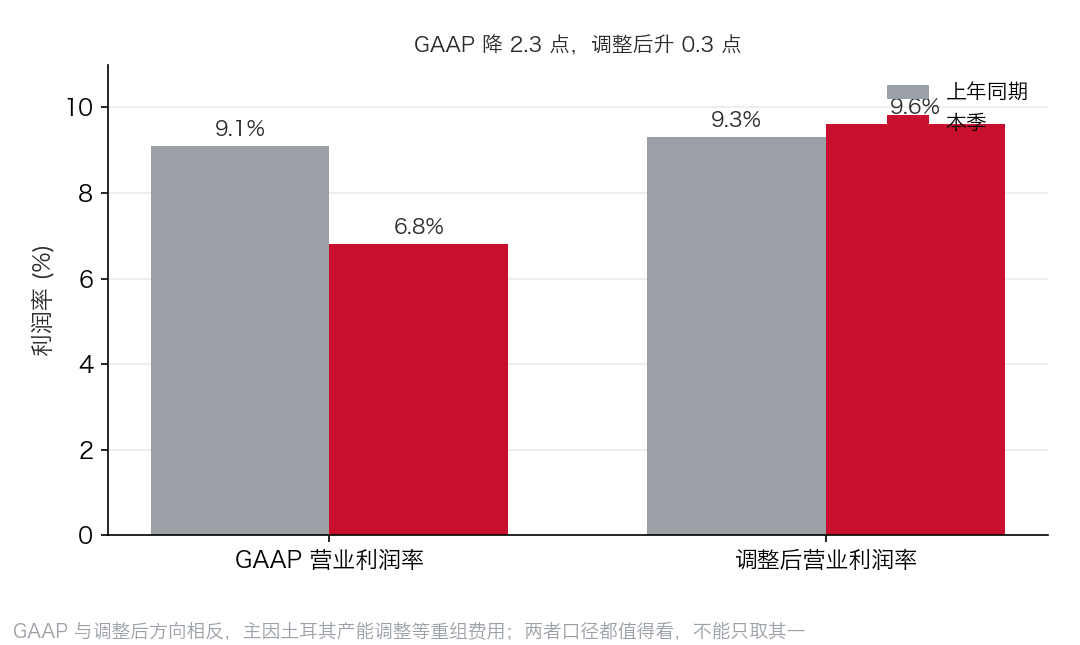
In the second quarter, operating profit under GAAP stood at $192 million, down from $247 million year-on-year, with the profit margin decreasing from 9.1% to 6.8%. However, adjusted operating profit rose from $251 million to $270 million, with the profit margin increasing from 9.3% to 9.6%.
This variation was primarily attributed to restructuring costs, such as capacity adjustments in Turkey. While the adjusted figures provide a clearer picture of ongoing operational efficiency, restructuring necessitates substantial cash and management resources.
Summary
Observing Autoliv's trajectory involves assessing whether the global expansion of Chinese automakers can prompt traditional safety system leaders to reallocate customer shares while maintaining profit margins. It is equally important to monitor how Chinese automakers approach passive safety components both domestically and internationally.
-
China’s Auto Market: How Fierce Is the Competition with Frequent New Car Launches? When Will It Subside?
-
Has Tesla Lost Its Lead and Missed the Chance to Enter China? Time is Running Out for Tesla's FSD in the Chinese Market
-
![]()
When Ambition Meets Boundaries, Building a Step-Change Future is Tougher Than Building a Phone
-
NIO’s Battery Swap Stations Now Accommodate an Additional Battery Model
-
![]()
Why Are Smartphones Selling Fewer Units but at Higher Prices?
-
iPhone Duo Sees Just 900 Yuan Price Hike, Scalpers in Frenzied Resale Race
-
![]()
Focus | Warburg Pincus Considers Selling Chinese Parking Operator Yangguang Haitian, Valuation May Reach US$300 Million
-
![]()
What? The Audi A8 is Set to Be Manufactured in China, in Partnership with Huawei