Global Share Falls Below 50%—What Is the Future of Gasoline Cars?
 11/02 2026
 375
#Where Is the Future of Gasoline Cars?
On a domestic social platform, a discussion centered on this question drew 110 million views and 14,000 comments in just two days. Frankly speaking, ever since new energy vehicles began their rapid rise, the debate over the future of gasoline cars has never truly stopped. But a recently released set of data has once again pushed the issue into the spotlight, drawing considerable attention and discussion.
Foreign media recently reported that, according to Mobility Global statistics, the share of pure gasoline cars in global new car sales fell to 49% in the first half of 2026—a sharp decline from 73% in the same period of 2021, and the first time it has dropped below 50% since automobiles became widely popular in the United States in the 1920s. For a time, "gasoline cars losing half their territory" became a hot topic. Yet we should recognize that 49% does not mean internal combustion engines will soon exit the stage; rather, "pure gasoline cars" as a standalone statistical category may itself be worth reconsidering. In the market it has "retreated" from, it is not only electric vehicles that are advancing aggressively; gasoline-electric hybrid vehicles are also rapidly filling the mainstream price band it has vacated. According to Mobility Global statistics, HEVs accounted for 18% of global new car sales in the first half of 2026, already surpassing pure electric vehicles' 17%.
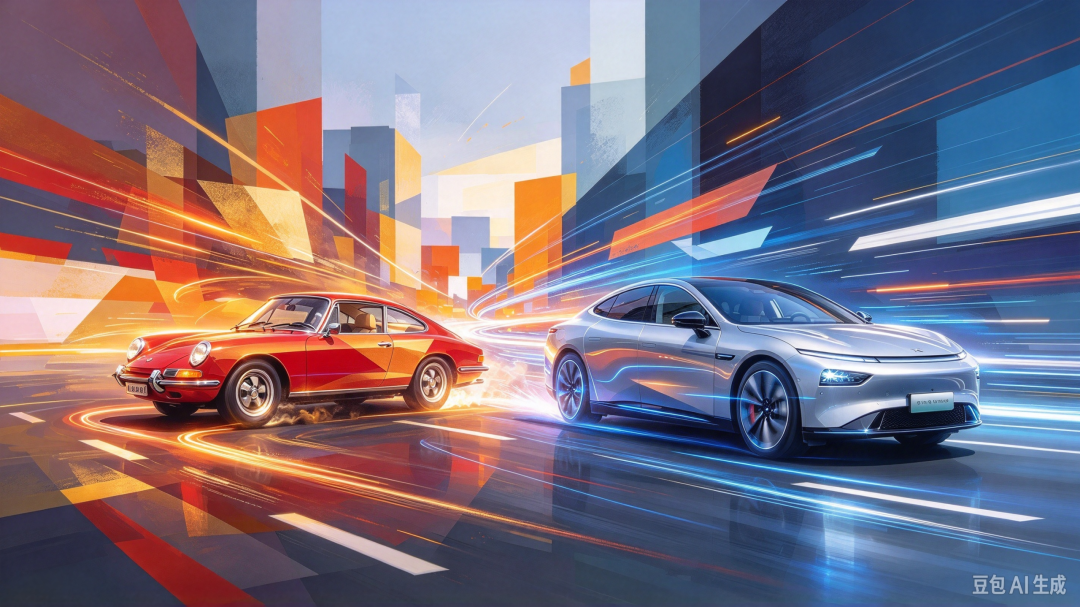
Retreat in Global Market Share
According to statistics from the China Association of Automobile Manufacturers, from January to September this year, production and sales of new energy vehicles reached 12.483 million and 12.472 million units respectively, up 11% and 11.1% year on year, with new energy vehicle sales accounting for 53.6% of total new car sales. In the passenger car market, the proportion is even higher. In the first nine months of this year, domestic passenger car sales were 12.794 million units, of which traditional fuel passenger car sales were 5.127 million units, accounting for only 40%. In other words, new energy vehicles now account for 60% of domestic passenger car new car sales.
Data released by the China Automobile Dealers Association Passenger Car Market Information Joint Committee (the "Passenger Car Association") shows that in September 2026, the sales share of gasoline cars in the Chinese market fell below one-third for the first time, while the overall penetration rate of new energy vehicles climbed to 67%, setting a record high.
In the Chinese market, new energy vehicles are the "majority" and will continue to occupy more market share. Moreover, with the growth of China's auto market and Chinese automakers' continuous "going global," the global auto market landscape will also undergo profound changes. Although this conclusion has become a consensus across the global industry, the moment the share of gasoline cars in the global market falls below 50%, it inevitably still triggers reflection and strong emotions among many.
Not long ago, foreign media reported that, according to data released by Mobility Global (formerly S&P Global Mobility; statistical scope excludes some heavy vehicles), global sales of gasoline cars (excluding hybrids and other electrified models) fell 10% year on year to 20.25 million units from January to June this year. The share of such models in global new car sales dropped 3 percentage points to 49%. This is reported to be the first time the market share of gasoline cars has fallen below 50% since automobiles began to become widespread in the 1920s.
Gasoline Cars Are Not Heading Toward Their End
Given the vigorous development of new energy vehicles in China—the world's largest single auto market—some interpret the above data as a landmark event in the global auto market: electrification has crossed the critical point, and gasoline cars have taken a back seat. But in fact, the "49%" in Mobility Global's data does not tell that story.
The foreign media report did indeed mention the growth of electric vehicles. According to Mobility Global statistics, global electric vehicle sales rose 12% to 6.87 million units in the first half of the year. Moreover, electric vehicles' share of all new car sales has reached 17%, exceeding the 16% threshold often regarded as the tipping point for large-scale adoption. Among them, electric vehicle sales in Europe rose 32% to 1.81 million units. Data from the European Automobile Manufacturers' Association shows that in the first half of the year, across 31 major European countries combined, electric vehicle sales surpassed gasoline-powered cars for the first time in a half-year period; electric vehicle sales in Southeast Asia reached 350,000 units, with growth as high as 81%; sales in Oceania more than doubled to 110,000 units.
However, it should be noted that, according to Mobility Global's statistical scope, in the first half of this year, the combined global new car sales share of electric vehicles and plug-in hybrid vehicles was only 23%, while pure hybrid vehicles (HEVs) accounted for 18%, diesel vehicles accounted for 10%, and the market share of non-new energy vehicles still exceeded 70%.
According to data released by the European Automobile Manufacturers' Association (ACEA), in the first half of this year, the market share of pure gasoline cars in the European market was squeezed to only 22.2%, but European consumers mostly chose hybrids—namely HEVs—to complete the substitution. This category ranked first with a stable 37.3% share, while pure electric accounted for only 20.7%. In the United States, according to statistics from the Alliance for Automotive Innovation, in the second quarter of 2026, pure electric vehicle sales accounted for only 7.9% of the light vehicle total, while hybrid vehicles reached 22.2%. In other words, models equipped with internal combustion engines still accounted for 69.9%. Between high oil prices and declining subsidies, American car buyers also chose hybrids first rather than jumping directly to pure electric.
Internal Combustion Engines Will Not Disappear
Under the topic "Where is the future of gasoline cars," many industry insiders share the same judgment: the future of gasoline cars has never been about stubbornly sticking to pure gasoline, but about taking the upgrade path of hybridization plus intelligence. In their view, it is relatively reasonable to improve drivability and reduce fuel consumption through hybridization, support air conditioning and external discharge through small batteries, and at the same time realize intelligentization.
At the same time, some comments argue that gasoline cars will retreat to heavy-duty, extreme cold, long-distance, and lower-tier markets, while retaining niche segments such as high-end off-road and performance cars, achieving differentiated coexistence with other technology routes.
On the other hand, even in the domestic market, gasoline cars still account for more than 80% of the vehicle parc. According to Ministry of Public Security data, by the end of 2025, the national vehicle parc was 366 million, of which 43.97 million were new energy vehicles, accounting for 12.01%. On this basis, the parc of non-new energy vehicles (including traditional fuel vehicles and ordinary hybrid vehicles) is about 322 million, accounting for nearly 88% of the total. This means that the huge aftermarket system of repair, maintenance, and refueling will continue for a long time, and for a considerable period, gasoline cars will still account for a relatively high proportion of the vehicle parc.
Perhaps, before answering "where gasoline cars are heading," we should first clarify the definition of "gasoline cars." Pure gasoline cars are indeed experiencing a gradual shrinkage of market share, but gasoline cars in HEV form are beginning to move toward the mainstream. As an efficient energy conversion module in the electric drive architecture, the internal combustion engine is being re-optimized to take over the mainstream family car space vacated by pure gasoline cars. At the same time, high-end gasoline cars may move toward niche survival and may maintain a relatively small market share in the future.
The future of gasoline cars will not arrive in the form of either "disappearance" or "victory." It is heading toward several different endpoints in several different forms. What truly determines the position of an automaker, a supplier, or a market in the transformation is not "when the share of gasoline cars will reach zero," but at which fork, in which form, and on which timeline they choose which products, technologies, and models to respond to new changes in the market.

Image: from the internet
Article: Auto Perspective
Layout: Auto Perspective
-
![]()
This "Silver October" New Energy Report Card Is Most Striking for Its "Zero, Xiao, Xiao" Polarization
-
![]()
AITO's First Real Test: Can the New M8 Carry Seres on Its Own?
-
![]()
Huawei Wins Audi A8 Deal — Why That Matters More Than Launching Another "Jie" Brand
-
![]()
The Most Aggressive Investor, Mediocre Returns: Has Amazon Become a Worker for Nvidia?
-
![]()
Explained: Anthropic's Prospectus — and What It Means for the Auto Industry and Us Workers
-
![]()
[Xauto Smart Driving Rankings] Xiaomi SU7 N70 HyperOS 1.18.3 Urban Evaluation Report
-
Why AI Short Dramas Have Exploded in Popularity
-
Japanese Big Four See Sales Drop in China in First 10 Months; Are Toyota and Honda Hybrids Still Worth Buying in the Cold North?